
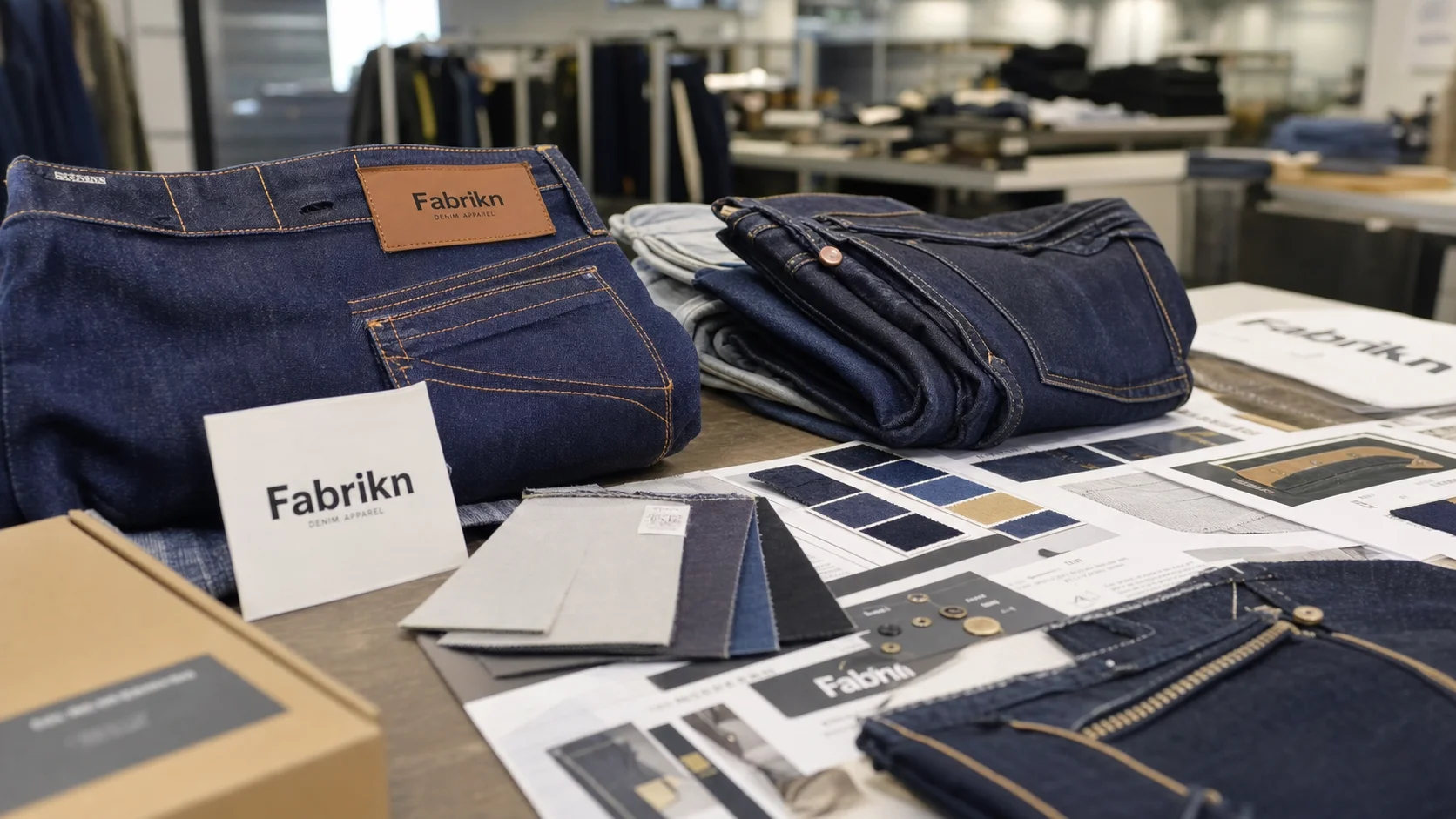
Screen Printing on Poly Bags for Apparel with checks for samples, fit, MOQ, QC evidence, pricing terms, and delivery risk.
Fast answer: Screen Printing on Poly Bags for Apparel: Costs, Quality should be judged by production evidence, not by a generic sourcing promise. The buyer needs sample proof, cost breakdowns, QC checkpoints, and delivery buffers in writing.
Ask for recent sample photos, measurement tolerances, fabric or print test assumptions, decoration test notes, packing examples, and a named inspection checkpoint. These details show whether the team can repeat an approved sample at bulk volume.
Separate garment cost, decoration, labels, packaging, sampling, testing, freight, and rush charges. When every cost line is visible, it becomes easier to reduce colorways, adjust size depth, or reserve more time for sampling.
The cheapest part of the package can do the most talking. Screen printing on poly bags for apparel turns a plain sleeve into a sales cue before anyone touches the garment, and I’ve watched that happen in factories from Dongguan to Tiruppur.
A crisp one-color logo on a 40-micron LDPE bag makes a basic tee look deliberate; a smeared print on a hoodie makes the whole piece feel bargain-bin. That is why screen printing on poly bags for apparel keeps surviving every packaging fad. Buyers notice the first three seconds, then the story starts.
Retail is not subtle. The bag sits in the customer’s hand, on the peg, or inside the mailer, and in unboxing it frames the garment before the fabric does. On factory visits in Vietnam and China, managers kept circling back to the same point: poly bags protect inventory from dust, shave freight weight by grams, and keep packing lines moving at 60 to 120 bags per minute. When a carton leaves with 300 pieces instead of 240 because the packaging stayed light, that math matters.
Speed still pays. Sustainable packaging materials exist, but many add $0.04 to $0.18 per unit, push lead time out two to four weeks, or make moisture protection harder. Brands want recycled content; retail buyers still punish damaged goods more than they reward a compostable claim. Price, appearance, recyclability — they rarely move together.
I’ve seen premium labels spend $0.09 per unit on a printed bag and ordinary basics spend $0.03 on the same format, then look equally polished because the print was aligned and the film was clear. The bag does not need to be expensive. It needs to look deliberate.
The workflow starts long before ink hits film. First comes bag selection: LDPE for a softer feel, HDPE for a crisper, noisier bag, or recycled poly when the brand has a content target to defend. Then artwork gets separated, screens are burned, ink is mixed, and the press is set to match print area, speed, and film tension.
On one run I watched, the supplier printed 12,000 bags in five hours. Setup had already taken 90 minutes, which matters far more on a 1,000-piece order than on a 100,000-piece run. Screens need registration within 1 to 2 mm, or the logo slides off-center and the whole carton looks careless. After print, the bags pass through drying or curing tunnels, then get stacked, counted, and packed flat into cartons for shipment.
LDPE accepts ink differently than HDPE because the surface is softer and less slippery. Recycled poly can be trickier still, since the melt stream and additives vary by source. According to ISO material testing standards, surface consistency affects adhesion and repeatability; in practice, that shows up as one carton passing cleanly while the next shows faint rub-off or odor retention. Cure temperature often sits around 70°C to 120°C depending on ink type and film thickness. Push the line too fast, and the print looks dry but fails a rub test later.
The cheapest bags can create the highest reject rates. A 25-micron film wrinkles more during print runs than a 40-micron film, so a supplier may quote $0.01 less per bag and lose $0.03 in wasted labor, setup resets, and scrap.
I’ve seen factories in India reject 6% to 9% of thin-film bags during long runs. The sturdier film stayed under 2% rejects with the same artwork.
That is why factories serving screen printing services clients often ask for a sample first, then lock line speed, ink viscosity, and stack height before mass production. The final carton looks simple. The process is not.
The economics change sharply as order size rises. A 1,000-piece run may carry $35 to $80 in screen setup per color, plus artwork prep. At 10,000 pieces, that cost spreads out and the unit price can fall by 30% to 45%. At 100,000 pieces, the conversation shifts to film yield, carton efficiency, and freight consolidation.
A realistic cost stack looks like this: artwork prep at $15 to $60, screen or plate creation at $25 to $100 per color, inks at $0.003 to $0.02 per bag depending on coverage, labor at $0.01 to $0.05, packaging at $0.005 to $0.02, and inland freight at another $0.01 to $0.04 when the plant sits far from port. For many buyers, that means a printed bag lands near $0.04 to $0.12 in Asia and $0.10 to $0.24 closer to the U.S. or EU market.
Region matters, but not always in the way first-time buyers expect. China often wins on line speed, equipment depth, and low container consolidation costs. Vietnam can be competitive on labor and garment-adjacent integration, yet smaller packaging vendors may add more outsourcing steps. India often offers attractive labor rates, especially near textile hubs, but film consistency and compliance documentation can vary by supplier tier. Nearshore suppliers shorten lead time to 7 to 14 days, though the unit price usually rises because labor, overhead, and local environmental compliance cost more.
Data from U.S. trade guidance on import logistics shows freight and customs timing can swing landed cost as much as factory price on short orders. I saw that with a brand that saved $0.018 per bag in one region, then spent $0.06 more per bag in expedited freight after missing a retail delivery window by nine days.
Recycled film adds cost upfront, often $0.01 to $0.04 more per unit, but it can reduce reputational risk when packaging is under scrutiny from buyers or auditors. For brands in private label apparel, that tradeoff is usually easier to defend than a cheaper virgin-poly bag with a weak story. If packaging sits inside a broader brand program, private label clothing services often pair better with a clear packaging spec than with a vague “eco” note.
When brands request screen printing on poly bags for apparel in bulk, the best manufacturer is usually the one that can show stable production records, not just a low quote. A reliable supplier will also explain their quality controls, confirm MOQ, and quote true wholesale or bulk pricing without hiding setup costs. In many cases, the most competitive factory is the one in China with the right equipment and documented compliance.
Quality control starts with measurable thresholds, not vibes. I ask for print density, registration tolerance, barcode legibility, seal strength, and contamination control on every sample. If the logo moves more than 2 mm, the run is risky. If the barcode smears or the seal weakens, the bag is not pack-ready.
The simplest tests are also the most useful. A tape pull test should leave the print intact after one firm lift. An abrasion rub should survive 20 to 50 double strokes without visible transfer, depending on ink system and end use. Heat exposure at 45°C to 60°C for 24 hours can reveal blocking, odor, or surface tack that the factory missed in a cool room. If the bag is meant to pass through distribution centers in summer, that test matters more than a pretty photo.
Artwork often fails on flexible film for boring reasons. Fine text below 5 pt blurs. Reverse print areas fill in. Gradients band on opaque film. White ink can look strong at press but fade when stacked under pressure. I’ve seen factories in Europe serving luxury brands test with stronger rub standards and tighter visual inspection than promo-packaging suppliers charging a similar unit price.
It is not magic. It is discipline.
For buyers comparing packaging with garment construction, the same logic applies across sublimation printing services and other decoration methods: if the artwork is sensitive, the test plan has to be specific. I also request a sealed-bag sample and a carton-drop photo, because a logo that survives a bench test can still scuff after 300 pieces are stacked and trucked for six hours.
My own QC checklist is blunt:
Screen printing has a narrow sweet spot, and that is exactly why it works. For 1-color to 3-color logos, repeat orders, and artwork that does not change every season, it usually beats more complicated methods on cost and durability. Flexographic printing is faster for massive volumes, but setup is heavier and the economics improve only after tens of thousands of units. Digital printing handles variable graphics and short runs, yet unit cost can jump to $0.20 or more when coverage is high. Plain bags plus labels or inserts are the cheapest to change, but the least premium if the application is sloppy.
In side-by-side planning, I see screen printing on poly bags for apparel chosen when a brand needs 5,000 to 50,000 units, wants crisp branding, and expects stable artwork for at least two seasons. Flexo works better for 100,000-plus units with narrow margins. Digital fits launch capsules, test drops, and personalized packs. Labels or hang tags are useful when the packaging must remain recyclable or when the brand wants to reuse one bag spec across multiple SKUs.
Some premium brands choose plain recycled bags with a high-quality label because it reduces mixed-material waste and keeps the package easier to recycle. The look can be cleaner too. A minimal bag with one precise label often feels more expensive than a crowded print panel, especially when the garment itself carries the design story. For labels, trims, and finishing, many brands route the rest of the program through cut and sew manufacturing so garment and packaging specs stay aligned.
The method should match the product. Streetwear with bold marks? Screen print. Fast-changing fashion basics? Labels or inserts. Seasonal graphic tees? Flexo or digital can make sense. What I’ve seen fail repeatedly is using a method because a supplier prefers it, not because the product needs it.
A proper brief saves weeks. I send suppliers a one-page spec that lists bag size, film thickness, material, ink color, print area, quantity, shipment terms, and target market. If the bag will sit in a humid warehouse or a coastal market, I say so. If the customer is a discount chain or a premium boutique, I say that too, because print tolerance and finish expectations are different.
The artwork package should include vector files, Pantone references, overprint notes, and bleed requirements. For most poly bags, I ask for editable AI or EPS files, not a flattened JPEG. If the design includes small text, I set a minimum line weight of 0.25 pt and a font size no smaller than 5 pt. For two-color prints, I want a color trap of at least 1 mm so misregistration does not show white gaps.
Before I approve a sample, I ask five questions.
Factory photos are not proof. A clean press room can still hide poor ink control. I always request sample archives and recent production references from at least two brands with similar packaging, order size, or market tier. When a supplier says they have done work for premium labels, I want dates, quantities, and a photo of the actual packed cartons, not a showroom mock-up.
If the brand is building a wider product line, I compare the packaging brief against garment specs and screen printing services for consistency across hangtags, tees, and bags. A matching spec set reduces confusion in production, especially when three vendors are involved and the PO is split across two factories.
For brands that care about compliance, I also check whether the supplier can support materials aligned with Textile Exchange guidance or packaging claims that may later need documentation. If the bag is intended for sensitive markets, I may ask for OEKO-TEX related confirmations where applicable. That extra step can save a lot of rework when the retail team asks for proof after the order is already in motion.
Start small, then scale with evidence. I shortlist three suppliers, request two samples each, and test one bag with tape pull, one with rub, and one under heat. If the artwork is new, I revise once before placing the full order. A pilot run of 500 to 2,000 pieces catches weak ink, poor registration, and film wrinkles before they become a 20,000-piece problem.
Timeline is straightforward when artwork is ready. In seven days, you can collect supplier quotes and confirm bag specs. In two weeks, you can review sample prints and approve a revised proof. In 30 days, many factories can complete production and packing if the film is in stock and the PO is clean. If the bag needs custom film or recycled content certification, add seven to 14 days.
I’ve seen brands lose money because packaging failed after garments were already boxed. That mistake is expensive because the fix happens too late. Test before the container ships. Approve only after you have a physical sample, not a PDF.
When screen printing on poly bags for apparel is planned well, the order becomes predictable: the custom spec is clear, the manufacturer understands the target quality, and the supplier can quote realistic wholesale and bulk terms. For many apparel brands, screen printing on poly bags for apparel works best with one clean brief, one vetted factory, and one test round before full production in China.
For Asia sourcing, many printed poly bags land around $0.04 to $0.12 per unit depending on size, film thickness, and color count. Small orders of 1,000 pieces carry heavier setup costs, often $35 to $80 per color, while 10,000-piece runs dilute that sharply.
Simple orders can move in 7 to 14 days if artwork is final and film is available. Custom film, recycled content, or multiple print colors can extend lead time to three to four weeks, especially when the supplier outsources any step.
Request tape pull, rub resistance, barcode scan, seal strength, and heat exposure testing. I also ask for a visual inspection under bright light and a packed-carton photo, because defects often show up after stacking, not right after printing.
Yes, but recycled film can be less consistent than virgin LDPE or HDPE. Expect more variation in adhesion and surface finish, and budget for extra sample rounds. The upside is reputational: many buyers now prefer recycled content when the price premium stays near $0.01 to $0.04 per bag.
Screen printing is better for 1 to 3 colors, repeat artwork, and runs from 1,000 to 50,000 units. Flexo is faster and more economical at 100,000-plus units, but setup is heavier and the design must suit long-run production.