
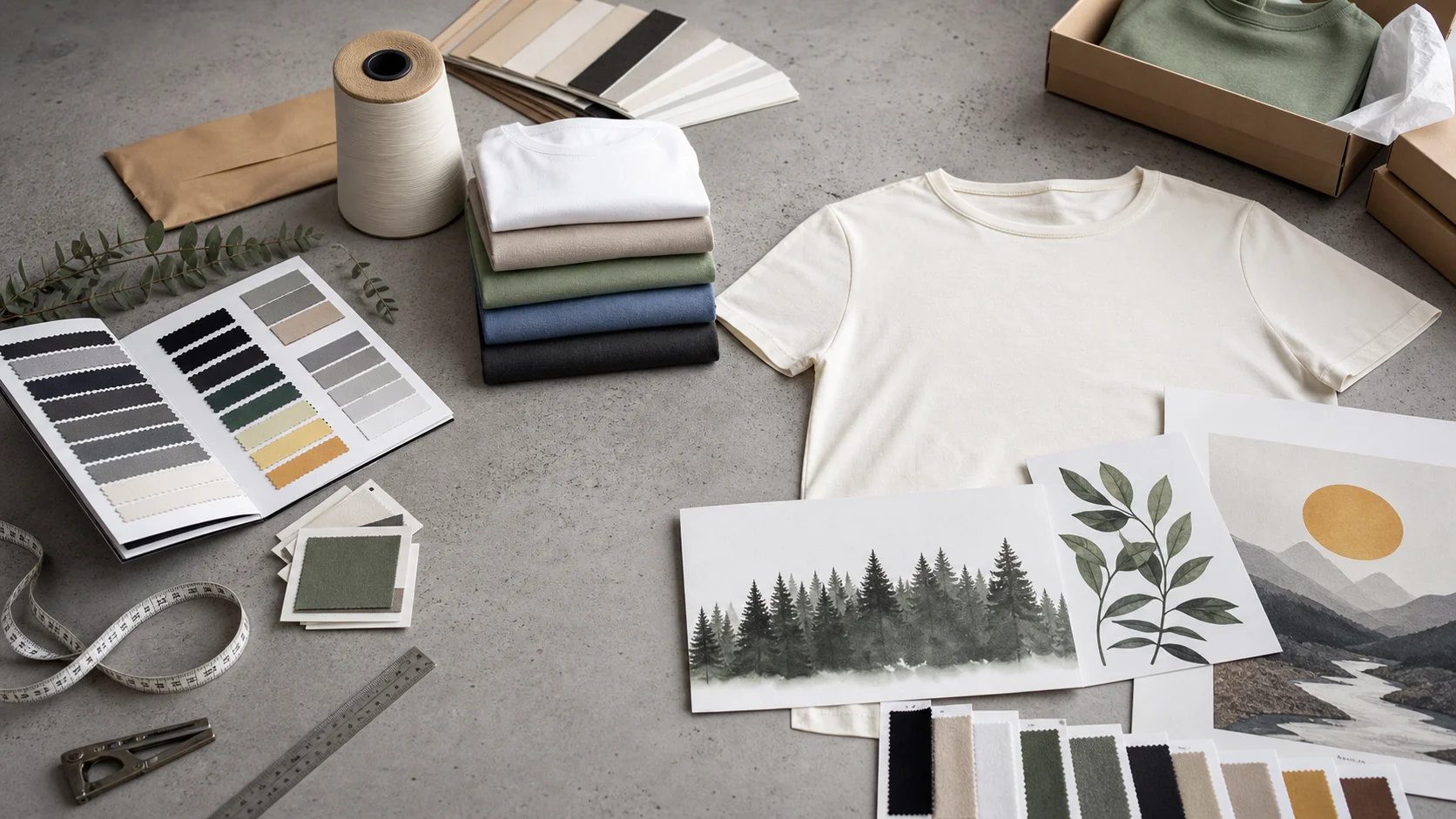
Branded Apparel Boxes with Inserts with checks for samples, fit, MOQ, QC evidence, pricing terms, and delivery risk.
Fast answer: Branded Apparel Boxes with Inserts: Board, Insert Fit, Print, and Cost should be judged by production evidence, not by a generic sourcing promise. The buyer needs sample proof, cost breakdowns, QC checkpoints, and delivery buffers in writing.
Ask for recent sample photos, measurement tolerances, fabric or print test assumptions, decoration test notes, packing examples, and a named inspection checkpoint. These details show whether the team can repeat an approved sample at bulk volume.
Separate garment cost, decoration, labels, packaging, sampling, testing, freight, and rush charges. When every cost line is visible, it becomes easier to reduce colorways, adjust size depth, or reserve more time for sampling.
The box lands before the garment does, and that first second tells the customer almost everything. In apparel, custom branded boxes with inserts for apparel are not window dressing; they shape the first impression, protect the product, and keep returns from creeping upward. I have seen a crushed collar undo an otherwise perfect launch before the customer even reached the try-on mirror.
Factories in Guangdong, Ho Chi Minh City, and Surat all told a version of the same story. The cheapest packers shaved 8% to 12% off box spend by skipping inserts or using undersized cartons, then paid it back through repacks, damage claims, and returns. One direct-to-consumer knitwear brand I worked with cut collar-crush complaints from 14% to 4% after moving to fitted custom branded boxes with inserts for apparel. That was not a branding win. It was a margin win.
Most apparel damage is subtle rather than dramatic. A folded shirt shifts, a belt slides out, a lingerie strap escapes, and suddenly the customer sees a mess instead of a considered product. Inserts stop fold shifting, collar crushing, accessory loss, and that awkward opening moment when tissue has drifted into one corner. For multi-SKU sets, they also keep items separated so labels stay put and sock bundles don’t split in transit.
Premium apparel still ships badly because too many teams design for the photoshoot, not the fulfillment line. A gorgeous box gets approved, then a repacker discovers she can only manage 220 units per hour instead of 340 because the insert collapses under pressure. At labor rates of $4.50 to $7.50 per hour in some Asian facilities, that gap compounds fast across 3,000 or 10,000 units. Packaging is product protection and margin control. Treat it that way.
In my experience, private label clothing brands feel this most sharply because the packaging becomes part of the brand promise long before the fabric is touched. Strong custom branded boxes with inserts for apparel make a mid-market sweatshirt feel edited, intentional, and worth the ticket.
Start with structure. Rigid board is the luxury cue: dense, crisp, built for presentation. Corrugated is the shipping workhorse, especially for e-commerce where a 32 ECT or stronger board can take more abuse than a thin folding carton. Folding cartons sit in the middle: lighter, cheaper, useful for apparel accessories or lower-weight programs, but they need careful dimensioning to avoid buckle points and crushed corners.
Insert choice matters just as much as the shell. Paperboard tabs held folded tees flat at 12 to 18 points more reliably than elaborate foam cutouts in a few programs I saw, because the garment was supported rather than squeezed. Molded pulp works well for shoes, belts, and bundled sets. Die-cut corrugated creates structure for heavier denim packs. PET trays can look polished, but they bring recycling complications when the pack uses multiple plastics. Recycled pulp alternatives usually score better than mixed-material foam builds, especially where recovery systems are stricter.
Apparel type changes the spec. Knitwear needs anti-crease support, so think wider base, gentle tension, and enough headspace to keep ribs from sharp folds. Lingerie needs compartment separation, because straps and hooks tangle faster than most teams expect. Premium basics need stable stacking so the top unit does not slide when a carton is inverted. Shoes need a heel block or toe restraint. Sets need a divider or nested insert to stop the top piece from riding up during transit.
Thicker board does not always improve protection. On a factory visit in South China, a brand had approved 24-point board and still saw edge crush because the insert was 3 mm too loose on all four sides. Expensive-looking carton. Bad performance. A tighter fit with 18-point board and a better fold cradle cut damage by 31% across a 5,000-unit test run. Fit beats thickness when the garment can move.
For teams developing technical apparel or intimates, the box spec often sits beside the garment spec. A brand building custom bra manufacturing programs needs insert geometry that respects cup shape, strap routing, and hanger-pack options. The same logic carries into pattern development and cut and sew manufacturing, where the fold plan affects carton dimensions as much as the fabric does.
Cost is where ambition meets arithmetic. Simple printed mailers with paper inserts can start near $0.70 to $1.40 per unit at scale, especially if the artwork is restrained and the board is standardized. Rigid boxes with custom inserts can run $2.50 to $6.00-plus depending on finish, volume, and whether the pack needs hand assembly. Premium multi-piece sets can clear $7.50 when foil, specialty paper, and nested trays all enter the spec.
Region matters, but not in the lazy way buyers assume. China often offers lower unit cost on high-volume runs because tooling, board supply, and assembly ecosystems are mature. Vietnam and India can compete well on labor-heavy assembly, especially for packs that need manual insertion or multiple components. Nearshore suppliers may look pricier on unit price, yet they can cut freight time by 10 to 21 days and reduce cash tied up in transit. On a $40,000 packaging order, that time delta can matter more than a $0.18 difference per unit.
MOQ changes the math sharply. A 3,000-unit run can carry 20% to 40% higher unit cost than a 20,000-unit order because the setup gets spread across fewer boxes. A $1,200 print plate, a $350 sampling round, and a $600 die tool are manageable at 20,000 units. At 3,000 units, they bite. Newer brands often overspend on fancy finishes to justify a small run, then should have simplified the construction and saved the detail work for later batches.
Hidden costs are usually where budgets break. Tooling, print plates, sampling, special coatings, freight cube, and manual insertion labor can add 12% to 28% to a quote that looked attractive on paper. A 400-gram rigid box may also increase cubic freight enough to change landed cost by $0.20 to $0.45 per unit, depending on route and consolidation. If the pack is heavy enough, a stylish box turns into a logistics penalty.
There is room to save without making the pack feel cheap. Use fewer inks. Keep the interior one-color. Standardize insert sizes across styles. Tie box dimensions to apparel folds rather than to arbitrary marketing preferences. A brand shipping 180 GSM jersey tees, French terry 320 GSM hoodies, and lightweight leggings can often reduce complexity by using two or three box families instead of six. That simplicity lowers pack labor and cuts waste.
Last year I worked with a brand that priced three versions of the same box and found a useful middle path: a $1.18 corrugated mailer with a paperboard insert performed nearly as well in damage tests as a $3.90 rigid presentation box because the carton dimensions were tighter and the SKU mix was simpler. Cost per impression matters, but cost per resolved delivery matters more.
Box sizing should follow the garment fold, not the mood board. A folded tee pack needs different depth than denim, outerwear, or a three-piece set with tissue and a thank-you card. I have measured brands that lost 9 mm of usable depth by choosing a prettier box profile, then spent weeks fighting pop-open lids and creased sleeves. The carton must match the way the apparel is folded, stacked, and inserted in real time.
Inserts should control movement without over-compressing the fabric. Too much pressure causes crease complaints, especially on brushed fleece, poplin shirts, and viscose blends. Too much compression also slows pack-out because workers need to re-fold, flatten, and check symmetry. A good spec allows just enough resistance to stop slide, but not enough to mark the fabric. Line testing matters more than renderings.
Branding hierarchy should feel intentional. Exterior logo first. Interior message second. Tissue third. Insert placement last. If every surface speaks at once, the box starts to look busy and the garment loses the spotlight. A matte outer shell with a restrained foil mark can photograph beautifully, while an overworked interior print often disappears once the tissue opens. Soft-touch coatings and foil can raise packaging spend by 15% to 30%, so spend that premium where customers will actually see it.
Here is what most people miss: a prototype that looks perfect on a designer’s desk can fail on the packing line if the fold sequence was never timed at speed. I watched a team approve a gorgeous unboxing pack that required eight hand motions, two re-alignments, and one extra tissue sheet. At 180 units per hour, the labor cost wiped out the margin benefit. After simplifying the fold and removing one insert layer, they moved to 290 units per hour and reduced packing errors by 22%.
For brands in intimate apparel, the pack brief should be built alongside product development, not after it. If the straps, cups, and closures are still changing, the box will drift. I have seen teams lock packaging too early and then pay for it in repacks, extra void fill, and missed ship dates. A clean visual system only works if the operations team can execute it every day, not just on sample day.
Sustainability claims sound cleaner than they often are. FSC paperboard, recycled content verification, and chain-of-custody documents are the evidence I look for first. Vague phrases like “eco-friendly” or “planet-safe” tell me almost nothing. According to FSC, chain-of-custody systems track paper from forest to finished product, and that documentation matters more than a green icon printed on the inside flap. For broader textile responsibility context, see Textile Exchange standards for preferred materials.
Compostable claims deserve scrutiny. Mixed coatings, laminated films, and certain adhesives can block real-world recycling even if a sample passes a marketing description. If a supplier cannot show the resin, coating, and glue spec, I assume the claim is soft. Data from WRAP shows that packaging design choices have a direct effect on recoverability, which is why simple paper-based formats often outperform complicated mixed-material builds in practice.
Regional documentation quality varies. Mills in Europe and North America often provide cleaner audit trails, more detailed recycled-content statements, and better lot-level paperwork. Lower-cost sources can still be legitimate, but they may require more auditing and more sample retention to prove the claim holds across batches of 5,000 or 50,000 units. I have seen buyers accept recycled-content numbers without asking for supporting certificates. Risky. For chemical and material safety checks, OEKO-TEX certification guidance is also worth reviewing.
Switching from plastic trays to paper-based inserts can reduce plastic content by 80% to 100% in the pack structure, depending on how many components were plastic to begin with. The smaller win is right-sizing. Oversized boxes increase void fill, freight emissions, and warehouse cube loss. A carton that is 15 mm too tall does not sound dramatic, yet across 25,000 units it can add several pallets of wasted air.
In sustainability reviews, I ask for the same three proofs every time: material composition, recovery pathway, and factory documentation. If a supplier cannot explain what happens after the box is opened, I keep digging. Packaging should be measurable, not poetic.
A useful sourcing process starts with a hard brief. Request dielines, drop-test standards, pre-production samples, color targets, and assembly-time estimates before you compare price. Without those five items, quotes are theater. A manufacturer can look $0.30 cheaper and still be more expensive once you add hand insertion, protective overages, or QC rework.
I ask factories for real line speeds, reject rates, and examples of similar apparel programs. Glossy photos tell me very little. A team that packs 360 units per hour with a 2% reject rate is more credible than one showing a beautiful showroom. During visits, I watch for inconsistent glue lines, weak insert fit, and approvals handled only by sales staff instead of the people running production. Warning signs.
Storage conditions matter more than many buyers realize. Corrugated stored in humidity above 65% can warp, while adhesive performance can slip if carton stacks are kept too close to a loading bay. I inspect how sample runs are packed before mass production, because a sloppy sample room often predicts a sloppy output room. Carton stacking height, humidity control, and dust management all affect finish quality.
Ask the factory how many garment packaging programs they run each month and whether they have handled pieces similar to yours. A factory with 12 apparel box programs and 3 shoe programs will understand insert tolerance better than a generalist printer. If your item is technical, the logic becomes even sharper. Brands working on performance wear or cut and sew manufacturing lines need packaging partners who can adapt to fit changes without missing ship windows.
Before you sign, request a sample carton packed with real product, not blank boards. The difference between a beautiful mockup and a production pack can be 6 mm of slack, one weak glue seam, and a lot of trouble. In many cases, the best supplier is a factory in China with strong packaging production control, but the right choice depends on quality, MOQ, and service fit rather than location alone.
If a supplier can quote accurately, show data, and answer production questions without hand-waving, you are close. If the team cannot, I would get a free quote from a second source and compare the assumptions line by line.
My 30-day plan is simple. Write the packaging brief in week one. Collect three vendor quotes in week two. Order samples in week three. Test with real garments in week four. That means tee, hoodie, denim, or bra samples folded exactly as they will ship, not staged by a designer with access to a perfect flat table.
Run a pilot of 300 to 1,000 units before locking the full order. Measure damage, pack-out time, and customer feedback. If you can, test two insert options side by side. One may save $0.12 per unit but cost 18 seconds more in labor, which is a bad trade once the order climbs above 5,000 units. Real data beats assumptions every time.
Internal alignment is non-negotiable. Merchandising sets the fold. Operations sets the shipping spec. Design sets the visual system. If one team changes the garment length by 2 cm and nobody updates the dieline, the box stops fitting and the whole program slips. I have watched this mistake add two weeks to a launch.
Track five KPIs from the start: return-rate change, unboxing complaints, pack labor minutes per unit, freight cube, and packaging cost as a share of COGS. If the box raises perceived value but increases labor by 40%, you need to know early. If it lowers returns by 3 points and holds cube steady, you have a winner. That is the standard I use.
Packaging should earn its place by protecting product, lowering friction, and supporting margin. If the pack cannot do those three jobs, it is just a prettier expense. For brands scaling custom branded boxes with inserts for apparel, the goal is clear: build a system that works in wholesale, bulk, and direct-to-consumer production without dragging down quality or speed. Get the spec right, and the box will do its job long after the customer has moved on to the clothes.
They keep folded garments from shifting, reduce collar crush, and separate accessories or multi-piece sets during transit. Brands use them for shirts, lingerie, denim, shoes, and premium basics when presentation and protection both matter.
Simple printed mailers with paper inserts can start around $0.70 to $1.40 per unit at scale. Rigid boxes with custom inserts usually run $2.50 to $6.00+, depending on finish, volume, and assembly labor.
Sampling often takes 7 to 14 days, while production commonly runs 3 to 6 weeks after approval. Add shipping time if you are importing, since ocean freight can add 10 to 30 days depending on route.
Yes, if the structure uses FSC paperboard, verified recycled content, and simple paper-based inserts. Avoid mixed-material foam and unclear compostable claims, because those often perform poorly in real recycling systems.
Ask for dielines, drop-test standards, reject rates, and a packed sample with real garments. A strong factory should show 2 to 3 comparable apparel programs and explain how they manage glue lines, humidity, and insert fit.