
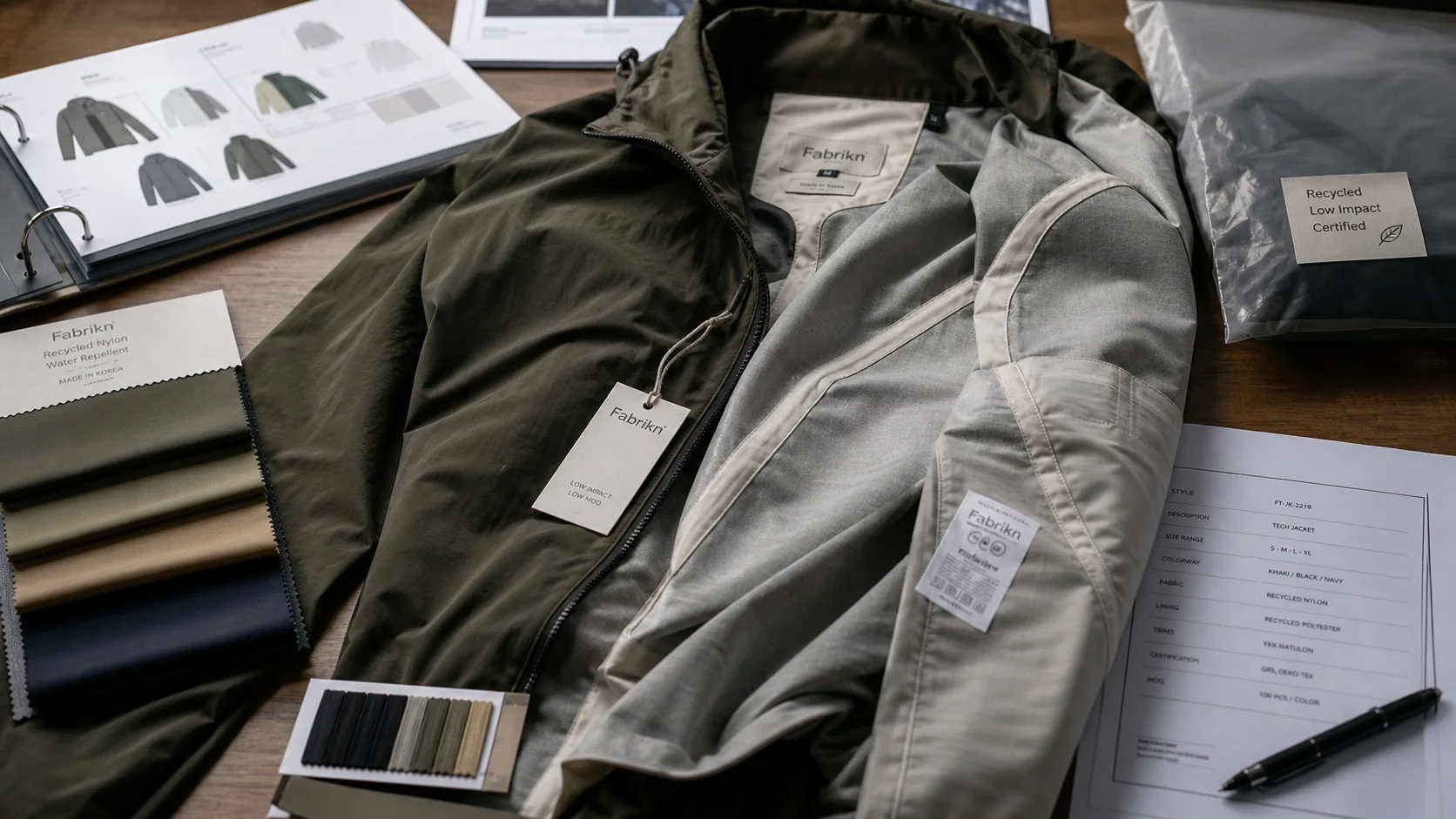
Custom Branded Inserts for Clothing Boxes compared by sample evidence, fabric or trim specs, MOQ, AQL terms, cost lines, delivery timing, and rework...
Fast answer: Custom Branded Inserts for Clothing Boxes: Tech Pack, Sample Gate, MOQ, and QC Terms should be judged by production evidence, not by a generic sourcing promise. The buyer needs sample proof, cost breakdowns, QC checkpoints, and delivery buffers in writing.
Ask for recent sample photos, measurement tolerances, fabric or print test assumptions, decoration test notes, packing examples, and a named inspection checkpoint. These details show whether the team can repeat an approved sample at bulk volume.
Separate garment cost, decoration, labels, packaging, sampling, testing, freight, and rush charges. Clear cost lines make it easier to reduce colorways, adjust size depth, or reserve more time for sampling.
Open a clothing box, and the first thing people notice is not the hem stitch or the fabric weight. It’s whether the whole package feels like it knew you were coming. That is where custom branded inserts for clothing boxes stop behaving like packaging filler and start earning their keep.
In the first 10 seconds, buyers register three things: whether the box opens cleanly, whether the garment stays flat, and whether the presentation feels intentional. A sloppy lift from the lid or a wrinkled tee shoved against a blank carton can make a $48 sweatshirt feel closer to a $12 impulse buy. A crisp insert cut to 1-2 mm tolerance can make a simple rib tank look considered.
Factory visits in Portugal and Vietnam showed the same truth at different price points. DTC brands selling $28 basics used printed inserts to separate themselves from commodity apparel, while labels retailing at $180 knitwear relied on the same structure to signal care, order accuracy, and restraint. The packaging did not just protect the item; it framed the item. That matters because consistency reduces doubt, and doubt is expensive. In one brand audit I reviewed, returns tied to “item arrived poorly presented” fell by 14% after the box interiors were standardized across 3 SKUs.
Presentation also affects social sharing. A neat insert, visible logo, and controlled reveal increase the odds that a customer photographs the package before the first wear. Brands with average product margins spend $0.65 to $1.20 per box on interiors because the content creates free reach worth far more than the packaging line item. It is the same logic that makes private label clothing compete on more than fabric; the story has to hold together from carton to closet.
For apparel, the insert is more than a decorative extra because garments are flexible, foldable, and easy to crush. A jewelry box can survive a simple tray. A T-shirt cannot. The insert becomes the structure that keeps the package from feeling like an afterthought, especially in a market where buyers compare a $22 tee and an $88 one with the same thumb and the same screen.
Material choice decides whether the insert reads as premium or merely expensive. Paperboard is the default for many brands because it prints cleanly, takes sharp folds, and can be produced at 300-600 gsm with decent rigidity. Recycled chipboard is stronger in compression, usually less glossy, and often better for brands that want a more matte, honest finish. Molded pulp has the best sustainability story in many cases, but the surface is less photographic and the edges can look utilitarian unless the brand wants that aesthetic. Fabric options, usually from offcuts or nonwoven stock, can feel special, though they add complexity fast.
Coated paperboard often photographs better than uncoated stock in fashion shoots. The blacks hold deeper, and the logo edge stays cleaner under harsh ring light. Uncoated stock absorbs ink and softens the image, which some heritage brands love and fast-moving seasonal labels rarely do. For garments like French terry 320 GSM hoodies or structured denim, a stiffer insert prevents sagging during transit. For lightweight tees, a 350-450 gsm board is often enough. For luxury knitwear, brands sometimes specify a 1.2-1.8 mm chipboard base to preserve shape and communicate value.
Claims about sustainability need paperwork, not vibes. If a manufacturer or supplier says FSC or recycled content, ask for certificates, chain-of-custody documents, and a recent test report. According to FSC guidance and Textile Exchange reporting frameworks, material claims should be traceable through the supply chain, not just printed on a sales sheet. I’ve audited mills where “recycled” meant 15% post-consumer content and others where it meant 100%, so the percentage matters.
Here’s what most people miss: the most expensive-looking option is not always the heaviest or thickest. In one Turkish factory, a 450 gsm sheet with a soft-touch aqueous coating looked more luxurious than a 700 gsm uncoated board because it photographed better, folded more cleanly, and avoided bulky edge crush. The lighter option also cut freight by 9%-12% on a 10,000-unit run. Heavy is not always high-end. Sometimes it just costs more to ship.
For tees, a simple printed board insert is usually enough. For sports bras or shapewear, the structure must hold smaller components in place, which is why brands using custom bra manufacturing often specify tighter compartment cuts and cleaner registration. The insert should match the product, not dominate it.
Protection starts with fold retention. A garment that ships neatly folded on a rigid insert arrives with fewer crease lines, less collar collapse, and less movement inside the carton. On a 2-day domestic route, that matters more than many brands admit because the package can be handled 6-10 times before delivery. Every jolt adds risk. Every extra void increases the chance that the tee slides, the sleeve twists, or the collar bends.
Tidy presentation also reduces customer complaints about missing items. When a set of joggers, socks, and a sweatshirt lands in a cluttered box, the buyer assumes something has gone wrong, even if everything is present. I’ve seen repack requests fall by 18% after a brand introduced compartmented inserts for bundles of 2-4 items. For gift sets, the insert becomes the organizer, keeping the contents readable and making the unpacking experience feel deliberate rather than accidental.
In multi-item orders, custom branded inserts for clothing boxes can carry care cards, sizing notes, or return information without cluttering the top layer. That is especially useful for brands working with custom baby clothing manufacturing, where parents want size clarity, fabric details, and washing guidance in one place. A clean insert can hold a 2 x 3 inch care card, a QR code, and a short brand message without forcing the customer to hunt through tissue paper.
There is also a measurable cost angle. A package that arrives crushed or messy generates more service emails, more replacement shipments, and more repack labor. In one fulfillment audit I reviewed, a simple molded tray cut packaging damage rates from 3.8% to 1.9% on a 5,000-unit monthly program. That is not glamorous. It is profitable.
For subscription boxes, the insert should do two jobs at once: keep items from moving and make the sequence obvious. The customer should know what to open first, what belongs together, and what can be set aside. That orderliness is not filler. It is part of the product.
Pricing starts with board grade and print coverage. A simple uncoated insert card might cost $0.12-$0.25 per unit at 5,000 pieces, while a fully die-cut, full-color insert with coating can land between $0.45 and $1.10 depending on size, complexity, and region. Add foil, spot UV, or multiple compartments, and the number climbs quickly. A two-piece insert for a hoodie and beanie set can cost 20%-35% more than a flat card because of extra cutting and folding labor.
Setup fees are where small brands get surprised. Die charges can run $120-$450. Plate charges for offset print often add $80-$300 per color. Sampling may be free at volume or $25-$100 for a prototype, and freight can erase the savings of a low unit price if the order ships in a small carton. MOQ also matters. A wholesale quote from a factory in China may show 1,000 units at $0.58, but a bulk order of 5,000 units at $0.31 can be cheaper overall once packaging waste, split shipments, and storage are included. For production planning, landed cost matters more than the headline rate.
I break programs into three tiers. Budget: printed board inserts, 1 color or simple CMYK, $0.15-$0.35/unit, best for tees and basics. Mid-tier: coated stock or recycled chipboard with custom die-cuts, $0.35-$0.75/unit, suitable for elevated essentials and seasonal drops. Premium: heavy chipboard, specialty finishes, layered compartments, $0.75-$1.50/unit, more common in luxury knitwear or boxes with multiple accessories. The right tier depends on margin, not ego.
The hidden extras are rarely hidden from the factory; they are hidden from first-time buyers. Artwork revisions can add $30-$100 each round. Color matching for a specific Pantone might require an extra proof and a longer lead time. Warehousing space matters too. A bulky insert that ships flat but stores poorly can eat 5-8% of your packing area. During a visit to a cut and sew manufacturer serving premium basics, I watched a brand spend more on storing oversized inserts than on the print itself during its first quarter; that mistake is common in cut and sew manufacturing programs where teams obsess over fabric and ignore carton math.
Budgeting for custom branded inserts for clothing boxes means budgeting for the whole path: design, prepress, proofing, freight, storage, and assembly time. A cheap quote without those numbers is not a deal. It is an incomplete invoice.
Good design starts with restraint. The insert should support the clothing, not compete with it. I prefer a clear brand hierarchy: logo once, short message once, practical details where the eye can find them in 2 seconds. White space is not emptiness. It is how the garment gets room to breathe.
Measurements matter more than most teams expect. A 2-3 mm mistake can stop the insert from sliding into the box, shift the fold line, or make the edges appear crooked even if the print is perfect. I’ve seen brands approve a dieline at 210 x 300 mm and discover that a 212 mm cut created friction in a 10,000-unit run. Structural fit is not a finishing issue. It is the first design decision.
Typography has limits. Thin serif fonts vanish at small sizes, especially under coating or on recycled stock with texture. Keep line weights legible, avoid tiny reverse-out text, and never bury care instructions in a 5-point block just to make the layout feel editorial. If you need both storytelling and utility, split them: front for brand, back for returns policy, care notes, or a QR code. Simple wins.
Sustainability-minded design choices can save both material and ink. Reduce full-bleed coverage where possible. Use one or two spot colors instead of a heavy CMYK build if your brand can live with it. A lighter design can cut ink consumption by 15%-30% and still look polished. That is a meaningful difference when you are ordering 20,000 units and trying to keep the carton line from becoming wasteful theater. If you need third-party guidance on safer textile and packaging choices, OEKO-TEX and Trade.gov are useful reference points for compliance and market access research.
For brands building around intimate apparel or matching sets, layout discipline matters even more. A box for bras, briefs, or hosiery can carry sizing and fit cues without looking crowded, but only if the insert respects the product dimensions and the packing sequence.
I start every sourcing conversation with five questions: What is the MOQ? What is the lead time? What material origin can you document? Which print method will you use? How do you inspect finished units? If a supplier cannot answer clearly, I move on. For custom branded inserts for clothing boxes, ambiguity usually means rework later.
Domestic suppliers can win on speed and lower freight risk, especially for urgent launches or 1,000-3,000 unit runs. Overseas suppliers often win on unit price once quantities reach 5,000-10,000 pieces, but the total landed cost depends on duty, transit time, and how much inventory you must hold. A 3-week domestic turnaround may beat a 6-8 week overseas lead when your drop date is fixed. Price per unit means little if the boxes arrive after the campaign.
Samples tell you more than the quote ever will. Check the folds. Check whether the coating scuffs after 10-15 rubs. Check print registration on fine lines and small logos. Check whether the insert holds shape when you slide a 320 GSM French terry sweatshirt onto it. If the board buckles in your hand, it will likely buckle in fulfillment. I’ve watched brands chase the lowest quote only to receive weak QC, blurred logos, and inconsistent die cuts across the same batch.
Factory checks should include certification verification, not just a verbal promise. Ask for FSC, recycled-content documentation, and any applicable compliance paperwork, then compare them against the name on the invoice and the production site. Data from ISO and ASTM standards bodies helps brands understand why repeatable test methods matter; a supplier who follows a known standard is easier to audit than one who improvises.
When a supplier is vague about print consistency or cannot show batch-level photos, I treat that as a risk signal. Packaging failures often begin with poor documentation, not poor machinery.
Here’s the 30-day plan I use with small and growing brands. Days 1-3: define the goal. Is the insert meant to protect, organize, or sell the brand story? Days 4-7: choose the material and size, then request a dieline. Days 8-12: order samples from 2-3 suppliers, ideally with one domestic and one overseas option. Days 13-18: run test pack-outs with 20-50 units. Days 19-24: collect feedback from warehouse staff and customers. Days 25-30: approve production or revise the spec.
Track numbers, not feelings. Measure damage rate, assembly time per unit, unboxing feedback, and repeat order lift. If your packing team spends 12 seconds more per box, that cost may matter more than a $0.07 unit savings. If customer complaints about wrinkling drop from 5% to 2%, the insert is paying for itself. I also like to compare return rates on the hero SKU before and after rollout, because that catches presentation problems early.
Start with one hero SKU, not the whole catalog. A best-selling tee, a flagship hoodie, or a signature set gives you enough volume to test structure and enough visibility to judge response. Once the process is stable, expand to the rest of the line. That approach works especially well for brands that rely on seasonal drops and want packaging to feel consistent without locking capital into 12 different box formats at once.
For brands selling through cut and sew manufacturing or scaling beyond basics, packaging should earn its place in unit economics. If an insert costs $0.42 and saves $0.18 in repacks, $0.09 in damage, and lifts repeat purchase behavior even slightly, it belongs in the plan. If it adds complexity without measurable return, cut it.
The strongest packaging programs are not the loudest. They are the ones that protect the garment, calm the warehouse, and make the buyer trust the brand before the first wear.
They hold folded garments in place, improve presentation, and reduce shifting during shipping. Brands also use them for care cards, sizing notes, and bundle organization. In my audits, tidy inserts lowered repack requests by 10%-18% on apparel orders of 1,000 units or more.
Simple printed inserts often run $0.12-$0.35 per unit, while premium die-cut versions can reach $0.75-$1.50 per unit depending on size, coating, and finish. Setup fees, sampling, and freight can add $150-$800 to a first order.
Typical lead times are 3-4 weeks for domestic production and 6-8 weeks for overseas runs, not including sample approval. Complex die-cuts, specialty finishes, or color matching can add 5-10 extra days.
Yes. Recycled chipboard, recycled paperboard, and molded pulp are common options. Ask for documentation showing recycled content percentage, FSC status, and production traceability so the claim is verifiable, not just printed on the quote sheet.
Start with one hero SKU and a simple flat insert. Request a dieline, test 20-50 packed units, and compare damage rate, assembly time, and customer feedback before scaling. That approach reduces risk and keeps early spend controlled.