
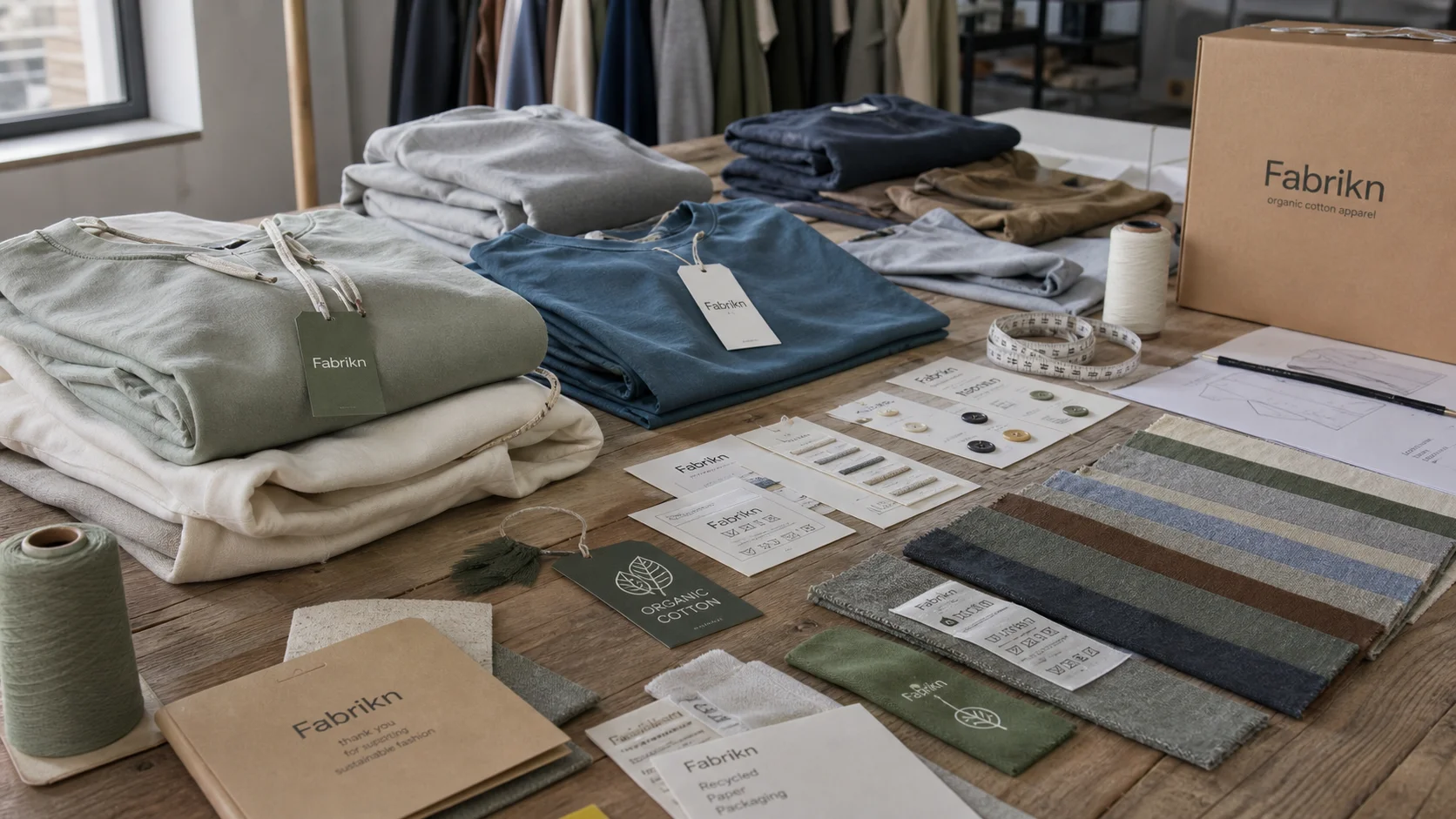
Custom Care Instruction Cards for Clothing Boxes compared by sample evidence, fabric or trim specs, MOQ, AQL terms, cost lines, delivery timing, and rework...
Fast answer: Custom Care Instruction Cards for Clothing Boxes: Tech Pack, Sample Gate, MOQ, and QC Terms should be judged by production evidence, not by a generic sourcing promise. The buyer needs sample proof, cost breakdowns, QC checkpoints, and delivery buffers in writing.
Ask for recent sample photos, measurement tolerances, fabric or print test assumptions, decoration test notes, packing examples, and a named inspection checkpoint. These details show whether the team can repeat an approved sample at bulk volume.
Separate garment cost, decoration, labels, packaging, sampling, testing, freight, and rush charges. Clear cost lines make it easier to reduce colorways, adjust size depth, or reserve more time for sampling.
Pretty boxes can still deliver disasters. A $220 silk blouse, wrapped in tissue and ribbon, might make it to the doorstep only to land on the sink with one blind guess and come out ruined. That’s the gap custom care instruction cards for clothing boxes are supposed to plug. Nice presentation up front, but the care side feels thrown together.
Just look at returns data; it slaps you with that lesson. In apparel, an 8% return rate chews through margin, and one avoidable return often costs more than the insert: a card might be $0.08 to $0.35, while a single return gulps $6 to $18 for postage, inspection, repacking, and customer service. Add a reprint cycle for damaged goods and the total climbs fast. No one likes to budget for that.
On factory visits in Vietnam, Portugal, Guangzhou’s Baiyun district, Dhaka’s Savar industrial complex, Ho Chi Minh City’s Thu Duc finishing houses, and Istanbul, the same split kept showing up. Luxury brands were paying for heavy boxes, embossed logos, and satin tissue, yet the care guidance got reduced to “Follow label instructions.” Mid-market labels—some at $28 to $45 retail—often printed clearer wash temperatures, drying rules, and ironing details, even though Guangzhou’s Heidelberg Speedmaster and Komori presses cost almost as much as the paper insert itself. The pricier garment was not always the better taught one.
In Ho Chi Minh City, boards arrived from suppliers using 100% GRS-certified recycled fibers, the sheets were trimmed with Bobst die-cutters, and soft-touch laminations went on with OEKO-TEX Standard 100 compliant UV adhesives before the inserts sailed 18-22 business days to European distribution centers; the same WRAP- and BSCI-audited subcontractors handled trimming for Istanbul-based orders.
Packaging is not just presentation. It is post-sale support. A box opens once, but the care card may get a glance three or four times in the first month, especially for premium apparel, DTC drops, and gifts where the recipient never picked the product. Well-made custom care instruction cards for clothing boxes calm uncertainty right when trust is most fragile.
For brands building private label programs, the box insert should sit beside tech packs, labels, and fit notes as part of the product system. It works especially well in private label clothing services, where the brand controls the customer experience but not every production detail. The insert becomes the bridge.
The strongest care card stays short, specific, and readable in a hurry. Buyers actually use six things: fiber content, wash temperature, drying method, ironing guidance, stain handling, and no-bleach warnings. If a card can’t answer those in under 20 seconds, it is trying too hard.
Lead with the highest-risk actions: “Cold wash 30°C,” “Lay flat to dry,” “Do not bleach,” then follow with exceptions such as “Reshape while damp.” For knitwear or brushed fleece, a tiny note can prevent a flood of pilling complaints. Denim needs a heads-up about color transfer. Activewear should tell customers to skip fabric softener, which can wreck stretch recovery.
Icons help, but only when plain language sits beside them. A sun symbol works. A crossed-out iron works. A tiny washer icon with no text does not help much when someone is rushing or reading in a second language. Simple icon systems beat decorative illustration almost every time in my audits.
Brands can add more, but only if the extra content earns its place. QR links to a 45-second care video, repair guidance, recycling instructions, and a one-line sustainability note can all work. Claim recycled content? Say the number. If a garment contains 60% recycled polyester, write it plainly. Data from Textile Exchange shows why that matters: buyers are getting better at spotting fluff.
When you explain fiber content, say “60% GOTS-certified organic cotton, 40% recycled polyester with a GRS certificate,” and spell out the wash steps with the same honesty. Print shops in Guangzhou and Dhaka now stock OEKO-TEX Standard 100 certified inks and adhesives so the card can sit beside a baby garment without triggering skin concerns or contradicting the sewn label.
Compliance is no place for guesswork. U.S. care labeling expectations differ from EU and UK practices, so packaging cards should never contradict the sewn-in label or hangtag. If a care card says cold wash while the sewn label says lukewarm, you’ve created a support problem before the first wash. For garments produced through cut and sew manufacturing, double-check that consistency before approving print files.
Paper choice changes how the card behaves in the box and in the hand. Uncoated stock is best for scribbling notes or checking off steps. Coated stock gives sharper color and better moisture resistance. Recycled paper supports sustainability claims, but surface texture and brightness can vary. Heavy board, usually 350 to 450 gsm, feels premium in gift packaging and outerwear boxes.
Finish is where teams often overdo it. Matte is readable. Soft-touch feels expensive, but it can scuff in transit. Spot gloss can highlight a logo or key icon, yet too much shine creates glare under retail lighting. Embossing adds tactility for bridal or occasionwear, though it also pushes cost up and may slow production by 2 to 5 days.
Flat insert cards are the cheapest and fastest. Folded cards hold more content, which helps when you need care instructions in English, Spanish, and French on one piece. Card-plus-hangtag hybrids work well for premium or gift formats because the same asset can travel from box to garment rail. I’ve seen this used effectively on cashmere sets priced at $140 to $260, where the card also doubled as a brand story piece.
Durability matters more than most teams expect. A card that curls in humid warehouses or smudges under stack pressure is a weak card, even if the design looks beautiful. In one coastal China factory, 10,000 inserts warped because the paper had sat for three weeks in a damp room before packing. Not a design problem. A handling problem.
Match format to category. Knitwear needs clarity around stretching and drying. Activewear needs sweat and wash-frequency guidance. Bridal and occasionwear benefit from a more premium insert with repair and preservation notes. Outerwear often needs space for shell fabric, fill, and liner care differences. For babywear, brands working through custom baby clothing manufacturing often choose softer wording and larger icons because exhausted parents do not want to decode a wall of text at 11 p.m.
At the Ho Chi Minh City and Guangzhou shops that print these cards, offset hits pass through Heidelberg Speedmaster XL 105 or Komori Lithrone presses, then move through UV curing tunnels and Bobst die-cutters before the final trimming. The same operations are WRAP and BSCI audited, and the factories share their audit reports with brands so the inserts pair credibly with GOTS-certified garments. Some of those shops also stock Mitsubishi thermal laminators and 3M 300LSE adhesives for lamination, preventing delamination when the card is tucked into a humid shipment.
A strong brief makes the supplier's job narrower and the quote more reliable. For custom care instruction cards for clothing boxes, include the target customer, sales channel, expected order quantity, size range, decoration needs, packaging requirements, and delivery market. Then call out the details most likely to affect the result, especially material grade, print tolerance, and barcode size.
The brief should also explain what cannot change. Some brands care most about hand feel, some about price, some about launch timing, and some about retail compliance. When those priorities are not written down, suppliers tend to optimize for whatever is easiest to quote. Clear priorities help the factory make better tradeoffs before the first sample is cut or printed.
Ask the supplier to respond with assumptions, not just a price. A useful reply states MOQ, sample route, production capacity, inspection plan, packing method, and freight handoff. If the answer is vague, the project may still work, but it needs a tighter pre-production stage before money and calendar pressure build up.
The best time to catch problems is before the pre-production sample is approved. Check measurements, color, placement, material behavior, shrinkage, construction, labels, and packaging in the same review instead of approving each item in isolation. Many bulk issues are not caused by one dramatic mistake; they come from several small unchecked assumptions.
For custom care instruction cards for clothing boxes, pay special attention to folding method, pack-out sequence, and retail compliance. These details often look minor in an email but become expensive once cutting, printing, sewing, packing, or shipping begins. A simple checklist with owner, due date, and approval status keeps the brand team and factory aligned.
Bulk production should not start until the supplier can explain how the approved sample becomes a repeatable production standard. That means reference sample storage, line instructions, inline checks, final inspection, and defect handling. A factory that can describe this process clearly is usually safer than one that only promises speed.
Price differences are useful only when the quotes cover the same work. Compare sample cost, material source, trims, decoration, packaging, testing, inspection, and freight assumptions. A low unit price can become expensive if it excludes items the brand needs before launch.
Timeline promises deserve the same scrutiny. Ask what happens if the first sample needs revision, whether materials are in stock, when the production slot is reserved, and how export packing is handled. The most reliable supplier is often the one that gives a realistic calendar instead of the fastest optimistic answer.
Before making the final decision, write down the specification, approval owner, delivery expectation, and the one or two risks that would cause the most trouble if missed. For custom care instruction cards for clothing boxes, this usually means checking material grade, print tolerance, barcode size, and the support process after the order is placed.
This last review does not need to be complicated. It simply makes the decision easier to repeat, easier to explain, and easier to verify when the finished product or jewelry arrives.
One useful way to pressure-test the decision is to ask what would happen if the order had to be repeated in six months. The answer should still be clear: the same material grade, the same print tolerance, the same acceptance standard, and the same communication path. If a second order would depend on memory or guesswork, the first order is not documented well enough yet.
Another useful check is to separate preference from requirement. Preference is the look, wording, or finish the brand likes. Requirement is the measurement, tolerance, certificate, material, or delivery condition that cannot fail. Good buying decisions keep both visible, so the final choice is not pushed around by the last email, the cheapest quote, or the prettiest sample photo.
Finally, ask who owns each approval. A project with one accountable owner for sample review, one owner for final content or artwork, and one owner for delivery sign-off usually moves faster than a project where every decision is shared loosely across a team. Clear ownership reduces delays and makes the finished result easier to judge.
The finished result should be judged against the approved standard, not against a vague idea of what looked good at the start. Compare the delivered item with the approved sample, written specification, photos, and any measurement or certification notes. If the result meets those points, the project is easier to reorder and easier to improve later.
If something is off, record it in practical terms: where the issue appears, how often it appears, whether it affects use, and what change would prevent it next time. That turns a complaint into a useful production note and helps the next order become more consistent.