
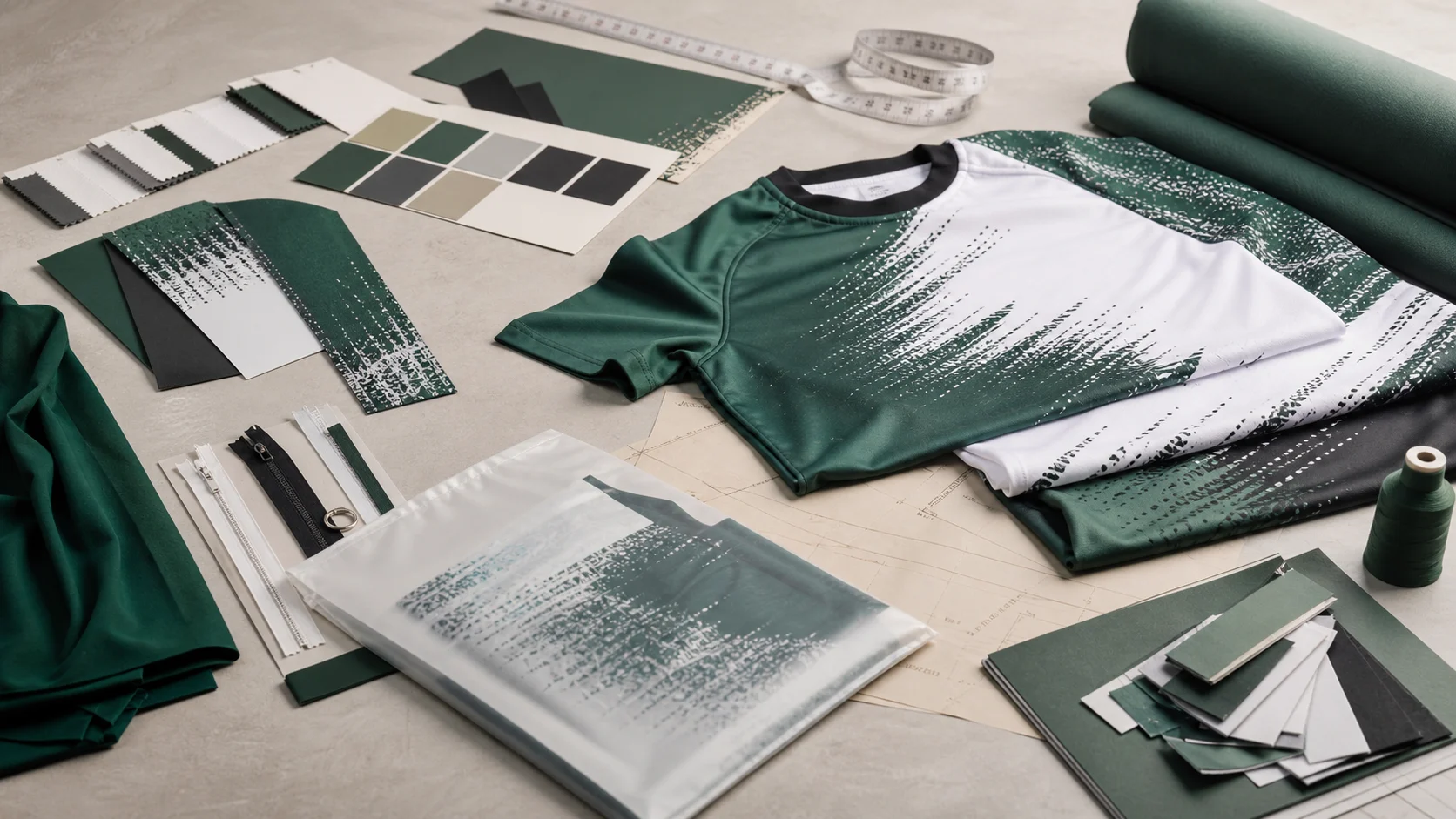
Clothing Subscription Box Inserts with checks for samples, fit, MOQ, QC evidence, pricing terms, and delivery risk.
Fast answer: Clothing Subscription Box Inserts: Message, Size, Paper, and Packing should be judged by production evidence, not by a generic sourcing promise. The buyer needs sample proof, cost breakdowns, QC checkpoints, and delivery buffers in writing.
Ask for recent sample photos, measurement tolerances, fabric or print test assumptions, decoration test notes, packing examples, and a named inspection checkpoint. These details show whether the team can repeat an approved sample at bulk volume.
Separate garment cost, decoration, labels, packaging, sampling, testing, freight, and rush charges. When every cost line is visible, it becomes easier to reduce colorways, adjust size depth, or reserve more time for sampling.
The first box tells the truth before the customer does. Custom packaging inserts for clothing subscription boxes can make a brand feel considered in the first 10 seconds, cut damage claims, and lower returns by 8% to 15% in some apparel pilots. If the presentation looks sloppy, the clothes start at a disadvantage.
Inside the retention problem sits a product mix that looks fine on a spreadsheet. A brand can source solid French terry at 320 GSM, choose clean trims, and still lose subscribers because the box arrives with wrinkled knits, unclear sizing, or accessories rubbing against delicate fabric. Apparel is not beauty. A serum bottle does not need a fold map, but a blouse in size XS and a knit in size XL need different pressure points, different layering, and different care cues. That complexity shows up fast in refunds.
In Vietnam and Portugal, factory floors made the contrast obvious. One shallow corrugated platform kept collars crisp during a 3- to 4-week ocean transit. A thin card with no side support let rib knits slump, and the crease marks were strong enough to trigger complaints within 72 hours of delivery. Same garment. Different presentation.
Premium and value-tier boxes prove the point from opposite sides. A premium box using rigid board, printed care panels, and a simple wrap band can lift perceived value by $12 to $20 without changing garment cost at all. A budget box using generic tissue and no structure may save $0.18 per pack, then pay it back through support tickets and slower reorders. The unit economics are not subtle.
Not every subscriber wants the same thing. Urban customers buying a curated capsule box often expect clean separation for 3 items, a lookbook card, and enough polish for social sharing. Regional value shoppers care more about fit notes, return instructions, and durability during a 7- to 10-day delivery cycle. clothing packaging solutions only work when the insert matches actual garments, actual fold sizes, and actual shipping stress. Inserts are not filler; they are a control point for cost, presentation, and retention.
Inside the box, custom packaging inserts for clothing subscription boxes have a blunt job: hold the product, protect the finish, and keep the customer calm. That sounds simple until a blouse slides onto a metal zipper, a belt rubs a print surface, or a matching set shifts during a 600-mile truck ride and arrives looking like it lost a fight with the packing line.
Structural work comes first. Inserts separate coordinated items, stop abrasion, and keep accessories from damaging fabric. A tissue divider can isolate a silk camisole from denim. A belly band can hold a shirt to the right width. A printed card can explain styling, care, and pairing in one small surface area. Corrugated platforms work well for layered outfits. Molded pulp trays are better for mixed kits with jewelry, scarves, or small accessories. Garment-fold supports keep collars and hems aligned so packers do not over-handle the piece.
Then comes the message layer. A clean insert turns the opening sequence into a guided reveal instead of a scramble. That matters in subscription apparel, where the customer may compare 2 tops, 1 trouser, and 1 outer layer in a single sitting. When the box opens in a logical order, customers spend less time re-folding, less time guessing care instructions, and less time wondering which piece belongs with which look.
Materials behave differently in transit. Paperboard is easy to print, easy to recycle in many markets, and often available with recycled content above 60%. Recycled kraft feels more honest but can show scuffs earlier. Molded pulp performs well on shock absorption, though fiber loss can be a concern if the tray is low-grade or poorly finished. Plastic alternatives can hold shape, but disposal friction is higher in many regions, and that friction is real to customers, not theoretical.
The thing nobody tells you: thicker board is not always better. In the factories I visited, a 24 pt sheet with better fold memory and tighter die-cut tolerance outperformed a heavier 32 pt board that warped, cracked at the score, and added 40 to 60 grams per box. Fit beats bulk every time.
That is why custom packaging inserts for clothing subscription boxes have to match the garment, not just the brand mood board. A knit polo, a woven skirt, and a padded vest each demand a different pressure profile, and the wrong insert can increase returns even when the fabric and construction are solid. For brands doing private label launches, private label clothing services and insert design should be planned together, because packaging and product finish fail or succeed as one system.
Pricing for custom packaging inserts for clothing subscription boxes starts low on paper and rises quickly once you add finishing, assembly, and freight. A simple printed card can run $0.06 to $0.18 at 25,000 units, while a die-cut paperboard platform may sit at $0.22 to $0.45 at 5,000 units and $0.12 to $0.28 at 25,000. Molded pulp trays often fall in the $0.30 to $0.75 range at medium scale, but tooling can add $800 to $3,500 before the first shipment leaves the factory.
Volume changes everything. At 500 units, a custom run usually pays more for setup than material. I’ve seen pricing of $0.85 to $1.60 per unit for a small paperboard insert because the cutting die, sample revision, and hand assembly dominate the job. At 5,000 units, the same concept may drop by 30% to 50%. At 25,000 units, print efficiency, nesting, and fewer touchpoints can halve the landed cost again. MOQ 500 pieces is common for early-stage brands, but MOQ 5,000 is where costs start to behave rationally.
Hidden costs show up in lamination, embossing, foil, and ink coverage. A full-bleed printed insert may add $0.08 to $0.20 over a single-color design. Embossing can add another $0.03 to $0.10. If the insert needs folding, gluing, or pre-assembly, warehouse labor may cost more than the board itself. I watched a supplier spend 14 seconds per unit aligning a two-piece card platform. Trivial at 1,000 units. Expensive at 40,000.
Freight can flip the math. A lighter insert with a slightly higher print cost may save 8% to 12% on shipping compared with a heavy molded component. That matters on air shipments, where every 100 grams counts. When a brand sources more complex garments through cut and sew manufacturing, the packaging line has to reflect the same discipline, because a beautiful garment paired with an oversized insert becomes a margin problem.
My simple decision framework is this. Premium brands should spend on structure, finish, and repeatability. Mid-market subscriptions should optimize for protection, clear care notes, and low assembly time. Discount-first operators should keep inserts to one printed card, one divider, and minimal die-cutting. Paperboard is the safest default. Molded pulp makes sense for mixed accessory kits. Specialty finishes belong only where customer lifetime value justifies them.
Subscription apparel is judged in layers. The box arrives. The customer opens it. The items sit in order. The fit decision happens later. Inserts affect all four moments, and the sequence matters more than many teams admit. A neat opening raises the odds of social sharing, but it also lowers friction. Customers keep what they can understand quickly. That can mean 1 fewer return per 20 boxes, which is meaningful when each return costs $6 to $14 to process.
Care instructions reduce avoidable returns more effectively than many brands expect. A linen blend that wrinkles in transit is not a defect. It is a care education issue. A nylon-elastane legging with a hidden heat warning needs a label that says so clearly. Add styling notes, such as “wear with ankle boots” or “pairs with item 3 in this box,” and you reduce confusion. I’ve seen return rates fall from 18% to 12% after a brand added one precise care card and one fit note per outfit.
Regional behavior differs. Premium urban shoppers in New York, London, or Seoul often read presentation as a signal of product quality, and they will post unboxing clips if the layout feels intentional. Value-led regional subscribers in secondary markets care more about durability, legibility, and speed. They want to see the size, the care symbols, and the reason the piece earns a place in the box. International shipments add another layer because customs delays, longer transit, and humidity can make weak inserts fail before delivery.
Brands should track a narrow set of metrics: return rate by style, damaged item rate, unboxing completion rate, reorder rate within 60 days, and ticket volume tied to packaging confusion. If the insert looks expensive but the reorder rate stays flat, the design is signaling status without improving behavior. That is decoration, not performance.
In a warehouse in Los Angeles, a team showed me how a 2 mm fold error on a printed insert created a visible skew in the box. The board cost difference was only $0.04. The trust cost was larger. Customers notice bad alignment faster than they notice good material. That is why simple, precise folding often outperforms a fancier surface finish.
The right supplier is not the one with the glossy sample folder. It is the one that can hit the same dimensions 1,000 times in a row. For apparel inserts, I look for material sourcing transparency, sampling in 7 to 10 days, die-cut accuracy within tight tolerances, and print consistency across reorders. Apparel-specific experience matters because garment folds are unforgiving. A tray designed for a candle will not behave like one designed for a ribbed sweater.
Domestic production usually gives the shortest lead time, often 10 to 21 days, plus easier communication and lower rework risk. Nearshore suppliers can offer 2- to 4-week transit windows and better freight economics than offshore routes, especially for North American brands shipping from Mexico or Central America. Offshore factories may win on piece price, but lead time can stretch to 4 to 8 weeks, and sample revisions can add another round if your file prep is weak.
Ask direct questions before sampling. What is the board caliper tolerance? How do they test edge crush? Can they match Pantone on coated and uncoated stock? Do they have in-house die-cutting or outsource it? How many QC checks happen before shipment? These details separate reliable partners from risky ones, because packaging failure is often a process failure, not a design failure. A capable manufacturer, whether in China or elsewhere, should be able to show production records, quality controls, and sample history.
Audit checkpoints should be specific: color consistency across the first and last cartons, board warp after 48 hours in humid conditions, odor from adhesives, ink rub after friction testing, and assembly fit with the actual folded garment. I have seen 2 factories produce identical artwork files with radically different outcomes because one team dried the ink for 12 hours and the other rushed it at 3.
Factory visits always reveal labor that brochures hide. A simple insert might require hand scoring, tab folding, spot gluing, then bundling into sets of 25. Those minutes become landed cost. A brand selling knitwear through custom baby clothing manufacturing channels learns the same lesson quickly, because soft goods punish sloppy dimensions. The lower the tolerance, the more the factory’s labor plan matters.
Start with a brief that is boring in the best way. Box dimensions. Garment count. Fold style. Fabric types. Print assets. Sustainability targets. A box might need to fit 2 tees, 1 knit pant, and 1 accessory pouch, all packed into a 13 x 10 x 3 inch mailer. If the items include silk, denim, and a coated jacket, the insert structure changes immediately.
Then move to sampling. Standard work can take 2 to 3 weeks from first file to first sample, then 1 to 2 revision rounds. Custom die-cut or molded options usually need 4 to 6 weeks for tooling and test fitting. Production windows vary from 7 to 14 days for print-only cards to 3 to 5 weeks for complex assembly. Test with real garments, not paper dummies. A 280 GSM jersey tee folds differently from a 420 GSM sweatshirt.
Run the transit simulation. Vibrate the packed box for 1 to 2 hours. Stack it. Tilt it. Hold it at high humidity if your market includes coastal regions or monsoon seasons. Then ask customer service what kinds of questions the pilot shipments trigger. If 20% of the calls are about “what goes where,” the insert needs clearer sequencing or fewer pieces.
Rollout needs discipline. Train assembly staff on fold direction and insertion order. Lock QC sampling at the start of each shift. Keep contingency stock for seasonal spikes, especially if you launch during Q4 or a spring refresh. I also recommend a version-control sheet, because small changes to copy or board thickness can break the whole pack-out line.
Brands already building garments through private label clothing services should align packaging sign-off with the final size set. That keeps the insert from arriving too early, before fit and assortment are fixed, which is how costly reprints happen.
The first mistake is overdesign. A layered insert with foil, spot UV, and multiple pockets may look premium in a sample room, then slow the pack line by 20 to 30 seconds per box. At 10,000 boxes a month, that is real labor. Worse, decorative folds can create pressure points that crush shoulders, crease collars, or trap lint. Function has to win.
The second mistake is ignoring warehouse speed. Brands often price only the board and print, then forget the labor to align, fold, and place each component. If one insert needs 3 actions and another needs 7, the landed cost gap can exceed the material gap. I have seen a warehouse reject a “better” insert because it added 2 minutes per 10 boxes. Tiny on paper. Ugly in the labor report.
The third mistake is sustainability theater. A recycled claim means little if the local recycling stream rejects the laminate, or if the glued components need separation the customer will never do. If you say recyclable, the disposal path needs to be clear in the market where the box lands. Data from OEKO-TEX, Textile Exchange, and the International Trade Administration show how seriously buyers now read material claims, but packaging still has to survive real household disposal habits.
Regional mismatch causes trouble too. A rigid board insert that works in dry California may warp in humid Singapore or coastal India. A minimalist card that feels clean in Sweden may read as under-packaged in Dubai. Climate, shipping distance, and customer expectations all alter the tolerance threshold. Same design, different outcome.
The best insert is the one customers barely notice because it simply works. It opens cleanly, protects the clothes, explains the purchase, and disappears into the experience. That is the standard worth paying for.
They hold garments in place, separate coordinated items, and protect fabric from abrasion during shipping. They also carry care notes, styling guidance, and return instructions. In apparel subscriptions, that combination can reduce avoidable returns by 5% to 15%.
Costs range widely by format and volume. Printed cards may cost $0.06 to $0.18 at 25,000 units, while die-cut paperboard inserts often run $0.12 to $0.45 depending on complexity. Small runs of 500 units usually cost far more per piece because setup and sampling are spread across fewer boxes.
Simple print-only inserts can be ready in 2 to 3 weeks, including proofing. Custom die-cut or molded formats usually need 4 to 6 weeks, and complex assembly may add another 1 to 2 weeks. If you need revisions, build in extra time for at least one sample round.
Yes. Recycled kraft, recycled paperboard, and molded pulp are common choices. The key is confirming how the material is actually recycled in the destination market, because coatings, adhesives, and mixed fibers can reduce recyclability. Ask the supplier for disposal guidance by region.
Source from a supplier that understands apparel folding, dimensional tolerance, and warehouse assembly speed. Domestic suppliers are usually faster, nearshore partners can balance speed and freight, and offshore production can lower unit price at higher volumes. The best choice depends on MOQ, transit time, quality requirements, and rework risk.