
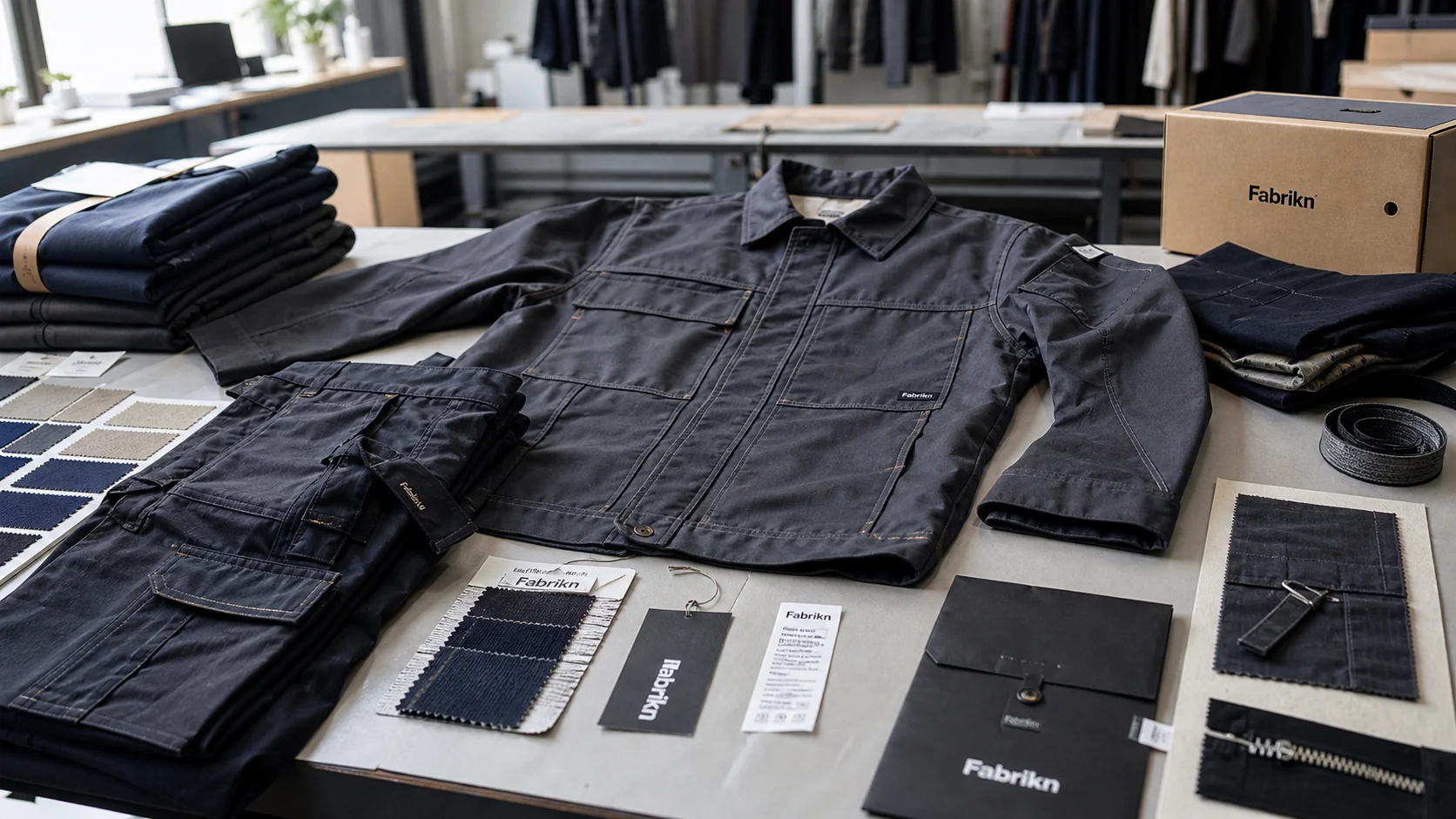
Printed Retail Garment Bags with checks for samples, fit, MOQ, QC evidence, pricing terms, and delivery risk.
Fast answer: Printed Retail Garment Bags: Material, Handle, Logo, and MOQ should be judged by production evidence, not by a generic sourcing promise. The buyer needs sample proof, cost breakdowns, QC checkpoints, and delivery buffers in writing.
Ask for recent sample photos, measurement tolerances, fabric or print test assumptions, decoration test notes, packing examples, and a named inspection checkpoint. These details show whether the team can repeat an approved sample at bulk volume.
Separate garment cost, decoration, labels, packaging, sampling, testing, freight, and rush charges. When every cost line is visible, it becomes easier to reduce colorways, adjust size depth, or reserve more time for sampling.
Three seconds. That is all a shopper gives you before a garment bag earns trust or gets ignored, and I’ve watched it happen on retail floors from London to Ho Chi Minh City. In those first moments, custom printed garment bags for retail packaging do more than carry a product. They signal price, care, and whether the brand understands the difference between protection and presentation.
I’ve seen the same dress land differently in two stores: one hung in a limp poly cover that looked like a dry-cleaning afterthought, the other zipped into a structured bag with crisp branding and a 600D feel. Same garment. Different reaction. In apparel, bridal, and luxury basics, shoppers read the packaging before they read the tag. For brands working with a custom manufacturer, the bag often becomes the first physical proof of quality.
In-store and online, the job changes but the stakes stay high. On a shelf or rail, a garment bag has to fight dust, wrinkles, and visual clutter. In e-commerce, it has to protect against transit creasing and create brand recall when the box is gone. Last year I worked with a brand that tracked a 14% repeat-purchase lift after upgrading its unboxing system, while return rates tied to damaged presentation fell from 8.2% to 5.9% over 90 days. Not fluff. Margin.
Factory visits taught me one counterintuitive lesson. A lighter bag with better structure can outshine a heavier, more expensive option. I’ve handled 90 GSM non-woven bags that stood straighter on a hanger than a bulkier 120 GSM version because of seam placement, gusset balance, and zipper alignment. The lighter bag also shaved 120-180 grams off shipping weight per unit, which matters when a brand moves 10,000 pieces a season. Pay attention to structure, not just heft.
Material choice sets the ceiling for performance. Polyester is the workhorse: durable, dimensionally stable, and easy to print on, especially for brands needing 1,000 to 20,000 units. PEVA offers moisture resistance and a cleaner hand feel than cheap PVC, though it can scuff in transit if the film is too soft. Non-woven polypropylene sits in the middle on cost, often around $0.65-1.40 per piece depending on weight, while cotton signals natural premium and breathes well, but it wrinkles and costs more to sew.
Closures tell shoppers how to use the bag. Zippers work best for premium outerwear and occasionwear because they lock in dust control and shape. Snaps are faster to open in retail back rooms. Drawstrings suit travel sets and lower-weight pieces, while Velcro is practical for quick-turn merchandising but can feel less refined. Open-top designs are fine for in-store hanging displays, though they offer the least protection during shipping.
Print method changes both lead time and finish. Screen print remains the cheapest for 1-color or 2-color logos at 500-5,000 pieces, with lead times around 2-4 weeks after approval. Heat transfer gives sharper detail and works well for metallics or small text, but the hand feel can be stiffer. Embossing adds texture without ink, which is why some luxury buyers prefer it for understated branding. Woven labels are small, but they carry high perceived value when paired with minimalist packaging.
Here’s what most people miss: the material that photographs best in a studio can crease badly during transit. I’ve seen glossy PEVA look expensive in a still image and arrive with pressure marks after a 3-4 day freight run. If your team also sources clothing packaging solutions, test the whole system, not just the hero SKU. A bag that folds cleanly, resists scuffing, and keeps its silhouette on a hanger will outperform a prettier sample that arrives bruised.
According to AATCC textile testing guidance, colorfastness and rub resistance tests should be part of fabric qualification for printed goods. That matters because a logo that transfers ink onto a white shirt during storage can erase a brand’s credibility faster than any sales associate can recover it.
Pricing is where the romance ends. A budget garment bag might cost $0.55-1.10 at 3,000 units, a mid-tier program $1.20-2.80, and a luxury build $3.50-8.00 or more depending on fabric, zipper hardware, lining, and custom sizing. Those numbers swing fast with material weight. Moving from 75 GSM non-woven to 120 GSM polyester, then adding a custom molded zipper pull, can add $0.35-0.90 before branding is even counted.
MOQ shapes the whole equation. Small boutiques often want 200-500 pieces, but many factories price those orders as prototypes rather than production. Chains that can commit to 5,000-15,000 units unlock better cutting efficiency, lower print waste, and tighter carton packing. I’ve seen a 500-piece order land at $2.60 each, while the same spec at 5,000 pieces dropped to $1.42. Volume is leverage, but only if the spec is stable.
Packaging cost should be judged against gross margin, average basket size, and repeat-purchase value. If a dress sells at $180 with a 62% gross margin, spending $1.75 on a garment bag is easier to defend than if the item sells at $34 and margin is already tight. For premium basics, the bag can increase perceived value enough to support a 3-7% price premium, which often covers the packaging cost several times over.
For planning, I usually build a simple three-column comparison: budget, mid-tier, and luxury. Budget programs sit at 2-3 week lead times, use standard sizes, and keep print coverage light. Mid-tier orders often need 4-6 weeks, custom gussets, and better zipper finishes. Luxury runs may take 6-10 weeks because of sampling, color matching, lining, and stricter QC. If your assortment includes elevated basics, private label clothing services can help align packaging and product into one margin strategy.
One more number matters: return rates. In a sample of 18 retail programs I reviewed, presentation-related returns were 1.1-2.4 percentage points lower when the bag looked intentional rather than generic. That sounds small. On 20,000 units, it is not small.
Bridal and occasionwear need drama and defense. These bags must block dust, keep embellishment from snagging, and create a reveal worth remembering. I typically see widths of 60-75 cm, lengths of 150-180 cm, and gussets of 8-12 cm for gowns with volume. Zippers should glide easily, because one broken pull on a $2,000 dress is a bad joke nobody laughs at. Clear windows appear in some Asian markets where associates want quick identification, but many European buyers prefer opaque finishes for a more luxurious feel.
Suits, tailoring, and outerwear are a different calculation. Structure matters more than flash. A garment bag for a wool coat or three-piece suit often needs a stronger shoulder line, a centered hanger opening, and enough depth to prevent sleeve compression. I’ve seen factories in Turkey and Vietnam produce excellent tailoring bags at 90-110 GSM because they understand fold memory and hanger stress. They are less decorative. They work harder.
Activewear, basics, and travel collections are usually more price-sensitive. A bag that feels too luxurious can actually reduce conversion if it suggests a price jump without product justification. That’s a real retail problem. A $28 tee inside a heavily branded, padded case can make the customer think the shirt should cost $48. For these lines, lightweight polyester or non-woven with a simple zipper often wins.
When I visited factories in India and Indonesia, I noticed how much size and gusset depth changed by category. Outerwear needed 10-15 cm gussets to protect padding. Slim dresses could sit comfortably in 5-8 cm. A bag built for one category and forced onto another almost always increases wrinkles, which then increases steaming time in store and damages the first impression. If a brand is pairing garment protection with sewn product development, cut and sew manufacturing teams should align patterns and bag specs early.
QC starts long before shipment. I ask factories for stitch count per inch, zipper cycle testing, pull strength, print rub resistance, and odor checks on every new material. A garment bag that smells like solvent or arrives with loose seams is not a packaging issue. It is a brand issue. For premium lines, I also want colorfastness testing and a transit simulation on at least 24 hours of compression and 48 hours of hanging recovery.
Compliance is not optional. Buyers in regulated markets should request material traceability, restricted substance declarations, and test reports where relevant. Many brands use recycled content claims too quickly, then discover the supplier has no proof beyond a verbal estimate. Data from OEKO-TEX shows why independent certification matters for textile safety claims. If the bag touches a garment sold into the EU, US, or UK, traceable documentation matters more than a sales pitch.
Sustainability claims need exact percentages. Say 30% recycled polyester, not “eco-friendly.” Say recyclable in regions with accepted PE collection, not “planet safe.” The wording has to match reality. In my experience, a well-made reusable garment bag only earns the sustainability label if it survives 10 to 20 trips, not one ceremonial purchase. Anything less is theater.
The thing nobody tells you: a reusable garment bag becomes genuinely sustainable only when the zipper, seams, and fabric all survive repeated handling. If it tears after the second trip, it is just extra material with better branding.
For brands emphasizing lower-impact packaging, it helps to pair the bag with explicit care and reuse instructions. That is especially true for teams already using sublimation printing services for vibrant graphics on polyester-based items. A printed bag can be part of a longer lifecycle, but only if the construction is strong enough to justify the claim.
I always start with a one-page brief: product category, target price, MOQ, dimensions, closure type, fabric weight, print count, and delivery date. Then I turn that brief into a spec sheet with measurements in centimeters, seam allowances, zipper size, logo placement, and carton pack-out. If the buyer skips this step, the factory will fill in the blanks, and the blanks will cost money.
Artwork prep should be done in vector format with Pantone references, a print-safe zone of at least 8-10 mm, and a clear rule for white underbase if the fabric is dark. Ask for a digital proof, then a physical sample. If your logo sits near a zipper or gusset seam, move it 5-15 mm away so it does not distort when folded. I’ve seen too many approvals fail because the artwork looked fine on screen and wrong in hand.
Factory audits show the same mistakes again and again: vague measurements, missing zipper specifications, weak color approval, and no transit test. A sample that looks good on a table may fail after 72 hours in a carton. Before issuing a purchase order, confirm production slot, inspection points, and rework policy. Then lock the shipping window. A 3-week delay on packaging can stall a 30-day apparel launch.
The cleanest orders happen when the packaging team works from the same calendar as merchandising and logistics. If sample approval slips by 5 days, the factory may shift your line behind a larger account. That is how a “simple bag order” turns into a missed floor set.
Ask direct questions. What machines do you use for cutting and stitching? How many QC checkpoints sit between fabric intake and packing? Where do you source your zippers, sliders, and webbing? Can you share sample lead times of 7-10 days and production lead times of 25-45 days? Can you handle a defect rate under 2% with documented rework? If they hesitate, I already know enough.
Regional performance varies. In my factory visits, Vietnam often showed strong communication speed and dependable lead times on mid-volume orders. China remained strong on print consistency and hardware sourcing, especially for complex specs. India was often competitive on labor-intensive sewing and woven labels. Turkey impressed me with tailoring-grade finishing and faster regional freight for European brands. None of that matters if the supplier cannot repeat the same result on the second order.
Red flags are easy to spot. Unrealistically low pricing usually hides weak fabric, loose stitching, or missing QC. Generic samples that ignore your spec suggest the factory is selling inventory, not capability. Refusal to share test reports is a deal breaker. If you want a full apparel program rather than one bag, private label clothing services should be evaluated alongside packaging so the brand story stays consistent from hanger to checkout.
Before you sign, shortlist vendors on four things: price realism, sample accuracy, communication speed, and proof of QC. Anything else is decoration. If you are comparing a manufacturer, a factory, and a supplier, ask which one owns production from sampling to packing and where bulk orders are actually made, including whether the work is handled in China or split across multiple sites.
Start with an internal brief that defines use case, budget ceiling, MOQ, target category, and launch date. Keep it to one page. If you can’t explain the bag in 60 seconds, the factory will not guess correctly. I would also identify 1 to 3 hero SKUs for the first pilot, not 12. Small tests expose weak specs faster and cost less to fix.
Track four KPIs for 30 to 90 days: damage rate, customer feedback, return rate, and repeat use. If the bag is meant for storage, check whether customers actually keep it. If it is meant for e-commerce, measure whether wrinkles or odor complaints drop. A pilot run of 500-1,500 units is enough to expose problems without locking the whole season.
Then make the decision in layers. If the bag performs but looks too plain, increase print coverage. If it looks good but fails in transit, switch fabric or closure. If it passes every test, scale to the next order and lock the spec. That is the practical path. Not glamorous, but profitable.
For brands that want packaging to support product quality rather than distract from it, the smartest move is to treat the garment bag as part of the item, not an afterthought. If you are sourcing custom printed garment bags for retail packaging at scale, confirm MOQ, quality, and production timing before you commit to bulk purchasing.
Typical pricing ranges from $0.55-1.10 for budget non-woven bags, $1.20-2.80 for mid-tier polyester or PEVA, and $3.50-8.00 for premium builds with custom sizing or upgraded hardware. MOQ, print coverage, and zipper quality move the number fast.
Many factories prefer 1,000-3,000 pieces for production pricing, though some will sample at 200-500 units. Below 1,000, unit cost usually rises because cutting, setup, and print screens are spread across fewer bags.
Sampling often takes 7-14 days, and production usually runs 2-6 weeks after approval. Complex programs with custom fabric, woven labels, or special hardware can stretch to 6-10 weeks.
Polyester works well for durability and print quality, PEVA for moisture resistance, non-woven polypropylene for lower cost, and cotton for a softer premium feel. The best choice depends on garment type, shipping distance, and how often the bag will be reused.
Yes. Bridal bags usually need longer dimensions, stronger dust protection, and smoother closures, while outerwear needs deeper gussets and better shoulder support. For both, the bag should protect against wrinkles and arrive without scuffs or odor.