
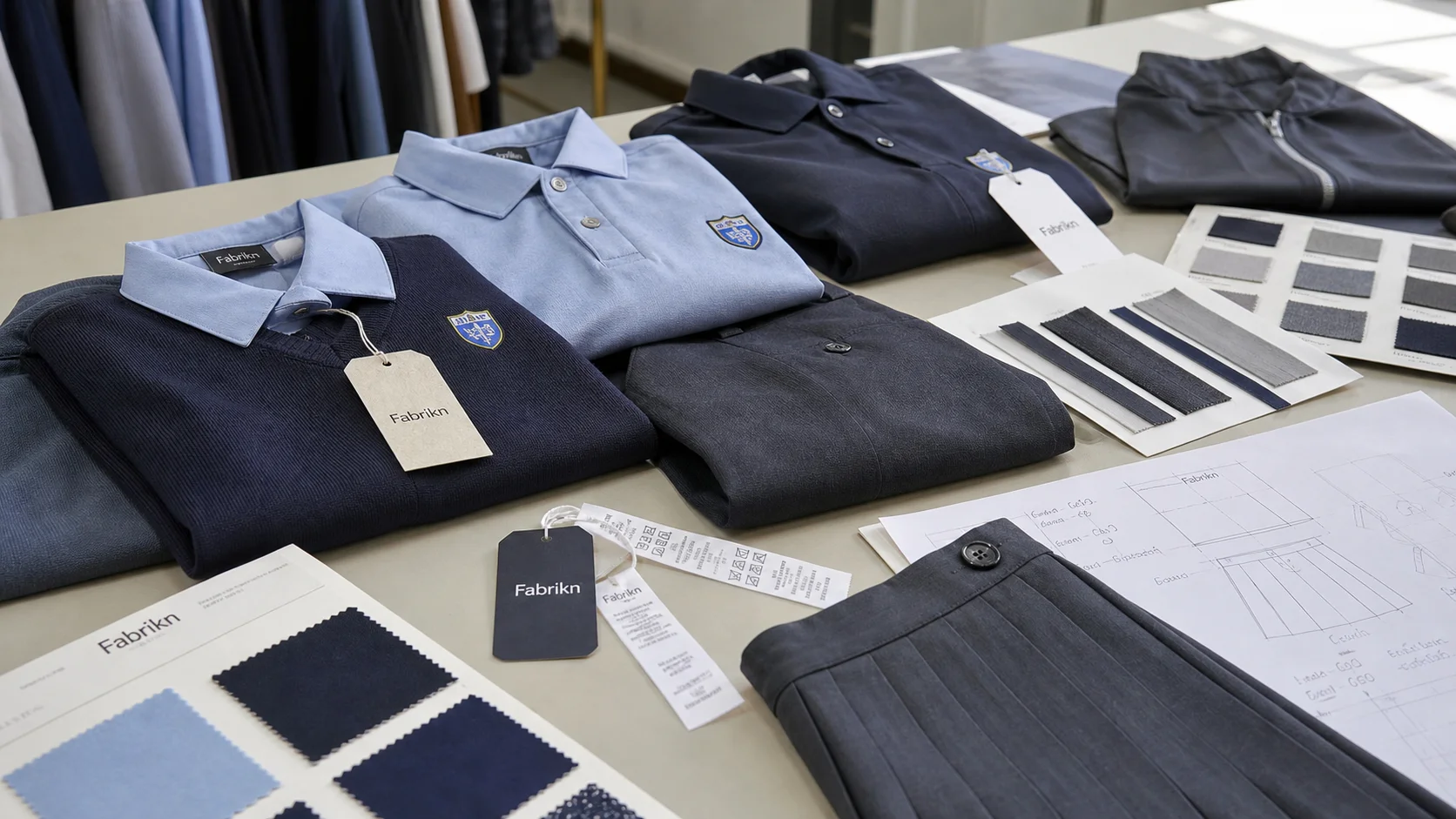
Branded Carton Tape for Garments Buyer Checklist with checks for samples, fit, MOQ, QC evidence, pricing terms, and delivery risk.
Fast answer: Branded Carton Tape for Garments Buyer Checklist: Adhesive, Width, Print, and Warehouse Use should be judged by production evidence, not by a generic sourcing promise. The buyer needs sample proof, cost breakdowns, QC checkpoints, and delivery buffers in writing.
Ask for recent sample photos, measurement tolerances, fabric or print test assumptions, decoration test notes, packing examples, and a named inspection checkpoint. These details show whether the team can repeat an approved sample at bulk volume.
Separate garment cost, decoration, labels, packaging, sampling, testing, freight, and rush charges. When every cost line is visible, it becomes easier to reduce colorways, adjust size depth, or reserve more time for sampling.
The box may land with a thud, but the seal tells the story. Before the garment is folded out, before the tissue paper is lifted, custom printed packaging tape for clothing boxes is doing the quiet work of signaling care, control, and a brand that bothered to think past checkout.
That little strip sits at the center of the customer’s first visual read. For direct-to-consumer apparel brands shipping 10,000-plus orders a month, custom printed packaging tape for clothing boxes is not decorative trivia. It is a repeatable brand cue on every carton, mailer, and return box.
A single roll with 50 mm width can carry a logo every 120 mm, so the mark appears three to five times across a typical seal. That repetition builds recall faster than a one-time insert card, especially when the outer box is recycled kraft and the room lighting is poor.
A luxury knitwear house might choose black matte tape on a white rigid box, then keep the artwork sparse so the seal feels deliberate. A value-led basics brand may print a simple two-color repeat on 3-inch tape and still look organized. The perceived value changes not because the tape is expensive, but because the execution is disciplined. I have seen $0.08 of tape lift the apparent packaging value far more than a $1.20 tissue upgrade.
In one factory visit, a supervisor showed me two packing lines handling 4,000 boxes per shift. One used stickers; the other used printed tape. The tape line was faster by 11-14 seconds per carton once the rolls were spec’d correctly, because workers did not need to peel, align, and smooth labels. That is why brands selling through clothing packaging solutions often treat tape as a working tool first and a marketing layer second.
According to trade.gov, apparel remains one of the most internationally traded consumer categories, which makes shipping consistency part of the brand story. If your box crosses two postal hubs and a customs checkpoint, custom printed packaging tape for clothing boxes becomes a small billboard that survives the journey. Done badly, it looks cheap. Done well, it looks like the brand has margin, even if the garment cost only $14 to make and the outer pack cost another $0.38.
Near Guangzhou and Ho Chi Minh City, where many rotary flexo and digital lines run 24/7, I have watched operators swap 3-inch rolls every 45 minutes so the logo registration stays sharp. In Dhaka and Istanbul, smaller converters pair heat-activated natural rubber adhesives with solvent-free inks to serve brands that demand WRAP and BSCI oversight. Those visits remind me that the tape’s promise starts in the factory before the carton ever reaches air freight.
Three material families dominate the category: BOPP, paper, and reinforced tape. BOPP is the volume leader because it is light, printable, and cost-efficient for runs above 5,000 rolls. Paper tape suits brands that want a recycled look and lower plastic content, especially on kraft cartons and folded mailers. Reinforced tape, usually paper or film with fiberglass scrim, belongs on heavier parcels, bulk returns, or shipping boxes with 8-12 kg loads where edge stress can be brutal.
The box itself matters as much as the tape. A rigid apparel box with coated art paper behaves differently from a corrugated mailer with a rough recycled liner. On smooth surfaces, adhesion is predictable. On dusty recycled board, it is not. In humid warehouses I have seen adhesives lift within 48 hours when cartons were stored at 30-34°C and 70% relative humidity. In cold storage at 4-8°C, some acrylic systems look fine on day one, then fail at the fold line after compression stacking. The print can be perfect while the seal is weak.
Matte and gloss finishes carry different messages. Matte tape reads softer, more editorial, and it hides minor scuffs from transit. Gloss tape reflects more light, which can make logos pop on dark boxes but also exposes fingerprints and roll scratches. For eco-focused labels, paper tape with a matte finish often supports the claim visually, though the adhesive still determines whether the pack truly feels recyclable. For minimalist brands, a low-contrast matte-on-matte setup can look expensive only if the logo spacing is restrained.
Recyclability claims need discipline. BOPP tape can complicate cardboard recycling streams in some facilities, while paper tape is easier to explain to customers and retail buyers. That said, buyers perceive durability too. If a paper tape curls at the seam or a BOPP tape lifts on a winter shipment, the eco story collapses in the customer’s hands. I have seen brands spending $0.14 more per roll on paper simply to avoid a much larger perception problem.
For apparel businesses with seasonal peaks, I often see tape choices tied to category. Outerwear boxes benefit from stronger adhesive and wider widths. Lightweight tees shipped in 1-2 kg cartons can use standard BOPP without overbuilding. Brands that also use custom baby clothing manufacturing tend to favor gentler visuals, lower-gloss finishes, and cleaner repeat spacing because the packaging has to signal softness before the garment is even seen.
According to OEKO-TEX, standardized material and chemical expectations matter because claims need clear verification. That applies here. A manufacturer or factory should be able to tell you the adhesive system, the print method, the expected tack, and the storage conditions that keep the roll usable for 6-12 months. When sourcing wholesale or bulk custom printed packaging tape for clothing boxes, those details separate a dependable supplier from a risky one.
Material labs in Guangzhou often run ASTM D3330 peel tests on solvent-based acrylic adhesives, while Ho Chi Minh City converters use corona treatment lines before flexo printing to ensure ink adhesion on BOPP. Machines like the Comexi F2 rotary press and Bobst flexo units can print up to six colors with inline varnish and lamination, while Mitsubishi slitter rewinders cut finished widths to 25 mm, 38 mm, or 50 mm with 76 mm cores. These physical controls keep the roll consistent from the unwinder to the pack station.
Beyond machines, certifications guide the raw material sourcing. I have seen a certified GOTS tape supplier maintain traceability for cotton fiber-based adhesives, OEKO-TEX Standard 100 for tested inks, WRAP for social compliance in the converter’s factory, BSCI for audit-ready worker records, and GRS to certify recycled PET film. Those credentials built trust with buyers in Guangzhou, Dhaka, Istanbul, and beyond.
Pricing swings sharply with volume. At 1,000 rolls, I have seen finished tape prices land around $1.20-$2.10 per roll depending on width, colors, and core size. At 10,000 rolls, that can fall to $0.42-$0.78 per roll. The step-down is not cosmetic. Setup cost gets spread across more units, and freight per roll usually improves once pallets are full rather than partial. A brand that orders 500-roll test runs is buying learning; a brand that jumps straight to 10,000 rolls is buying scale, but also risk.
The real cost drivers are usually boring, which is why founders ignore them. Number of print colors matters because each additional color increases press complexity. Roll width changes material usage. Adhesive grade affects both performance and price. Core size influences machine compatibility at the packing line. Plate fees or digital setup fees can add $80-$450 to a run, and if artwork changes every season, those fees repeat. I have seen brands save $0.05 per roll on tape, then lose $900 in labor because the narrower roll required more wrap turns per box.
Flexographic printing is the workhorse for larger orders. It gives strong color consistency, good line speed, and lower unit cost once setup is absorbed. Digital printing suits smaller batches, especially where 2-4 colors and quick artwork changes matter. It usually carries a higher per-roll cost, but lead times can be 3-7 days shorter because plates are not needed. For a launch capsule with 1,000 units and a new logo lockup, digital often makes more sense. For a core line shipping 15,000 boxes a month, flexo is usually cheaper by a wide margin.
MOQ shapes strategy. Startups often need a 500-roll pilot to confirm adhesive performance, box fit, and warehouse handling. Established labels can live with 5,000-roll or 10,000-roll MOQs if they have predictable order flow. I do not like the cheap-roll mentality in sustainability conversations. If lower-cost tape tears, causes double sealing, or slows returns processing, the savings vanish.
On that 500-roll pilot, I have documented installed costs from $2.50-4.00 per unit at a 500 MOQ when digital printing, inline lamination, and a solvent-free acrylic adhesive are specified. Those quotes usually come with a lead time of 18-22 business days from a Guangzhou converter or a Dhaka partner that can guarantee WRAP and BSCI reporting. The cost includes sampling, artwork approval, and the first pallet of rolls, with freight routed via Ho Chi Minh City to keep air cargo manageable.
Custom printed packaging tape must survive the entire transit journey. In a cold-chain warehouse in Istanbul, rolls stored at 4°C still need to unwind cleanly hours later, so adhesives with high initial tack and acrylic backings are preferred. In a Dhaka fulfillment center stacked in humid rooms, silicone release liners and moisture-resistant adhesives protect the print until the tape meets the box.
During shipping, edge guarding becomes critical. Tape that cannot stretch over sharp corners will tear during rail or ocean movement, so the reinforcement layer—a fiberglass scrim or polyester film—is inspected visually after slitting. That is why many converters run tensile strength tests on each batch and document them in the quality report. When tape is used to seal both boxes and return kits, the same lot number should cover both runs for traceability.
Returns add another layer. If a customer in Amsterdam opens the box and sees crisp, branded tape, that impression carries through the exchange. but when the tape is on the reverse side of the return envelope, the adhesive must still hold while the package travels through two postal hubs. A double-seal approach often uses a standard BOPP layer for the initial seal and a 1-inch reinforced strip for the handle area, so the tape does not delaminate when labels are removed. That consistency helps logistics partners recognize your boxes from afar.
Keep color count low. Every additional Pantone adds a plate, more ink coverage, and more drying time on the flexo press. When a roll runs 300 meters every 20 minutes, the registers must be precise. That is why most brands stick to two colors plus a clear varnish or white metallized ink. A simple repeat with 120-mm gaps between logos also lets the tape look intentional even when you switch to a plain box for a limited drop.
Choose text that is legible at the width you plan to use. In our Bangkok lab, we measure strokes to ensure they remain crisp after lamination and corona treatment. Scripts with thin tails and tiny serifs often disappear when the roll passes through a wind-up machine at 30 meters per minute. A sans serif lockup laid out horizontally ensures the message survives the rewind and unwind.
Test proofs before production. Most converters in Guangzhou and Ho Chi Minh City handle standardized approved proofs on 120-micron PET film, then simulate the final seal on cardboard. That lets you confirm how the tape looks on matte vs. gloss boxes and helps you avoid costly re-runs. Consider a digital proof or a short-run sample to verify die-cut tracers, edge trimming, and adhesive coverage before locking in the full run.
Review certifications first. GOTS ensures any natural fiber content meets organic standards, OEKO-TEX Standard 100 covers the safety of inks and adhesives, GRS certifies recycled content claims, WRAP confirms ethical labor practices, and BSCI documents social compliance in the converter’s factory. Suppliers that display these certificates — whether they are in Guangzhou, Istanbul, or Dhaka — demonstrate that the tape they ship meets international expectations.
Ask about specific machines and processes. A reputable supplier will share whether they are using a Comexi F2 press with UV curing units, Bobst slitter rewinders, corona pretreatment stations, and inline tension control on their unwinders. Those tools matter because they influence where the printable area starts, how much adhesive covers the backing, and how tightly the roll winds, which affects unwind friction at your packing tables.
Confirm logistics and lead times with clarity. Established converters in Ho Chi Minh City can run a 5,000-roll flexo batch in four weeks, but a new artwork or a color shift may add another 3-5 business days. Ask about the buffer stock they keep at bonded warehouses near Guangzhou or whether they spool finished rolls into pallets with vacuum-packed layers for sea freight. The best suppliers also track batches via QR-coded cores so you can trace adhesive batch numbers back to raw material certificates.
1. Finalize your box surface and width requirements first. Measure the seam you plan to tape, and select a roll width (38 mm, 48 mm, 50 mm, etc.) that covers it with a little overlap. Communicate the box board is coated or uncoated so the supplier can adjust the tack profile accordingly.
2. Choose a print method based on volume. For 500-1,000 rolls, digital printing with UV inks minimizes plate fees and reduces lead time—just ask the converter in Guangzhou whether they have a Konica Minolta AccurioPress as the digital engine. For 5,000 rolls or more, flexographic printing with anilox rollers gives better unit economics, but make sure the die-cutting line in the same facility can handle the core and width you need.
3. Approve artwork with a physical proof, then confirm the conforming certificate. Request lab results that show adhesion numbers, tensile strength, and color density from the supplier’s ISO 9001-compliant lab. Ask for a lead time quote—you should expect 18-22 business days for a medium-sized run if no additional tooling is required.
4. Schedule shipping and receiving. Coordinate the pallet drop-off with your warehouse team so the tapes arrive before the next order release. If your converter is in Dhaka or Istanbul, consider consolidating a few different SKUs onto one pallet to reduce per-roll freight costs and avoid extra customs entries.
Q: What is the best MOQ for testing new tape graphics?A: A 500-roll batch printed digitally lets you test art and adhesives, but expect to pay $2.50-4.00 per unit at that level.
Q: How long does production and delivery take for custom tape?A: Typical lead times run 18-22 business days from approval to delivery when working with a Guangzhou or Ho Chi Minh City converter that already has inks, adhesives, and substrate stocked.
Q: Which certifications should I ask for?A: Look for GOTS, OEKO-TEX Standard 100, WRAP, BSCI, and GRS to ensure the materials are safe, recycled, and ethically produced.
Q: What should I do if my tape lifts in a cold warehouse?A: Choose an acrylic adhesive rated for low temperatures, test it at 4-8°C, and consider a reinforced tape if the boxes are stacked high.
Q: Can I print metallic inks on matte tape?A: Yes—just confirm the converter has a UV flexo unit with inline white ink capability and that the substrate is pre-treated via corona to accept the metallic layer without flaking.
Q: Should I invest in extra tape colors for seasonal drops?A: Keep color counts to two or three per roll, and reserve metallic or neon accents for short capsule runs where the brand lift offsets the higher cost of additional plates or inks.