
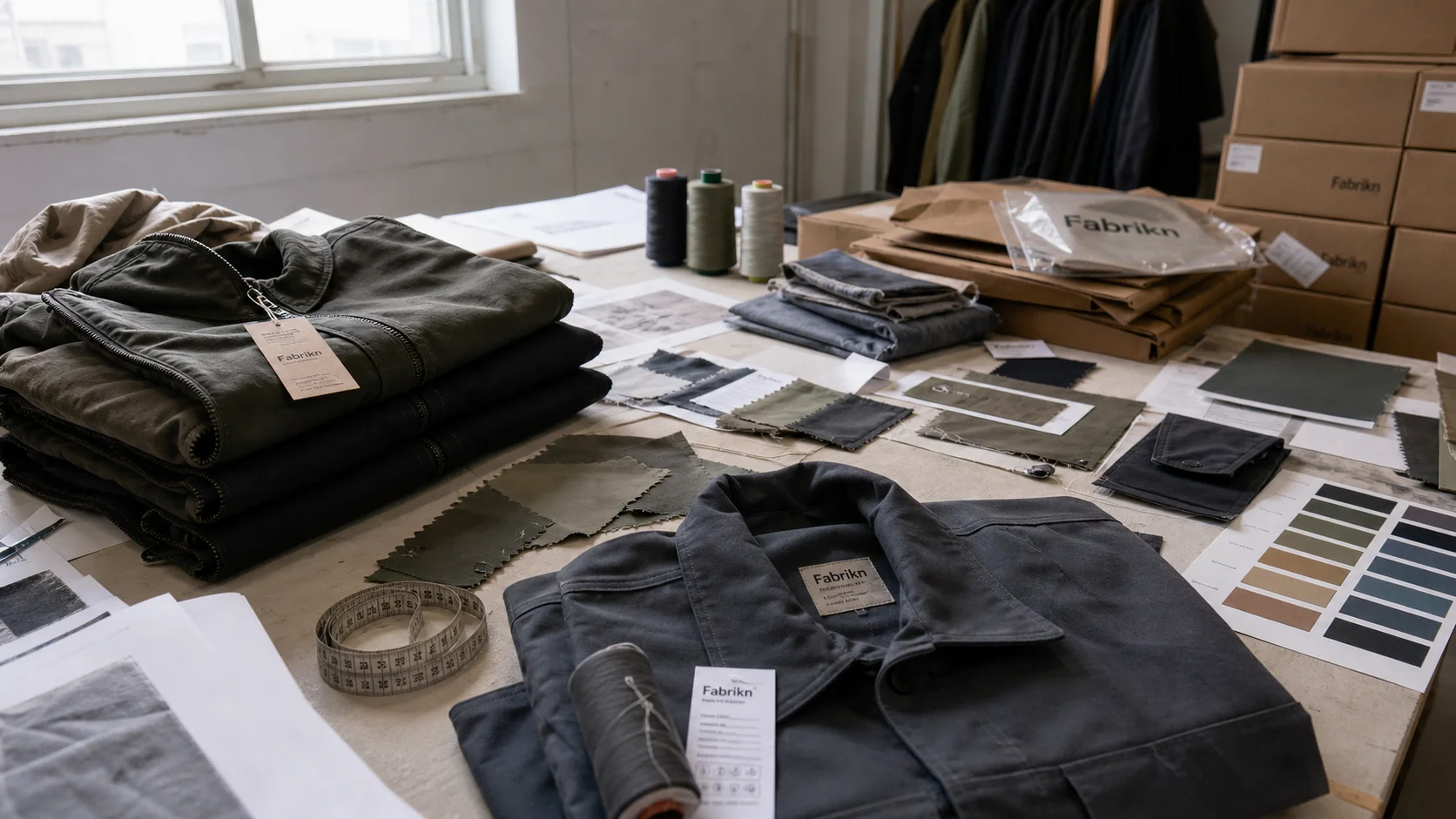
China Printed Tissue Paper with checks for samples, fit, MOQ, QC evidence, pricing terms, and delivery risk.
Fast answer: China Printed Tissue Paper: GSM, Ink, MOQ, and Lead Time should be judged by production evidence, not by a generic sourcing promise. The buyer needs sample proof, cost breakdowns, QC checkpoints, and delivery buffers in writing.
Ask for recent sample photos, measurement tolerances, fabric or print test assumptions, decoration test notes, packing examples, and a named inspection checkpoint. These details show whether the team can repeat an approved sample at bulk volume.
Separate garment cost, decoration, labels, packaging, sampling, testing, freight, and rush charges. When every cost line is visible, it becomes easier to reduce colorways, adjust size depth, or reserve more time for sampling.
Custom printed tissue paper china factory searches keep rising for a simple reason: tissue looks harmless until the first shipment goes sideways. In factory audits across Guangdong, Zhejiang, Tamil Nadu, and Ho Chi Minh City, I’ve seen sheets priced at $0.03 to $0.08 still fail on print alignment, sheet count accuracy, and pack-out damage. Low quote. Bigger bill.
Brands often fixate on unit price and miss the landed total. A $2.40 carton from a weak mill can become a $4.10 problem after rework, relabeling, and delayed freight. China still leads in flexible printing capacity, especially for mixed-SKU orders, because many plants can switch between 2-color flexo, 4-color offset, and short-run digital work without forcing enormous MOQs. Local mills in Europe or North America may communicate more smoothly, sure, but they can ask for 5,000 to 20,000 sheets just to start, plus tooling that runs $180 to $600.
I’ve compared China with India and Vietnam on the same brief: 17 x 24 inch tissue, 17 GSM, one logo repeat, and branded belly bands. China usually wins on setup speed and tooling cost, while India sometimes edges ahead on raw tissue price for simpler unprinted runs. Vietnam can be competitive on small orders, but I’ve seen lead times stretch from 10 days to 18 when print partners outsource finishing. That is where buyers get trapped. Procurement teams need a supplier that can handle branding, compliance, and export paperwork without turning a 2-week job into a 5-week apology.
Tissue paper also behaves differently from generic paper stock. Humidity, caliper, and ink penetration all change the result. In southern China, I watched a plant hold room humidity at 48% to 55% and still reject a batch because color drift widened beyond the acceptable range after 8,000 sheets. Cheap tissue can look fine for the first 200 sheets and then go soft, ghosted, or inconsistent by sheet 1,200.
A serious custom printed tissue paper china factory does not sell one product. It sells a range: acid-free tissue, virgin pulp tissue, recycled tissue, colored tissue, patterned tissue, and luxury wrap tissue for premium packaging. I’ve seen mills offer 15 GSM to 30 GSM, with 17 GSM and 18 GSM the sweet spot for retail wrapping because they balance opacity and foldability. Sizes usually range from 30 x 30 cm sheets to 50 x 70 cm wraps, with folded formats, roll formats, and custom die-cut packaging on request.
Printing methods matter. Flexographic printing works best for high-volume branding runs of 10,000 sheets or more, especially when the design uses one or two repeated colors and does not need photographic detail. Offset printing gives sharper detail for logos, fine lines, and multi-color layouts, but setup takes longer. Digital short-run printing is useful for seasonal launches, influencer kits, and test orders of 300 to 1,000 sheets. It costs more per piece, yet it saves brands from paying plate fees before market demand is proven.
The range of use cases is wider than many buyers expect. Apparel brands use tissue inside folded garments and shoe boxes. Cosmetics companies wrap palettes and sets. Jewelry brands want a higher-opacity sheet to prevent show-through. E-commerce sellers use printed tissue for unboxing and return presentation. Food-safe secondary wrapping can apply when the tissue is uncoated and compliant for indirect contact, though I always ask for test documents before treating any packaging as suitable for that purpose. For brands building cohesive packaging systems, a custom sublimation printing service can help align artwork across multiple substrates.
Custom printed tissue also pulls its weight in private-label presentation. Last year I worked with a brand that switched from plain white tissue to branded printed wraps inside boxes and saw a 19% lift in social mentions from unboxing content. The tissue itself cost only 4 cents more per unit. The margin effect came from presentation, not material extravagance, which is exactly why smart buyers treat tissue as a packaging asset rather than filler.
The quality markers are measurable. I ask for GSM tolerance within ±1.0 to ±1.5 GSM, opacity above the agreed spec, print alignment within 1 to 2 mm, and rub resistance that survives a dry rub and a slightly damp rub test. Whiteness matters too. A 92 to 94 brightness sheet can look premium, while lower brightness may read dull under retail lighting. Odor is another overlooked issue. If a tissue smells strongly of solvent or pulp-processing chemicals, I treat that as a warning signal.
Humidity is not a footnote. It changes the way tissue lies on the press. In humid provinces, sheets can curl, stick, or register poorly, and even a skilled operator will struggle if the paper has absorbed moisture overnight. I’ve seen factories use dehumidified storage and still get one bad batch out of twenty when the monsoon season pushed ambient humidity above 70% for several days. That is one reason premium houses spend more on storage and airflow than low-cost exporters do.
Price tier tells you a lot about discipline. Low-cost exporters often work with loose tolerances and accept minor rub-off as “normal.” Mid-tier specialists usually document GSM, count accuracy, and carton specs, then back that with basic AQL sampling. Premium packaging houses behave more like garment factories with tighter process control, the same way a good factory running cut and sew manufacturing manages fabric shrinkage, sewing tolerance, and finishing at each checkpoint. They cost more, but their reject rates are usually lower.
The thing nobody tells you: the lowest quote often comes from shorter inspection time, not lower manufacturing cost. One missed carton drop test can erase the savings on an entire first order.
Before you place an order, request a pre-production sample signoff, inline inspection during the first 2,000 to 5,000 sheets, AQL sampling on finished cartons, and a carton drop test for export packs. I also ask for sheet count verification on random cartons. A box sold as 480 sheets should not arrive with 462. That sounds small until you multiply the shortage across 1,200 cartons.
Pricing changes with more variables than buyers expect. Material grade, print colors, sheet size, packing style, carton configuration, and even pallet height all affect the quote. A plain 17 GSM virgin tissue in one color might land at $0.025 to $0.045 per sheet at higher volume, while a two-color repeat could sit only slightly higher if the design fits one plate setup. Full-coverage artwork is the expensive version because it uses more ink, tighter registration control, and more press checks.
Sample budgets usually run from $35 to $120 depending on artwork complexity and whether you need physical proofing or revised mockups. Small-run pricing often starts at 300 to 1,000 sheets for digital work, with a unit cost that can be 2 to 4 times higher than a production order. At 5,000 to 20,000 sheets, flexo becomes economical because plate fees get spread over more units. Plate or cylinder charges can range from $90 to $350, which changes first-order economics more than many buyers realize.
I’ve seen mainland China beat Vietnam and India on tooling cost by 15% to 40%, especially for repeatable branded tissue with simple repeat prints. Freight tells a different story. A China quote can be cheaper ex-works yet land higher once air freight, carton volume, and peak-season space are added. Vietnam may offer a similar tissue spec at a slightly lower shipping cost on certain routes, but production flexibility is often narrower. India can be attractive for basic tissue substrate, though color control and turnaround vary by region and supplier type.
MOQ is where strategy matters. Digital runs can start at 300 sheets or 500 sheets per design. Flexo often wants 3,000 to 10,000 sheets, while larger contracts may ask for 20,000 sheets or more to make the press efficient. The difference between a 1-color repeat and a 4-color wrap can be dramatic, not because ink is expensive, but because every extra color adds registration risk and setup time. Buyers sourcing branded gift tissue, luxury wrap tissue, or retail packaging paper should compare specs on identical sheet size and GSM before judging cost.
Timeline starts before the press runs. Artwork setup usually takes 1 to 3 days if files are clean, or 4 to 7 days if the supplier needs redraws, logo cleanup, or Pantone matching. Sample production typically takes 3 to 5 days. Approval can be fast, yet delays often appear in the back-and-forth over color, sheet count, and carton labels. Mass production then runs 5 to 12 days for standard orders, while complex or seasonal jobs can take 15 to 20 days if the plant is already booked.
Shipping changes the calendar sharply. Courier samples usually arrive in 3 to 7 days. Air freight for urgent launch stock can take 4 to 9 days door to door, though it costs far more per kilogram. Sea freight for larger replenishment orders may take 18 to 35 days depending on destination and port congestion. I have seen a 6,000-sheet order leave the factory in 8 days, then sit for 11 more because the booking was pushed behind a holiday backlog.
Hidden time sinks matter. Artwork revisions can add 2 days. Color matching back-and-forth can add 3 to 5 days. Carton labeling changes after approval can force rework if the supplier has already printed shipping marks. This is where many buyers lose a week. I always ask for one final proof showing dimensions, sheet count, packing format, and barcode placement before mass production begins. If the order is tied to a store opening or campaign launch, that proof should be signed off, not vaguely approved in email.
For brands that already manage apparel or box programs, tissue scheduling should sit beside the rest of the packaging calendar, just as you would align private label clothing services with trims and labels. A tissue order is small, but it can still derail a launch if it lands after printed hangtags or before the carton art is finalized. I prefer a 2-week buffer on every first order and a 1-week buffer on reorders.
Start with documents. Ask for the business license, export history, FSC claims if they are making them, test reports, and social compliance documents if your brand requires them. Then verify the print capability instead of trusting a trading-company pitch. I want machine photos, recent order photos, and a live video of the production line with date-stamped sheets moving through the press. If a supplier cannot show the actual plant, I assume they are brokering the job.
On site, I look for red flags. Warehouse labeling should be consistent. QC logs should exist and show defects by batch. Chemical claims should be specific, not vague phrases like “eco ink” without a test basis. Turnaround promises that sound too neat usually are. If a factory says it can do a custom printed tissue paper china factory order in 24 hours with no proofing, I slow down immediately. Real plants have machine queues, paper drying time, packing slots, and export documents to prepare.
My supplier scorecard is simple. I grade communication speed, sample accuracy, defect rate, carton durability, and willingness to fix problems in writing. A supplier that answers in 2 hours and delivers a sample within 4 days is usually more reliable than one that sends glossy promises and no data. If the first carton falls apart in a 1-meter drop test, that supplier does not belong in your approved list. For sustainability verification, many buyers also cross-check standards and claims with Textile Exchange, OEKO-TEX, and trade.gov before scaling.
Send a complete RFQ this week. Define sheet dimensions, GSM, print coverage, color targets, packing format, carton count, and annual forecast before asking for prices. If you want meaningful comparisons, do not send vague notes like “premium tissue for fashion.” Give suppliers the same brief: 50 x 70 cm, 17 GSM, 2-color repeat, 480 sheets per carton, 1,000 cartons annual forecast, and one backup artwork file in case the first design needs revision. That is how pricing differences reveal process quality instead of empty promises.
Build a pilot order around one or two SKUs, not five. Keep the MOQ manageable, ideally 500 to 2,000 sheets per design for a first test, and ask for one backup artwork version so response times can be measured under pressure. If you sell apparel, gifting, or footwear, tissue often sits beside the rest of the finishing chain. The same buyer who orders labels and tissue may also need packaging partners, and a broader supplier mix can be useful when the final product line requires coordinated finish work.
Compare at least three suppliers using identical specs. Ask each for ex-works price, sample fee, plate fee, lead time, and shipping-ready carton dimensions. Then inspect the sample for print rub, count accuracy, and fold memory. I recommend either visiting the factory or commissioning a third-party inspection before scaling past the first order. If you can’t travel, ask for carton-level photos, batch numbers, and one full production video. That is the moment to request a custom tissue packaging quote and judge how they respond under real scrutiny.
My practical sequence is simple. Sample first. Approve only after the proof matches the brief. Inspect the factory or use a third-party inspector. Scale only after carton-level consistency is confirmed across at least 2 lots, not one lucky run. The best custom printed tissue paper china factory partners are not the cheapest on paper. They are the ones that make your packaging predictable enough to budget, ship, and restock without drama.
Most factories produce acid-free tissue, virgin pulp tissue, recycled tissue, colored tissue, and printed wrap tissue in sheets, folded packs, or rolls. Common specs include 17 GSM to 18 GSM, 30 x 30 cm to 50 x 70 cm, and carton packs from 200 to 500 sheets.
At scale, printed tissue can start around $0.025 to $0.045 per sheet for simple one-color work, with higher prices for full-coverage or multi-color designs. Sample fees often run $35 to $120, and plate fees can add $90 to $350 on flexo orders.
Samples usually take 3 to 5 days, and standard production takes 5 to 12 days once artwork is approved. Add 3 to 7 days for courier samples, 4 to 9 days for air freight, or 18 to 35 days for sea freight.
Yes, if the factory offers digital short-run printing. Many can start at 300 to 500 sheets per design, while flexo printing usually requires 3,000 to 10,000 sheets or more because plate setup must be spread over larger volume.
Ask for business licenses, export records, sample photos, live production video, and test reports. Then compare sample accuracy, defect rate, communication speed, and carton drop performance. A supplier that cannot show a real machine line should not be treated as a direct factory.