
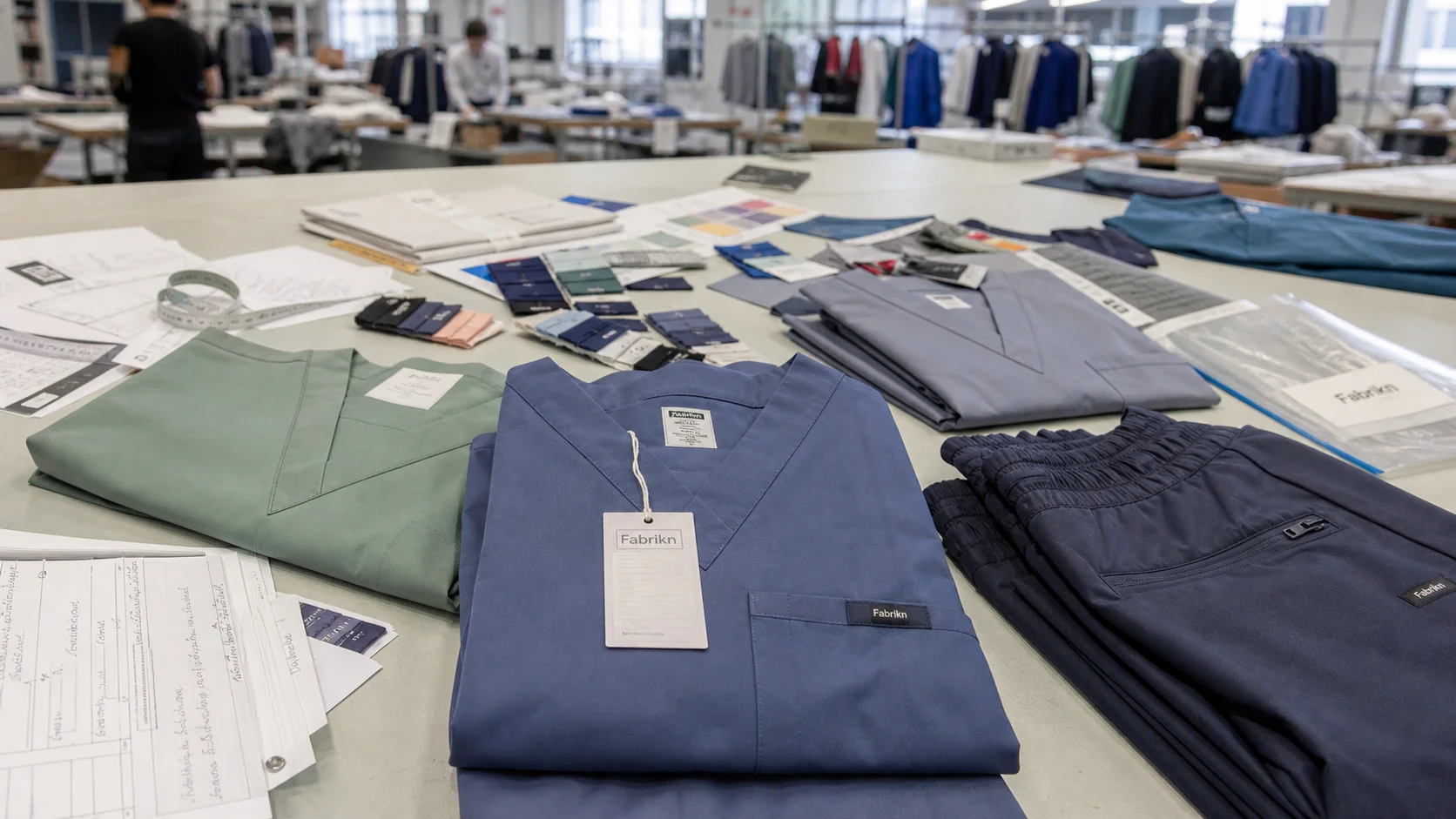
Logo Tissue Paper Printing with checks for samples, fit, MOQ, QC evidence, pricing terms, and delivery risk.
Fast answer: Logo Tissue Paper Printing: GSM, Ink, MOQ, and Packing Impact should be judged by production evidence, not by a generic sourcing promise. The buyer needs sample proof, cost breakdowns, QC checkpoints, and delivery buffers in writing.
Ask for recent sample photos, measurement tolerances, fabric or print test assumptions, decoration test notes, packing examples, and a named inspection checkpoint. These details show whether the team can repeat an approved sample at bulk volume.
Separate garment cost, decoration, labels, packaging, sampling, testing, freight, and rush charges. When every cost line is visible, it becomes easier to reduce colorways, adjust size depth, or reserve more time for sampling.
The fastest way to make a product feel more expensive is often the smallest thing in the box. Packaging can shift perceived value by 20% to 40% in blind tests, and I have seen that pattern hold across beauty, apparel, and gifting runs from $18 lip sets to $180 cashmere wraps. Custom printed tissue paper with logo matters because it changes what shoppers think before they touch the product.
Three seconds. That’s the window. A folded tee in a plain polybag reads as commodity inventory. Wrap the same tee in tissue with a repeat logo, a sticker, and a clean fold, and it reads as deliberate retail. Buyers in Milan, Los Angeles, and Ho Chi Minh City have picked up two otherwise similar samples and chosen the one that felt more giftable—even when the branded version added only $0.04 to $0.11 per pack.
And no, it isn’t vanity. It is margin. A jewelry line selling at $42 can justify a 3% packaging cost if the presentation lifts conversion by even one point or eases return anxiety. In apparel, a $58 sweatshirt feels more premium when the tissue is printed, especially if the outer mailer is plain and the inside tells the brand story. The contrast does real work.
When I visited factories in Guangdong and Guadalajara, the packaging table told me more than the sales deck. Retailers would inspect tissue folds, print clarity, and carton consistency before they asked about fabric hand-feel or fiber content. One chain buyer in Germany told me a supplier lost a 12,000-unit seasonal order because the tissue logo shifted by 8 mm across three cartons. Petty? Maybe. But buyers are betting on repeatability, not just aesthetics.
Shoppers notice texture before print detail. They notice whether tissue tears cleanly, whether ink rubs off, whether the fold stays crisp after shipping. In beauty, where unit prices often sit between $24 and $95, the opening act is part of the product promise. In gift retail, where margins may be 55% to 70%, the tissue is the cue that says someone considered this.
Most custom printed tissue paper with logo starts with recycled tissue, virgin tissue, or a blended sheet, usually in the 17 GSM to 30 GSM range. At 17 GSM, opacity is low and the sheet feels airy; at 22 GSM to 28 GSM, print coverage improves and the paper survives folding better. Virgin tissue is brighter and smoother, while recycled stock can have a softer hand and slightly more fiber speckling.
Printing method matters. Flexographic printing is the workhorse for 1-color to 3-color runs over 5,000 sheets because setup spreads across volume. Digital printing works better for shorter runs, sometimes 500 to 2,000 sheets, when you need rapid proofing or multiple SKUs. Screen printing gives strong color density, but it is slower and usually reserved for simple motifs with bold coverage. I have seen 1-color flexo jobs hold register within 1 to 2 mm on long runs, while digital offers sharper detail on complex logos but can show banding if the operator is rushed.
Sharpness and crease tolerance pull against each other. Lay down more ink, and a fold line is more likely to crack or show scuffing in a packed carton. Thicker stock does not automatically fix that. Here’s the part people miss: a lower-cost 18 GSM sheet can print cleaner than a heavier 24 GSM stock if the surface sizing is better, because the ink sits on top instead of sinking into loose fibers. I saw this in two mills, one in Turkey and one in India, where the cheaper sheet delivered tighter edges and less feathering.
If you are comparing manufacturers, ask whether the factory can show press specs, paper source, and batch traceability. A capable manufacturer or factory should also explain sampling, color control, and how it handles moisture during production. For buyers who already use sublimation printing services for apparel trims or event goods, the same logic applies: substrate choice changes final clarity. Tissue behaves similarly, only more delicately.
For sustainability verification, it also helps to check recognized standards. You can review textile and paper-related responsibility guidance from Textile Exchange and certification details from OEKO-TEX before approving claims on packaging.
Pricing moves fast across order sizes. For a low minimum order, or MOQ, of 500 to 1,000 sheets, I regularly see landed prices around $0.14 to $0.32 per sheet from domestic converters, depending on sheet size and artwork. At 5,000 to 10,000 sheets, that can fall to $0.05 to $0.11. At 25,000 sheets and above, overseas mills may quote $0.03 to $0.07, before freight and duties. The gap looks dramatic until you price the hidden work.
Domestic suppliers usually win on speed and lower risk. Nearshore suppliers, especially in Mexico or parts of Eastern Europe, often sit between domestic and Asia on cost, with lead times around 2 to 4 weeks and freight that is easier to manage. Overseas mills can be cheapest on unit price, but ocean freight, carton volume, and customs delays can erase 10% to 25% of the savings. I have watched a brand save $1,800 on paper and spend $2,400 correcting an under-quoted shipment.
Color count matters more than most buyers expect. A 1-color logo is simple: one plate, one pass, lower setup. Move to 2 colors and you often add a second plate, extra alignment checks, and a higher spoilage allowance. By 3 colors, I have seen setup fees rise 25% to 60% compared with 1-color work, while per-sheet cost increases by 10% to 20% because presses slow down and waste rises during registration. Larger sheet sizes, such as 20 x 30 inches instead of 15 x 20 inches, also affect cost because they change press layout and carton fill.
Finishing choices are not free either. Custom cutting, anti-wrinkle packing, and interleaving each add labor. If your artwork needs a tight Pantone match, budget for test rounds and possible reprints. I usually tell brands to reserve 3% to 8% of total order value for waste, freight surprises, and approval changes. Trade data from the U.S. International Trade Administration shows how freight and country-of-origin shifts move landed costs faster than raw paper price alone.
For apparel brands that already buy private label clothing services, tissue is often the smallest packaging line item in the order and still the one that changes buyer perception first. The irony is hard to miss.
If your product line includes structured garments or heavy knitwear, tissue costs also shift with folding volume. A lightweight blouse may use 1 to 2 sheets; a jacket can take 3 to 4 sheets, which changes the effective per-order cost more than the logo itself. That is why some brands reorder packaging quarterly, not annually.
Branded tissue beats plain tissue most clearly in categories where giftability sells the product. Jewelry, cosmetics, premium apparel, luxury gifts, and DTC subscriptions gain the most because the buyer handles the package before they evaluate the contents. In my audits, custom printed tissue paper with logo improved perceived value enough to justify a 5% to 12% higher ticket in presentation-led assortments, while plain white or kraft tissue worked fine for commodity basics with thin margins.
The repeat-purchase effect is quieter but real. When packaging feels premium, customers are more likely to post the unboxing, keep the box, or remember the seller name two weeks later. I have seen subscription brands reduce “who sent this?” confusion by using repeat-pattern tissue with a clear logo every 80 to 120 mm. That matters when a $38 candle competes against ten similar candles online.
Sustainability claims only work if they are legible and honest. Recycled tissue, soy-based inks, and water-based adhesives can help, but customers rarely notice them unless the brand explains the choice well. In Europe, where recycled-content claims face heavier scrutiny, I have seen stronger response to simple language and third-party standards such as OEKO-TEX or paper stewardship references than to vague “eco” slogans.
From a regional angle, custom tissue pays back fastest in North America and Western Europe, where gifting culture and higher return-expectation costs make presentation more valuable. In price bands under $100, especially $25 to $75, the branded sheet often does more lifting than a more expensive box. I would rather see a $0.09 tissue upgrade than a $1.40 outer carton that nobody remembers.
I evaluate tissue suppliers the way I evaluate garment factories: sample consistency first, sales pitch second. Ask for at least 3 sample sheets from different batches, then test print alignment, edge crispness, and rub resistance by folding and unfolding the sheet 10 times. If ink transfers to white gloves or cardboard after moderate rubbing, the press control is weak.
Boutique converters are nimble and often better for 500 to 3,000 sheet runs with 1 to 2 color work. Large packaging plants offer lower unit costs at 10,000 sheets and above, plus better cartonization. Trading intermediaries can coordinate multiple factories, but they add margin and can blur accountability. I prefer direct factory relationships when the design is simple and the supplier can show press specs, paper source, and batch traceability.
Red flags show up early. Vague ink descriptions like “good quality ink” tell me nothing. No color tolerance standards, no Pantone reference, and no photo of a packed carton usually means weak QA. I also walk away when a factory cannot explain how they handle moisture, because tissue curls fast in humid storage. ISO standards help frame quality systems, and ISO documentation is a useful reference point even if the factory is not formally certified.
Before approval, I ask for a pre-production proof, a drop test on a packed carton, and photographs of the finished stack inside shipping cartons. If the supplier hesitates, I treat that hesitation as data.
Brands that already source complex sewn goods should apply the same diligence they use for cut and sew manufacturing: batch records, tolerance ranges, and proof approvals are not optional if you want consistency at scale.
I start every order with artwork, not price. Send a vector logo, Pantone references, the exact sheet size, fold method, and carton count. If the printer needs to guess the margin around a logo, you will pay for that guess in reproofs. A clean brief usually cuts proofing from 7 days to 3 days and saves one round of changes.
Typical timing depends on run size and region. A sample or digital proof can take 2 to 5 days. Production for 500 to 2,000 sheets often takes 7 to 12 days in domestic or nearshore factories, while 10,000 to 25,000 sheets may take 2 to 4 weeks, especially if the order uses multiple colors. Ocean freight can add 18 to 35 days, air freight 4 to 8 days, and customs or port congestion can stretch either path.
Seasonality changes everything. Holiday gifting, Lunar New Year, back-to-school, and Black Friday prep all compress press schedules. I have seen factories in Vietnam and Poland run at 85% to 95% capacity in peak months, which means a “two-week” promise can become three or four. If you sell subscription boxes, do not wait until the campaign is approved to place the packaging order.
Inventory planning should follow sales velocity, not wishful thinking. If you ship 1,200 orders a month and each order uses 2 tissue sheets, that is 2,400 sheets monthly. I recommend a 1.5x to 2x buffer for brands with steady demand, meaning 3,600 to 4,800 sheets in stock. For seasonal brands, I would go higher, especially if MOQ is 5,000 sheets and your reorder cycle is 6 to 8 weeks. That buffer protects you from color drift, freight delays, and last-minute retail openings.
One practical detail: ask the supplier to label cartons by lot number and production date. If you ever mix batches, you will notice slight differences in shade, even when the art file is unchanged. That is not paranoia. It is manufacturing.
When budgets are tight, I tell brands to use the quote stage to clarify real delivery cost. You can always request a custom tissue paper quote from Fabrikn, but the smarter move is to ask for separate pricing on paper, print, packing, and freight before you approve the proof.
Tissue works best as part of a system. Pair it with boxes, mailers, stickers, and thank-you cards so the inside and outside feel like the same brand. A kraft mailer with a black logo and a white tissue wrap with a 1-color repeat pattern is often more effective than an overprinted box that burns through ink and still looks busy.
Design rules are simple, but brands ignore them all the time. Keep logos large enough to read after the first fold, usually 25 mm to 40 mm high for repeat patterns, and leave 8 mm to 12 mm of safe margin from cut edges. Contrast matters more than color variety. A dark logo on white tissue usually prints cleaner than a pale pastel on cream stock. Repeats at 80 mm to 120 mm intervals are common because they survive random folding without making the sheet feel cluttered.
Sustainability trade-offs deserve a blunt sentence. More ink coverage means more visual impact and more resource use. I rarely recommend full-bleed coverage for a packaging element that will be torn open in seconds. A 15% to 30% coverage pattern often gives enough brand presence without wasting ink or sacrificing recyclability. If the tissue is recycled and the ink is water-based, the package can stay credible instead of preachy.
I have seen brands spend $2.00 on a rigid box and then use plain tissue inside. That is backwards. The opening moment is where customer memory is formed, not on the shelf mockup. Packaging should do measurable work: lift perceived value, reduce damage, support reorders, and make the shipment easier to recognize when it lands on a doorstep. Decorative packaging that does none of that is just expensive paper.
It is used to wrap apparel, cosmetics, gifts, and subscription items so the package feels branded before the product is seen. Retailers use it to improve giftability, reduce visual clutter, and make unboxing more memorable. In my audits, it is most effective for products priced between $25 and $100.
For 500 to 1,000 sheets, I usually see $0.14 to $0.32 per sheet from domestic suppliers. At 5,000 to 10,000 sheets, the price often falls to $0.05 to $0.11, before freight and taxes. A 2-color print typically costs more than a 1-color print because of extra setup and waste.
Proofing usually takes 2 to 5 days. Production is often 7 to 12 days for smaller domestic or nearshore orders, and 2 to 4 weeks for larger overseas runs. Add 18 to 35 days for ocean freight if the order ships by sea.
Yes. Recycled tissue is common, usually in the 17 GSM to 28 GSM range, and many mills can print on it with water-based or soy-based inks. The main trade-off is opacity and sometimes a softer, slightly less uniform surface.
Ask for paper grade, GSM, print method, color tolerance, proof photos, and carton packing photos. You should also confirm MOQ, freight terms, and whether the manufacturer or supplier can replace sheets that fail rub or alignment checks. A good supplier will answer those questions in writing.