
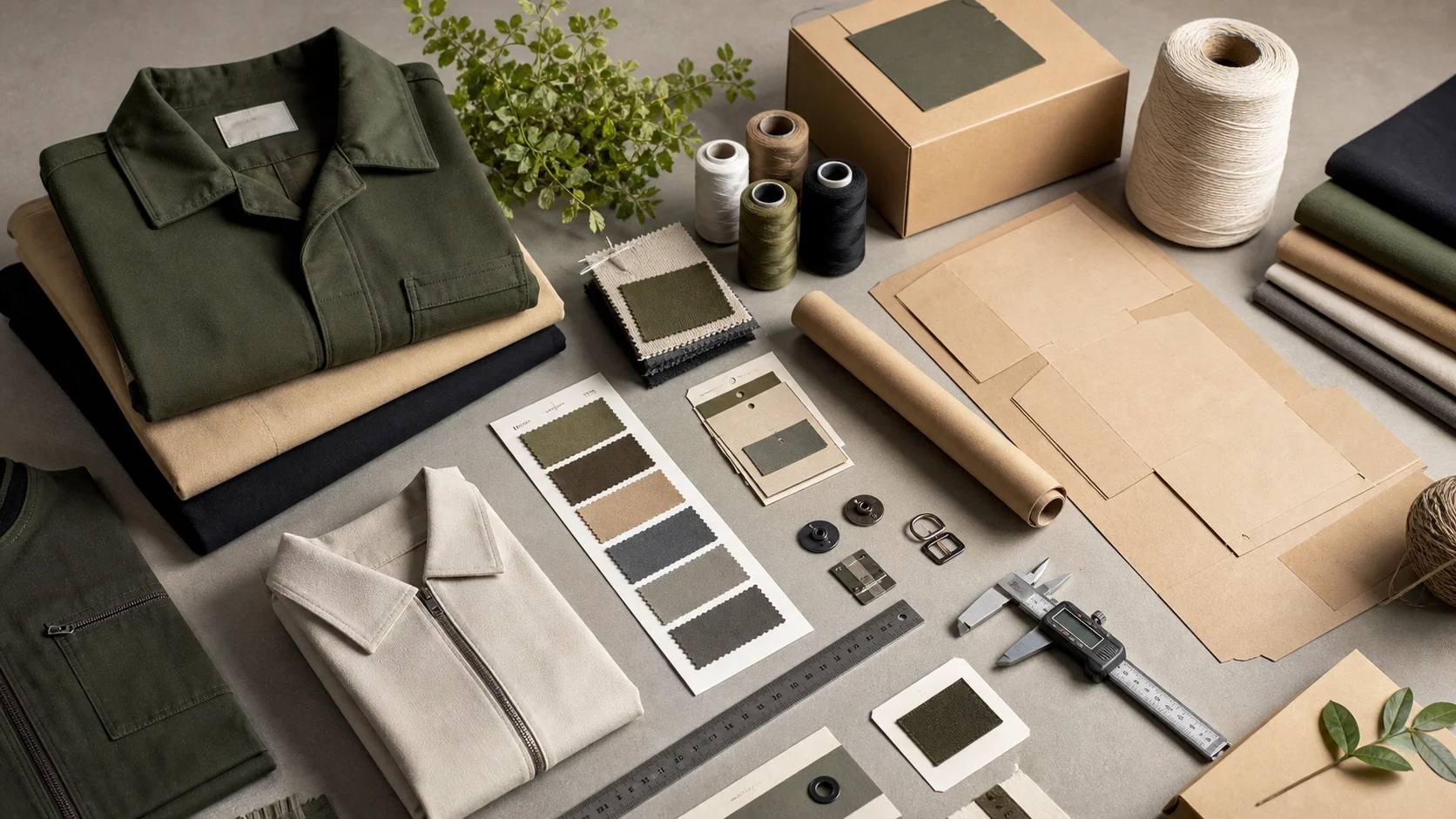
Logo Tissue Paper from China with checks for samples, fit, MOQ, QC evidence, pricing terms, and delivery risk.
Fast answer: Logo Tissue Paper from China: GSM, Ink, MOQ, and Lead Time should be judged by production evidence, not by a generic sourcing promise. The buyer needs sample proof, cost breakdowns, QC checkpoints, and delivery buffers in writing.
Ask for recent sample photos, measurement tolerances, fabric or print test assumptions, decoration test notes, packing examples, and a named inspection checkpoint. These details show whether the team can repeat an approved sample at bulk volume.
Separate garment cost, decoration, labels, packaging, sampling, testing, freight, and rush charges. When every cost line is visible, it becomes easier to reduce colorways, adjust size depth, or reserve more time for sampling.
A cheap quote can look brilliant right up until freight, plate fees, and spoilage show up and ruin the mood. That’s the trap buyers fall into when they compare custom tissue paper with logo china to local quotes. A sheet priced at $0.028 can end up closer to $0.046 once carton packing, export paperwork, and 6% waste are added.
Above 5,000 sheets, China still wins because consistency beats a tiny quote difference. For a brand running 8 SKUs, repeating the same logo placement across 30,000 sheets is exactly where a custom tissue paper with logo china manufacturer stays steady. During factory visits, I’ve seen repeat color matching hold inside a narrow band on 3-color jobs, while smaller plants elsewhere needed more hand sorting and a bigger remake allowance.
India has real strengths. Smaller domestic-flexible orders, especially 1,000 to 3,000 sheets, often move faster there, and split cartons or adjusted pack counts are easier to negotiate. Turkey does well when a European brand wants 4-7 day regional shipping and less transit risk than an Asia-to-Europe ocean move. China is the scale choice. Turkey is the proximity choice. India is the nimble local choice.
Some low-price factories trim cost by shaving tissue weight by only 2 to 4 grams per sheet. That sounds tiny. It isn’t.
A drop from 21gsm to 17gsm changes opacity, hand feel, and the way a box opens on camera. I’ve held both side by side, and the lighter sheet wrinkles faster and shows fold marks more aggressively.
For boutiques, subscription boxes, and beauty brands, the real question is not which supplier is cheapest on paper. It is which one can deliver 5,000, 20,000, or 50,000 sheets with the same print repeat, the same sheet count, and the same color every time. If your packaging program also includes labels or garment packaging, I often advise teams to compare it alongside private label clothing services and broader packaging buys, because the freight logic is often similar.
Flexographic printing is the workhorse for repeat orders. It fits long runs, simple logos, and 1-color or 2-color repeats above 5,000 sheets. Offset printing gives sharper fine lines, smaller type, and more detailed artwork, though setup takes longer and prepress is less forgiving. Digital proofing handles sampling and short runs, especially when a brand wants 100 to 300 sheets before approving a 10,000-sheet job.
Paper weight changes everything. At 17gsm, tissue feels lighter and saves freight, but it is easier to see through. At 21gsm, most premium brands get a solid balance of opacity and foldability. At 30gsm, the sheet starts to feel substantial, which can suit luxury boxes but pushes cost and shipping weight higher. I’ve seen brands pay more for the feel than for the print itself.
Finish choices matter more than buyers expect. Matte tissue hides handling marks better. A soft sheen can look polished under retail lighting, but it may show scuffs faster. Full-bleed branding costs more because ink coverage rises. Single-color repeats are cheaper because the press stays cleaner and drying time drops. Custom sheet sizes change waste too. A 500 x 700 mm sheet can work well for apparel packaging, while 400 x 600 mm often suits beauty boxes and small goods.
Dark inks shift the economics. Black, deep navy, and rich burgundy need heavier coverage, which raises setup time and can slow drying, especially on 17gsm stock. In one factory in Guangdong, I watched a 2-color black-and-gold run need extra drying racks and stretch the turnaround by 2 days. The artwork was fine. The ink load was the issue.
Color count also affects repeat quality. A 1-color logo on a 20,000-sheet order is far easier to control than a 4-color brand pattern with tight registration. For teams that need packaging and sewn products to match, the same sourcing discipline applies as it does in cut and sew manufacturing: check the spec, not the sales promise.
My artwork checklist is simple:
For custom tissue paper with logo china, pricing usually breaks into four parts: sample cost, setup or plate fees, production cost, and freight. A sample might run $30-80, depending on whether the factory sends a digital proof or a printed proof pack. Plate fees can sit at $40-150 per color. Production pricing often lands around $18-45 per 1,000 sheets for simple single-color jobs, with larger or more detailed jobs moving higher. Freight is the wild card, and it changes the math faster than the print line does.
A 1,000-sheet order is rarely efficient. I’ve seen those jobs cost 2 to 4 times more per sheet than a 10,000-sheet order once setup and packing are spread across the run. A small brand paying $110 for 1,000 sheets may think it found a bargain, then learn that the same custom tissue paper with logo china supplier could supply 10,000 sheets for $280 to $420, before freight. The per-sheet price falls because the machine time and plate fee are diluted across more output.
MOQ thresholds vary by supplier and print method. Flexo jobs often begin at 3,000 to 5,000 sheets. Offset shops may ask for 1,000 to 3,000 sheets if the artwork is more complex. Some mills will print on specialty stock only above 5,000 sheets because they want to protect line efficiency. If a supplier claims to accept any quantity, check whether they are trading the low MOQ for higher setup fees or thinner tissue stock.
Hidden costs can erase the bargain fast. Carton strength matters because tissue is bulky and crush-prone. Moisture protection matters because paper absorbs humidity in port storage. Customs paperwork can add $25-75 in admin, depending on the freight forwarder. If artwork is misapproved, the reprint risk is yours unless the purchase order clearly assigns responsibility. I’ve seen a single color shift turn a $1,200 run into a complete remake.
FOB China can still beat local sourcing after freight, but only when volume is high enough. On a 20,000-sheet order, ocean freight to Europe or North America can add only a few tenths of a cent per sheet. On a 1,000-sheet order, that same shipment can make the landed cost ugly. I’ve seen European boutique buyers save 9-14% versus local sourcing on 30,000-sheet annual volume, then lose money on emergency reorders under 2,000 sheets.
When a quote lands, compare four numbers, not one:
If a supplier hesitates to spell those out, treat the quote as incomplete. A serious factory will break down the pricing without drama. If you need a starting point from a packaging team that already handles repeat ordering, you can request a packaging quote for custom tissue paper orders and compare that structure against your own supplier list.
The three checks that matter most are repeat alignment, rub resistance, and opacity. Alignment tells you whether the logo lands in the same position sheet after sheet. Rub resistance tells you whether ink will transfer onto hands, apparel, or the inside of a luxury box. Opacity tells you whether the logo on one side shows through too aggressively on the other. A sheet can look good in a sample and still fail on a 15,000-sheet run if the press drifts.
One approved sample is not enough. I ask for a first proof, a mid-run check, and a sealed final sample from the same batch. That matters because a 20,000-sheet job can drift after the first pallet if the operator changes ink viscosity or paper feed tension. In one Zhejiang factory, a 0.5 mm misalignment on the second pallet turned into visible repeat wobble by the fourth pallet.
Factory audits tell you more than a sales deck ever will. I look at storage humidity, trim accuracy, and waste bins. Humidity should be controlled because tissue warps fast. Trim accuracy should be tight because sloppy cutting creates uneven edges that snag in folding. Waste control says a lot about discipline. If a factory is casually discarding 8% to 10% of output without tracking why, the quote may hide the real cost of poor process control.
Low-cost factories often win on labor flexibility, not craftsmanship. Premium factories win on process discipline. That is the difference. A cheaper quote can hide looser tolerances, wider color acceptance ranges, and less exacting prepress review. I have seen a factory offering a price 18% lower than a competitor, yet the final sheets had more shade variation and weaker corners because the tissue stock was slightly uneven.
Acceptance standards should be in the purchase order. Put them in writing. Specify the allowed color tolerance, the acceptable defect rate, the overrun limit, and who pays for remakes if the approved proof is not matched. Ask for AQL terms if the supplier already uses them, and state the maximum number of damaged sheets per carton. That removes arguments after shipment, when everyone suddenly remembers different versions of the spec.
For brands selling premium apparel, I compare packaging diligence with garment QC. A supplier who can manage branded tissue well usually understands how exacting detail needs to be in browse our product catalog style assortments, where repeatability across items matters more than a single nice sample.
A realistic timeline begins with artwork approval, which takes 1 to 3 days if the file is clean and 5 to 7 days if the layout needs correction. Sampling usually needs 3 to 7 days. Mass production is often 7 to 14 days for simple jobs and 15 to 20 days for more complex, full-bleed work. Packing adds another 1 to 2 days. Export booking and customs can take 2 to 5 days. Door-to-door transit then depends on the freight mode.
Air freight is for urgent reorders. It can move tissue quickly, but volumetric weight bites because tissue is light and bulky. Sea freight is the cleaner option for larger volumes above 10,000 sheets, where the carton count justifies the slower transit. Courier is fine for proofs, sample packs, or 10 to 20 kilos of reference stock. I have seen a 6-kilo courier box cost more than the printed tissue inside it.
Lunar New Year, Golden Week, and port congestion can add 1 to 3 weeks. That delay is not theoretical. It shows up in factory shutdowns, labor shortages, and missed sailings. Brands that plan seasonal packaging drops should work backward from launch dates by at least 6 weeks for production and 2 to 4 weeks for transit, depending on the route. If the drop is tied to subscription boxes, build one extra week into the schedule.
Planning rule: for every 10,000 sheets, assume the carton footprint matters as much as weight. A bulk tissue order can be 60 to 120 cubic feet before compression. That is why shipping math often surprises first-time buyers. They think in kilograms. Freight forwarders think in cubic meters.
Here is the practical rhythm I recommend:
The first questions should be technical, not polite. Ask for paper gsm, print method, MOQ, lead time, sample policy, and incoterms. Then ask whether the quote assumes 17gsm, 21gsm, or 30gsm stock, because that one detail can change both feel and freight. If the answer is vague, the supplier is either inexperienced or hiding an extra charge.
Compliance claims need proof. If the factory says FSC, recycled content, or food-contact suitability, ask for written documentation, not a logo in a catalog. Standards bodies such as trade.gov, OEKO-TEX, and Textile Exchange set useful benchmarks for traceability and sustainability claims, and buyers should verify what applies to their order. A neat PDF is not evidence.
Contract terms save money later. Define overrun limits, such as 3% or 5%. Set defect allowances, usually 2% to 4% depending on the order size. Specify color tolerance, remake responsibility, and whether approved samples override artwork files if there is a dispute. I also ask for machine specs, recent export references, and dated factory photos showing the actual line, not only the sales office.
These questions expose weak suppliers fast:
For procurement teams, the goal is not to collect the lowest quote. It is to remove uncertainty. That means matching the artwork file to the machine type, confirming the freight basis, and checking whether the supplier can hold a repeat order 3 or 4 months later at the same spec. If the brand sells across multiple categories, the same discipline you use for packaging should carry into the broader product line, from tissue to trims to sewn goods.
Start with volume. Then choose the print method. Then collect 3 quotes, request samples, approve artwork, and place a pilot order. That order should be big enough to test production discipline, usually 3,000 to 5,000 sheets, but not so big that a mistake becomes expensive. I prefer a two-supplier strategy because no one factory should control your lead times or your pricing.
After the first shipment, track four numbers: shortfalls, color drift, defect rate, and customer feedback. If 400 sheets are missing from a 10,000-sheet order, log it. If the black ink feels lighter than the approved proof, log that too. If the tissue tears too easily during wrapping, that tells you the gsm or folding process was wrong. Brands that pay attention to those details negotiate better on the second order, because they are using evidence instead of guesswork.
The sourcing rhythm should be boring. Boring is good. Reorder on a cadence of 8 to 12 weeks if your packaging program is steady, and keep a 10% to 15% buffer if your launches are seasonal. If a supplier can hit that rhythm twice in a row, you have a reliable partner. If not, move the business.
My framework is simple:
That is how brands move from quoting chaos to repeatable supply. It saves money, and it gives your packaging program a steadier heartbeat. If custom tissue paper with logo china is part of your brand story, make it boringly dependable, then let the presentation do the talking.
For simple single-color jobs, production often lands around $18-45 per 1,000 sheets before freight and setup. Sample charges usually add $30-80, and plate fees can add $40-150 per color. Small orders of 1,000 sheets can cost 2 to 4 times more per sheet than 10,000-sheet orders.
MOQ commonly starts at 1,000 sheets for simple digital proofs, 3,000 sheets for some flexo jobs, and 5,000 sheets for larger repeat runs. The threshold depends on print method, paper stock, and how many colors are in the design. More colors usually mean a higher minimum.
Artwork approval can take 1 to 3 days, sampling 3 to 7 days, and production 7 to 20 days depending on complexity. Add 2 to 5 days for export booking and customs, then transit time by air or sea. Around Lunar New Year, delays of 1 to 3 weeks are common.
Yes, many suppliers can provide FSC or recycled-content stock, but the claim should be backed by written documents and current certificates. Ask for the certificate number, scope, and whether the specific mill or converter is covered. Do not rely on a catalog badge alone.
Check file format, repeat spacing, logo stroke thickness, Pantone references, and sheet size. Ask for a digital mockup and a printed proof, then confirm color in daylight. For production runs above 10,000 sheets, request a mid-run sample or photo to verify alignment and ink coverage.