
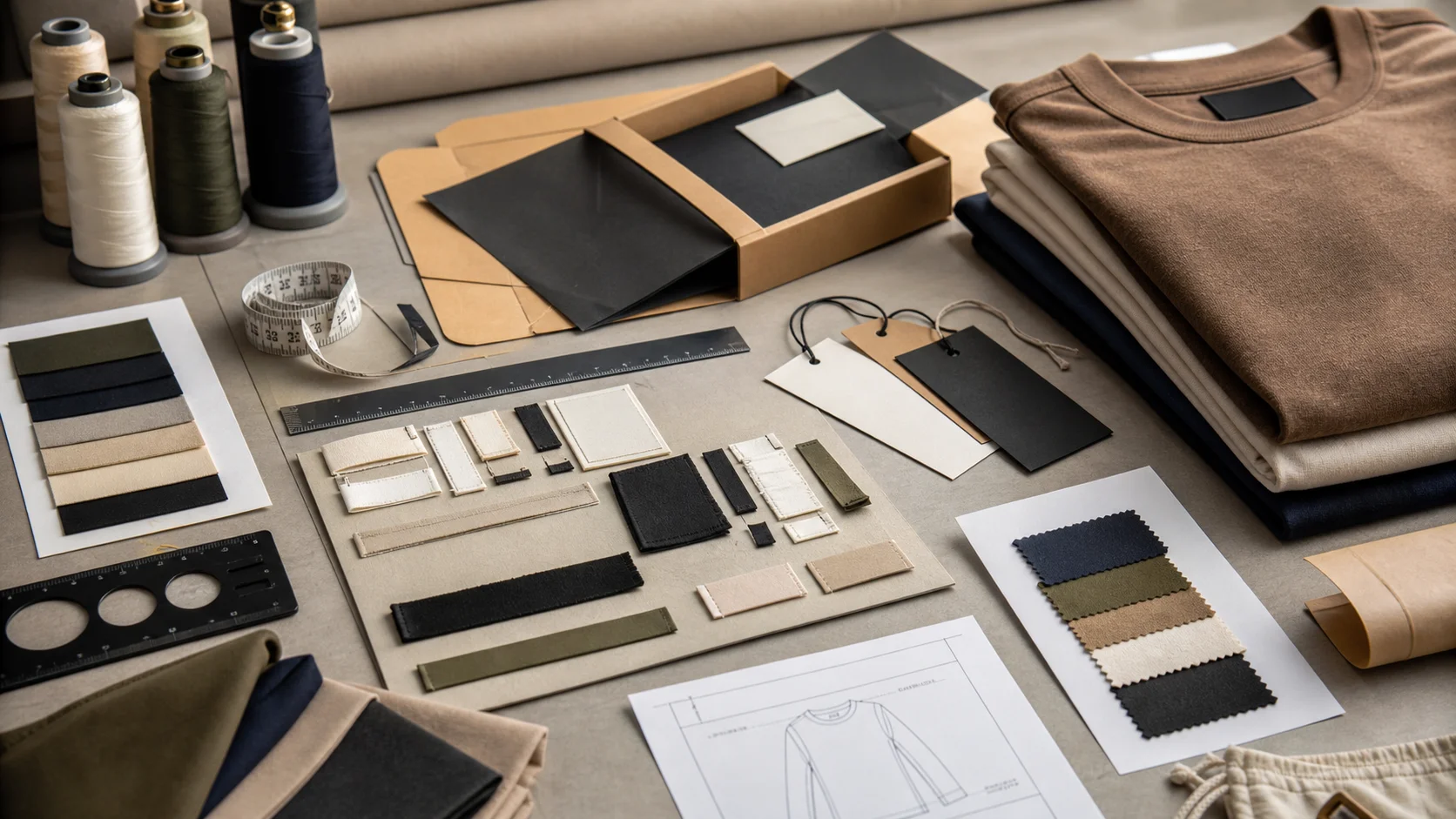
Custom Tissue Paper for Apparel Packaging with checks for samples, fit, MOQ, QC evidence, pricing terms, and delivery risk.
Fast answer: Custom Tissue Paper for Apparel Packaging: GSM, Ink, Fold, and MOQ should be judged by production evidence, not by a generic sourcing promise. The buyer needs sample proof, cost breakdowns, QC checkpoints, and delivery buffers in writing.
Ask for recent sample photos, measurement tolerances, fabric or print test assumptions, decoration test notes, packing examples, and a named inspection checkpoint. These details show whether the team can repeat an approved sample at bulk volume.
Separate garment cost, decoration, labels, packaging, sampling, testing, freight, and rush charges. When every cost line is visible, it becomes easier to reduce colorways, adjust size depth, or reserve more time for sampling.
At a Milan showroom, I watched a buyer open a folded shirt in three seconds flat. The tissue did half the selling before the collar even appeared. That is the quiet power of custom tissue paper for apparel packaging. Clean folds, a crease-free wrap, and a logo that sits flat can lift perceived value fast, even on a $24 tee. At factory docks, in showroom unpacking, and in retail backrooms, I kept seeing the same thing: the box was ordinary, the presentation was not.
Across eight countries, the shelf effect stayed stubbornly consistent. A $15 basic knit in plain kraft packing looked like margin. Put the same knit in printed tissue, with 60-70% ink coverage and a precise fold, and it suddenly looked closer to a $38 item. Premium brands exploit that gap. Mass-market brands usually leave it on the table. In Europe and Japan, buyers notice paper quality, print alignment, and fold memory far more often than they do in many North American high-volume programs, where packaging is still treated as utility. According to ISO standards for quality management, consistent process control matters because small material and handling variations compound across production lots.
What factory visits reveal about print quality is less glamorous than marketing suggests. A 17 GSM sheet can look sharper than a 28 GSM sheet if the fiber blend holds ink well and the calendering is even. Damage reduction claims of 10-15% in transit showed up when tissue reduced sleeve abrasion inside cartons, though the real gain was fewer scuffed hems, not miracle protection. And the counterintuitive part: a tighter one-color logo at 18-22% ink coverage often performs better than a thick, heavily saturated design, because heavy laydown can crack on folds and telegraph creases.
For brands also buying clothing packaging solutions, tissue is the cheapest visible signal in the box. A few cents can move a product up a category. That matters whether you sell a $12 sock set or a $220 coat.
Paper specs decide whether the sheet looks refined or flimsy. GSM, caliper, opacity, pH, print area, and fold performance are the first things I check. For apparel, the common range is 17-28 GSM, with caliper often between 0.06 and 0.12 mm depending on the fiber mix. Lower GSM can still work well if the fibers are long enough and the coating is tuned for the ink. One 17 GSM stock I inspected held a tighter repeat than a 22 GSM recycled option because the surface sizing was better balanced.
Acid-free paper matters for garments that sit in storage for 6-12 months, especially white knits, silk blends, and packaged accessories. Recycled stock is attractive for sustainability targets, but it can vary more in shade and tear resistance unless the mill tightly manages pulp source and de-inking. Virgin fiber usually gives the best print clarity and the cleanest fold memory. Blended stock sits between them, often at a better price point. Data from Textile Exchange shows that recycled and preferred fiber sourcing can reduce pressure on virgin inputs, but packaging buyers still need to test actual performance, not just claims.
Inks and coatings can create dye migration risk, especially with dark garments and metallic finishes. I have seen black tissue transfer a faint grey rub mark onto cream jersey after 48 hours in humid storage. White tissue reduces that risk, while dark print needs stronger rub testing. Denim usually needs higher tear strength, around 3.5-5.0 N on small hand tests, because the fabric edges are abrasive. Knitwear can tolerate softer sheets. Intimates need lower lint and cleaner pH. Accessories such as belts or scarves need more presentation value than resistance, so print sharpness often matters more than bulk.
Factory engineers told me that pH drift beyond 7.5 can raise yellowing risk for pale fabrics, while opacity below 70% lets logos bleed through and weaken the reveal. For brands weighing cut and sew manufacturing, tissue spec should match garment sensitivity, not just box size. That is where many packaging briefs fail.
Brand codes translate well onto tissue because the surface is simple and unforgiving. Logos, repeats, monograms, launch dates, and short messages all work if they are controlled. I have seen a one-color repeat on 70 GSM kraft tissue outperform a glossy full-coverage concept because it felt calmer and more deliberate. Brands spend heavily on hangtags and mailers, then waste the tissue with messy graphics that fight the rest of the pack.
The technical limits are clear. One-color printing is cheapest and fastest. Two-color work gives more hierarchy, but registration tolerance tightens fast, often within 1-2 mm. Full-coverage print looks rich, yet it adds drying time, higher waste, and more risk of cracking on folds. Seasonal programs can use custom tissue paper for apparel packaging to bridge campaigns, gift sets, and launch drops without reworking the box. That is useful when collection calendars shift every 6-8 weeks.
Consistency matters across cartons, labels, hangtags, and mailers. When the tissue repeats the same typeface weight and spacing as the carton, the package feels intentional. When it does not, the package looks assembled by four different teams. I have seen brands spend $0.18 more per unit on cartons and forget to spend $0.02 on tissue alignment. The customer notices the mismatch first.
Last year I worked with a brand that sold entry denim at $59 and outerwear at $240. Their expensive four-color tissue looked busy, while a restrained one-ink monogram on 19 GSM stock looked premium and cut their rejection rate by 11% after a 2,000-piece pilot. They also tied the packaging to their private label clothing services, which made the whole system feel coherent rather than decorative.
Pricing starts with sheet size, GSM, print colors, MOQ, finishing, and shipping mode. A 50 x 70 cm sheet at 17 GSM with one-color print can land in a very different band than a 70 x 100 cm sheet at 22 GSM with two-color registration and anti-setoff coating. In factory quotes I reviewed, entry-level tissue often sat around $0.04-0.09 per sheet at 10,000-20,000 sheets, mid-tier at $0.09-0.18, and premium nearer $0.18-0.35 depending on finish and volume. MOQ 500 is common for local converters, while larger mills may want 5,000 or 10,000 sheets.
Costs rise fastest on short runs, special inks, custom die sizes, and air freight. A small brand ordering 1,200 sheets can pay more for tooling and setup than for paper itself. Plate fees might add $80-250 per color. Waste allowances can add 3-8% to the quote. Warehouse handling can add another $0.01-0.03 per sheet if the tissue ships flat and must be counted, packed, and relabeled before fulfillment.
I compare tiers this way. Entry brands usually need a clean one-color sheet, standard size, and 17 GSM stock. Mid-tier brands can justify 19-22 GSM, two colors, and better opacity. Premium brands often pay for custom repeat spacing, careful shade matching, and archival-grade acid-free stock. None of those upgrades should be random. A tissue sheet that costs $0.12 and helps a $90 garment feel like $120 is a strong trade. A tissue sheet that costs $0.28 and adds no clear lift is vanity.
Freight can erase a cheap quote. A lot of buyers chase a $0.03 unit savings and then spend $600 extra on air to fix a missed launch date. I prefer landed cost, not board price. If a program needs 20,000 sheets and tissue adds $1,600 all-in, that is 1.1% on a $145,000 apparel order. That is manageable if the packaging supports sell-through and reduces returns tied to wrinkling or scuffing. For brands wanting a quick starting point, request a custom tissue paper quote and compare the landed number, not the headline one.
Supplier audits should start with the paper mill source, the print line, color control, certification, and complaint history. I ask where the pulp comes from, whether the converter tracks lot numbers, and how they segregate white, natural, and printed runs. FSC paperwork helps, but I still want the lot trace. A supplier that cannot show retained samples from the last 3 months is usually hiding weak control. According to FSC chain-of-custody guidance, documentation only works when it is maintained from source to final product.
Sample approval should test folding, rub resistance, and ink transfer, not only color match. I have seen beautiful samples fail after a 24-hour compression test because the print cracked at the fold line. Rub the sample against white cotton, then against a dark knit, then pack it in a carton for 48 hours. If the tissue sheds or transfers, it is not ready. Direct factory sourcing is usually cheaper and more transparent. Trading companies can add flexibility, but they often mask mill origin. Local converters are faster and easier to reach, though margins are higher.
Factory red flags are easy to spot once you have walked enough floors. Inconsistent shade lots. Weak final inspection. Lead times that sound impossible but are promised anyway. I once saw a supplier quote 7 days for a custom print job that realistically needed 18-21 days, drying included. Regions also differ. North Asia often offers better print consistency and lower defect rates on high-volume runs. South Asia can be cost-competitive, but freight and communication lag can stretch a 2-page approval chain into a 2-week delay. Europe tends to price higher, yet response time is often quicker. North America is strongest for fast turns under 3,000 sheets.
For buyers who care about packaging and garment identity together, the same discipline used in premium private label clothing services should apply here. The paper is not an afterthought. It is a controlled component.
Start with use case, not artwork. Define the garment type, fold style, sheet count, and what the tissue must do. A silk blouse wrapped for boutique retail needs different paper than a 320 GSM French terry hoodie shipped in a mailer. Write the brief with dimensions, target GSM, preferred color, print area, and whether the sheet must fit a single fold or a double wrap.
Your brief should include at least five facts: garment category, box or mailer size, sheet size, branding goal, and shipping target. I also ask for one reference pack and one bad example. That tells the supplier more than vague style language. If the brand sells through wholesale and DTC, say so. A tissue design that looks luxurious in a showroom may fail in a warehouse when workers fold 800 units per shift.
Run a pilot first. I like 500-1,500 sheets for new programs, with a 7-10 day approval window once the sample arrives. Reorder triggers should be tied to inventory, not panic. If stock falls below 30% and lead time is 4 weeks, reorder immediately. If defect rates exceed 2% on inspection, hold the next batch until the issue is solved. The five data points every buyer should collect before signing are simple: unit price, MOQ, lead time, defect policy, and freight terms.
Here is the procurement sequence I recommend: request three quotes, approve one physical sample, place a pilot order, inspect 200 sheets, then scale only after the first production lot passes. That order reduces overbuying and saves the team from paying for 25,000 sheets before the logo size is even right. In other words, custom tissue paper for apparel packaging should be treated like any other production input: custom, measured, and verified before scale.
Domestic sourcing is faster. Overseas sourcing is cheaper. That trade-off rarely changes. In the United States or Europe, a domestic converter can often turn a simple 1-color run in 7-14 days, sometimes faster for 1,000-3,000 sheets. China, India, or Vietnam can price better on 10,000-50,000 sheets, but total timing usually lands at 3-6 weeks once printing, drying, packing, and ocean or air transit are included. A 2-week sample phase can save a 10-week production mistake, especially when artwork scale or fold alignment is off.
Holiday peaks stretch everything. I have seen October orders slip because factories were already booked for November retail programs. Lunar New Year can add 10-20 lost production days. European plants often shut for summer holidays, and North American converters slow down near year-end when mailer and gift orders surge. Speed, cost, and customization form a triangle. If speed matters most, go domestic and keep the design simple. If unit price matters most, go overseas and lock artwork early. If customization matters most, ask for a sample run before you commit volume.
The cleanest decision framework is this: choose local if the launch is under 21 days away, choose overseas if the order is above 10,000 sheets and the launch is 6-8 weeks out, and choose hybrid if you want a small domestic pilot before a larger offshore reorder.
For sustainability-minded buyers, it also helps to compare supplier certifications and material claims against recognized standards such as OEKO-TEX and trade guidance from Trade.gov when evaluating import pathways, compliance, and sourcing risk.
Most apparel programs fall between $0.04 and $0.35 per sheet depending on size, GSM, print colors, and volume. A 50 x 70 cm one-color sheet at 17 GSM usually costs less than a larger 70 x 100 cm two-color sheet at 22 GSM. Freight, tooling, and waste allowances can add 10-20% to the landed total.
For most apparel, 17-22 GSM works well. Lighter sheets suit knits, tees, and accessories, while 24-28 GSM is better for denim, coats, and premium folding where more body is useful. Print quality depends more on fiber mix and coating than on GSM alone.
Simple domestic runs can take 7-14 days after artwork approval. Overseas orders usually need 3-6 weeks, and that can stretch during holiday peaks or factory shutdowns. A sample phase should take 7-10 days before full production starts.
Low MOQ options are often easier through local converters and smaller print shops, where minimums can start around 500 sheets. Larger mills may require 5,000 to 10,000 sheets. Ask for retained samples, shade control, and a clear defect policy before placing a small order.
Yes, if the sheet is matched to the garment and folded correctly. In factory observations, better tissue reduced scuffing and abrasion in cartons by around 10-15% in some programs. It will not replace structural packaging, but it can protect finishes and improve the unboxing experience.