
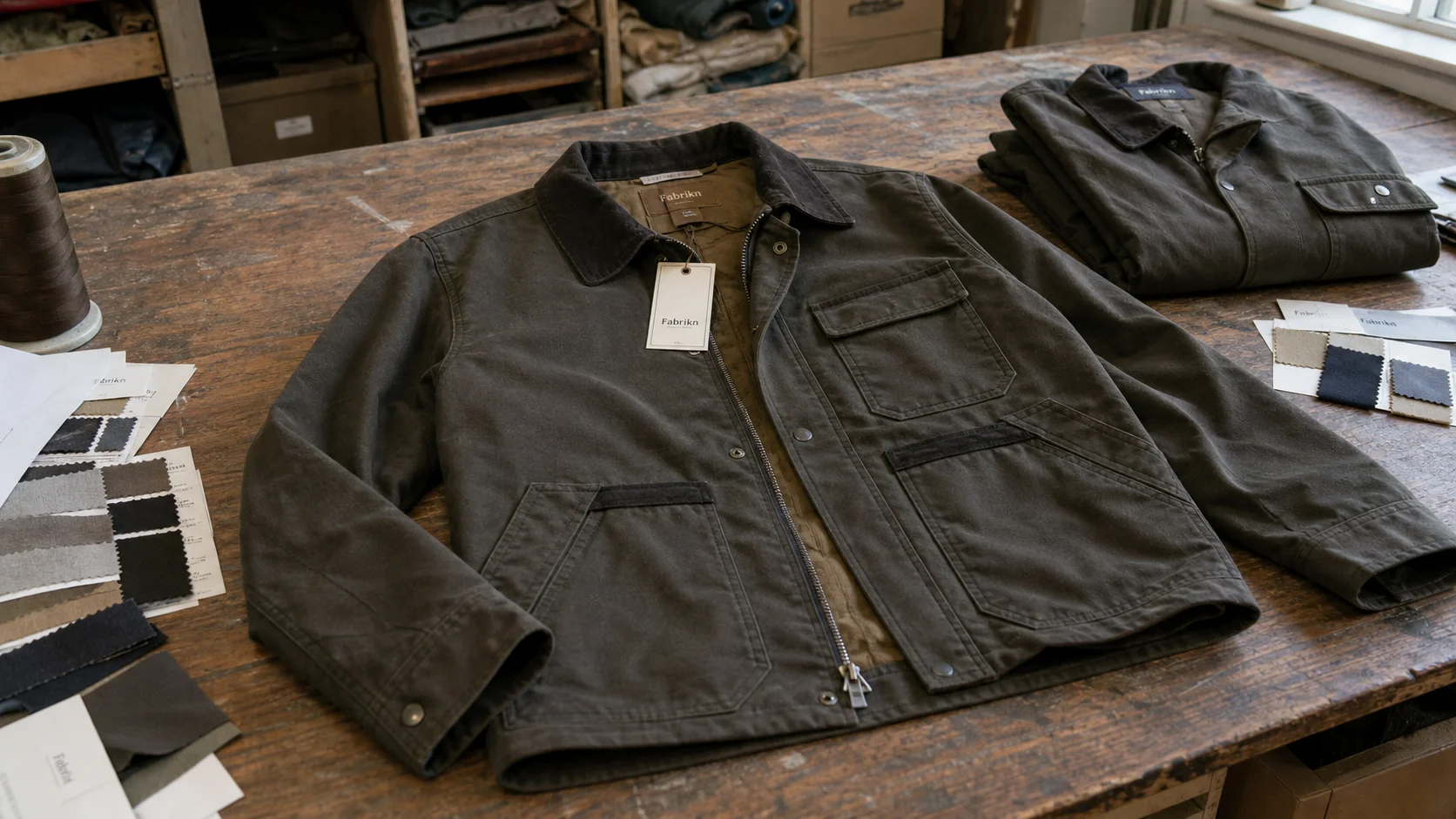
A focused SEO outline for trade companies sourcing custom work jackets, covering durable fabrics, jobsite-ready construction, logo decoration, compliance...
Custom Work Jackets for Trade Companies - Clothing Manufacturer manufacturing guide
Custom work jackets are not just branded outerwear. For trade companies, they are part of the uniform system, the protection layer, and often the first item a customer notices on site. A good program needs more than a logo placement. It needs the right fabric weight, a sensible fit range, reliable trims, and a production plan that can hold up when repeat orders are placed months later.
This guide is written from a sourcing perspective for buyers working in the clothing manufacturer category. It focuses on what matters when ordering from a custom work jackets manufacturer for trade companies: material choices, typical MOQ ranges, sample approval steps, lead-time drivers, inspection risks, and the tradeoffs that affect cost and performance.
For companies comparing suppliers, it helps to review the manufacturer’s broader capabilities first. A service overview can clarify whether the factory handles pattern development, fabric sourcing, embellishment, and packing under one roof: fabrikn.com/services/. If you need a direct line for product discussion, contact options are usually the fastest way to request a quote or send a tech pack. The about page can also help confirm whether the supplier is set up for repeat B2B production rather than one-off retail sampling.
Trade companies usually buy jackets for practical reasons before branding. The garment has to perform in variable weather, allow movement over base layers, and survive repeated washing or hard daily use. The same jacket may be worn by technicians, installers, warehouse crews, site supervisors, or customer-facing field teams, which means the product must cover a wide fit range without looking sloppy.
That creates a different brief from fashion outerwear. A trade jacket should be durable enough for abrasion, clean enough for client-facing environments, and simple enough that replacement orders can be re-run without redesigning the whole program. The best approach is usually a restrained design with a few well-chosen features rather than a heavily styled jacket that looks good in a mockup but fails in the field.
For trade work, the best jacket is rarely the thickest jacket. It is the one that balances abrasion resistance, warmth, logo durability, and repeatable fit across sizes.
Buyers should also think beyond the first order. If a company expects reorders, the manufacturer needs to keep fabric references, trim codes, logo files, and size specs stable. Small variations are normal across dye lots and production runs, but a disciplined supplier should be able to control those differences within an acceptable tolerance.
Trade companies generally choose from a few work-jacket formats. The right option depends on climate, movement needs, and whether the jacket is meant for outdoor site work, warehouse use, or customer-facing visits.
Jacket type Best use case Typical strengths Tradeoffs Softshell jacket Mixed indoor/outdoor work, cool weather, active roles Good mobility, clean appearance, moderate weather resistance Usually less warm than insulated styles; water resistance is limited unless specified carefully Insulated work jacket Cold sites, outdoor crews, winter programs Warmth, wind protection, layered comfort More bulk, higher cost, fit must be managed carefully to avoid restriction Bomber-style work jacket Field staff, logistics teams, branded uniforms Easy to wear, broad size acceptance, familiar look Can look too casual if fabric and trim choices are weak Canvas or cotton duck jacket Heavy-use trade environments, rugged appearance Abrasion resistance, classic utility feel Heavier hand feel, slower drying, more shrinkage risk if fabric is not controlled Hi-vis work jacket Roadwork, utilities, compliance-led environments Visibility, compliance options, strong site identity Requires careful trim and print placement, often more testing and stricter spec controlSoftshells are often the easiest starting point for trade companies that want a neat uniform look. They are generally lighter than insulated jackets, resist light wind, and take embroidery well if the fabric is stable. Insulated jackets make more sense where warmth is the priority, but they need careful pattern work so that the bulk does not make the wearer feel boxed in.
Canvas and cotton duck options create a more rugged impression, which suits some trades well. The tradeoff is weight and wash behavior. If the buyer is not prepared to accept a heavier jacket, or if the garment needs frequent laundering, a more technical shell fabric may be easier to manage.
Fabric selection is where a lot of jacket programs succeed or fail. A custom work jackets manufacturer for trade companies should be able to explain the performance differences between each option and show how those choices affect cost, hand feel, and lead time.
Common shell options include polyester, polyester-spandex blends, cotton twill, cotton canvas, nylon blends, and laminated technical fabrics. Polyester-based shells are popular because they are stable, color-consistent, and easy to decorate. Cotton-rich fabrics feel more traditional, but they can shrink, crease, and fade more quickly if the yarn quality is weak or the washing process is not controlled.
For weather resistance, many buyers ask for a durable water repellent finish or a bonded construction. Those features can improve performance, but they should be specified clearly. A light DWR finish will shed drizzle for a while; it will not turn a jacket into rain gear. If the buyer expects regular wet-weather use, the spec should include seam construction, waterproof zippers, or a laminated membrane where appropriate.
Lining choices affect comfort, print behavior, and price. Mesh linings keep weight down and improve breathability. Taffeta linings are smoother, easier to layer over, and often more appropriate for insulated styles. Quilt padding or synthetic fill adds warmth, though too much fill can reduce mobility and make logo placement more difficult near seam lines.
Thermal performance should be defined in practical terms rather than vague marketing language. A buyer can specify the expected season, typical working conditions, and whether the jacket is meant to be worn over a hoodie, fleece, or standard uniform shirt. That guidance helps the manufacturer choose the right pattern ease and insulation level.
Zippers, snaps, hook-and-loop tape, drawcords, and elastic components may sound minor, but they often determine whether the jacket feels professional after a few months of use. Metal zippers can feel more robust, yet they may not suit every budget or climate. Coil zippers are lighter and usually more flexible. Zipper pull tabs should be easy to grip with gloves if the jacket is intended for outdoor trades.
Thread choice matters too. In high-stress areas such as shoulders, cuffs, pockets, and hems, stronger polyester thread is usually preferred over general-purpose thread. If reflective tape is required, it should be placed where it supports visibility without interrupting fit or branding. Low-quality trim is a common source of complaints, especially when a jacket otherwise looks strong on paper.
Custom work jackets can be branded in a few different ways, and the best choice depends on the surface fabric and the job environment.
Not every decoration method suits every fabric. Heavy embroidery on a thin softshell can cause distortion. Large prints on textured canvas may not sit cleanly. A practical manufacturer will recommend decoration based on the material instead of simply accepting any artwork file.
Placement also deserves attention. Left chest logos are common because they stay visible while the garment remains easy to wear across roles. Back logos work well for site identification. Sleeve branding can help when jackets are worn open, though sleeve print and embroidery must be positioned carefully so they do not interfere with cuff movement or jacket stacking when the arms bend.
Sampling is where many custom jacket programs save money later. A rushed sample stage often leads to costly bulk corrections. A well-managed process usually moves through a few predictable steps: tech pack review, material confirmation, prototype or development sample, fit sample, pre-production sample, and then bulk approval.
The manufacturer should receive measurements, reference images, logo files, fabric targets, color codes, size range, and packing instructions. If a buyer is unsure about every detail, it is still worth defining the non-negotiables early: weather resistance, warmth level, decoration method, and acceptable fit.
This sample tests the basic structure. It is the moment to review silhouette, pocket balance, collar height, sleeve length, and overall proportions. Buyers should expect to see differences from the final product at this stage, especially if fabric substitutions are still being discussed.
The fit sample matters when the jacket will be issued across a team. Trade companies often need room for layers, but not so much room that the garment looks oversized. Size grading should be checked across the range, not only in the sample size. Arm mobility, cuff opening, and hem drop are common trouble spots.
The pre-production sample should reflect approved fabric, trims, decoration, and label placement. This sample is the closest version to bulk production and should be examined carefully for color accuracy, stitch quality, logo scale, zipper feel, and packaging.
At this stage, buyers should confirm all details in writing. If something is still vague, it will usually become more expensive once bulk begins. A useful rule is simple: if a feature affects fit, safety, branding, or price, it should be approved before production starts.
MOQ varies by manufacturer, jacket complexity, and decoration method. For custom work jackets, a common starting range is often 100 to 300 pieces per style or color, with some factories asking for more if special fabric, custom-dyed material, or heavy embellishment is involved. Programs with multiple size runs or multiple logo placements can push that number higher.
Low MOQ orders are possible, but they usually cost more per piece. A buyer should expect to pay for setup, pattern work, sampling, and material sourcing effort whether the order is 50 pieces or 500 pieces. If the program is likely to repeat, a slightly larger initial order can lower the unit cost and reduce the risk of running out of stock too quickly.
Lead time depends on several variables:
For a straightforward stock-fabric jacket with simple branding, a realistic timeline might be measured in weeks rather than days. For a custom-developed program with special fabric and finishing, the timeline can stretch further. Buyers should build in extra time before seasonal demand, because weather-driven purchases tend to compress production schedules and expose weak planning.
Pricing is usually shaped by a few core elements: fabric cost, pattern complexity, number of components, decoration method, order volume, and packaging requirements. A jacket with a simple shell and one small chest logo will price very differently from an insulated, hi-vis style with reflective tape, multiple pockets, and a custom zipper package.
Buyers often focus on fabric cost first, but labor can matter just as much. Extra pockets, contrast paneling, reinforced elbows, detachable hoods, or internal document pockets all add handling time. More stitch lines mean more chances for visual inconsistency, so a design that looks efficient on a mockup may be slower and more expensive in production.
Trade companies should also weigh lifecycle cost. A cheaper jacket that pills, delaminates, or loses logo clarity after a season may end up costing more than a slightly better-built garment. That does not mean overbuilding the product. It means selecting materials that match the actual work environment and replacing them at a sensible cadence.
Outerwear programs often look fine in a sealed sample but reveal issues in bulk. The most common risks are predictable, which makes them easier to manage when the buyer knows where to look.
Inspection should cover both appearance and function. Buyers should check measurement points, logo placement, seam quality, loose threads, zipper operation, pocket alignment, and packing consistency. If the jacket is intended for outdoor use, it is worth confirming that the garment still performs after a reasonable wash or wear test rather than relying only on a clean-room sample.
Third-party inspection is often useful when volumes are meaningful or when the buyer cannot inspect every shipment personally. Even then, the spec must be clear. Inspection teams can only verify against the approved standard; they cannot correct a vague brief.
Choosing a manufacturer for custom work jackets is partly about production capacity and partly about communication discipline. A good supplier should ask direct questions about weather use, uniform policy, logo file quality, size distribution, and re-order expectations. If a vendor only talks about price and does not ask about wear conditions, that is usually a warning sign.
Useful questions include:
There is also a difference between a supplier that can make a jacket and a supplier that can manage a uniform program. Trade companies usually benefit from the second type. Program support matters when sizes need repeating, stock needs replenishing, and branding cannot drift from one order to the next.
That is where a practical conversation with a manufacturer can help. Reviewing capabilities on a services page, then sending product details through the contact page, tends to produce a more accurate quote than asking for a generic jacket price. Background information on the supplier’s business model can also show whether the factory is structured for B2B apparel manufacturing or for small retail runs.
A well-made custom work jacket does more than carry a logo. It supports brand consistency, improves team presentation, and gives workers a piece of outerwear they are likely to wear repeatedly. The strongest programs are built around clarity: clear fabric targets, clear fit expectations, clear decoration rules, and clear approval steps.
Trade companies do not usually need fashion experimentation. They need dependable jackets that balance practicality and appearance. That means choosing materials that match the job, keeping the design focused, and working with a manufacturer that understands the cost of poor tolerances, weak trims, or uncontrolled shade variation.
If the jacket will be worn often, inspected by customers, and reordered later, the safest route is a controlled development process with honest tradeoffs. A slightly higher unit price can be justified when it reduces returns, improves comfort, and keeps the whole team looking consistent.
Get a free quote from Fabrikn — your trusted B2B clothing manufacturer with 10+ years of experience. MOQ as low as 200 pieces.
Get a Free Quote →MOQ often starts around 100 to 300 pieces per style, though it can be lower for simple programs and higher for custom fabrics, special trims, or complex decoration. The exact number depends on whether the factory is using stock materials or building the jacket from a new specification.
Lead time depends on sampling rounds, fabric sourcing, trim availability, and decoration complexity. A straightforward order may move in a few weeks once approvals are complete. Custom fabrics, waterproof constructions, or large embroidery programs usually take longer.
There is no single best fabric. Polyester softshell works well for active teams and clean branding. Cotton canvas suits rugged use. Insulated technical fabrics are better for cold weather. The right choice depends on climate, movement requirements, and how often the jacket will be washed.
Embroidery is usually the most durable and professional-looking option on stable fabrics. Printing works better for large graphics, detailed artwork, or high-visibility branding. The fabric should guide the decoration method because not every logo treatment behaves well on every material.
At minimum, the development sample, fit sample, and pre-production sample should be reviewed carefully. Buyers should confirm measurements, material references, logo placement, trims, and packing details before bulk begins. Changes after production starts are usually slower and more expensive.
The most common risks are shade variation, embroidery puckering, weak zippers, seam failure, poor size grading, and overpromised weather resistance. A clear spec and proper inspection plan reduce the chance of these problems reaching the final shipment.
For buyers comparing suppliers, the most useful next step is usually a short product brief, followed by a sample request and a production timeline discussion. That approach gives a manufacturer enough information to quote accurately and helps the buyer see whether the supplier is built for repeat trade apparel programs.