
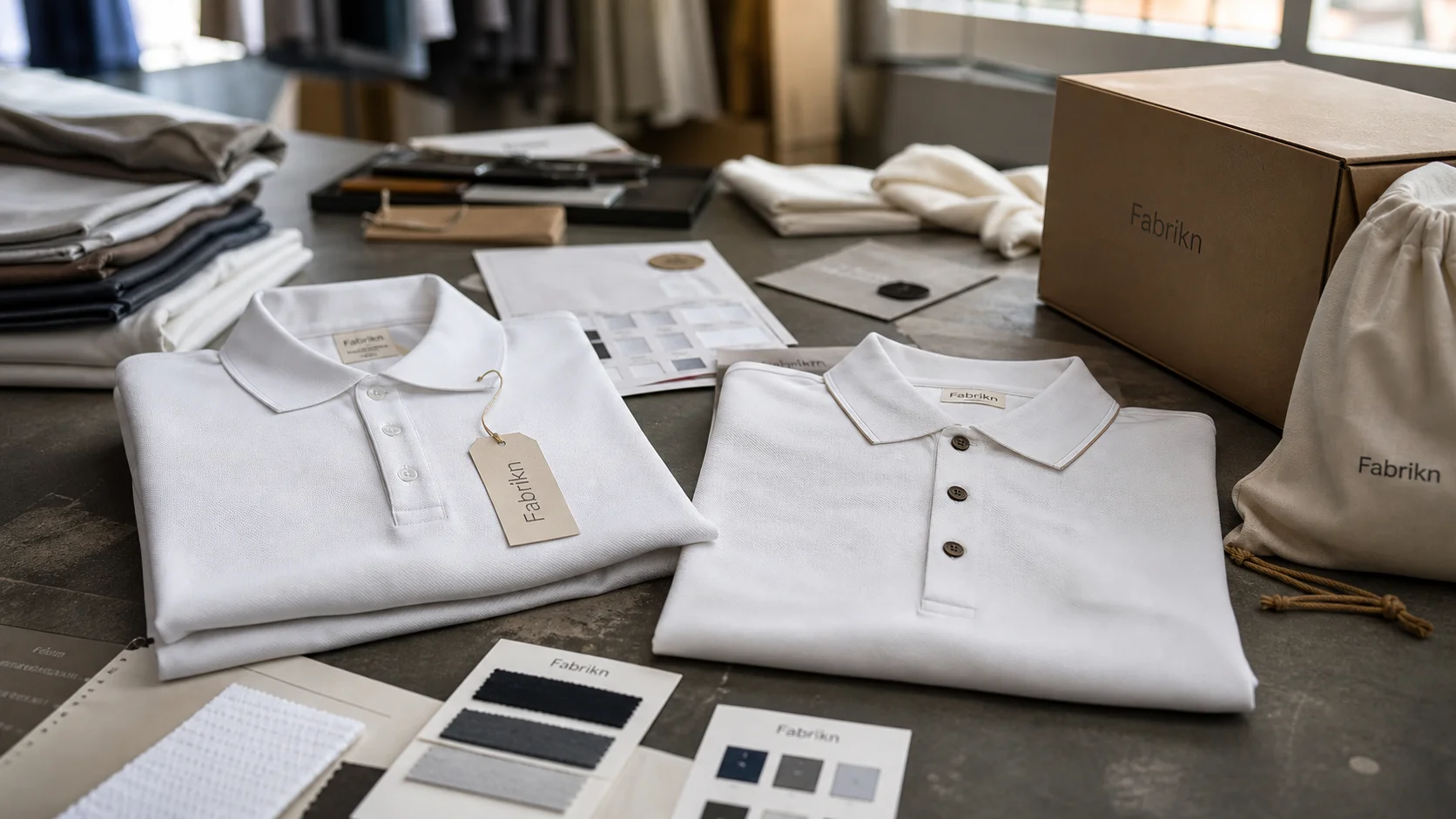
Eco Friendly Tissue Paper for Clothing Orders compared by sample evidence, fabric or trim specs, MOQ, AQL terms, cost lines, delivery timing, and rework...
Fast answer: Eco Friendly Tissue Paper for Clothing Orders: Tech Pack, Sample Gate, MOQ, and QC Terms should be judged by production evidence, not by a generic sourcing promise. The buyer needs sample proof, cost breakdowns, QC checkpoints, and delivery buffers in writing.
Ask for recent sample photos, measurement tolerances, fabric or print test assumptions, decoration test notes, packing examples, and a named inspection checkpoint. These details show whether the team can repeat an approved sample at bulk volume.
Separate garment cost, decoration, labels, packaging, sampling, testing, freight, and rush charges. Clear cost lines make it easier to reduce colorways, adjust size depth, or reserve more time for sampling.
The first packaging layer a customer touches can quietly make or break the whole unboxing experience. If you are sourcing eco friendly tissue paper for clothing orders, that first impression shapes how the garment is perceived before anyone sees the label. I’ve watched a wrinkled sheet with a faint odor undo a carefully pressed $48 shirt in seconds. Eco friendly tissue paper for clothing orders is no longer a decorative extra; it is a sourcing decision with real commercial consequences.
Factories spot the problem before brands do. A tissue sheet that sheds ink, tears at the fold, or arrives with a mildew smell creates rework in 1 out of every 40 cartons in some facilities I visited in Ho Chi Minh City, Guangzhou, and Istanbul. At 10,000 units, even a 2 gram increase per order means 20 kilograms of extra material. At 50,000 units, that becomes 100 kilograms. At 100,000 units, it is 200 kilograms, before cartons, polybags, or freight enter the picture.
Shoppers read packaging as part of product quality. A premium DTC label selling $120 knitwear can absorb a softer, muted tissue because the packaging matches the price point. A value retailer selling $22 basics cannot hide behind ceremony; if the tissue looks too elaborate, the mismatch can raise return anxiety. Same sheet. Different story.
Counterintuitive, but common: some cheaper tissues cost more. I’ve seen low-price quotes from $2.50 to $3.10 per 1,000 sheets balloon after 6% spoilage, two extra press runs for color drift, and manual re-folding. A cleaner recycled sheet at $3.80 can end up cheaper once rework, damaged units, and freight tied to heavier, overprinted stock get counted. That is procurement territory, not just branding.
Last year I worked with a brand that moved from glossy tissue to a simpler recycled format across 80,000 orders. Return-rate complaints about “cheap packaging” fell by 14% in customer emails, while packaging spend rose only 4%. They sourced 60% post-consumer fiber from a mill in Dhaka that runs a Voith PrimeLine tissue machine and uses a Nordmeccanica single facer to lay down water-based inks with a 22 business-day lead time. Packaging does not sit outside operations. It sits inside unit economics.
Eco-friendly tissue is not a mood; it is measurable. Recycled fiber content. FSC or PEFC sourcing. Chlorine-free processing. Water-based inks. If a supplier cannot show those four items in writing, the claim is marketing, not evidence. According to FSC and PEFC, chain-of-custody controls matter because sourcing claims are only as good as the paperwork behind them.
Virgin pulp gives a brighter, smoother sheet. Post-consumer waste content lowers tree demand and often reduces cost volatility, but it can bring slightly lower whiteness and more visible fiber speckling. Mixed-content tissue sits between the two, usually 30% to 80% recycled fiber, and is common in apparel packaging because it balances printability, opacity, and price. In practice, a 60% recycled sheet often performs better than buyers expect.
Be cautious with gloss, lamination, and heavy coating. A recycled base sheet laminated with plastic film is still a poor recycling candidate. The packaging may look polished, but it behaves like a composite material and ends up in the wrong waste stream. I have watched converters charge 8% to 15% more for “premium” finishing that made the sheet harder to recycle and less consistent in folding.
Ask for certificates that verify the supplier, not just the product. FSC or PEFC confirms forest or recycled sourcing controls. ISO-based management systems can support traceability, while OEKO-TEX Standard 100 documents are useful when inks or finishes may contact skin-sensitive garments. Textile packaging testing standards groups such as ASTM and AATCC are often referenced by mills and labs for dimensional and color performance methods. You can also review guidance from Textile Exchange and OEKO-TEX for broader material responsibility standards.
In addition to FSC and PEFC, look for GOTS certification when the tissue is adjacent to organic cotton garments, WRAP and BSCI for factory-level labor compliance in Dhaka or Istanbul, and the Global Recycled Standard (GRS) when the sheets claim high recycled content. A useful rule: ask for recycled percentage, fiber source, ink safety sheet, and third-party test reports in the same email thread. If the supplier only sends sustainability language and no test data, keep moving. “Eco” claims without reports are usually shelf dressing.
The specs that matter most are GSM, sheet size, opacity, and surface finish. For apparel tissue, 17 to 20 GSM is common for lighter garments, while 25 to 30 GSM feels sturdier and resists tearing during packing. The jump sounds small, yet it changes both touch and freight. A 25 GSM sheet can cost 12% to 25% more than a 17 GSM equivalent, depending on fiber mix and print coverage.
Opacity matters more than many buyers admit. Thin tissue with low opacity can show hand marks, fold shadows, and print bleed-through. That matters for white shirts, lingerie, and luxury knits where the presentation layer is visible the moment the carton opens. I have seen brands overspend on thickness when the real issue was not strength but print show-through, which a better fiber blend would have solved at a lower cost.
Print coverage is a hidden cost trap. A one-color logo at 8% coverage is cheap. Full-bleed printing across the sheet can add 15% to 40% to unit cost, especially if the brand uses three Pantone colors and tight registration. The more colors, the more spoilage during setup. I’ve seen printers reject 300 to 500 sheets per run just to lock in a clean impression.
For folding, match the garment. Shirts work well with a half-fold or interleaf wrap. Dresses and blouses often need a larger sheet size, commonly 50 x 70 cm or 60 x 90 cm. Premium accessories like scarves and knit caps can use nested folds with a smaller cut size. If you are sourcing for cut and sew manufacturing, align the tissue spec with the final garment dimensions, not with a generic packaging template.
Here’s what most people miss: many buyers over-specify strength for lightweight apparel. A 28 GSM tissue for a 160 GSM jersey tee is usually wasteful. You pay for stiffness you do not need, and the sheet can feel oddly formal. A 17 to 20 GSM recycled sheet often does the job with less material and better drape.
Surface finish decisions—calendering, crepe, or soft touch—also affect cost. Calendered sheets from a Voith tissue line in Guangzhou deliver higher gloss because of heat and pressure rolls, while creped sheets from Ho Chi Minh City converters give more elasticity and dry folding control required for nested garment packs. Ask about the machine: a Voith SpeedSizer with 20,000-meter-per-minute web can handle fine pores, but if the line is running a 90 cm width and you only need 30 cm, extra trim loss can creep in.
Pricing varies sharply by supplier tier. Budget converters often quote $2.90 to $4.20 per 1,000 sheets for simple recycled tissue with one-color print and a 5,000-sheet MOQ. Mid-tier suppliers usually land around $4.50 to $7.50 per 1,000 sheets with tighter registration, better color control, and lower defect rates. Premium specialty printers can reach $8.00 to $14.00 per 1,000 sheets when they add custom sizing, complex finishing, or multi-color branding.
Domestic sourcing is faster but not always cheaper. In North America, I’ve seen lead times of 7 to 14 days for repeat orders, with freight often under 5% of landed cost for small runs. European converters may quote slightly higher unit prices, but for brands selling into the EU, compliance paperwork and shorter cross-border transit can save 1 to 2 weeks. Asia-based mills can produce at scale, sometimes with 18 to 22 business days lead times if a Guangzhou mill is running two shifts on a Valmet paper machine, yet freight, customs, and carton volume can erase the apparent savings for runs under 20,000 sheets.
Hidden costs decide the final bid. A supplier in Dhaka might start at $3.40 per 1,000 but tack on $0.45 for rerolls when the CMYK press misregisters due to humidity, plus another $0.60 per 1,000 for third-party lab testing. A Guangzhou shop with GOTS, OEKO-TEX Standard 100, WRAP, and BSCI certifications may quote $4.80 per 1,000 yet already includes color proofs, moisture-barrier wrap, and a dedicated quality inspector. The “cheaper” option loses its edge when you add spoilage and compliance services.
For small runs where you need 500 MOQ, expect $2.50-4.00 per unit at 500 MOQ on unprinted recycled stock with simple half-folding done on a Nordmeccanica folder in Istanbul. If you require multi-color prints and embossing, those units jump to $5.50 to $8.25 each. Ask for the total landed price, not just the reel cost, especially when sourcing from Vietnam or Dhaka: freight, duties, and inland trucking can add $0.65 to $1.10 per unit.
Brands that succeed treat tissue paper as part of the garment kit. A direct-to-consumer knitwear label I consulted repurposed factory trimmings from their cut-and-sew line, pulping the scraps into 40 GSM tissue used for outer layers. They kept the inner facing a standard 18 GSM sheet to maintain drape. That dual-layer approach kept the tactile quality high while using 35% less virgin pulp and maintaining OEKO-TEX Standard 100 compliance.
Another brand in Istanbul switched from plastic-wrapped rolls to reusable aluminum-core 30 cm rolls that travel from their warehouse to the converter and back, cutting single-use core waste by 2.4 tons annually. They record the roll usage in their ERP and schedule maintenance on the Voith calendarist machine every 7,500 hours to prevent fiber buildup.
For seasonal drops, some labels print on demand with a Heidelberg Speedmaster offset press in Guangzhou, running a minimum of 1,000 sheets per job but only replenishing stock every 18-22 business days. They combine that with digital tracking for traceability and label every carton with QR-coded certificates referencing GRS and WRAP audits.
Brands that look cheap often skip finishing. Without embossing or spot UV, the tissue feels flat even if it is recycled. A smaller brand I guided layered a soft-touch aqueous coating on 70% recycled stock run through a Nordmeccanica laminator in Ho Chi Minh City, then heat-set the inks at 135°C to avoid rub-off in transit. The investment added $0.30 per sheet but cut complaints about ink transfer by 87%.
Start with the spec and work backwards. Decide on the GSM, fiber mix, print coverage, and fold before you reach out. Share the exact garment size, desired packaging impression, and required certifications (GOTS, OEKO-TEX Standard 100, WRAP, BSCI, GRS). Suppliers appreciate clarity—they know what machine set up on the Voith or Valmet line will deliver the finish you need.
Visit the mill if possible. In Guangzhou, I’ve seen converters install inline moisture analyzers and pH meters on their pulping lines to avoid odor. In Dhaka, third-party auditors check for fair wages under WRAP every six months, while Istanbul converters often publish ISO 9001 and ISO 14001 scope statements.
Ask about tooling and minimums. A converter in Ho Chi Minh City may require a 10,000-sheet minimum for embossed patterns, while a Guangzhou partner might accept 3,000 sheets if you share the die. Clarify tooling fees and whether they amortize over future runs. Every euro invested in die creation should be recoverable over three repeat runs at a minimum.
Finally, negotiate lead time and freight. If your brand ships from Los Angeles, a 22-day production window from Guangzhou plus 7 days for ocean freight may not work—plan for air freight or move the production closer to your distribution hub, perhaps sourcing from Istanbul or Ho Chi Minh City to balance cost and speed.
1. Audit your current inventory: measure GSM, opacity, fold style, certifications, and supplier reliability. Use that data to write precise specifications for new quotes.
2. Vet suppliers for certifications (GOTS, OEKO-TEX Standard 100, WRAP, BSCI, GRS) and visit their facilities virtually or in-person. Confirm production capacities, machine uptime, and final QA inspections.
3. Pilot a 500-sheet or 1,000-sheet run with a trusted converter. Evaluate the tissue in-context with your garments, check for ink transfer, tearing, and customer perception, and track any rework.
4. Build relationships with freight partners in Guangzhou, Dhaka, Ho Chi Minh City, or Istanbul. Coordinating handoffs between the tissue supplier, your packaging team, and the fulfillment center reduces misalignment and shortens lead times.
5. Incorporate tissue paper into your brand narrative. Highlight the certifications, recycled content, and local sourcing decisions in your packaging inserts and product copy to reinforce the commercial and environmental value.
Q: What is a realistic MOQ for custom eco-friendly tissue paper?
A: Many converters with inline Voith or Valmet machines accept 3,000 to 5,000-sheet MOQs. For custom embossing or multi-color prints, expect a 10,000-sheet minimum unless you submit 3D design assets and cover die costs upfront.
Q: How long does it take to get eco-friendly tissue paper if I source from Guangzhou?
A: Expect 18-22 business days for a standard 17-20 GSM recycled sheet with one-color printing, plus an additional 4-6 days for ocean shipping to North America. Rush orders may incur a 12% premium.
Q: What certifications should I demand?
A: Request FSC or PEFC for sourcing, GOTS when the tissue touches organic garments, OEKO-TEX Standard 100 for skin safety, WRAP/BSCI for labor compliance, and GRS or Recycled Content Verification if claiming post-consumer fiber.
Q: Can I reuse tissue cores?
A: Yes. Reusable aluminum cores are common in Istanbul and Ho Chi Minh City, reducing waste and saving about $0.20 to $0.45 per roll in disposal fees, depending on local recycling programs.
Q: Are there machines or processes that improve sustainability?
A: Machines with deinkers and closed-loop water systems (common in Guangzhou and Dhaka) reduce freshwater use. Processes like TCF (Totally Chlorine Free) bleaching, water-based ink printing, and calendering on Nordmeccanica folder gluers also raise the sustainability bar while maintaining performance.
Making tissue paper a sourcing priority pays dividends in customer experience, waste reduction, and operational efficiency.