
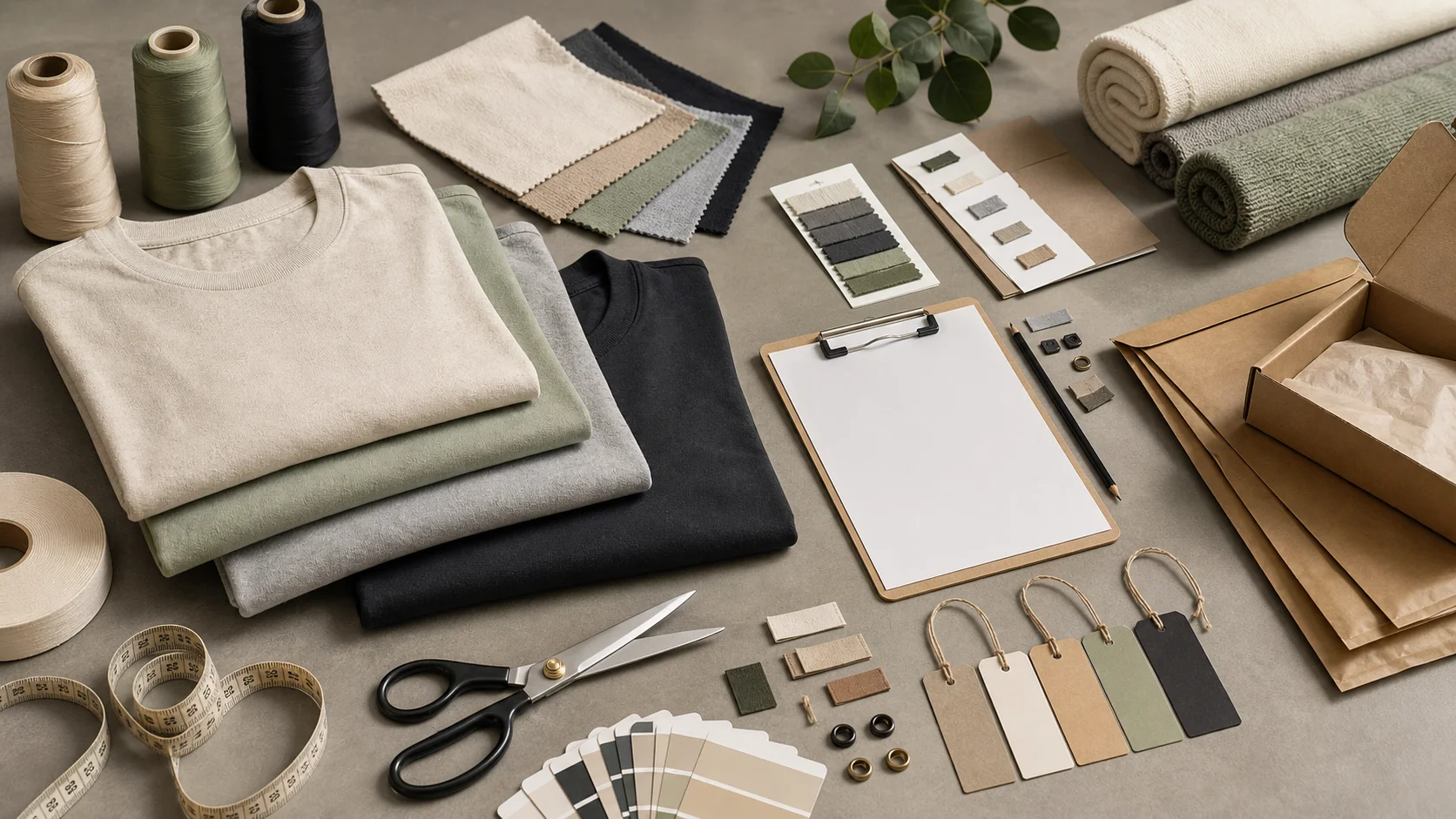
Fashion Brand Return Policy Practices with checks for samples, fit, MOQ, QC evidence, pricing terms, and delivery risk.
Fast answer: Fashion Brand Return Policy Practices: Samples, Cost Lines, QC, and Delivery Risk should be judged by production evidence, not by a generic sourcing promise. The buyer needs sample proof, cost breakdowns, QC checkpoints, and delivery buffers in writing.
Ask for recent sample photos, measurement tolerances, fabric or print test assumptions, decoration test notes, packing examples, and a named inspection checkpoint. These details show whether the team can repeat an approved sample at bulk volume.
Separate garment cost, decoration, labels, packaging, sampling, testing, freight, and rush charges. When every cost line is visible, it becomes easier to reduce colorways, adjust size depth, or reserve more time for sampling.
A fashion brand return policy can make or break your customer experience. For apparel and accessories, where fit, color, feel, and style matter, buyers often hesitate before clicking “purchase.” A clear, fair, and well-structured return policy helps reduce that hesitation, builds trust, and supports higher conversion rates. At the same time, the wrong policy can trigger unnecessary refunds, damaged margins, and avoidable customer service disputes.
This guide covers fashion brand return policy best practices with a practical business focus. Whether you are launching a new label or optimizing an established apparel business, the goal is the same: create a return policy that protects your brand, improves conversion, and minimizes costly refund issues.
For fashion brands that want to strengthen their operations from product development to fulfillment, it also helps to align policy decisions with your broader manufacturing and sourcing strategy. Learn more about our capabilities at Fabrikn Services, explore our company background at About Us, or contact us to discuss your next collection.
In fashion, returns are expected. Unlike many categories, apparel has subjective value. A customer may love the design but dislike the fit. They may order multiple sizes, compare colors under natural light, or buy for an event and return afterward. Because these behaviors are common, a return policy is not just a legal or customer service document; it is a sales tool.
From a conversion perspective, shoppers want reassurance before buying. A strong return policy lowers perceived risk and increases purchase confidence. When customers know they can return an item easily, they are more likely to complete checkout, especially if they are purchasing from a new brand.
From an operations perspective, the policy defines how much friction your team will face after the sale. If the terms are unclear, inconsistent, or overly generous without controls, your business may see more chargebacks, disputes, worn merchandise returns, and restocking complications. The ideal policy balances customer trust with business protection.
For fashion brands, the best return policy is not necessarily the most lenient. It is the one that is clear, easy to understand, and designed around real customer behavior and business economics.
Before improving your policy, make sure the basics are covered. A high-converting fashion return policy typically includes the following elements:
Return window: The number of days customers have to initiate a return, commonly 14, 30, or 60 days.
Condition requirements: Whether items must be unworn, unwashed, with tags attached, and in original packaging.
Eligible items: Which products can be returned, and which are final sale, custom-made, or hygiene-sensitive.
Refund method: Whether refunds go back to the original payment method, store credit, exchange, or a combination.
Shipping costs: Who pays for return shipping and whether original shipping is refundable.
Exchange process: How size exchanges or product swaps work.
Return authorization: Whether customers need approval or a return merchandise authorization, often called an RMA.
Inspection and processing timeline: How long it takes to inspect returns and issue refunds.
Non-returnable items: Items such as underwear, swimwear, personalized goods, or limited-edition pieces.
These details should be written in plain language. A policy that is technically strong but hard to understand often creates more confusion than protection.
Customers rarely read long legal text. They scan. That means your return policy should be concise, organized, and written in a way that answers the most important questions quickly. Use short paragraphs, clear headings, and bullet points. Make it easy for shoppers to find the return policy from product pages, checkout pages, the footer, and order confirmation emails.
The easier it is to find and understand your policy, the more trustworthy your brand appears. Clarity also reduces customer service tickets because buyers do not need to email your team for basic information.
Return windows should reflect the realities of how customers shop for fashion. A short window may protect inventory, but it can also deter purchases. A longer window may improve confidence, but it can increase late returns and operational complexity.
For many fashion brands, 30 days is a practical starting point. It offers enough time for delivery, try-on, and decision-making while still encouraging timely returns. In some cases, 14 days may work for fast-moving or seasonal collections, while 60 days may be appropriate for premium brands with stronger margin buffers and brand loyalty.
The best window depends on your customer base, price point, and fulfillment speed. If shipping times are longer, your return window should account for transit so customers do not feel penalized.
Fashion is not the same as electronics or home goods. Returns often depend on the product type. For example, swimwear, socks, intimate apparel, made-to-order pieces, and personalized garments usually require stricter rules for hygiene or customization reasons.
Rather than applying one blanket policy to every item, create category-specific rules. This helps prevent abuse while keeping the policy aligned with customer expectations. For example:
Standard apparel: returnable within 30 days if unworn and tagged.
Sale items: exchange or store credit only.
Custom pieces: final sale.
Accessories: returnable unless worn or damaged.
Clear category-based rules reduce disputes because the customer understands the logic behind the policy.
Refunds are not the only solution. In many cases, an exchange or store credit better supports your business while still satisfying the customer. For example, if a shopper ordered the wrong size, a quick exchange keeps the sale in your ecosystem and often preserves revenue.
Store credit can also be a useful option for brands that want to retain value while offering flexibility. Some brands even encourage exchange-first policies by making them easier and faster than refunds. The key is to ensure the process feels fair, not punitive.
Customers are more likely to accept store credit if the policy is transparent and the reward is clear, such as faster processing or a bonus credit value.
A complicated return process creates frustration and can lead to negative reviews. If you want fewer disputes, simplify the steps customers must follow. Ideally, the process should be straightforward:
Customer submits return request online.
Brand approves or auto-approves eligible returns.
Customer receives return label or instructions.
Item is shipped back.
Brand inspects and completes refund or exchange.
Automation helps here. Many growing fashion brands use return portals to reduce support workload and speed up response times. The smoother the process, the less likely customers are to escalate issues.
One of the biggest sources of refund disputes is condition ambiguity. Your policy should state exactly what “acceptable condition” means. For instance, define whether items must be:
Unworn and unwashed
Free from perfume, pet hair, stains, or makeup
With original tags attached
Returned in original packaging
Photographs and examples can help customers understand the standard before returning an item. This is especially important for premium clothing, where quality expectations are higher.
Shipping-related surprises are a common cause of dissatisfaction. Customers want to know whether they will receive free return shipping, who pays for exchanges, and whether the original shipping fee is refundable.
If you offer free returns, make sure the economics work for your margin structure. If return shipping is customer-paid, explain the policy in advance so there are no surprises. Some brands offset this by offering free exchanges, store credit bonuses, or prepaid labels only for defective products.
Whatever model you choose, transparency matters more than generosity alone. Customers usually accept reasonable terms if they are clearly explained up front.
Not every product deserves the same return terms. A luxury coat, a basic T-shirt, and a custom-tailored dress have different business implications. The higher the product value, the more important it is to think through return abuse, fit issues, and resale potential.
For premium products, consider more support during the buying stage, such as size guides, fit notes, or fabric details. For lower-priced basics, a simpler policy may be sufficient. Tailoring your policy to the item category helps improve efficiency without undermining trust.
The best return policy is one that customers rarely need to use. Many fashion returns are caused by unmet expectations, not defects. Detailed product content can reduce those expectations gaps.
Strengthen your product pages with:
Accurate size charts
Fit descriptions such as slim, relaxed, oversized, or true to size
Fabric composition and stretch information
Multiple model photos and angles
Care instructions
Color accuracy notes for screen variations
Better product information reduces the likelihood of buyer remorse, which means fewer returns and fewer refund-related conversations.
Some customers exploit flexible return policies. Brands need safeguards, but they should not make the policy feel hostile. Consider reasonable controls such as:
Tracking serial return behavior
Limiting returns on final sale items
Requiring proof for damaged or defective claims
Setting condition standards for accepted returns
These measures help manage losses while preserving a positive customer experience. The tone of your policy should remain service-oriented, not accusatory.
Refund issues usually arise when expectations and process do not match. To reduce them, start by reviewing the most common reasons customers request returns. Are items too small? Is color different from photos? Are customers confused by processing times? Each issue points to a specific fix.
One effective strategy is to connect your return policy with customer education. Add size guidance, “how it fits” notes, and care information before checkout. This improves purchasing confidence and reduces avoidable returns later.
Another strategy is to issue refunds only after inspection. This is standard practice for many apparel brands. It protects against fraud and ensures returned items meet condition requirements. Be sure to communicate the timeline clearly so customers know what to expect.
Also consider offering instant exchanges or store credit while the return is being processed. Customers often appreciate speed more than the refund type itself. Fast, transparent communication can turn a potentially negative experience into a retention opportunity.
A return policy is only as effective as the operations behind it. As your brand scales, returns can become a major cost center if your systems are not ready. Inventory management, warehouse workflows, and customer service training all need to support the policy you publish.
For example, if you offer exchanges, do you have the stock available to fulfill them quickly? If you accept returns at scale, can your warehouse inspect and restock items efficiently? If your team processes refunds manually, how long does the customer wait?
Strong returns operations usually include:
Centralized return tracking
Defined inspection criteria
Clear restocking or disposal rules
Customer service scripts for common issues
Data reporting on return reasons and refund rates
Fashion brands that treat returns as a data source often discover valuable product insights. For instance, repeated returns due to fit may indicate a pattern in pattern-making, grading, or spec development. That information can improve future collections and reduce refund volume over time.
Even strong brands make return policy mistakes. Some of the most common include:
Writing overly complex legal language: Customers should understand the policy without needing a lawyer.
Hiding the policy: If customers cannot find it, they will assume the worst.
Being too strict too early: A harsh policy can reduce first-time conversions.
Being too generous without controls: This can erode margins and increase abuse.
Not updating the policy: Your terms should evolve with your product mix, pricing, and logistics.
Inconsistent enforcement: Exceptions are sometimes necessary, but too many exceptions confuse customers and staff.
The best policies are consistent, customer-friendly, and economically sustainable. If your policy creates more internal confusion than customer confidence, it needs revision.
Publishing the policy on a website is not enough. Customers should see the key points in multiple places throughout the buying journey. Reinforce the policy on product pages, checkout pages, FAQ pages, order confirmation emails, and post-purchase communication.
Use plain-language summaries such as “Returns accepted within 30 days for unworn items with tags attached.” Then link to the full policy for details. This approach keeps the shopping experience smooth while still covering all necessary terms.
Customer service teams should also be aligned. If your website says one thing and your support team says another, trust breaks down quickly. Create internal documentation and standard responses so everyone communicates the same policy.
Fashion return policy best practices are not just about customer service. They also connect directly to product development, sourcing, and manufacturing. If your brand designs garments with a high likelihood of fit-related returns, your policy and content strategy should reflect that. If you produce custom or limited-run items, your return rules should protect production efficiency and inventory risk.
This is where a manufacturer and development partner can play a strategic role. Better pattern accuracy, more consistent grading, and improved sample review can reduce returns before the product ever reaches market. Brands that invest in product quality and supply chain alignment often need fewer policy exceptions later.
If you are building or refining your fashion line and want to reduce downstream operational issues, Fabrikn can help support your growth. Explore our services to see how manufacturing and product development decisions can improve commercial outcomes.
A smart return policy is one of the most valuable tools a fashion brand can use to improve conversions and reduce refund problems. The best policies are clear, fair, and aligned with real customer behavior. They reduce purchase hesitation, protect profit margins, and create a smoother experience for both shoppers and internal teams.
If you want higher conversion rates, start by making your policy easy to understand. If you want fewer refund issues, make sure your product pages, operations, and customer service systems all support the same promise. In fashion, trust is built not only by what you sell, but by how confidently you stand behind it.
For brands looking to scale with stronger production and support systems, Fabrikn is here to help. Visit our contact page to start a conversation.
Get a free quote from Fabrikn — your trusted B2B clothing manufacturer with 10+ years of experience. MOQ as low as 200 pieces.
Get a Free Quote →For many fashion brands, 30 days is a good starting point. It gives customers enough time to receive, try on, and decide on the item while keeping the return process manageable.
Free returns can improve conversions, but they are not always financially sustainable. Many brands choose free exchanges, store credit, or free returns only for defective items.
Common final sale items include custom-made garments, personalized products, intimate apparel, swimwear, and heavily discounted clearance items. Always make these exclusions clear before checkout.
Improve size charts, show accurate product photos, provide better fit descriptions, and ensure fabric and color details are clear. Reducing expectation gaps is one of the most effective ways to lower returns.
In most cases, refunds should be issued after inspection to confirm the item meets return conditions. This helps prevent fraud and ensures consistency.
Fabrikn supports fashion brands with manufacturing and product development expertise that can improve fit, quality, and consistency. Better products usually lead to fewer returns and fewer refund disputes. Learn more at About Us or Services.