
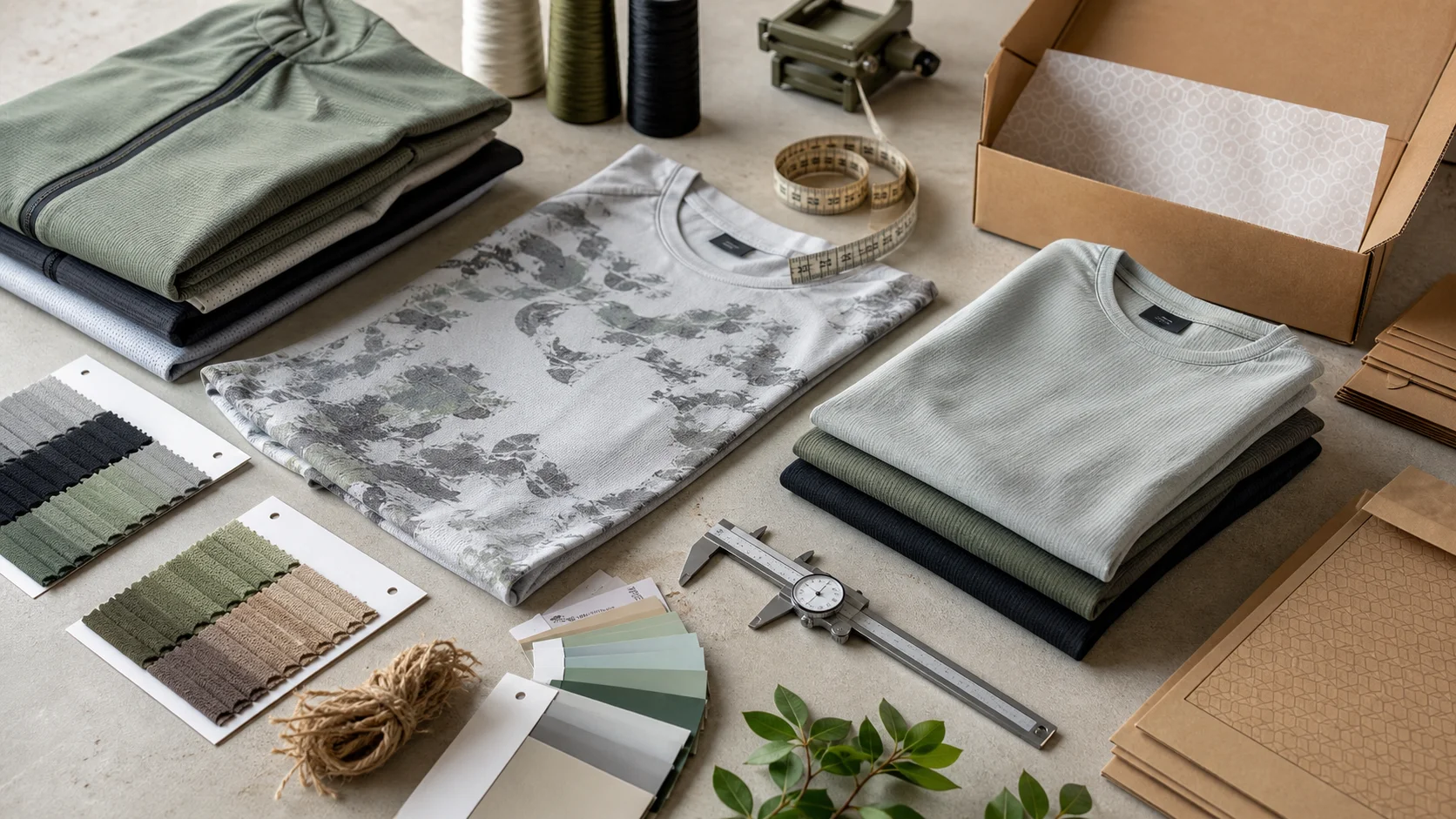
Repeat Purchase Program Planning with checks for samples, fit, MOQ, QC evidence, pricing terms, and delivery risk.
Fast answer: Repeat Purchase Program Planning: Inventory Holds, Reorders, and Pack-Out should be judged by production evidence, not by a generic sourcing promise. The buyer needs sample proof, cost breakdowns, QC checkpoints, and delivery buffers in writing.
Ask for recent sample photos, measurement tolerances, fabric or print test assumptions, decoration test notes, packing examples, and a named inspection checkpoint. These details show whether the team can repeat an approved sample at bulk volume.
Separate garment cost, decoration, labels, packaging, sampling, testing, freight, and rush charges. When every cost line is visible, it becomes easier to reduce colorways, adjust size depth, or reserve more time for sampling.
If you are building a clothing brand, running a retail store, or sourcing apparel for a business that keeps restocking the same items, a repeat purchase program can make life a lot easier. Instead of chasing one-off bulk deals, you buy around steady demand, planned replenishment, and a supplier relationship that lasts.
That supplier choice matters more than most people expect. It affects margins, product consistency, lead times, and the experience your customers have every time they reorder or come back for a best-selling item.
Finding a wholesale clothing supplier for repeat purchase programs is not just about comparing prices. You want a partner who can deliver the same fit, fabric, color, and finish again and again. That is the real test. Not the first order. The second, third, and tenth one.
Here is a practical look at how to evaluate suppliers, what to ask, what to avoid, and how to build a repeat purchase setup that does not fall apart when volume starts growing.
A repeat purchase program is a buying model where a business orders the same product, or a closely related version of it, on a regular basis. In apparel, that might look like:
What makes this different from a one-time wholesale buy is predictability. The supplier has to reproduce the same product with enough consistency that customers do not notice the difference between batches. That takes disciplined quality control, clear communication, dependable sourcing, and production capacity that can handle repeat runs without drama.
When repeat purchases are part of your model, your supplier is not just a vendor. They are part of the machinery that keeps your business moving. If they slip, you feel it fast. If they are solid, everything gets easier.
The reasons are pretty straightforward:
For businesses that want more than a transactional wholesaler, it helps to work with a supplier that can handle production and support together. You can learn more about Fabrikn’s approach to manufacturing and apparel services on our Services page.
It helps to know what kind of supplier you are actually talking to. The label on the website does not always tell the whole story.
Wholesalers buy finished clothing in large quantities from manufacturers and resell it to brands or retailers. They usually have broad catalogs and quick access to ready-made stock. Good option if you need speed and do not need much customization.
Manufacturers make the garments directly. For repeat purchase programs, this is often the strongest fit because they can support consistent production, private labeling, custom sizing, and planning around future reorders. If you want the same product again and again, a manufacturer usually gives you more control.
Private label suppliers produce garments under your brand name. That works well when you want a recognizable line that can be reordered without changing the underlying product every season.
Importers and distributors source products from other markets and move them locally. They can help with quick availability and smaller minimums, but customization and consistency can be less flexible than working directly with a manufacturer.
If you need custom apparel or a product line that can be reordered cleanly, talking directly with a manufacturing team usually saves time. You can also reach out through our Contact Us page to discuss sourcing needs.
Do not stop at the catalog. The supplier that looks cheapest on paper is not always the one that keeps your program working six months later.
Ask how they keep fabric, sizing, stitching, color, and finishing consistent from batch to batch. Repeat programs live or die on that answer.
A supplier can be affordable and still be the wrong fit. If they cannot handle your reorder volume or hit your timeline, they are going to become a bottleneck sooner or later.
MOQ matters. If it is too high, you get stuck with inventory you do not need. If it is too rigid, reordering becomes awkward. The sweet spot is a supplier that fits your buying pattern now and leaves some room for growth.
Lead time is not a side note. It affects stock levels, campaign timing, and customer satisfaction. Look for suppliers with clear production windows and a history of shipping on schedule.
Good quality control catches problems before they reach your customers. Ask whether they inspect raw materials, monitor production, and review finished goods before shipment. If the answer is vague, that is a warning sign.
Reorders should be simple. You want a supplier that answers quickly, gives direct updates, and does not make you chase basic information every time something changes.
If your repeat purchase program includes labels, tags, packaging, or fit changes, confirm they can actually handle it. Some suppliers say yes to everything and deliver very little.
It is hard to verify from the outside, but there are clues. Clean documentation, steady communication, professional operations, and long-term client relationships all point in the right direction.
Labor practices, material sourcing, safety standards, and environmental policies matter more than ever. A supplier that takes compliance seriously can protect your brand as much as your bottom line.
This is the filter stage. The goal is to clear out weak options before you waste time on samples, calls, or quotes that never go anywhere.
Write down what you need before you start outreach. Include garment type, material, sizes, colors, branding details, target quantities, reorder frequency, and delivery expectations. A precise brief gets better responses.
Use wholesale directories, trade platforms, search engines, and manufacturer websites. Specific keywords help here. The more closely your search matches your product category and reorder needs, the less time you spend sorting through noise.
The website usually tells you more than the sales pitch. Look for:
Reviews are not perfect, but they can reveal patterns. Better still, ask for references or examples of repeat clients. If a supplier has done this well for other businesses, they should be able to talk about it without getting evasive.
Samples tell you a lot. Look at stitching, fabric hand feel, sizing consistency, labels, and packaging. Then ask yourself a simple question: would you be comfortable sending this to your customers every month?
Good questions save a lot of pain later. Ask them early, and pay attention to how the supplier responds.
Listen for direct answers. If the replies stay vague or drift away from the question, that usually says enough.
Some suppliers look fine until you try to reorder. These warning signs are worth paying attention to.
One red flag by itself may not be a dealbreaker. A few of them together usually are.
Once you find a supplier that works, the real job is keeping the relationship useful for both sides. Repeat purchase programs run smoother when both parties know what to expect.
Share your expected reorder timing and likely volume whenever you can. Suppliers plan better when they have real numbers, even rough ones.
Changing details too often creates confusion. If you need changes, document them clearly and confirm them before the next run starts.
Simple, but important. Reliable payments build trust, and trusted customers usually get better attention when things get busy.
If something is off, say it early and specifically. A good supplier would rather fix a problem on the next run than hear about it after the customer complaints arrive.
As your business grows, your needs will shift. Let the supplier know when you expect bigger orders, broader size runs, or added product categories. The earlier they know, the easier it is for them to support you.
Price matters. Of course it does. But the cheapest quote is not always the best deal, especially in repeat programs where mistakes get multiplied over time.
Look at quality, consistency, lead times, communication, packaging, and reorder ease. A slightly higher unit price can be the better choice if it saves you from returns, delays, or production headaches.
Two quotes can look similar and still cover different things. Confirm whether sampling, labeling, packaging, freight, duties, or setup fees are included.
Extra costs can sneak in through rush fees, revision charges, or charges tied to small changes. Get clarity before you commit.
If the supplier is new to you, start smaller. A controlled first order gives you a better sense of quality and service before you scale up.
If you want a simple way to handle this, use a step-by-step process instead of trying to decide on instinct alone.
That last step matters more than people think. A supplier earns repeat business by handling the second order without making you repeat the whole buying process.
Manufacturers and private label suppliers are usually the strongest fit because they can keep product details consistent and support ongoing reorders. A wholesaler can still work if the product is already finished and you need quick replenishment.
Ask how they control materials, sizing, stitching, and final inspection across batches. Samples help, but repeat order history tells you more.
Not by default. If low pricing comes with inconsistent delivery or quality issues, it often costs more in the long run.
Share the garment type, material, size range, branding needs, estimated quantity, and how often you expect to reorder. The clearer you are, the faster a supplier can tell you whether they are a fit.
Yes. In fact, smaller brands often benefit the most because stable supply makes cash flow and inventory planning easier.
Finding the right wholesale clothing supplier takes a little patience, but it pays off fast once the first few reorders run smoothly. Look for consistency, clear communication, and a process that makes the next order easier than the last one.