
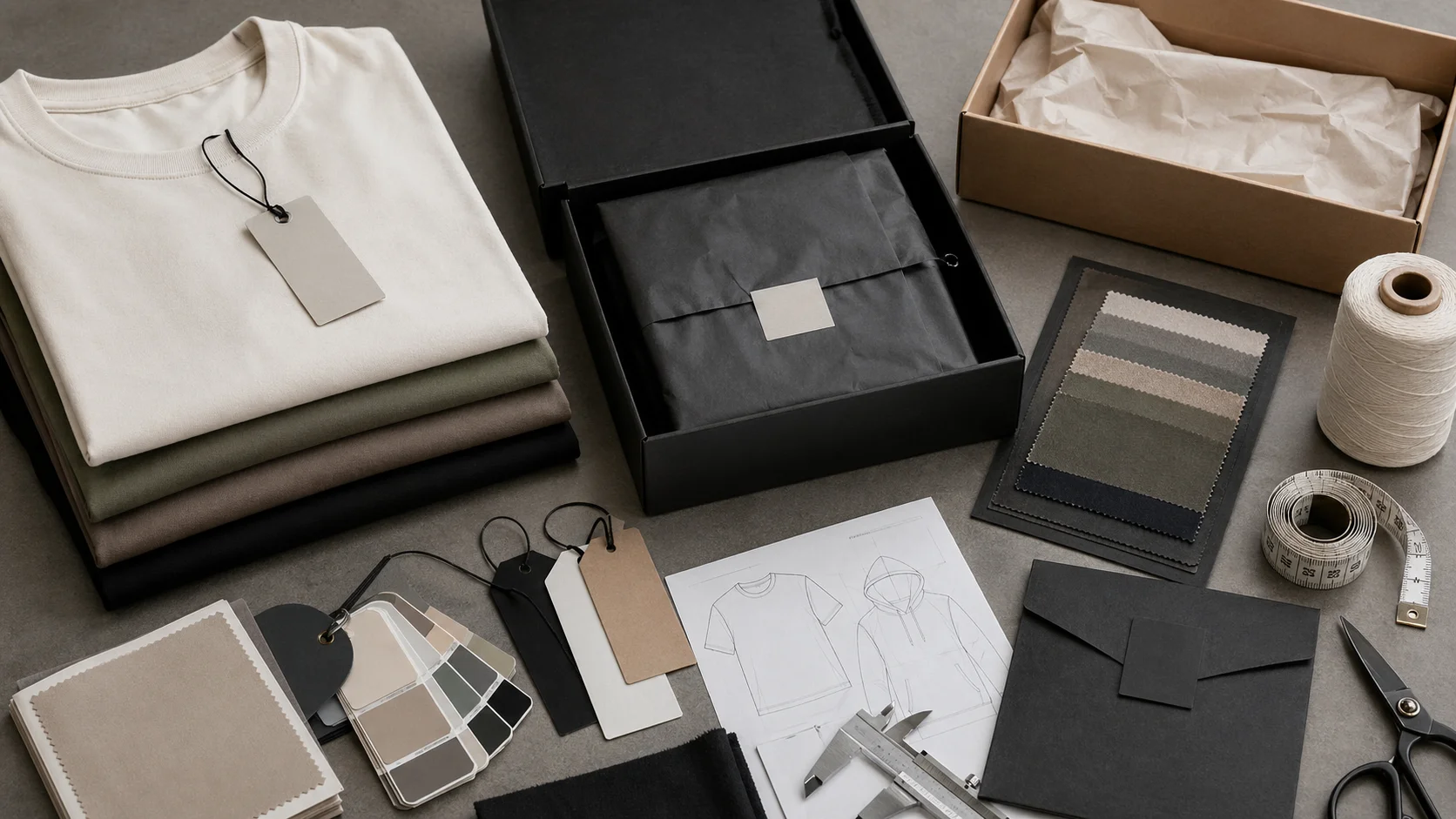
Check Wrap Certified Factory Claims compared by sample evidence, fabric or trim specs, MOQ, AQL terms, cost lines, delivery timing, and rework responsibility.
Fast answer: Check Wrap Certified Factory Claims: Tech Pack, Sample Gate, MOQ, and QC Terms should be judged by production evidence, not by a generic sourcing promise. The buyer needs sample proof, cost breakdowns, QC checkpoints, and delivery buffers in writing.
Ask for recent sample photos, measurement tolerances, fabric or print test assumptions, decoration test notes, packing examples, and a named inspection checkpoint. These details show whether the team can repeat an approved sample at bulk volume.
Separate garment cost, decoration, labels, packaging, sampling, testing, freight, and rush charges. Clear cost lines make it easier to reduce colorways, adjust size depth, or reserve more time for sampling.
If you are sourcing apparel for a sustainable fashion brand, you already know that factory claims can be difficult to verify. One of the most common claims you will see is that a manufacturer is “WRAP certified” or operates in a WRAP certified facility. While that can be a positive sign, it should never be accepted at face value without verification.
This guide explains how to check WRAP certified factory claims, what WRAP certification actually means, how to confirm whether a supplier is currently certified, and which questions to ask before placing an order. Whether you are a startup fashion label, a private label buyer, or an established brand improving supply chain transparency, verifying factory certifications is a critical part of responsible sourcing.
At Fabrikn, we work with brands that value transparency, ethical production, and long-term supply chain trust. If you want to learn more about our manufacturing approach, you can visit our About Us page or explore our Services.
WRAP stands for Worldwide Responsible Accredited Production. It is an independent, not-for-profit organization focused on promoting lawful, humane, and ethical manufacturing worldwide. WRAP certification is commonly used in the apparel, textile, footwear, and sewn products industries.
A WRAP certified factory has been audited against WRAP’s principles, which generally cover areas such as:
WRAP certification is often valued by buyers because it indicates that the factory has undergone third-party review. However, certification alone does not guarantee perfect performance in every area, nor does it mean the certification is current. That is why learning how to check WRAP certified factory claims is essential.
Sustainable fashion buyers are under increasing pressure to prove that their products are made responsibly. Consumers, investors, and retail partners are asking for evidence of ethical labor practices, safer working conditions, and stronger environmental standards. In this environment, a factory certification claim can influence sourcing decisions, brand reputation, and compliance risk.
WRAP claims matter because they can help buyers evaluate a factory’s operational standards. But they can also be used loosely in sales materials, email signatures, websites, and presentations. A supplier may say it is “WRAP certified” even if:
For buyers building a sustainable supply chain, the difference between a valid certification and a marketing claim can be significant. That is why due diligence should be a standard part of vendor onboarding.
To verify a WRAP claim, you should confirm the certification through direct evidence, not just supplier statements. Here are the most reliable steps to follow.
The first thing to request is the factory’s WRAP certificate number. A legitimate certificate should include identifying information such as the factory name, address, certification level, issue date, and expiration date. If a supplier cannot provide a certificate number, that is a warning sign.
Ask for a PDF or scanned copy of the current certificate. Check whether the legal company name matches the factory name you are dealing with. Pay attention to the address, as some brands use multiple buildings or production sites. The name and location must align with the actual facility producing your goods.
WRAP certification is not permanent. It must be renewed. A factory may have been certified in the past but may no longer hold active status. Always check the expiration date and make sure it covers your production timeline. If the certificate is close to expiring, ask whether renewal is in process and whether the factory can provide supporting documentation.
The most reliable way to confirm a WRAP certified factory claim is to cross-check it against WRAP’s official records or directory, if available. Look for the factory name, certificate number, and location. If the certificate is not easily searchable online, contact WRAP directly for confirmation.
Do not rely solely on screenshots provided by the supplier. Images can be outdated, edited, or unrelated to the current facility.
Many apparel companies work with multiple factories, and not every site under a parent company may be certified. Make sure the exact production facility you plan to use is the one listed on the certificate. Ask whether cutting, sewing, washing, embroidery, packaging, or finishing happens in the same facility or at subcontracted locations.
Some certifications or audits may apply to a specific factory process, not the entire supply chain. For example, a facility may be certified for sewing operations but may outsource dyeing, printing, or finishing. If your product includes specialized processes, verify whether those processes are included in the certified scope.
For higher-risk sourcing decisions, ask for supporting documentation beyond the certificate itself. This may include audit summaries, corrective action reports, or recent compliance updates. While not every factory will share full audit details, serious suppliers should be able to provide evidence that their certification is active and current.
WRAP certification should be one part of your supplier assessment, not the only one. Compare the claim with other indicators such as labor policies, social compliance audits, traceability systems, environmental certifications, and quality assurance procedures. A trustworthy factory should be transparent across multiple areas.
If possible, speak with the factory compliance team or management rather than relying only on a sales representative. Ask them to explain how they maintain WRAP standards, how often they are audited, and whether the certification applies to all relevant production lines.
Once verified, store the certificate, contact notes, and any confirmation emails in your supplier records. This helps protect your brand during audits, customer inquiries, and internal compliance reviews. It also makes it easier to track renewal dates and re-check claims later.
When checking WRAP certified factory claims, certain warning signs should prompt further investigation. If you notice any of the following, slow down and verify carefully:
Any one of these red flags does not automatically mean the claim is false. But it does mean the buyer should not proceed without confirmation. Sustainable fashion depends on accurate sourcing information, and due diligence is part of responsible business practice.
Asking the right questions can quickly reveal whether a WRAP claim is credible. Below are useful questions to include in your sourcing checklist:
These questions are practical and professional. A reputable supplier should be able to answer them clearly. If your team wants help evaluating a production partner, you can reach out through our Contact Us page.
Verifying WRAP certification is only one part of responsible sourcing. To build a stronger sustainable fashion supply chain, consider the following best practices:
Create a standard checklist for all new vendors. Include factory name, legal entity, address, certificate number, issue date, expiration date, audit body, and scope of certification. This makes comparison easier and helps prevent oversights.
Do not wait until bulk production to verify claims. Confirm certifications before placing sample or development orders whenever possible. Early verification saves time and reduces risk later in the process.
Even if a factory was certified last year, do not assume it remains valid. Set a reminder to re-check certifications at least annually, or before each new seasonal order.
Keep all proof of verification in one place: certificates, emails, screenshots of directory listings, and internal approval notes. This creates a clear audit trail.
WRAP certification can support your environmental, social, and governance goals, but it should sit alongside other checks. Consider labor rights, chemical management, waste reduction, energy use, and traceability when evaluating suppliers.
Buyers often compare WRAP with other social compliance and sustainability certifications. While each has a different focus, understanding the distinctions helps you make better sourcing decisions.
No single certification is enough on its own. A strong buyer often combines third-party certifications with direct factory communication, sample inspections, and ongoing compliance reviews. The goal is not just to find a certified factory, but to build a dependable and transparent partnership.
At Fabrikn, we understand that sustainable fashion buyers need more than attractive pricing and polished promises. They need documentation, consistency, and a reliable manufacturing process. That is why we encourage brands to ask detailed questions, verify claims, and establish clear expectations before production begins.
Our team works with clients who want responsible apparel manufacturing with better communication and clearer sourcing support. If you are exploring a new production partner, start by learning more about our Services, or connect with us directly through our Contact Us page. You can also review our company background on the About Us page.
Whether you need help with private label production, custom apparel, or supplier guidance, the first step is always the same: verify the factory, verify the claim, and build from facts rather than assumptions.
Learning how to check WRAP certified factory claims is essential for any sustainable fashion buyer who wants to reduce risk and improve transparency. A valid WRAP certificate can be a valuable indicator of ethical manufacturing, but only when it is current, accurate, and tied to the correct facility.
The best approach is simple: ask for the certificate, verify the details, confirm the expiration date, cross-check with official sources, and document your findings. By building certification verification into your sourcing workflow, you protect your brand, strengthen your supply chain, and make more responsible production decisions.
Sustainable fashion is about more than labels. It is about evidence, accountability, and long-term trust.
Get a free quote from Fabrikn — your trusted B2B clothing manufacturer with 10+ years of experience. MOQ as low as 200 pieces.
Get a Free Quote →Ask for the certificate number, legal factory name, address, issue date, and expiration date. Then verify the details using WRAP’s official channel or directory if available. If the supplier cannot provide these details, treat the claim as unverified.
No. An expired certificate is not a current certification. A factory may mention past certification history, but it should not present an expired certificate as active status.
Not by itself. WRAP is a useful indicator of social compliance and responsible manufacturing, but sustainable sourcing also requires evaluation of environmental practices, traceability, labor conditions, and subcontracting risk.
If a supplier refuses to provide a certificate or verification details, treat that as a major red flag. A trustworthy factory should be transparent and willing to support due diligence.
Not automatically. You should confirm whether any subcontracted processes are included in the certified scope. If a product is partially made elsewhere, those facilities may need separate verification.
At minimum, re-check certifications annually and before major production orders. If the factory’s certificate is near expiration, verify it again before moving forward.
Yes. If you want to discuss sourcing requirements, production planning, or supplier evaluation, please visit our Contact Us page.