
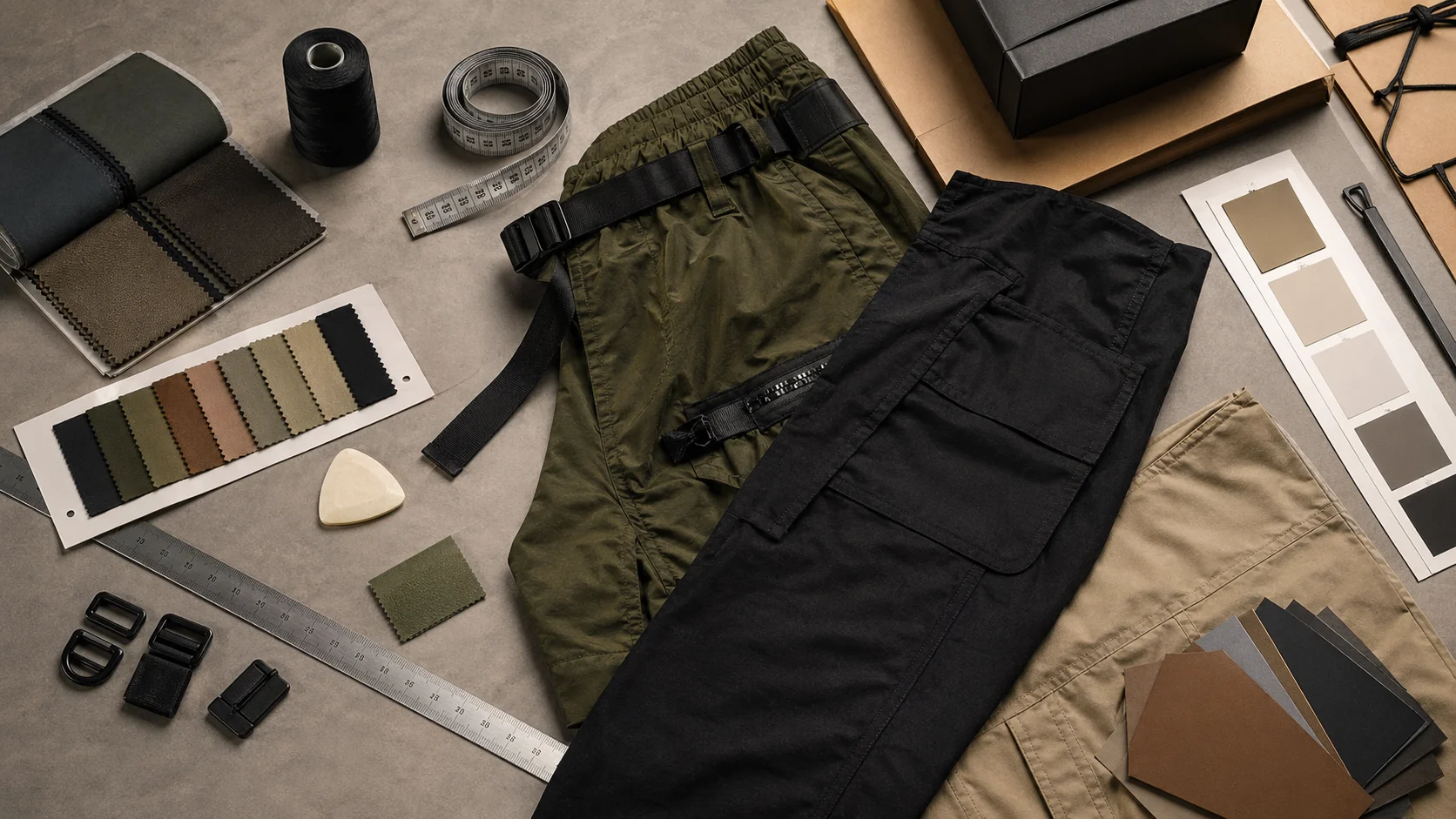
Hang Tag Material for Clothing compared by sample evidence, fabric or trim specs, MOQ, AQL terms, cost lines, delivery timing, and rework responsibility.
Fast answer: Hang Tag Material for Clothing: Material, Print, MOQ, and QC Terms should be judged by production evidence, not by a generic sourcing promise. The buyer needs sample proof, cost breakdowns, QC checkpoints, and delivery buffers in writing.
Ask for recent sample photos, measurement tolerances, fabric or print test assumptions, decoration test notes, packing examples, and a named inspection checkpoint. These details show whether the team can repeat an approved sample at bulk volume.
Separate garment cost, decoration, labels, packaging, sampling, testing, freight, and rush charges. Clear cost lines make it easier to reduce colorways, adjust size depth, or reserve more time for sampling.
Ten seconds is all it takes for a hang tag to go from branding to afterthought. I’ve watched one curl in transit, scuff at the corners, and look tired before the zipper was even touched. If you’re learning how to choose hang tag material for clothing, start with the retail floor, not the moodboard. In factory audits across Vietnam, Turkey, and Portugal, the same scene kept repeating: tags get handled, bent, stained, and read fast.
On the line, cartons of 10,000 units can hold garments that are perfectly fine while the tag stock fails the room test. A low-grade 180 gsm board abrades on carton edges; premium tags usually sit in the 300–400 gsm range and keep their shape through weeks of shipping, storage, and store handling. You can see the difference instantly. Flat says control. Frayed says cut corners.
Fast fashion usually runs lighter coated board because it keeps unit cost low and print output consistent at scale. Premium labels go heavier, often into textured board, cotton paper, or specialty stock, because the tag has to justify a $120 coat or a $280 knit set. A $14 T-shirt and a $1,200 leather jacket should not carry the same tactile signal. They are selling different promises.
Material choice shifts by garment. Denim wants stiffness and tear resistance, especially when the tag hangs off belt loops and survives rough warehouse handling. Knitwear benefits from a smoother edge and less bulk so it does not snag delicate yarns. Outerwear needs better moisture resistance because cartons sweat in humid ports. Luxury basics live or die on feel, so a cotton paper or soft-touch board can carry more weight than a loud graphic.
Some of the most expensive-looking tags I’ve touched were sustainability failures. I visited one supplier making recycled-paper tags with plastic lamination. They looked immaculate under store lights, but the laminate made them far harder to recycle. Pretty. Problematic. That contradiction shows up often in brands that focus on surface aesthetics before material logic.
If you are sourcing clothing packaging solutions, the hang tag should be treated as part of the same system, not an afterthought. The right stock balances brand image, shelf performance, sustainability claims, and what the factory can actually run at 5,000 units or 50,000.
Brand tier changes everything. A $25 tee can carry a simple uncoated recycled card and still look credible, but a $250 coat needs a different visual language or the customer starts questioning the markup. In my experience, the tag is one of the fastest ways to signal whether a brand understands its own price point. If the tag feels cheaper than the garment, trust drops before the fitting room.
Luxury apparel often leans on cotton paper or textured FSC board because those materials feel deliberate in the hand. Casual basics usually work better with uncoated recycled card, especially if the print is clean and the typography is restrained. Kidswear is its own category. Rounded corners, tougher stock, and low-abrasion edges matter because parents and children pull, twist, and chew on everything. I have seen a 240 gsm tag survive a rack, and a 300 gsm tag fail because the corner was too sharp for repeated handling.
Regional habits are revealing. European premium labels often prefer tactile, uncoated materials with muted finishes. Many Asian mass-market exporters focus on cost, turnaround, and print consistency, which is why coated boards dominate there. U.S. brands sit in the middle more often than not, mixing premium cues with a price-sensitive production brief. That middle ground can work, but only if the tag material matches the story the garment is trying to tell.
When I visited mills in Italy and Bangladesh in the same season, I saw another difference: some coated stocks hold color with almost no drift across 5,000 pieces, while recycled uncoated paper can vary more in shade from batch to batch. That variation is not automatically bad. For a heritage brand, it can feel artisanal. For a sharp, graphic label, it can look like poor control. Brand voice should decide.
For brands using private label clothing services, this alignment matters even more, because the tag may be the only visible brand asset before the customer tries the product. A sustainable label that chooses flimsy stock can accidentally signal cheapness, while an overbuilt glossy tag can make an ethical brand look performative. Budget matters, but meaning matters too.
Garment type should finish the decision. Denim can take heavier board, intimates need lighter, less intrusive tags, and outerwear often needs durability against damp storage and rough hands. That is the practical answer to how to choose hang tag material for clothing: start with price point, then category, then shelf life.
The material family matters as much as the design. Virgin paper gives the cleanest print and the most predictable performance, which is why many suppliers like it for crisp logos, fine type, and high-volume production runs. Recycled paper lowers virgin fiber use, but it can show fiber variation and a softer surface that mutes gloss. FSC-certified board adds credibility when chain-of-custody matters. Cotton paper feels rich and soft, but it costs more and can add 1–2 weeks to lead time. Kraft stock delivers a heritage look that suits workwear and rugged basics. Synthetic paper resists water and tearing, yet it complicates recycling. Specialty textured materials can feel outstanding, though they are often the hardest to replace quickly if the factory changes recipe.
I break the options down by how they behave on press. Recycled board usually absorbs ink more quickly, so black can look slightly duller and reds can shift warmer. Cotton paper handles embossing well and can make a simple mark feel expensive, but too much ink can feather at the edges. Kraft stock loves minimal design and dark type. Synthetic stock can take moisture, but some finishes crack under heavy folding or hot shipping conditions. If a tag will spend 21 days in humid transit, that matters.
For everyday basics, recycled board in the 250–350 gsm range is usually the most practical. For premium storytelling, cotton paper or textured FSC board gives more tactility and better perceived value. For heritage or workwear, kraft can be effective if the print is disciplined. For outdoor or rainy conditions, synthetic or coated paper can protect the design, though the recycling question becomes harder.
There is a sustainability trap here. “Eco-looking” kraft is not automatically lower-impact if it is covered in heavy ink, foil, lamination, or plastic windowing. I have pulled tags off racks in Spain, China, and Mexico and found that the most rustic-looking option was also the least recyclable because of mixed finishing layers. That mismatch is common when a manufacturer prioritizes appearance over end-of-life recovery.
Ask for fiber content, FSC chain-of-custody, recycled percentage, and every finishing treatment before artwork is approved. I want the paper spec, the coating spec, and the adhesive spec in writing. A supplier who cannot produce them in 24 hours is not ready for a production order.
For custom baby clothing manufacturing, I tend to push for softer, safer edges and uncoated boards that avoid unnecessary abrasion. Babies are not hanging around in sterile showroom conditions. Parents pull tags, stores fold garments, and cartons get compressed. The material has to behave outside the render file.
Buyers love unit price. Factories love total landed cost. Those two numbers are not the same. Basic coated card usually sits at the lowest cost tier, recycled uncoated board lands in the middle, FSC or premium textured board costs more, and cotton paper or specialty stock rises highest. A tag quoted at $0.04 can quietly become $0.09 once you add freight, finishing, and carton handling. Cheap paper can become expensive fast.
I’ve seen a supplier quote a low tag price, then recover margin through foil stamping, extra packing, or delays caused by sourcing paper from a different mill. That is where buyers lose leverage. A 5,000-piece order may look manageable on paper, but if the mill minimum is 20,000 sheets, your “low-cost” option becomes a storage problem and a cash-flow problem.
Lead times vary just as sharply. Standard paper stocks may be ready in 7–14 days after artwork approval. Custom textured board, cotton paper, and specialty recycled options often need 3–6 weeks depending on mill availability and the season. During peak factory months, I’ve seen that stretch another 5–7 days because the paper needs to be booked before the printer can schedule press time. If your launch window is fixed, that matters more than saving a cent.
MOQ also moves with complexity. A plain die-cut tag might start at 3,000 pieces. Add custom shades, embossing, foil, or unusual cuts, and the minimum can jump to 10,000 or even 25,000 pieces. Some suppliers will accept smaller quantities, but the per-unit cost rises and the color consistency can suffer. That is especially true for custom recycled blends, where batch variation is harder to control.
In my experience, the smartest buyers compare three numbers together: unit cost, production time, and carton weight. Heavier paper adds shipping cost, especially on international orders. A 350 gsm tag in 20,000 units can add several extra kilos per shipment versus a 250 gsm option, and that can matter when freight rates move by $0.20–$0.40 per kilogram.
If your program involves private label clothing services, build the tag line item into the full quote from day one. Otherwise, the supplier may price the garment accurately and underquote the packaging, which leaves you renegotiating in week 3. That is avoidable.
The best tag material is the one that survives the finish. Offset printing gives sharp detail on coated and smoother boards. Digital print is flexible for short runs and variable data. Screen print lays down stronger color on rougher surfaces. Foil stamping adds shine, but it can crack if the stock is too weak or too absorbent. Embossing and debossing work beautifully on thicker board, especially 300 gsm and up. Spot UV can look polished, but it is unforgiving on recycled surfaces with rough fiber texture. Die-cutting tests the edge quality immediately.
Material absorbency is where the design often fails. Uncoated paper can mute saturation, which suits natural, earthy brands and hurts fashion labels that rely on precise reds, blacks, and metallic accents. A white 320 gsm coated board can keep a logo tight. A recycled uncoated stock may soften the same logo just enough to make it look less exact. That is not always wrong. It just has to be intentional.
When I visit factories, I ask for six tests before sign-off: bend test, rub test, moisture exposure, fold memory, edge cracking, and color-fastness after handling. The bend test shows whether the stock springs back or takes a permanent crease. The rub test reveals whether ink smears after 20–30 passes. Moisture exposure matters if the tag will travel through humid ports or damp stores. Fold memory and edge cracking tell you whether the tag will survive being stuffed in cartons. Color-fastness after handling catches the final disappointment.
Outerwear tags should usually use sturdier board and protected print because they are exposed to rougher use. Luxury garments can justify tactile finishes, but only if the finish supports the story rather than masking weak design. I have seen a 280 gsm lighter stock outperform a 360 gsm premium board because the lighter stock held typography cleaner and kept color more exact. Heavy is not always better.
That is the counterintuitive part. A lighter stock with excellent print behavior can beat a heavier premium board when the design depends on crisp type, accurate brand color, and sharp contrast. Buyers who assume thickness equals quality end up overpaying for the wrong signal.
My advice: avoid over-finishing. Lamination, dense foil, and plastic coatings can undermine recyclability and create a false premium signal that disappears the moment the tag meets real handling.
According to Textile Exchange, material claims are only meaningful when the chain behind them can be verified. The same rule applies to hang tags. FSC certification, recycled content declarations, and chain-of-custody records are the first documents I request. If a supplier claims compostable or biodegradable performance, I want the test basis, the conditions, and the exact substrate. Vague green language is not a spec.
Recyclable does not always mean recycled in practice. Inks, adhesives, foil, and coatings can block recovery streams. A paper tag with a plastic string, a glued insert, and a laminated face may be technically paper-based but functionally hard to recover. I have seen buyers spend more on sustainability branding than on the actual substrate. That is backwards.
Regional waste systems matter too. In some European markets, coated paper is handled more consistently than in others. In parts of North America, mixed-material tags may be removed by hand and discarded before they ever reach paper recovery. In some Asian markets, collection systems vary wildly city by city. That means the right material depends not only on where the tag is made, but where the garment is sold.
Ask suppliers three direct questions: what percentage is post-consumer content, does the paper mill use renewable energy, and do any finishing steps add non-paper components? If the answer arrives as a marketing paragraph instead of a number, push harder. I also look for proof from standards bodies. Data from OEKO-TEX, trade.gov, and ISO help frame trade and standards claims, especially when sourcing spans multiple countries and regulations.
Sustainability is not only about the substrate. Oversized tags, doubled inserts, and decorative strings create unnecessary material use. A 90 x 140 mm tag can sometimes do the same job as a 120 x 180 mm one if the typography is disciplined and the information hierarchy is clear. Scale the tag to the garment, not to the insecurity of the brand team.
The cleanest-looking tags on a merchandising table are not always the most responsible. I have handled tags that looked minimal but were built from three layers and mixed adhesives, and I have handled rougher-looking recycled boards that were far easier to recover. Factory reality beats visual theater every time.
The fastest way to get clean pricing is to write a better brief. I tell buyers to send one spec sheet with the garment category, target retail price, quantity, tag size, paper weight, finish, print method, string type, attachment method, sustainability requirements, and shipping destination. If the destination is Hamburg instead of Los Angeles, the freight math shifts. If the order is 2,000 pieces instead of 20,000, the pricing logic shifts again.
For sample requests, ask for 3–5 material options, not 20. Too many choices blur judgment. I compare samples under store lighting, in transit conditions, and by touch. A tag that looks good under a bright desk lamp can flatten under warm retail lighting. I also rub each sample against denim, knitwear, and a plain cotton tee because the substrate must work against the garment, not in isolation.
Use a short approval path. Start with the pre-production sample, then review the print proof, then check color tolerance, edge quality, and final carton inspection. If a supplier cannot hold a consistent trim edge across 500 samples, they will not hold it across 50,000. I’ve learned that the hard way on more than one launch.
A simple decision matrix helps. Score each option from 1 to 5 on brand feel, recyclability, cost, turnaround, and durability. A high-end cotton paper might score 5 on feel, 3 on recyclability, 2 on cost, 3 on turnaround, and 4 on durability. A recycled uncoated board might score 4, 5, 5, 5, and 3. The point is not perfection. The point is clarity.
If you are building a program for made-to-order or small-batch production, tag material should sit alongside the garment development logic itself. That is especially true for cut and sew manufacturing, where paper specs and garment specs move in lockstep. Choose the tag to match the garment’s story, the retail environment, and the route to store. Then price the cheapest quote only after those three are fixed.
Match the tag to the retail price and the expected customer perception. A $25 tee usually works with 250–300 gsm recycled or uncoated board, while a $150–$300 item often needs textured FSC board or cotton paper to avoid looking underpriced. Keep the same brand system, but vary the material weight and finish by category.
Use a clean uncoated recycled card with strong typography, a disciplined color palette, and no unnecessary finishes. In many factories, a 300 gsm recycled board with one-color offset print outperforms a cheaper glossy stock with foil because it looks intentional. Budget tags can still feel premium if the edges are clean and the layout is sparse.
Basic coated card is usually the lowest tier, often around $0.03–$0.06 per piece at volume. Recycled uncoated stock may land around $0.05–$0.10, premium textured board around $0.08–$0.18, and cotton or specialty stock can go higher depending on MOQ, print method, and finishing. Shipping and carton weight can add 10%–25% to the landed cost.
Standard paper stocks are often ready in 7–14 days after artwork approval. Custom textured, cotton, or specialty recycled materials usually take 3–6 weeks, especially if the mill needs to book paper in advance. Foil, embossing, and unusual die-cuts can add another 3–7 days.
You can, but I would not recommend it. Kidswear needs softer edges and lower abrasion, denim needs stronger tear resistance, and outerwear benefits from moisture-tolerant stock. One spec across all three usually creates either unnecessary cost or poor performance in at least one category.