
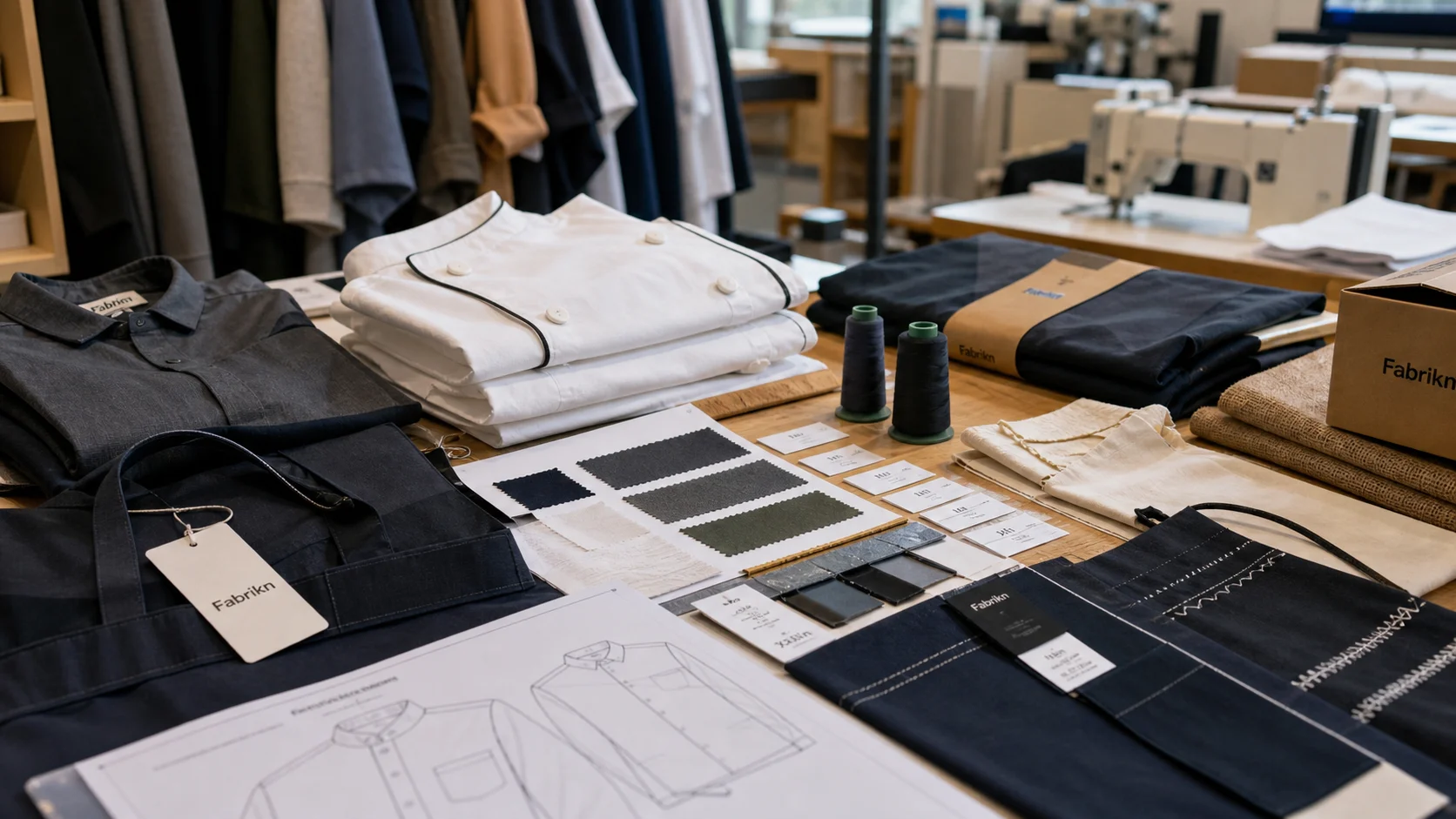
Sustainable Clothing Materials compared by sample evidence, fabric or trim specs, MOQ, AQL terms, cost lines, delivery timing, and rework responsibility.
Fast answer: Sustainable Clothing Materials: Tech Pack, Sample Gate, MOQ, and QC Terms should be judged by production evidence, not by a generic sourcing promise. The buyer needs sample proof, cost breakdowns, QC checkpoints, and delivery buffers in writing.
Ask for recent sample photos, measurement tolerances, fabric or print test assumptions, decoration test notes, packing examples, and a named inspection checkpoint. These details show whether the team can repeat an approved sample at bulk volume.
Separate garment cost, decoration, labels, packaging, sampling, testing, freight, and rush charges. Clear cost lines make it easier to reduce colorways, adjust size depth, or reserve more time for sampling.
Choosing sustainable clothing materials is one of the most important decisions a fashion brand can make. Fabric selection affects everything from environmental impact and product quality to customer perception and long-term business success. For brands that want to create responsible, high-performing apparel, sustainable material sourcing is no longer optional—it is a competitive advantage.
In the global apparel industry, material choices influence water use, energy consumption, chemical pollution, waste generation, and carbon emissions. At the same time, consumers are becoming more informed and are actively looking for garments made from recycled, organic, biodegradable, or low-impact fibers. That means brands need to understand not just what fabrics are labeled “eco-friendly,” but how to evaluate materials with a practical, business-focused lens.
This guide explains how to choose sustainable clothing materials for different product categories, what sustainability claims really mean, and which criteria matter most when building an ethical supply chain. Whether you are launching a new collection or improving an existing line, the right approach to material selection can help you create better products and a stronger brand. If you are developing garments at scale, explore our manufacturing services to see how we support apparel brands with sourcing and production.
A sustainable clothing material is one that reduces environmental harm and supports responsible production throughout its lifecycle. That lifecycle includes raw material extraction, farming or fiber production, processing, dyeing, manufacturing, transportation, product use, and end-of-life disposal.
There is no single definition of “sustainable,” because a fabric can perform well in one area and poorly in another. For example, a fiber may be renewable but require heavy water use. Another may be recycled but still depend on energy-intensive processing. The best way to evaluate a material is to look at its total impact rather than a single claim on a label.
Key sustainability characteristics typically include:
For apparel brands, sustainability should also include product performance. A fabric that wears out quickly may create more waste than a slightly less “green” fiber that lasts for years. The most responsible choice often balances environmental impact with quality, comfort, and durability.
When choosing sustainable clothing materials, it helps to use a clear evaluation framework. This prevents decisions from being based only on marketing language and ensures that your material strategy supports your brand values and business goals.
Start by identifying where the fiber comes from. Is it plant-based, animal-based, synthetic, or recycled? Natural fibers can be renewable, but they may also require land, irrigation, or pesticides. Synthetic fibers may be durable and lightweight, but they often come from fossil fuels. Recycled fibers can reduce demand for virgin resources, though they still need careful assessment.
Water footprint is a major factor in sustainable textile selection. Cotton, for example, has historically been associated with high water use, although organic and rain-fed farming methods can reduce the impact. Materials like hemp and linen often require less irrigation than conventional cotton, making them attractive options for environmentally conscious brands.
Consider the dyes, finishes, and treatments used on the fabric as well as the fiber itself. A fiber can be natural but still become unsustainable if processed with toxic chemicals. Look for certifications and supplier transparency regarding safe chemistry, low-impact dyes, and restricted substance management.
Some fabrics require more energy to produce than others. Synthetic fibers, regenerated cellulose fibers, and heavily processed blends may involve energy-intensive manufacturing. Whenever possible, choose materials produced using renewable energy, local sourcing, or shorter supply chains to reduce transportation emissions.
Sustainable clothing should last. A durable material reduces the need for replacement and helps lower overall consumption. Evaluate abrasion resistance, colorfastness, stretch recovery, and wash performance. If the fabric is for activewear, outerwear, or workwear, durability is even more important.
Think about what happens when the garment is no longer wearable. Can the fabric biodegrade naturally? Can it be recycled into new textile products? Is it made from a fiber-to-fiber recyclable mono-material, or does a fiber blend make recycling difficult? End-of-life planning is essential for circular fashion models.
Certifications can help validate sustainability claims, but they should not be the only factor. Look for recognized standards such as GOTS, OEKO-TEX, GRS, FSC, or similar credentials depending on the material type. In addition, ask suppliers for traceability information, audits, and documentation.
There are many materials that can support more sustainable apparel production. The best choice depends on the product type, target customer, and performance requirements. Below are some of the most widely used sustainable clothing materials and why brands choose them.
Organic cotton is grown without synthetic pesticides, herbicides, or genetically modified seeds. Compared with conventional cotton, it generally supports healthier soil and can reduce chemical exposure for farmers and ecosystems. It is soft, breathable, and versatile, making it suitable for t-shirts, babywear, underwear, loungewear, and casual apparel.
However, organic cotton still uses water and land, so it is best used thoughtfully. For brands that want a natural fiber with broad consumer appeal, it is often a strong foundational choice.
Hemp is one of the most environmentally promising textile fibers. It grows quickly, needs relatively little water, and can thrive with minimal pesticides. Hemp fibers are strong, breathable, and naturally textured, making them excellent for durable garments, denim alternatives, outerwear, and casualwear.
Modern processing methods have improved hemp’s softness and versatility, allowing brands to use it in more fashion-forward applications. It is a strong option for brands looking to combine performance with a low-impact raw material.
Linen is made from flax and is valued for its breathability, lightness, and natural aesthetic. Flax generally requires fewer inputs than many other crops, and linen garments are durable and biodegradable when untreated. It works especially well for summer clothing, dresses, shirts, trousers, and resort wear.
Its main drawback is that linen wrinkles easily, but many consumers see that texture as part of its charm. For premium brands focused on natural elegance, linen is a strong sustainable material choice.
Lyocell and modal are regenerated cellulose fibers made from wood pulp. Tencel lyocell, in particular, is often highlighted for its closed-loop production process and efficient solvent recovery system. These fibers are soft, moisture-managing, and comfortable against the skin, making them ideal for intimates, activewear, dresses, and premium basics.
As with any wood-derived fiber, sourcing matters. Look for responsible forestry and transparent manufacturing. When chosen carefully, these fibers can be excellent for brands wanting a refined hand feel and lower-impact profile.
Recycled polyester is typically made from post-consumer plastic bottles or recovered polyester waste. It helps divert materials from landfill and reduces the need for virgin fossil-based polyester. It is commonly used in sportswear, outerwear, swimwear, and technical garments because it is strong, lightweight, and quick-drying.
That said, recycled polyester is still a synthetic fiber and can shed microplastics during washing. It is often best used where performance is essential and where garment design can help reduce microfiber loss.
Recycled cotton can come from pre-consumer textile waste or post-consumer garments. It lowers the need for virgin cotton and helps reduce textile waste. It is often blended with other fibers to improve strength, since recycled cotton fibers tend to be shorter and less durable on their own.
This makes it useful for denim, casualwear, and blended knitwear. When assessing recycled cotton, check how much recycled content is actually present and whether the blend supports the garment’s intended use.
For brands that work with animal-based materials, responsible sourcing is essential. Peace silk and certified wool or alpaca can be more ethical options than conventional alternatives. However, animal fibers require careful evaluation of land use, animal welfare, traceability, and processing chemistry.
Brands should never assume an animal-based fiber is sustainable simply because it is natural. The source and certification standards matter greatly.
Not all commonly used fabrics are equally sustainable. Some may seem eco-friendly at first glance but have hidden trade-offs. Others can be acceptable in specific applications if sourced responsibly, but should not be used indiscriminately.
Conventional cotton is widely used, but it can have a significant environmental burden due to irrigation, pesticide use, and soil degradation. It is not automatically unsustainable, but brands should seek better alternatives where possible or verify responsible farming practices.
Virgin synthetic fibers are derived from fossil fuels and contribute to carbon emissions and microplastic pollution. They can be useful for durability and performance, but they are not ideal when a natural or recycled alternative can meet the same needs.
Viscose can be problematic when wood sourcing and chemical processing are poorly managed. However, it is important to distinguish between conventional viscose and more responsible regenerated fibers produced through closed-loop or certified systems.
Complex blends can make recycling difficult. For example, mixing cotton with polyester, elastane, and multiple finishing agents may improve performance, but it can reduce the garment’s recyclability. Simpler material compositions are usually better for circularity.
Water repellency, anti-wrinkle treatments, flame retardants, and other performance finishes may introduce chemicals that undermine sustainability goals. These finishes are not always bad, but they should be reviewed carefully and only used when necessary.
Choosing sustainable clothing materials is easier when you match fabric characteristics to the garment’s function. A material that works for a lightweight T-shirt may not be suitable for outerwear or activewear.
For T-shirts, tanks, underwear, and lounge sets, comfort and breathability are usually the top priorities. Organic cotton, hemp-cotton blends, and Tencel lyocell are often strong choices. These fabrics are soft, familiar to consumers, and suitable for large-scale production.
Activewear requires stretch, moisture management, recovery, and durability. Recycled polyester, recycled nylon, and performance blends may be appropriate. The best sustainable activewear materials often use recycled content, minimize chemical finishes, and include thoughtful design to extend garment life.
Denim and workwear need high strength and abrasion resistance. Hemp blends, organic cotton, and recycled cotton can be effective. Brands should also look for low-impact dyeing and finishing methods because denim processing can be resource-intensive.
For dresses, shirts, skirts, and premium collections, material aesthetics matter alongside sustainability. Linen, Tencel lyocell, organic cotton sateen, and responsibly sourced wool can provide elevated texture and drape. In these categories, traceability and quality are essential because consumers expect longevity as part of the value proposition.
Outerwear often needs weather resistance and insulation. Recycled polyester, recycled nylon, and innovative bio-based insulation materials may be useful. Sustainable outerwear should also be designed for repair, modularity, and long-term use.
Supplier communication is one of the most effective ways to evaluate sustainable clothing materials. Even a strong-looking fabric can have weak sustainability credentials if the supply chain is opaque.
Asking these questions early helps avoid costly changes later. It also shows your team and your customers that sustainability is built into the product development process rather than added as an afterthought.
At Fabrikn, we understand that sustainability is not just about fabric selection. It is about building a smarter supply chain from concept to finished garment. We work with brands that want to explore responsible material options, improve production efficiency, and create apparel that aligns with modern consumer expectations.
Our team supports apparel businesses with material guidance, product development, and scalable manufacturing solutions. Whether you need help selecting sustainable fabrics for a capsule collection or sourcing production for a full line, we can help you move from idea to execution. Learn more about our background and approach on our about us page, or reach out directly through our contact page to discuss your project.
Sustainable material decisions become easier when you have an experienced partner who understands both textile performance and production realities. We help brands balance aesthetics, function, cost, and environmental responsibility so that sustainability supports growth rather than complicating it.
Choosing sustainable clothing materials requires more than picking a fabric with an eco-friendly label. It means evaluating the full lifecycle of the material, understanding the trade-offs, and selecting fibers that match your product goals, audience, and brand values. The most sustainable option is often the one that combines lower environmental impact with strong durability, traceability, and usability.
Organic cotton, hemp, linen, Tencel lyocell, recycled polyester, and recycled cotton all have important roles to play in modern apparel. But no material is perfect. The real goal is to make informed choices based on evidence, supplier transparency, and the intended use of the garment.
If your brand is ready to build a more responsible collection, start by defining your sustainability priorities, asking better supplier questions, and choosing materials that support both product quality and long-term environmental responsibility. With the right sourcing strategy, sustainable fashion can be practical, scalable, and commercially strong.
Get a free quote from Fabrikn — your trusted B2B clothing manufacturer with 10+ years of experience. MOQ as low as 200 pieces.
Get a Free Quote →There is no single “most sustainable” clothing material because sustainability depends on how a fiber is grown, processed, used, and disposed of. Hemp, organic cotton, linen, and responsibly made recycled materials are often strong choices, but the best option depends on the product.
Organic cotton is generally better from a chemical and soil-health perspective, but it still uses land and water. It is often a more responsible choice than conventional cotton, though brands should still consider overall sourcing and product lifecycle.
Recycled fabrics can reduce demand for virgin resources and help divert waste, but they are not automatically sustainable. Processing methods, fiber blends, and end-of-life issues still matter. A recycled material should be evaluated just like any other fabric.
Recycled polyester, recycled nylon, and carefully designed performance blends are common choices for sustainable activewear. The best option depends on the required stretch, moisture management, and durability.
Ask for certifications, test reports, fiber composition details, traceability records, and chemical compliance documentation. Reliable suppliers should be able to explain how their materials are sourced and processed.
Yes. Fabrikn supports brands with apparel manufacturing and can help guide sustainable material decisions. To discuss your project, visit our contact us page or explore our services.