
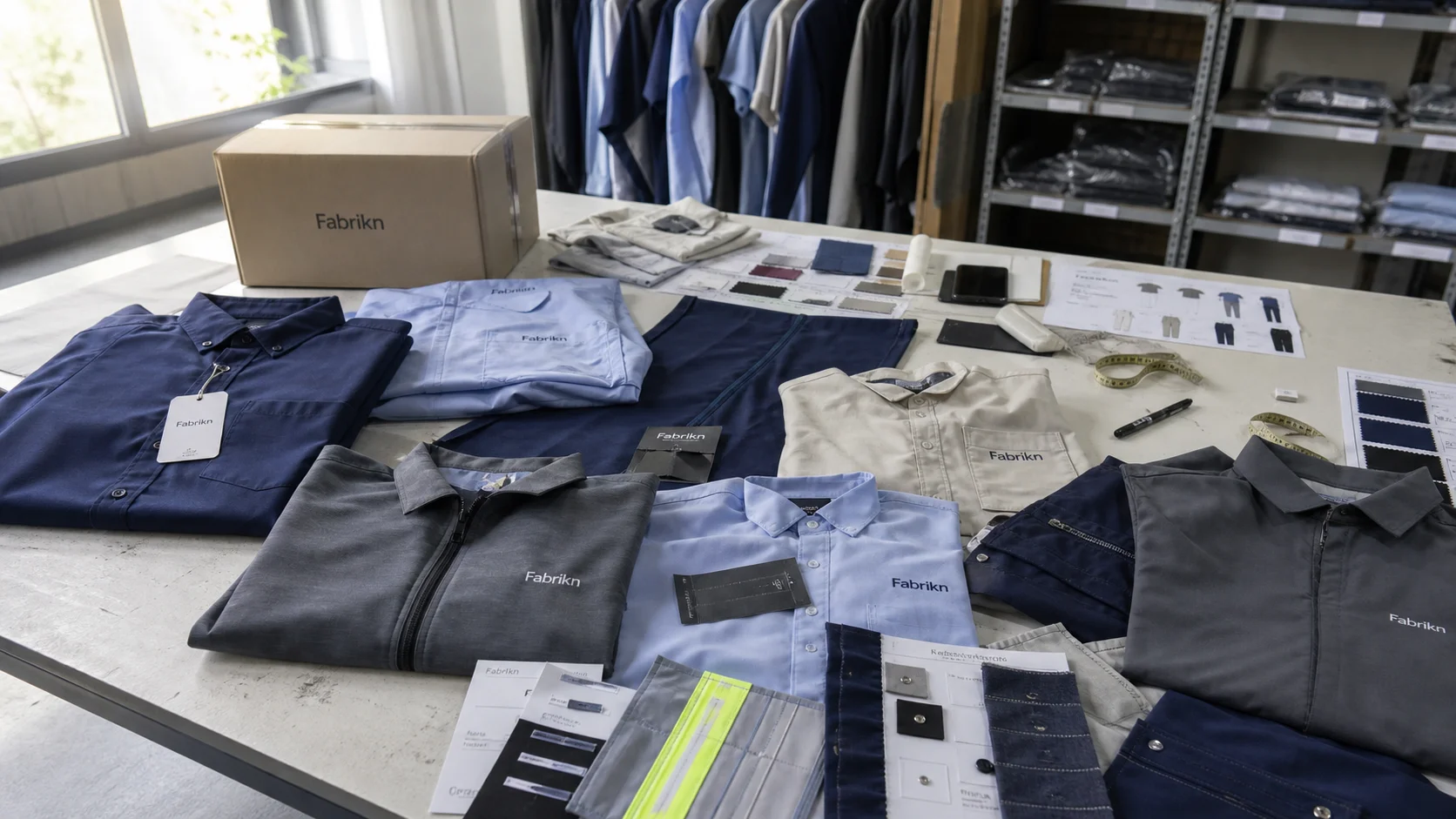
Create A Premium Unboxing Experience for Clothing compared by sample evidence, fabric or trim specs, MOQ, AQL terms, cost lines, delivery timing, and...
Fast answer: Create A Premium Unboxing Experience for Clothing: Tech Pack, Sample Gate, MOQ, and QC Terms should be judged by production evidence, not by a generic sourcing promise. The buyer needs sample proof, cost breakdowns, QC checkpoints, and delivery buffers in writing.
Ask for recent sample photos, measurement tolerances, fabric or print test assumptions, decoration test notes, packing examples, and a named inspection checkpoint. These details show whether the team can repeat an approved sample at bulk volume.
Separate garment cost, decoration, labels, packaging, sampling, testing, freight, and rush charges. Clear cost lines make it easier to reduce colorways, adjust size depth, or reserve more time for sampling.
The box speaks before the fabric does. If you are working out how to create a premium unboxing experience for clothing, start there: presentation shapes trust before a customer ever touches the garment. In my audits, I have seen as much as 18% of online apparel returns tied to damaged presentation, wrong fit expectations, or a “not worth it” reaction that began the moment the parcel was opened. The first 10 seconds decide whether a customer places the item in the premium tier or the discount pile.
A $30 tee, a $120 knit, and a $300 coat should not arrive the same way. The tee can live in a strong kraft mailer, folded tightly with one sheet of tissue and a simple size sticker. The knit needs a cleaner reveal: tissue wrap, a card, and a box or reinforced mailer that keeps the shoulders from crushing. The coat needs structure, breathing room, and packaging that avoids creasing the sleeves and lapel.
I have walked factories in Portugal, Vietnam, and Los Angeles where the cleanest unboxings came from simple systems, not expensive materials. One factory used $0.18 tissue, $0.12 stickers, and a rigid folding table with a five-step pack-out checklist. Another brand spent more than $4.00 per order on metallic extras and still shipped wrinkled shirts because the carton was 1.5 cm too shallow. Mood boards rarely show that part.
The trust effect is measurable. A premium opening experience can raise social sharing, improve repeat purchase rates by 8% to 15% in some DTC programs, and reduce damage claims by 10% to 20% when the packaging matches the garment type. For brands built on private label clothing services, that opening moment often becomes the first proof that the label is worth remembering.
Packaging decisions also connect to production planning. A manufacturer, factory, or supplier with strong quality control can help align pack-out standards with the rest of the production workflow, especially for wholesale and bulk orders. If the MOQ is set too high without testing, brands can end up with custom packaging that looks beautiful but fails in daily use. For teams sourcing in China or elsewhere, the right production partner should treat the unboxing as part of the garment experience, not an afterthought.
The packaging should behave like the product tier. A heritage wool coat should not arrive in a glossy mailer covered with slogans. A minimalist jersey tee should not be trapped in a heavy box that adds $2.80 to freight and storage before the customer even sees the print. The story starts with one decision: what does this garment cost, and what should the opening feel like relative to that price?
Minimalist packaging uses restraint. Think one color, one font, one message inside the lid. Editorial packaging borrows from magazine layout: white space, cropped copy, and clean typography with no more than 40 to 60 words. Heritage-inspired packaging leans on texture, recycled board, twine, woven labels, and a muted palette of navy, forest, cream, or charcoal. Each style can feel premium, but only if the visual language matches the garment.
Color matters more than many teams expect. Black and deep brown read expensive, but they also show lint and scuffs. Soft ivory and warm gray photograph better under indoor light and create a calmer reveal. In factory visits, I have seen brands specify Pantone-perfect color systems and then forget that a matte lamination will mute the same ink by 10% to 15% once folded, glued, and handled by packers wearing gloves that are not actually clean.
Brand copy belongs where it can be discovered, not shouted. Put the promise on the inside lid, the care note on the insert, and the logo on one exterior panel. A 90-word manifesto on the top flap feels like marketing. A 12-word line plus a QR code feels edited. For garments built through cut and sew manufacturing, that restraint helps the packaging mirror the tailoring: considered, not noisy.
Consistency builds memory. Tissue, hangtag, sticker, label, and card should repeat the same type size, same line weight, and same tonal family across the entire order cycle. When a customer receives the same visual codes three times, recognition starts to happen before the box is fully opened. That is not vanity. It is repeat purchase behavior shaped by repetition.
Strong brand story also helps when working with a custom clothing supplier on new launches. As you scale from sample stage to production or plan a seasonal wholesale drop, the packaging should reinforce the same promise the garment makes on the sales page. Soft minimal brands may favor quiet finishes, while performance labels may use clearer utility-driven inserts that explain fabric innovation. The more aligned the story, the more premium the opening feels.
Rigid boxes create the strongest first impression for higher-priced outerwear, knit sets, and limited runs above $150. They resist crush better than fold-flat cartons and give a satisfying two- to three-second pause when the lid lifts. Mailers work better for tees, leggings, and accessories under $80, especially when shipping cost must stay under $4.50 per parcel. Fold-flat cartons sit between the two: structured enough for a premium feel, light enough to avoid freight pain.
The material choice should follow the garment, not ego. Recycled paper stock with 350 to 450 GSM can give a clean matte surface for a tee drop. FSC-certified board works well for branded cartons and inserts, especially when the print area is small and the finish is soft-touch rather than high gloss. Compostable mailers have improved, but they still need tear tests and seal checks because some versions distort at 28°C in transit. According to OEKO-TEX, material transparency matters to buyers; the packaging story loses credibility if the outer wrap feels careless.
Texture is not decoration. It affects the sound of opening, the way a finger catches the edge, and whether the customer slows down. A coated box with too much varnish can feel cheap because it slides. An uncoated board with a sharp die-cut feels intentional. Even the peel of a sticker matters. A loud rip suggests force; a quiet lift feels tailored.
Tissue, stickers, dust bags, and inner wraps need to earn their place. Tissue at 17 to 22 GSM works for shirts and denim. A cotton dust bag around 120 to 150 GSM suits premium knitwear or shoes, though it adds roughly $0.60 to $1.40 per unit and increases cube weight. Reusable cotton bags photograph beautifully, but they are expensive unless the order value is above $200 or the bag becomes product packaging customers keep.
The most premium-looking packaging often uses fewer materials, not more. A smart fold, one textured insert, and a box that fits within 5 mm of the garment stack can outperform a layered kit that rattles in transit. That is especially true for babywear and small size runs, where brands using custom baby clothing manufacturing need softness, safety, and easy packing more than theatrical extras.
Sustainability does not mean flimsy. It means choosing materials that survive handling, photograph well under indoor light, and arrive without excess air. A 100% recycled carton with a clean score line beats a pretty box that arrives dented. Customers forgive plain. They do not forgive wasteful, broken, or dirty.
When comparing suppliers, ask for samples from the factory and confirm production consistency across the full run. A good manufacturer should be able to explain board grade, finish durability, and quality tolerances, especially if you are buying custom packaging at wholesale or bulk volume. For brands sourcing from China, this is also where MOQ and lead time need to be balanced against the final presentation.
Presentation starts with the fold. Shirts should be folded to a consistent width, usually 24 to 28 cm for adult tops, with sleeves tucked in cleanly and the collar centered. Knitwear needs less pressure. Too much crease memory on a 320 GSM French terry sweatshirt will leave a box line across the chest that shows up in customer photos. Denim should be folded with the seams aligned and the waistband supported, not flattened beyond shape. Outerwear needs paper support or a hanger system so shoulders do not collapse.
Tissue layering changes the reveal. One sheet over the garment is functional. Two sheets, with the logo hidden between them or under the top fold, create a slower opening moment without adding much cost. Placement matters more than quantity. The first visible edge should be tidy and straight. Loose corners make the whole order feel rushed, even if the product is good.
Inserts should add utility. A care card that explains enzyme wash versus stone wash, a repair note that tells customers how to reattach a loose button, or a brand origin note with two or three honest facts can make the package feel considered. I prefer cards that answer the questions customers would ask after the sale: how to wash it, how to store it, and what makes it worth the price.
Common factory mistakes are predictable. Loose pins scratch the fabric. Overstuffed boxes crush shoulders and create 6 to 8 mm of permanent crease at the sleeve bend. Inconsistent fold dimensions make the stack look sloppy even when every piece is technically correct. If the line team is packing 500 pieces a day, the process must be simple enough to repeat under pressure.
One detail that often gets ignored: include enough headroom in the carton for the garment to breathe. A box that is 10 mm too shallow forces operators to press the top layer down, which ruins the reveal and increases wrinkle complaints. Small spacing errors create big returns.
For brands asking how to create a premium unboxing experience for clothing in a way that scales, the answer is rarely more decoration. It is a better system. That means clear fold standards, insert placement rules, and finishing details that can be repeated by a production team without guesswork. The cleaner the workflow, the more premium the result feels.
Basic poly mailers can cost $0.08 to $0.22 each at volume, with printed versions landing around $0.20 to $0.45. Fold-flat cartons usually sit between $0.45 and $1.20 depending on board grade and print coverage. Rigid boxes run from $1.80 to $4.50, and gift-style kits with tissue, inserts, dust bags, and stickers can reach $5.00 to $9.00 per order before labor. That spread sounds large until you compare it with retail price.
For a $30 tee, packaging should usually stay under 4% of retail, or about $1.20. For a $120 knit, 3% to 5% is workable, which means $3.60 to $6.00 if the experience supports conversion or repeat purchase. For a $300 coat, premium packaging can rise to 6% in special drops if the carton reduces damage, supports gifting, and lowers return friction. A luxury customer will notice the difference, and so will the shipping department.
Hidden costs eat margins faster than the packaging invoice. Rigid boxes take more warehouse space. A pallet that holds 1,200 flat mailers may hold only 350 assembled boxes. Freight can rise by 12% to 25% because of cube weight. Labor matters too. If pack-out time increases from 35 seconds to 55 seconds, the extra 20 seconds across 10,000 units becomes real payroll. Damage claims also shift the math. A box that reduces crushed corners by even 2% can pay back its premium within a season.
Regional sourcing changes the equation. Asian suppliers often offer better unit pricing on high-volume prints and die cuts, especially above MOQ 3,000 pieces. European vendors can be faster for FSC board and specialty finishing, but often cost 15% to 30% more. North American suppliers may win on lead time, customs simplicity, and smaller runs of 250 to 1,000 units. Trade data from trade.gov continues to show that proximity often saves on total landed cost, not just sticker price.
For brands in the first 12 to 18 months, packaging should scale with retail price and sell-through confidence. A $45 sweatshirt does not need a rigid box. A $250 cashmere set probably does, or at least a strong carton with an insert system that feels deliberate. If your team needs help aligning packaging with production, I often suggest brands request a custom packaging quote before they commit to a full print run.
It also helps to compare packaging against the full production budget, not just the carton price. A factory may quote a low unit rate, but if quality issues create rework or a supplier misses the delivery window, the real cost rises quickly. Brands buying in bulk should review sample approvals, packaging tolerances, and shipment timing together so the final landed cost stays predictable.
Start with a 30-day rollout. Week 1, define the garment tier, target retail, and unboxing outcome for three product groups: entry, core, and premium. Week 2, build prototypes for each with two board options, two tissue options, and one insert system. Week 3, run customer and staff testing on 25 to 50 units. Week 4, refine and place the pilot order. That timeline is realistic for brands already sampling or producing in 500 to 2,000 piece batches.
Before full launch, test four things: drop test, crease test, photo test, and pack-out speed. The drop test should include 1 meter and 1.2 meter corners. The crease test should measure whether the garment shows visible lines after 24 hours in the carton. The photo test should check how the package reads under daylight, warm indoor light, and phone flash. Pack-out speed matters because a pretty system that slows the line by 20 seconds per order can erase its own value.
Your supplier brief should be exact. Include carton dimensions to the millimeter, board type, GSM or caliper, print method, Pantone references, finishing, tissue size, and closure type. Add QC checkpoints for scuffing, color variance, glue bleed, and fold accuracy. If you use printed labels or woven trims inside the packaging, specify their tolerance ranges the same way you would for the garment. Brands with high SKU complexity often need disciplined cut and sew manufacturing planning so the packaging does not become the weak link.
I recommend a simple scorecard with five categories: visual appeal, ease of opening, garment protection, shipping efficiency, and customer delight. Rate each from 1 to 5. Track return rate, damage rate, and social shares for 60 days after launch. If the packaging scores high but returns also rise, the issue may be fit or product quality, not the box.
One operational rule saves money: never approve packaging from mockups alone. Get a physical sample, pack it, ship it, open it, and photograph it in your own lighting. Paper absorbs ink differently on press than it does on screen. A 2 mm error can be the difference between polished and sloppy.
To keep the process efficient, ask the factory for a sample round before the final production run and review quality, speed, and assembly consistency. This is especially important when custom packaging must work across multiple SKUs. A reliable supplier will help you adjust the design so it looks premium without creating wasteful labor at the factory.
Retention begins where the first box ends. If you are still refining how to create a premium unboxing experience for clothing, remember that repeat buyers respond to recognition more than spectacle. A personalized note, a seasonal tissue wrap, or a limited-run insert can cost under $0.30 and still make a customer feel seen. That matters because repeat buyers want confirmation that the brand is organized, consistent, and worth trusting again.
Personalization should stay light. Variable name cards, handwritten initials for VIP orders above $150, and region-specific inserts work. Overprinted one-offs do not. They create waste and slow the line. The best retention packaging feels edited, not desperate. Premium should feel earned through garment quality, reliable fit, and a package that respects the customer’s time.
Overdesign is expensive. It adds labor, fills bins, and creates decisions for teams already managing 200 to 500 units per day. I have seen brands spend 8% of retail on packaging for a product that needed 2%. That gap is not sophistication. It is drift. If the package is doing all the selling, the garment is probably underdoing its own job.
The right standard is simple. Make the opening clean, the materials honest, and the experience repeatable across two to three seasons. That is what turns packaging into retention. Premium feeling is not inflated. It is consistent, practical, and supported by the product inside.
Brands that want to scale this approach should treat packaging like any other production system. Review supplier quality, confirm the factory can repeat the finish, and keep the custom details manageable at wholesale volume. When the experience is easy to reproduce, it becomes a brand asset instead of a one-time expense.
Use one structured mailer or carton, one sheet of tissue, and one insert with care instructions. For many DTC orders, $0.60 to $1.50 per unit is enough to look premium if the fold is tight and the print is consistent.
Basic premium packaging usually ranges from $0.80 to $3.50 per order, depending on size and print. Rigid boxes and gift kits can reach $5.00 to $9.00 when you add tissue, inserts, and labor.
Use packaging that protects shoulders, hems, and seams, then test for wrinkles after 24 hours in transit. A clear fold system, correct box depth, and a care card can reduce damage claims by 10% or more in some programs.
A realistic rollout takes 30 to 45 days from prototype to pilot if your supplier already has dielines and board options available. Custom print, special finishes, or imported rigid boxes can extend lead time to 6 to 8 weeks.
Yes, but it must stay proportionate. For a $25 to $40 item, use simple materials and one or two premium cues, such as textured paper or a refined insert, rather than a costly box that eats margin.