
Design Clothing Hang Tags More compared by sample evidence, fabric or trim specs, MOQ, AQL terms, cost lines, delivery timing, and rework responsibility.
Fast answer: Design Clothing Hang Tags More: Material, Print, MOQ, and QC Terms should be judged by production evidence, not by a generic sourcing promise. The buyer needs sample proof, cost breakdowns, QC checkpoints, and delivery buffers in writing.
Ask for recent sample photos, measurement tolerances, fabric or print test assumptions, decoration test notes, packing examples, and a named inspection checkpoint. These details show whether the team can repeat an approved sample at bulk volume.
Separate garment cost, decoration, labels, packaging, sampling, testing, freight, and rush charges. Clear cost lines make it easier to reduce colorways, adjust size depth, or reserve more time for sampling.
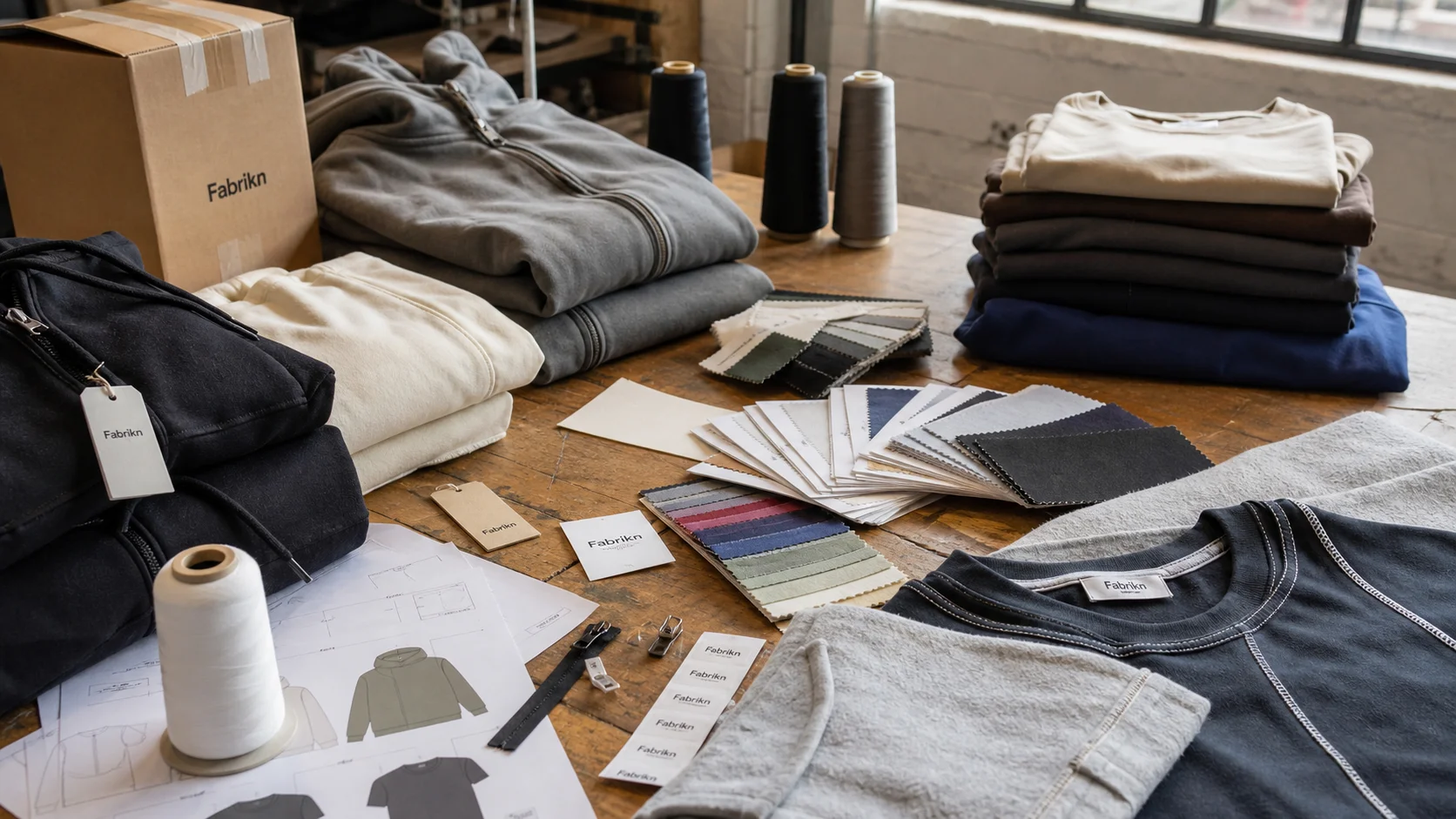
A clothing hang tag can sell a garment before a shopper ever touches the fabric. I’ve watched someone pick up a sweater, skim the tag for two seconds, and decide whether a $28 piece feels like $48 or $180. Tiny rectangle. Big swing.
Across 200+ factory visits in 8 countries, I’ve seen the same pattern again and again. In Vietnam, a $0.06 tag on a women’s blouse used 350 GSM FSC board and a matte black logo, and the buyer sold it as premium at $42 retail. In Bangladesh, the same silhouette with thin 250 GSM recycled stock and one-color ink landed at $14.99. Same stitching. Same carton count. Different story.
That gap matters because tags are not decorative leftovers. They sit inside the product architecture. A five-cent tag can support a $200 perception when it signals discipline: crisp typography, accurate origin copy, and paper that doesn’t feel flimsy in the hand. A sloppy tag does the opposite, even if the garment itself is well made.
Mass-market labels need the tag to identify fast, reassure fast, and survive rough handling. Premium brands use it to justify a higher margin with texture, restraint, and hierarchy. Luxury labels strip the tag down to almost nothing, but the paper stock, string, and embossing carry the message. I’ve stood in Italian workshops where a 1 mm shift in logo placement triggered a reprint, while a factory in Dhaka shipped 50,000 tags with the wrong shade of gray because the Pantone reference never got locked.
Buyers, merchandisers, and founders should treat the hang tag as part of the selling system, not an afterthought. It affects conversion, returns, and even markdown timing. A tag that tells the right story can move a buyer from “maybe” to “yes” in a 7-minute line review. A weak one becomes discount bait.
So I treat tags with the same seriousness as pattern fit or wash development. Good design isn’t decoration. It’s commercial discipline.
A hang tag has four jobs: identify, inform, reassure, and justify price. Most tags try to do all four at once, and that’s where they break down. A $12 tee needs a tag that identifies the item quickly and keeps shelf flow moving. A $220 blazer needs a tag that supports the price with precision, restraint, and a stronger visual code.
Logo, size, SKU, barcode, fiber content, origin, care notes, and, when the evidence is real, sustainability claims. Those are the core pieces. Order matters. I usually build the hierarchy in layers: brand first, product second, proof third, legal data last. Put ten lines of copy above the SKU and you’re forcing the buyer to work too hard.
Luxury tags use more space, heavier board, and fewer words. Mid-market tags need balance. They often combine a clean front with a denser back panel, especially for denim, tailoring, and outerwear. Value brands should push speed, legibility, and pack efficiency. On a $9.99 basic tee, a tag with two inks and a simple die-cut usually does more than a complicated multi-layer object that adds cost without adding trust.
Product type changes the equation. Denim often uses thicker tags, 400 GSM board, rivets, or string-and-button hardware because the garment already signals durability. Activewear works better with compact tags that don’t look heavy or wasteful. Childrenswear, especially for custom baby clothing manufacturing, needs softer edges, readable care data, and safety-conscious attachment so the tag doesn’t become a snag hazard. Basics should keep the language simple. Accessories can handle more play, especially if the tag doubles as a brand marker.
Overcrowding makes cheap garments look cheaper. Tiny type on a 55 mm x 90 mm tag disappears on shelf. Glossy stock on a brushed cotton sweatshirt feels wrong. When the tag material clashes with the hand feel of the garment, shoppers notice. They may not say it aloud, but they feel the disconnect in three seconds.
I tell brands to treat the hang tag like a miniature sales pitch with a deadline. In a store, it has to work in two glances. On a wholesale line sheet, it has to support the buyer’s margin logic. Online, it should match the tone of the product page and packaging. If the brand already uses clothing packaging solutions, the tag should echo that system, not fight it. For a manufacturer, factory, or supplier, the brief should be specific enough to guide production and quality checks without slowing the MOQ conversation.
Material choice changes the message before a single word gets read. Recycled paper, FSC-certified board, cotton stock, textured papers, and synthetic alternatives each carry different signals in hand, under light, and at the checkout counter. A 300 GSM recycled board can feel honest and modern. A 450 GSM cotton stock can feel soft and refined. A synthetic tag can survive moisture, but on a knit dress it can also look too technical.
I’ve handled tags across mills in India, China, Turkey, and Portugal, and the feel difference is often larger than the cost difference on paper. Recycled paper may add only $0.01-$0.03 per piece at 5,000 units, while a premium cotton stock might add $0.08-$0.20 depending on thickness and print coverage. Small numbers. Big multiplication. Add 30,000 units, string, staples, and packing labor, and the budget moves.
Print method matters just as much. Offset printing is efficient for 10,000+ units and color accuracy. Digital printing fits 500-2,000 units, quick tests, and fast seasonal changes. Spot UV, foil, embossing, and debossing help premium positioning, but only when the dieline is accurate and the stock can hold the finish. Soft-touch lamination creates a velvety feel, yet it may complicate recycling and can scuff during transport if cartons are packed too tightly.
Here’s what most people miss: expensive finishes fail when humidity control is poor or the die line is sloppy. In one factory in Zhejiang, a gold foil stamp looked perfect on the sample board, then warped on the production run because the paper absorbed moisture during a four-day monsoon delay. In a Turkish plant, embossing collapsed on a 420 GSM board because the counters were too shallow, and the brand had to scrap 12,000 pieces. The finish wasn’t the problem. The process was.
According to OEKO-TEX, material transparency and chemical safety matter more to many consumers now than the finish itself. That creates a trade-off. Coated papers can look luxurious, but they can also make recycling harder. Uncoated recycled stock may appear less polished, yet it communicates restraint and is easier to recover in standard paper streams. For brands scaling wholesale or bulk programs, that can make the difference between a smooth production run and avoidable quality complaints.
For cut-and-sew programs, the tag should match the garment’s construction language. A heavy fleece hoodie from cut and sew manufacturing can handle a 350-400 GSM tag with foil or embossing. A lightweight rayon blouse often reads better with 300 GSM uncoated stock, one or two inks, and a clean hang string. Match finish to fabric behavior, not to trends. That is how to design clothing hang tags that feel intentional rather than overproduced.
Unit cost is only the visible part of tag pricing. A simple 4-color tag on 300 GSM board might cost $0.04-$0.08 at 20,000 units, but the same tag at 1,000 units can jump to $0.18-$0.35 once plate charges, setup, and packing are included. Add foil, and the cost can rise by another $0.03-$0.12 per piece. Add die-cutting or stringing, and the labor line grows again.
Small runs are where brands overpay the most. A 500-piece order in the U.S. can move in 5-8 business days, but the per-unit price often sits at $0.30-$0.70 because the printer spreads setup across too few tags. Overseas production can lower the unit cost to $0.05-$0.15 at 10,000+ pieces, though lead time stretches to 3-6 weeks before shipping. Rework risk rises if artwork changes after proof approval.
Region matters. China and Vietnam usually offer faster sampling on higher volumes, often 3-7 days for a proof if the factory already has the stock. India can be competitive on textured board and specialty finishes, though plate charges may be higher. Eastern Europe can be strong for smaller premium runs, especially when brands need 1,000-3,000 units with better communication and shorter transit times. The total landed cost is where the real comparison lives.
Savings show up fast. Use fewer inks. Keep the dieline standard where possible. Skip custom hardware unless the product price can carry it. A basic kraft tag with black ink, one hole, and cotton string may save $0.06-$0.14 versus a laminated, foil-stamped, multi-layer design. On a 15,000-piece seasonal order, that gap protects margin.
Brands doing private label should think in batches. With private label clothing services, the tag cost should be mapped against the full margin stack: garment, label, polybag, carton, freight, and returns allowance. A tag that costs 8 cents instead of 3 cents sounds tiny. On 40,000 units, it changes the budget by $2,000. That can pay for one extra wash test. Or it can vanish.
Last year, when I priced a women’s knitwear line, the fastest path wasn’t the cheapest. It was the one with the fewest approval loops, a 10-day sample window, and a print spec that matched the factory’s existing cutters. Speed can save money when the plan is disciplined.
Trust begins with accuracy. Buyers expect fiber content, country of origin, company or RN info, SKU, size, and care references on the tag or in the attached labeling system. If the product uses recycled inputs, the claim has to be specific. “Made with 30% recycled polyester” is useful. “Eco-friendly” is not. Brands that stay vague about sustainability usually read as inexperienced or, worse, evasive.
Claims should be auditable. If a tag says organic cotton, the brand should be able to produce certification records. If it says FSC paper, the printer should have the paperwork. If it mentions a third-party standard, the mark has to be used correctly and only where permitted. The rules aren’t decorative; they protect the business.
Data from Global Organic Textile Standard and similar bodies shows that buyers increasingly want chain-of-custody proof, not slogans. That’s especially true in Europe and North America, where retailers watch greenwashing risk closely. A tag that overclaims can damage trust faster than a tag that says less but proves more.
I advise brands to align tag copy with ecommerce pages and sewn-in labels. If the website says a tee is 220 GSM organic cotton and the tag says only “premium cotton,” confidence drops. The tag, packaging, and product page should tell the same story in slightly different registers. That harmony matters in wholesale, too, where a buyer may compare the tag against supplier documents in under 2 minutes.
Cultural expectations differ by market. Some buyers want detailed material disclosure. Others want a cleaner front and a denser back panel. Either way, the document needs to stay clear. The best compliance tag feels calm, not crowded. Facts only. No shouting. This is also where quality control matters in production, especially when the factory is balancing custom, wholesale, and bulk orders for multiple markets.
The first prototype is where tag mistakes become cheap. I inspect the dieline first, then the color proof, then the stitched sample garment with the tag attached. A tag that looks fine on a flat PDF can fail once it hangs from a 320 GSM French terry hoodie or sits beside a satin blouse in a retail photo shoot. The physical test is the only test that matters.
Readability comes first. I check type size at arm’s length, barcode scannability on a phone or scanner, hole placement so the tag doesn’t flip awkwardly, and string length so it hangs at the intended angle. I also check whether the finish catches light too aggressively. A high-gloss surface can look rich on the proof and noisy on the rack.
Factories prioritize different things. In China, the conversation often centers on color match, turnaround, and packing counts. In Bangladesh, I’ve seen teams focus on durability and attachment strength because cartons may travel longer and be handled more roughly. In Portugal, premium mills often care more about alignment, tactile finish, and the relationship between tag stock and garment hand feel. If you are choosing a supplier, ask how they handle pre-production proofing and production checks before accepting a bulk order.
The expensive errors are predictable. A black that prints too warm can make a luxury tag look muddy. Foil that lands 1-2 mm off center makes the entire piece feel low-grade. Weak perforation can tear during stringing. Wrong packing counts can create a shortage that delays a launch by 1-2 weeks while replacement stock is rushed.
My checklist is simple and brutal:
Boring? Absolutely. Worth it? Every time. I’ve seen a 2-hour proofing delay prevent a 20,000-unit reprint. That’s the kind of discipline brands need before they scale. Before placing orders, many teams also review guidance from trade.gov for sourcing, import rules, and market access considerations.
Start with the job of the tag. Decide whether it should identify, inform, reassure, or justify price, then set a budget that fits the garment’s retail target. For a $18 tee, that may mean a $0.05-$0.10 tag. For a $180 jacket, it may mean $0.20-$0.60 with better stock and finish.
Then gather the technical inputs. Suppliers need a logo vector, copy deck, dieline, Pantone references, size matrix, barcode files, carton dimensions, and any legal text. If you are using private label clothing services or custom production, ask for sample tags before final approval. A printer can’t guess your brand standards from a screenshot.
Compare quotes beyond unit price. Check setup fees, plate charges, shipping, remake risk, and proof revisions. A quote that is $0.02 cheaper can become more expensive if it needs two extra rounds of corrections or a rushed freight upgrade. Give yourself 3-4 weeks for sampling and a buffer for one revision. That keeps launch pressure low and quality high.
If you’re briefed for a range, ask for one value option and one premium option. The difference often shows where the brand can save without hurting shelf impact. For brands tied to clothing packaging solutions, the tag should mirror the package, not compete with it. If the product is built through cut and sew manufacturing, the tag should match the construction standard in the same exact way. That is the practical side of how to design clothing hang tags well, especially when you need the result to work across retail, wholesale, and ecommerce.
The best tag sells the garment before the customer touches the fabric. That’s the test. If the tag can’t pass it, redesign it before you print 10,000 pieces.
Start with one clear job for the tag: identify the product, support the price, or explain key materials. For a small brand, keep the design to 1-2 colors, 300-350 GSM stock, and a simple die-cut to control cost at 500-2,000 units.
Design fees vary, but production is usually the bigger budget item. A basic tag can cost $0.04-$0.08 at 10,000 units, while premium finishes can raise it to $0.20-$0.60 per piece. Small runs of 500 units often cost much more per tag.
Use heavier board, clean typography, and one strong finish rather than stacking multiple effects. A 350 GSM uncoated stock with embossing or a single foil hit often reads more premium than a laminated tag with too much copy. Keep the layout disciplined.
Most buyers expect brand name, size, SKU, barcode, fiber content, country of origin, and care references. Sustainability claims should be specific and backed by records. If the product uses certifications, place the marks clearly and avoid crowding the layout.
Domestic printing can take 5-8 business days for simple runs, while overseas production often takes 3-6 weeks including sampling and shipping. Add more time if you need foil, embossing, or multiple proof rounds. Leave at least 3-4 weeks before launch.