
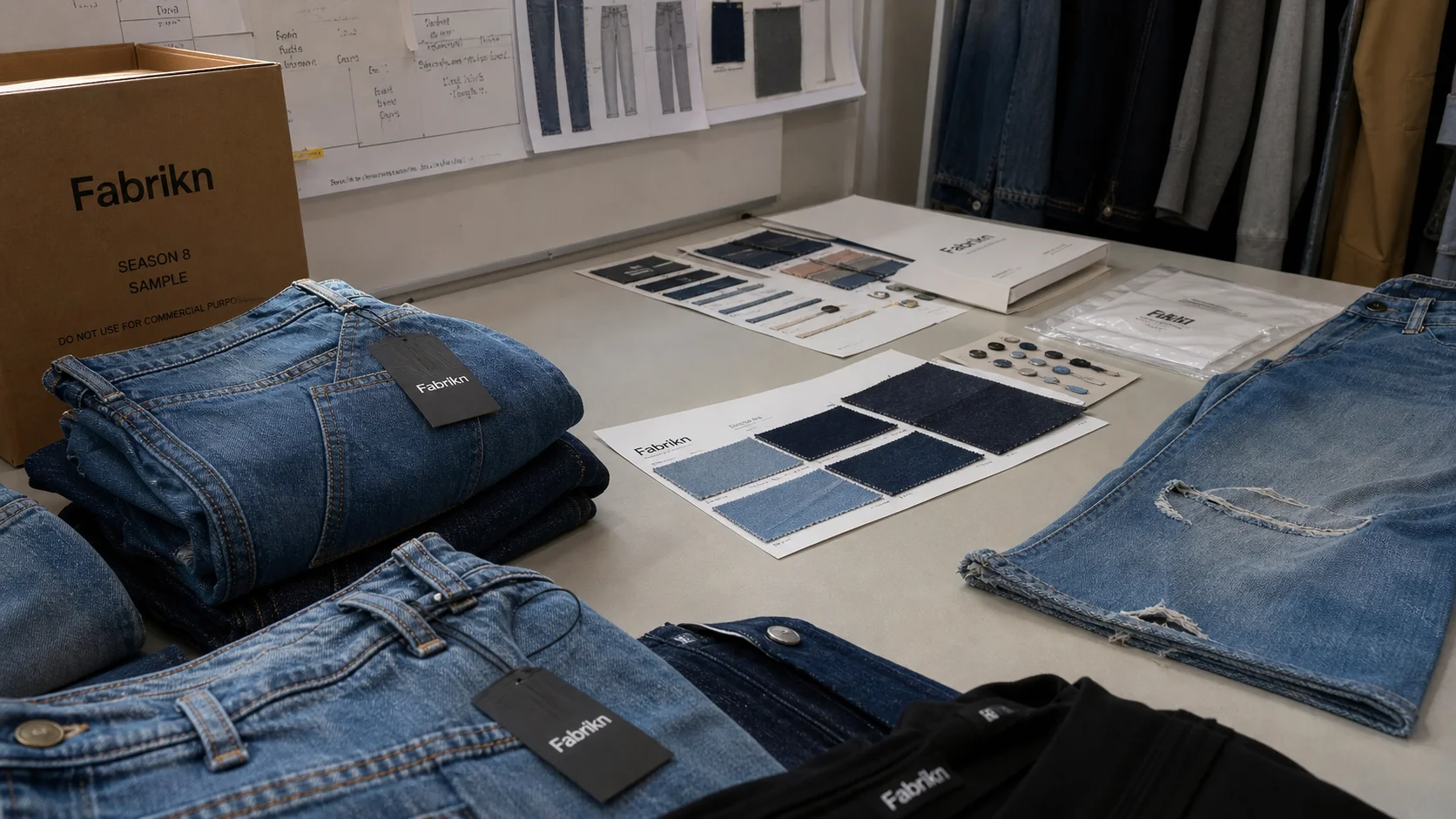
Estimate Landed Cost for Bulk Clothing Manufacturing compared by sample evidence, fabric or trim specs, MOQ, AQL terms, cost lines, delivery timing, and...
Fast answer: Estimate Landed Cost for Bulk Clothing Manufacturing: Tech Pack, Sample Gate, MOQ, and QC Terms should be judged by production evidence, not by a generic sourcing promise. The buyer needs sample proof, cost breakdowns, QC checkpoints, and delivery buffers in writing.
Ask for recent sample photos, measurement tolerances, fabric or print test assumptions, decoration test notes, packing examples, and a named inspection checkpoint. These details show whether the team can repeat an approved sample at bulk volume.
Separate garment cost, decoration, labels, packaging, sampling, testing, freight, and rush charges. Clear cost lines make it easier to reduce colorways, adjust size depth, or reserve more time for sampling.
How to Estimate Landed Cost for Bulk Clothing ManufacturingUnderstanding how to estimate landed cost for bulk clothing manufacturing is one of the most important steps in protecting margins, pricing products correctly, and making smarter sourcing decisions. If you are ordering apparel at scale, the factory price is only one part of the total expense. Freight, duties, customs clearance, insurance, packaging, warehousing, and last-mile delivery can all significantly change what each garment truly costs by the time it reaches your business.
For brands, wholesalers, retailers, and private label companies, landed cost is the real number that matters. It helps you determine whether a product is profitable, how to set wholesale or retail prices, and which manufacturing partner or shipping method offers the best value. In this guide, we will break down landed cost in simple terms, show you how to calculate it step by step, and explain the common hidden costs that clothing businesses often overlook.
Landed cost is the total cost of getting a product from the factory to your final destination. In bulk clothing manufacturing, that usually means adding up the unit manufacturing price plus all logistics, import, and delivery-related expenses.
Many buyers make the mistake of focusing only on the factory quote. A shirt that costs $4.00 per unit at the factory may cost much more once freight, tariffs, and handling are included. The landed cost is the “true cost per unit,” and it is the figure you should use when evaluating profitability.
For example, if you order 5,000 hoodies, the factory may quote $20,000. But after shipping, customs, insurance, and domestic distribution, your total spend may reach $26,500 or more. Your landed cost per hoodie would then be $5.30 instead of $4.00.
Bulk apparel businesses operate on narrow margins, especially when competing in wholesale, retail, or e-commerce markets. Accurate landed cost estimation helps you in several ways:
Protects profitability: You can avoid underpricing products and losing money on every sale.
Improves sourcing decisions: A lower factory price may not be the cheapest option if freight or duties are high.
Supports pricing strategy: Knowing your full cost helps set realistic wholesale and retail prices.
Reduces surprises: You can budget more accurately and avoid unexpected charges after shipment.
Helps compare suppliers: Two factories may quote different prices, but the better deal is not always the cheaper unit price.
If you are planning a new product line, it is also useful to speak with a manufacturing partner early in the process. You can learn more about Fabrikn’s apparel solutions on our services page or reach out directly through our contact us page.
To estimate landed cost accurately, you need to understand every cost layer involved. The main components usually include the following:
This is the base cost charged by the factory for producing the garments. It includes fabric, trims, labor, sampling if applicable, printing or embroidery, and basic factory overhead. In bulk clothing manufacturing, this is usually quoted per unit or per style order.
Packaging includes poly bags, size stickers, hang tags, cartons, labels, and other packaging materials. For apparel brands, packaging may also include branded inserts or premium retail-ready packaging.
This covers transportation from the factory to the port, airport, or freight forwarder’s warehouse. Depending on the factory location, this may include trucking fees, loading charges, and local handling.
This is the cost of moving goods from the origin country to the destination country by sea, air, rail, or courier. Freight is often one of the largest variables in landed cost, especially for bulky clothing products.
Cargo insurance protects your shipment in case of damage, theft, or loss during transit. While often optional, it is a smart safeguard for larger bulk orders.
When clothing enters a new country, it may be subject to import duties, VAT, GST, or other taxes. These rates depend on the product category, country of origin, and destination country regulations.
These are service charges for clearing your shipment through customs. A customs broker may handle documentation, compliance, and port procedures.
Once goods arrive in the destination country, they may still need to be transported to a warehouse, fulfillment center, or retail location. This can include port fees, unloading, drayage, and trucking.
If your inventory is stored before distribution, you may incur warehouse receiving, storage, picking, packing, or fulfillment fees.
Estimating landed cost is easiest when you break it into clear steps. Here is a practical method for bulk clothing manufacturing.
Ask your manufacturer for a detailed quotation that includes the unit price, minimum order quantity, sample charges, customization fees, and packaging assumptions. Make sure you know whether the quote is ex-works, FOB, CIF, or another shipping term.
For example:
Jacket unit price: $12.00
Order quantity: 2,000 units
Factory total: $24,000
If packaging is not included, calculate the cost per unit for poly bags, cartons, hang tags, or branded inserts. Even small costs can add up across thousands of units.
Example:
Packaging per jacket: $0.35
Total packaging: $700
Include trucking from the factory to the port or warehouse, export documentation, and any handling fees. Ask your freight forwarder for a full estimate rather than a partial quote.
Example:
Factory to port: $250
Export docs and handling: $180
Get a shipping quote based on your actual volume, carton count, weight, and destination. Clothing is often shipped by sea for bulk orders because it is more cost-effective, though air freight may be used for urgent replenishment.
Example:
Ocean freight: $1,600
Cargo insurance is usually a small percentage of shipment value. A common estimate is around 0.3% to 0.5% of cargo value, depending on the provider and route.
Example:
Insurance: $120
Determine the tariff rate for your apparel category in the destination country. Clothing duties can vary widely based on fabric, gender classification, product type, and trade agreements.
Example:
Declared value: $24,000
Duty rate: 12%
Duty: $2,880
Brokerage, port fees, delivery charges, and terminal handling should all be included in your calculation.
Example:
Customs broker: $200
Destination handling: $350
Domestic delivery: $420
If your goods are not moving directly to customers or retail stores, warehouse costs should be part of landed cost. This is especially important for e-commerce brands.
Example:
Receiving and storage: $300
Now total every cost linked to the shipment:
Manufacturing: $24,000
Packaging: $700
Origin transport and export fees: $430
International freight: $1,600
Insurance: $120
Duties: $2,880
Customs and destination fees: $550
Domestic delivery: $420
Warehousing: $300
Total landed cost: $30,000
Finally, calculate landed cost per unit:
$30,000 ÷ 2,000 = $15.00 per jacket
This means the true cost of each jacket is $15.00, not the original factory price of $12.00.
When estimating landed cost for bulk clothing manufacturing, hidden expenses can distort your budget if you do not account for them early. Some of the most common overlooked costs include:
Sample and development charges: Pattern making, tech packs, sampling, and revisions may not be included in the final unit quote.
Garment testing: Depending on the market, you may need colorfastness, shrinkage, or compliance testing.
Rework or defects: Poor quality control can lead to repairs, replacements, or rejected goods.
Currency fluctuations: Exchange rate changes can affect both production and shipping costs.
Port congestion and delays: Demurrage, detention, and storage fees may apply if shipments are delayed.
Labeling compliance: Incorrect fiber content labels, origin labels, or care labels may trigger rework or penalties.
Retail prep: Price tagging, steaming, folding, and carton configuration may be needed before distribution.
Working with an experienced manufacturer can help reduce these surprises. Fabrikn supports brands through the production process, and you can learn more about the company on our about us page.
Shipping method has a major impact on landed cost. Your decision should balance speed, cost, product value, and order urgency.
Ocean shipping is generally the most economical option for bulk clothing manufacturing. It works well for large orders with enough lead time. However, it is slower and may involve more handling steps.
Air freight is much faster but usually significantly more expensive. It is often used for urgent replenishment, promotional launches, or seasonal deadlines. For lightweight, high-value clothing, air freight may still be viable if speed is critical.
Courier services are convenient for smaller shipments, samples, or urgent initial orders. For bulk production, courier shipping often becomes too expensive for commercial-scale inventory.
If your product has a high retail margin, faster shipping may be worth the cost. If you are working with thin margins, ocean freight and strong inventory planning are usually the better choice.
Let’s look at a simple landed cost example for a bulk t-shirt order.
Factory unit price: $3.20
Quantity: 10,000 units
Manufacturing total: $32,000
Packaging: $0.20 per unit = $2,000
Origin freight and export: $600
Ocean freight: $2,400
Insurance: $150
Duty at 10%: $3,200
Brokerage and destination fees: $700
Domestic delivery: $500
Total landed cost: $42,550
Landed cost per unit: $4.26
Even though the factory price was only $3.20, the real cost per shirt is $4.26. If your wholesale price is $6.00, your gross margin is much lower than it may appear at first glance. That is why landed cost should always be used before finalizing any pricing model.
Reducing landed cost does not always mean cutting corners. In fact, smart planning can lower total cost while maintaining product quality and consistency.
Optimize order quantities: Larger orders can reduce per-unit manufacturing and freight costs, but only if inventory risk is manageable.
Select efficient fabrics and constructions: The right material choices can reduce both production and freight expenses.
Improve packaging efficiency: Smaller cartons and optimized packing can reduce shipping volume.
Consolidate shipments: Combining styles or products may reduce handling and freight charges.
Plan ahead: Advance planning helps you avoid expensive air freight and emergency shipping.
Work with experienced partners: Reliable manufacturers and freight forwarders can help you spot unnecessary costs early.
Review product classification: Correct HS codes and product descriptions can prevent avoidable duty mistakes.
If you want your landed cost estimates to be as accurate as possible, follow these best practices:
Request written quotes for production, freight, and customs-related services.
Confirm whether quotes are EXW, FOB, CIF, DDP, or another incoterm.
Ask for a landed cost estimate before approving a large purchase order.
Build a contingency buffer of 5% to 10% for unexpected expenses.
Track actual costs against estimated costs after each shipment.
Update your calculations whenever shipping routes, duty rates, or order quantities change.
For brands scaling into new markets or launching new apparel lines, working with a trusted manufacturer can simplify cost planning and production management. If you are ready to discuss your project, visit our contact us page.
Learning how to estimate landed cost for bulk clothing manufacturing is essential for building a profitable and sustainable apparel business. The factory price is only the starting point. To understand your real cost, you must add packaging, freight, customs duties, brokerage, taxes, domestic transport, and any storage or fulfillment charges.
When you calculate landed cost correctly, you can price more confidently, compare suppliers more effectively, and avoid costly surprises after your shipment arrives. Whether you are launching a new clothing line or scaling an existing brand, landed cost should be one of the first numbers you calculate before placing any bulk order.
Get a free quote from Fabrikn — your trusted B2B clothing manufacturer with 10+ years of experience. MOQ as low as 200 pieces.
Get a Free Quote →Landed cost typically includes the factory product cost, packaging, freight, insurance, duties, customs clearance, destination handling, domestic transport, and warehousing if applicable.
Factory price only covers production. Landed cost includes all costs required to deliver the goods to your final destination, so it is always higher than the factory price alone.
Ask for quotes from your manufacturer, freight forwarder, and customs broker. Then add every cost together and divide by the total number of units.
Ocean freight is usually the most cost-effective for bulk orders, while air freight is best for urgent shipments. The right choice depends on your budget, timeline, and product margins.
Yes. Fabrikn works with B2B apparel buyers looking for manufacturing support, and you can explore our services or get in touch through our contact page.