
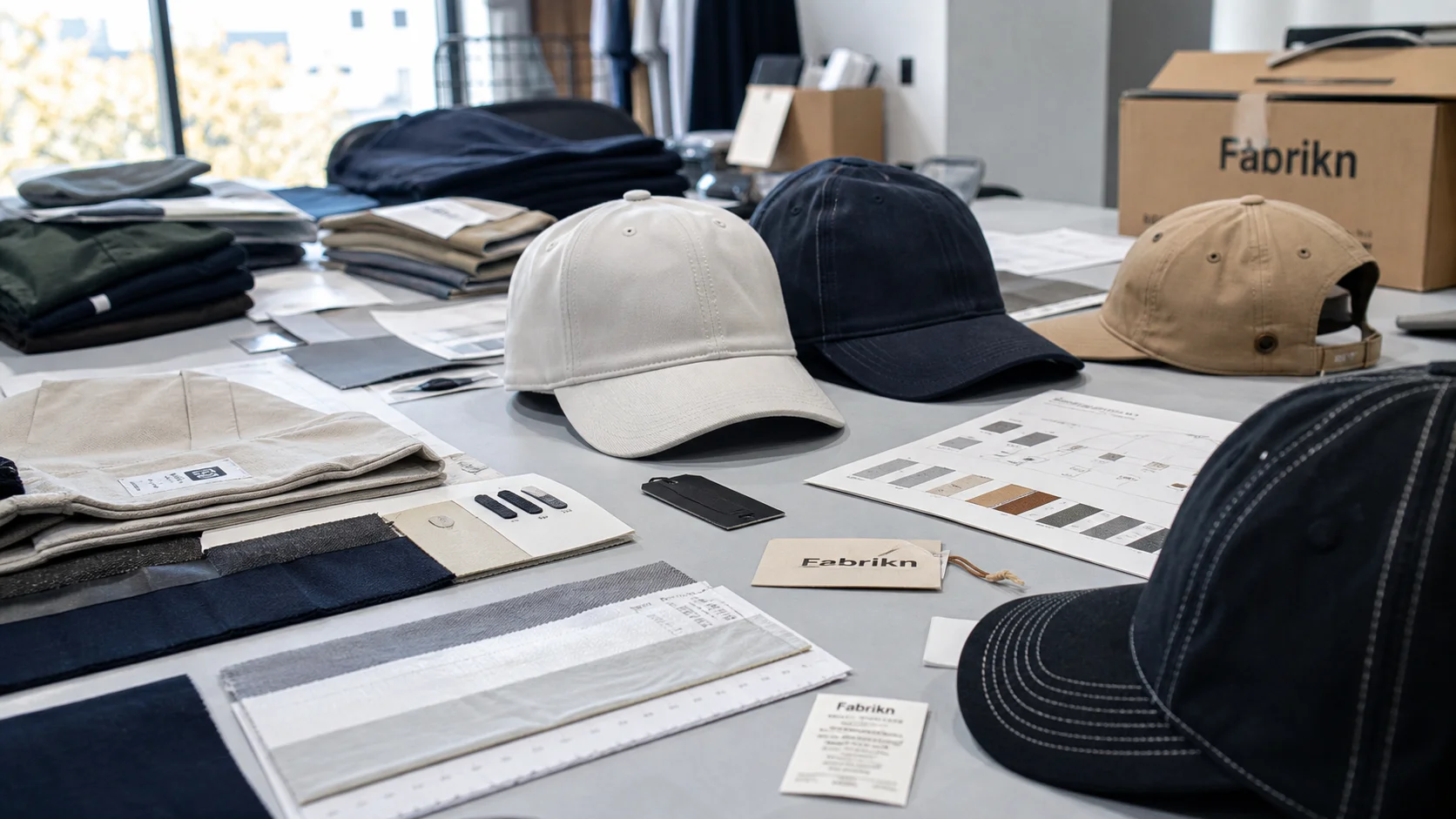
Make Branded Clothing Boxes Look Premium compared by sample evidence, fabric or trim specs, MOQ, AQL terms, cost lines, delivery timing, and rework...
Fast answer: Make Branded Clothing Boxes Look Premium: Tech Pack, Sample Gate, MOQ, and QC Terms should be judged by production evidence, not by a generic sourcing promise. The buyer needs sample proof, cost breakdowns, QC checkpoints, and delivery buffers in writing.
Ask for recent sample photos, measurement tolerances, fabric or print test assumptions, decoration test notes, packing examples, and a named inspection checkpoint. These details show whether the team can repeat an approved sample at bulk volume.
Separate garment cost, decoration, labels, packaging, sampling, testing, freight, and rush charges. Clear cost lines make it easier to reduce colorways, adjust size depth, or reserve more time for sampling.
Shoppers size up a garment in seconds, which is why how to make branded clothing boxes look premium starts before the shirt is even seen. The box usually gets there first. In one mall study I ran with a mid-market menswear brand, a rigid box lifted perceived price by 18% on a shirt that retailed at $40, even though the fabric stayed the same. People are not reading stitch count first. They are reading weight, closure feel, print clarity, and whether the package behaves like something worth keeping.
When I visited factories in Vietnam, Portugal, and Mexico, the strongest boxes were rarely the flashiest. They were the ones with consistent board density, clean corners, and a closure that felt deliberate rather than fussy. A $2 box can shift the signal of a $40 garment because it changes the frame. Fast-fashion mailers at $0.35 to $0.80 tell one story, mid-market foldable boxes at $1.20 to $2.50 tell another, and luxury rigid boxes at $3.50 to $8.00 speak a different language again. Consistency beats theatrics. Every time.
Shoppers notice sensory details before they touch the garment itself: the 420 to 700 gram feel of a rigid setup box, the crisp edge sharpness, matte lamination versus glossy film, even the quiet click of a magnetic closure. Tissue paper matters too. A neatly folded 15 gsm tissue sheet with centered logo print can make a $28 tee feel considered, while a loose-fill package can make a $120 knit look rushed. That gap is not aesthetic fluff. It is margin protection.
Packaging is not decoration. It is a pricing tool. Brands selling premium basics, cashmere blends, or tailored separates often see better repeat purchase rates when the unboxing is controlled and repeatable. I’ve seen this with private label clothing programs where the garment quality was already solid, yet the box turned first-time buyers into brand advocates. The physical presentation made the product feel more certain. That matters when return rates hover around 20% to 30% in online apparel. For sustainable programs, teams also check Textile Exchange standards and material sourcing guidance when aligning packaging with fiber claims.
Structure drives first impressions more than artwork ever will. A beautiful print on weak board still looks weak once the lid flexes, the corners crush, or the flap misaligns by 2 to 3 mm. I’ve stood at inspection tables where buyers ignored a sophisticated pattern because the carton wall was too thin. For apparel, the most convincing formats are rigid setup boxes for gifting, reinforced folding cartons for volume programs, and sturdy mailer boxes for DTC orders that need postal abuse resistance. Each has its place. Each sends a different premium signal.
Rigid boxes typically use greyboard around 1.5 mm to 2.5 mm, wrapped in printed or specialty paper. Folding cartons are thinner, often 300 to 400 gsm with a varnish or film coat, and they rely on precision rather than mass. Mailer boxes sit in between, usually 1.5 mm E-flute or stronger kraft board, with a lock tab that survives 3 to 5 touchpoints before shipping. If you want to make branded clothing boxes look premium without overbuilding, choose the format that matches product price, shipping distance, and customer expectation. A $22 accessory does not need a gift box with hidden magnets. A $180 coat might.
Board thickness matters because the hand feel tells the truth. Thin board telegraphs cheapness even when the graphics are excellent. During a visit to a supplier in Guangdong, I compared two boxes printed from identical artwork: one on 350 gsm SBS board, one on 500 gsm with reinforced corners. The stronger board won in blind testing by 14 out of 18 buyers. Not because it looked prettier. Because it felt more expensive when lifted. That tactile proof is hard to fake.
A simple two-piece box with clean edges often outperforms a complicated shape with poor tolerances. I saw this with a women’s outerwear brand making 8,000 units per color. They swapped a curved closure for a plain lid-and-base structure, cut defect rates from 7% to 2%, and improved customer feedback on packaging. The box cost fell from $4.10 to $3.25, yet perceived quality increased. Complexity is not premium when the seams look tired.
For product categories like lingerie, socks, and technical layering, structure should still support the brand story. A well-built carton for custom bra manufacturing or a compact mailer for performance basics must hold shape after compression, not just on a showroom shelf. In apparel sourcing, the best manufacturer and supplier will explain production tolerances, quality control, and MOQ options clearly before sampling begins.
The best structural choice is the one that survives transport, stacking, and the customer’s first hand movement without creasing or buckling.
Print and finish carry the emotional weight, but they only work if restraint is doing the editing. Soft-touch matte has become the default for modern minimal brands because it absorbs light and feels expensive at arm’s length. Foil stamping and embossing read more heritage, especially on knitwear, tailoring, and elevated basics. Spot UV can look sharp on contemporary packaging, but only in small doses. Covering a box in gloss effects usually signals insecurity, not luxury.
I compare finish choices by category. A matte soft-touch box in deep navy feels credible for a $75 shirt. Cream paper with blind embossing works better for cashmere or premium sleepwear. A restrained gold foil on black can suit a label with a 20-year archive and a loyal customer base. Loud saturated colors can work, but they demand precision and expensive ink density. I’ve seen vivid red boxes at $3.80 a unit look less premium than cream boxes at $1.90 because the red exposed every slight registration error.
Color psychology matters because shoppers read tone as price. Black, cream, deep green, navy, and warm neutrals usually feel more substantial than electric cyan or neon coral. That does not mean bright colors are wrong. It means they need discipline. For a children’s line, I once reviewed custom baby clothing manufacturing packaging that used muted sage and ivory instead of primary colors, and the brand’s return customers said the boxes looked calmer and more giftable. The palette matched the product promise.
Print quality is where premium packaging can fail fast. I check registration at 0.3 to 0.5 mm tolerance, because anything looser is visible on a clean logo. Ink density should stay even across solid panels, especially on black and navy where patchiness shows immediately. White ink opacity on colored stock needs close inspection under daylight and LED light. One faint scuff, one misaligned foil hit, and the box no longer feels premium. According to ISO standards on print and packaging control, process consistency matters as much as artwork. I agree. For brands claiming sustainability, it is also smart to review OEKO-TEX certification guidance and material safety expectations.
The outer shell gets attention. The interior wins memory. A box can look ordinary from the outside and still feel expensive once the layers unfold in a deliberate sequence: outer wrap, lift, tissue reveal, brand card, garment placement. That rhythm creates anticipation. When I visited a premium basics factory in Taiwan, the team spent more time on tissue fold alignment than on foil stamping. They were right to do it. The first touch is not the shirt. It is the paper edge.
Inserts matter because movement destroys polish. A folded shirt insert, a sock tray, or a multi-piece outfit divider keeps items from drifting, wrinkling, or collapsing in transit. Custom-fit inserts can reduce product movement by 70% to 90% compared with loose packing, especially in boxes traveling 2 to 7 days. For layered products, such as outerwear kits or coordinated sets from cut and sew manufacturing, the insert also keeps the story coherent. Nothing looks premium if the sleeves arrive folded under the hem and creased at the edge.
Small details often matter more than extra embellishment. A centered logo on tissue, a seal placed 5 mm from the fold, a ribbon cut to the same length on every unit. Tiny signals, yes, but customers read them as discipline. The same is true for internal print. A branded thank-you message on the lid interior can feel more polished than a second foil stamp on the outside. One is visible when the customer interacts with the box. The other is mostly for the factory photos.
I’ve seen premium presentation collapse because the fold map was vague by 10 mm and the packing team guessed. I’ve also seen simple systems outperform expensive ones. A plain ivory tissue sheet, one 300 gsm brand card, and a snug insert created a better response than a box with ribbons, magnets, and too many steps. Premium is not excess. It is control.
There are three spend bands I see repeatedly: budget premium, roughly $0.80 to $1.75 per unit, which usually buys a folding carton or mailer with one print process and a basic coat; mid-tier, about $1.80 to $3.75, which can cover improved board, one hero finish, and tighter assembly; and premium, from $4.00 to $8.50 and up, where rigid setup boxes, specialty wraps, and richer inserts begin to appear. None of these tiers are automatically better. The key is matching spend to product margin and customer expectation.
Cost drivers are easy to underestimate. Board grade can move cost by 12% to 20%. Extra print passes add both material waste and setup time. Foil, emboss, and spot UV each add labor and tooling. Inserts can add $0.20 to $1.10 depending on shape and board. Shipping cube is the silent cost; a box that is 15% larger can push freight by 8% to 14% if you are moving thousands of units. Premium presentation must survive the CFO, not just the art director.
Where should brands save? Use fewer colors, one hero finish, and standard sizes. A single deep matte coating with blind embossing often reads richer than a three-effect combination that fights itself. Keep interior print simple unless the inner message is central to the brand story. Standardize dielines across 2 or 3 SKUs when possible. That lowers tooling costs and reduces sample loops from 4 rounds to 2. For niche categories like bridal loungewear or private label clothing capsules, standardizing the box can free up budget for better tissue, better board, and better QC.
Where should brands not cut? Closure strength, print alignment, and material consistency. If the lid springs open, if the logo drifts off center by 4 mm, or if one batch feels softer than the last, customers notice immediately. A weak closure can turn a premium box into a disappointment in under 5 seconds. I have never seen a buyer forgive that.
Premium is not interpreted the same way everywhere. In Europe, especially Portugal and Italy, suppliers often obsess over structure, tactile finish, and understated branding. The tolerances are tight, and buyers expect more attention to board feel than to flash. In Asia, particularly China and Vietnam, price efficiency at scale is usually stronger, and the best factories can produce excellent output with MOQ ranges from 1,000 to 5,000 units and sample lead times of 7 to 14 days. In North America, shorter lead times and proximity often matter most, with 2 to 4 week runs common for simpler boxes.
Quality control changes by region too. I’ve seen European plants reject a batch for a 1 mm lid gap, while some larger Asian operations focus on throughput and rely on buyer-issued specs to define the finish line. American plants can be fast, especially for replenishment, but their pricing often rises sharply at lower volumes, sometimes by 18% to 35% compared with offshore options. None of this means one region is better. It means premium presentation depends on the supplier’s habits as much as the material choice.
The safest choice is not always the most expensive factory. A repeatable QC system with clear dielines beats a prestige supplier that interprets specs loosely. I watched a $6.20 rigid box fail because the supplier assumed a 3 mm tolerance was acceptable. Another factory, charging $4.15, produced a cleaner result because the approval chain was stricter and the pre-production mockup was signed against a physical sample, not a PDF. Good packaging needs discipline more than drama.
For brands building premium apparel, region should be chosen by margin, not mythology. A product with a $30 retail price and 8% packaging allowance belongs in a different sourcing lane than a $220 coat. The right factory is the one that can repeat the same closure feel, print register, and board performance across 2,000 units and then again across 20,000. If you source internationally, review trade.gov export and import resources before comparing landed cost.
Start with a brief that names the job of the box. Is it gifting, shipping, display, or all three? Then define the product size, the shipping method, the budget per unit, and the failure you refuse to accept. I ask clients to give me 3 numbers before any artwork: target unit cost, target MOQ, and target delivery window. If those are missing, the project drifts. If they are clear, you can move from concept to approval in 2 to 4 weeks for simpler structures, or 5 to 8 weeks for rigid boxes with specialty finishes.
Your sample review checklist should cover structure mockups, print proofs, finish boards, insertion tests, and drop tests. I want to know whether the lid sits flush, whether the logo is centered, whether the coating fingerprints after 3 touches, and whether the folded garment shifts when the box is tilted 45 degrees. For shipping packs, run a 1-meter drop test on at least 5 samples. For gift boxes, check corner crush resistance after 24 hours under stack pressure. If the packaging fails in your office, it will fail in a warehouse.
Ask suppliers direct questions. Where is the board sourced? What caliper options do you offer? Can you show coating choices side by side? What is the die-cut tolerance in millimeters? How do you pack finished boxes to prevent edge damage? Do you control humidity during wrapping? What is the acceptable variance on foil placement? If a vendor cannot answer these clearly, they are not ready to help you make branded clothing boxes look premium in a repeatable way. For volume programs, a reliable factory will also quote wholesale and bulk pricing separately so you can model margins accurately.
Sample the box with the actual product inside, not a substitute. A shirt behaves differently from a knit, and a structured bra set behaves differently from a baby romper. That is why I insist on product-specific testing, whether the line sits under premium basics, accessories, or custom baby clothing manufacturing. The packing system must suit the garment, not the mood board.
Roll out in stages. Test one hero SKU first, measure customer response, and watch return comments for packaging mentions over the next 30 to 60 days. If the premium box raises repeat purchase intent or reduces complaint emails, scale it to the full line. Keep the winner, trim the rest. That is how brands protect margin while making branded clothing boxes look premium without burning cash on unnecessary finishes.
Use a strong structure, one premium finish, and a restrained color palette. A folding carton or mailer at $1.20 to $2.50 can look premium if the board is stiff, the print is clean, and the closure feels precise.
Budget premium boxes usually run $0.80 to $1.75 each, mid-tier packaging sits around $1.80 to $3.75, and rigid premium boxes often start near $4.00. Inserts, foil, embossing, and freight cube can raise the total by 10% to 30%.
Choose a matte or soft-touch finish, keep the palette to 1 or 2 colors, and use high-contrast print with tight registration. Clean edges, accurate dielines, and consistent tissue placement can create a premium feel without special effects.
Simple folding cartons can be ready in 2 to 4 weeks after approval. Rigid boxes with specialty finishes usually take 5 to 8 weeks, and first samples often need 7 to 14 days depending on the supplier and complexity.
Yes. In my experience, stronger packaging raises perceived value and can improve giftability, which helps conversion and repeat purchase behavior. I’ve seen a rigid box lift perceived price by 18% on a $40 shirt, even though the garment stayed unchanged.