
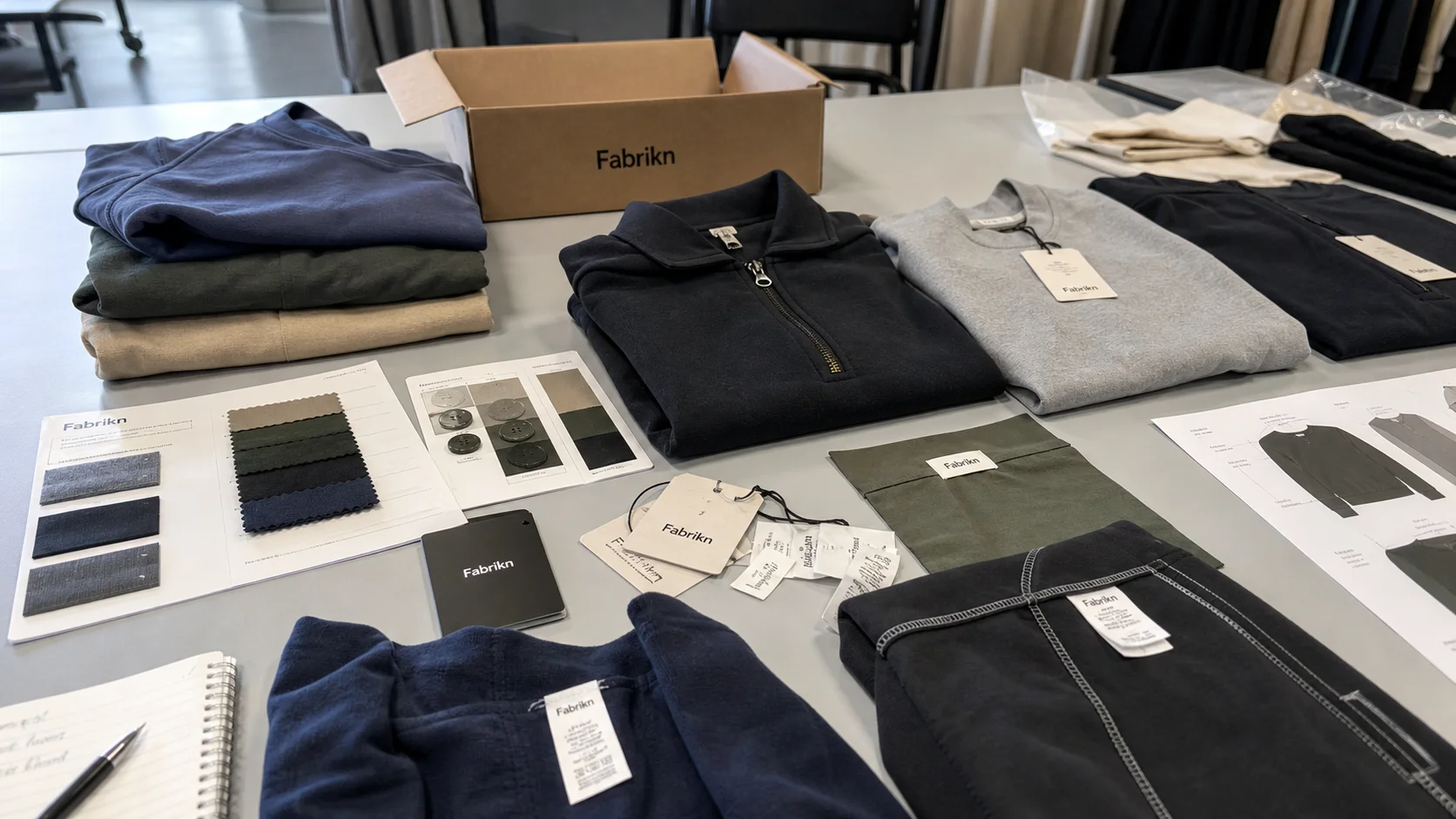
Verify Recycled Polyester Claims compared by sample evidence, fabric or trim specs, MOQ, AQL terms, cost lines, delivery timing, and rework responsibility.
Fast answer: Verify Recycled Polyester Claims: Material, Print, MOQ, and QC Terms should be judged by production evidence, not by a generic sourcing promise. The buyer needs sample proof, cost breakdowns, QC checkpoints, and delivery buffers in writing.
Ask for recent sample photos, measurement tolerances, fabric or print test assumptions, decoration test notes, packing examples, and a named inspection checkpoint. These details show whether the team can repeat an approved sample at bulk volume.
Separate garment cost, decoration, labels, packaging, sampling, testing, freight, and rush charges. Clear cost lines make it easier to reduce colorways, adjust size depth, or reserve more time for sampling.
Recycled polyester has become one of the most widely used sustainable materials in modern apparel. Brands use it in activewear, outerwear, basics, swimwear, bags, and accessories because it can help reduce reliance on virgin petroleum-based fibers while giving post-consumer or pre-consumer waste a second life. But as demand grows, so does greenwashing. Many buyers now face a critical question: how do you verify recycled polyester claims before you commit to production or make a sustainability statement to customers?
This guide explains how to verify recycled polyester claims in a practical, buyer-friendly way. Whether you are sourcing for a fashion brand, private label, retail collection, or corporate apparel line, you need a process that checks both the material and the paperwork behind it. A credible recycled polyester claim is not just a marketing phrase. It should be supported by traceable evidence, clear certifications, and a supplier who can document the fiber’s origin and processing path.
If you want support from a manufacturing partner that understands sustainability documentation, you can learn more about Fabrikn’s capabilities on our services page, explore our company background on the about us page, or reach out directly through our contact us page.
Verifying recycled polyester claims matters for three main reasons: compliance, brand trust, and product integrity. First, sustainability claims increasingly face scrutiny from regulators, retailers, and consumers. If a product is labeled as recycled polyester without proper proof, the brand may risk false advertising issues or reputational damage. Second, customers expect transparency. A vague “eco-friendly” message is no longer enough. Brands need specific, documented claims that can stand up to questions from procurement teams, retailers, and end consumers.
Third, not all recycled polyester is the same. There are material differences between post-consumer recycled polyester, pre-consumer recycled polyester, and chemically recycled polyester. Even when suppliers use similar language, the environmental profile and traceability can vary significantly. Verification helps you understand exactly what you are buying and whether it matches your sustainability goals.
For sustainable fashion buyers, verification is also a risk management tool. It helps prevent incorrect fiber labeling, ensures consistency across production runs, and reduces the chance of supply chain confusion. In a market where credibility matters, having a reliable verification process can be a competitive advantage.
Before you verify a claim, you need to understand what the claim can actually refer to. Recycled polyester is polyester made from recycled feedstock instead of virgin fossil-based raw materials. The feedstock is commonly sourced from PET bottles, packaging waste, textile waste, or industrial waste. However, not every recycled polyester product begins with the same input material or follows the same recycling route.
Post-consumer recycled polyester comes from materials that have already been used by consumers and then collected for recycling. A common example is used plastic bottles. This is the most recognizable type of recycled polyester and often the easiest to market, but it still requires verification of collection, sorting, and processing.
Pre-consumer recycled polyester is made from manufacturing waste that never reached the consumer, such as production scrap or offcuts. While still beneficial, it is different from post-consumer material and should not be presented as the same thing. Buyers should confirm exactly which waste stream is being used.
Chemically recycled polyester breaks down polyester waste into its original monomers or intermediates before creating new polyester. This route can offer different quality and performance characteristics, but claims should still be backed by chain-of-custody evidence and clear process documentation.
Mechanical recycling typically involves cleaning, shredding, and reprocessing plastic or textile waste into fibers or pellets. Chemical recycling uses a more complex process to depolymerize the material. Both can be valid, but the buyer should know which one is being used because the supporting documentation and certification approach may differ.
Recycled polyester claims can be expressed in different ways, and each should be treated carefully. Some common versions include:
Each claim has a different meaning. “100% recycled polyester” should mean the polyester fiber content is entirely recycled, though trims, linings, elastics, and other components may still contain non-recycled materials. “Made with recycled polyester” is more flexible and may apply to a partial blend. “Made from recycled PET bottles” sounds impressive but does not automatically prove that the full supply chain is traceable or certified.
Ocean-bound claims are especially sensitive. These typically refer to plastic waste collected before it reaches the ocean. If a supplier makes this claim, ask for source definitions, collection geography, and verification evidence. A strong claim should be specific and measurable, not just emotionally appealing.
The fastest way to verify recycled polyester claims is to request the right documents early. A serious supplier should be able to provide a clear documentation package without hesitation. Here are the most important items to ask for:
The material specification sheet should clearly show the fiber composition, including recycled content percentage. The fiber content declaration should match the product sample and all commercial documents. If a supplier says the fabric is recycled polyester but the paperwork only says “polyester,” that is a warning sign.
Chain-of-custody documents are especially important because they help show the recycled material is tracked through the supply chain. Without them, it can be hard to know whether the recycled feedstock was mixed, substituted, or misrepresented at some stage of production.
Certifications can make verification easier, but they do not replace due diligence. The most recognized standards in recycled textile sourcing include:
GRS is one of the most useful standards for verifying recycled content. It covers recycled input verification, chain of custody, social requirements, chemical restrictions, and environmental practices. If a fabric is GRS-certified, it can provide stronger support for recycled polyester claims, especially when you need a more robust sustainability narrative.
RCS verifies recycled input and chain of custody but does not include as many environmental and social criteria as GRS. It is often used when the main goal is to track recycled content through the supply chain. Buyers should still confirm the exact certified percentage and certified scope.
A certification certificate may not cover every component of the final garment. For example, a fabric mill may be certified, but the trim supplier may not be. Or a certificate may be expired, out of scope, or unrelated to the specific batch you are purchasing. Always check the certificate number, validity period, scope, and product coverage.
To verify recycled polyester claims effectively, use a repeatable audit process. The following steps are a practical framework for buyers.
Start by deciding exactly what you want to claim in your product and marketing materials. Do you need “contains recycled polyester,” “100% recycled polyester,” or a specific percentage? Different claims require different evidence. The more precise your internal requirement, the easier it will be to evaluate supplier documents.
Ask the supplier where the recycled feedstock comes from, what percentage of the fabric it makes up, and how it is processed. If the answer is vague, press for specifics. A credible supplier should be able to tell you whether the feedstock is post-consumer PET bottles, textile waste, or another source.
Check whether the paperwork matches the fabric sample, order code, colorway, and production batch. A common failure point is a certificate that exists, but for a different style or different material version. Verification should be product-specific, not generic.
Review whether the certificate covers the correct factory, mill, or trading company. Look for the exact facility names and addresses. If the supplier uses subcontractors, find out whether those subcontractors are also covered.
Ask how recycled material is tracked as it moves through the supply chain. Is it segregated? Is mass balance used? Is there a transaction certificate for each transfer? The answer will determine how reliable the claim is and whether you can support it in your own records.
In some cases, lab testing may help confirm fiber composition. Testing cannot always prove recycled origin, but it can support the claimed polymer type and help detect inconsistencies. If the supplier’s documentation is incomplete or if the order is high-risk, testing can add another layer of confidence.
When learning how to verify recycled polyester claims, it is just as important to recognize warning signs. Here are some red flags that should prompt deeper investigation:
Another warning sign is overclaiming. A fabric may contain recycled polyester, but the supplier may imply that the entire garment is recycled. Unless every component is verified, that statement could be misleading. Buyers should always distinguish between fabric-level claims and finished-product claims.
Verification is strongest when documentation and traceability work together. Traceability answers the question: where did the material come from? Testing helps answer: does this material match what is being claimed? Chain of custody connects the two by showing how material moved through the supply chain without losing its identity or being misrepresented.
For recycled polyester, traceability should ideally start at the recycled feedstock source and continue through fiber conversion, yarn spinning, fabric production, and garment manufacturing. In real-world sourcing, this may involve multiple parties. The more complex the chain, the more important it is to keep records aligned.
Mass balance systems may be used in some recycling models, especially in chemical recycling. If so, buyers should understand the methodology and whether the claim they intend to make is permitted under the applicable certification and labeling rules. Do not assume that all recycled polyester claims work the same way. Ask for a written explanation of how the claim is substantiated.
Lab testing can help identify fiber composition, but it usually cannot determine whether the polyester came from recycled or virgin feedstock unless paired with other traceability evidence. That is why buyers should not rely on testing alone. The best approach is a mix of documentation, certification, supplier transparency, and, where needed, independent verification.
To make your buying process more efficient, use a standard question set when evaluating suppliers. Here are practical questions that can help you verify recycled polyester claims quickly:
These questions do more than verify a claim. They also help you evaluate the supplier’s maturity. A supplier with a clear answer set is usually better prepared to support sustainable product development, compliance review, and future scale.
The most efficient sustainable fashion buyers do not verify recycled polyester claims ad hoc. They build a repeatable internal process. That process can be simple, but it should be consistent.
Include document requirements, certificate checks, and product-level validation steps. Make it part of your sourcing workflow so no recycled claim is accepted without review.
Use consistent wording across purchase orders, spec sheets, and marketing materials. This reduces the risk of confusion between “recycled polyester,” “contains recycled polyester,” and “made from recycled PET bottles.”
Decide who reviews certificates, who confirms testing, and who approves final claim language. In many companies, sourcing, product development, and marketing all play a role. Clear ownership prevents mistakes.
Store certificates, transaction records, test reports, and approval notes in one place. If a retailer, auditor, or customer asks for proof later, you will be ready.
Claims and certificates can expire, suppliers can change mills, and recycled content can shift by order. Verify periodically, not just once. A claim that was valid last year may not be valid today.
One of the easiest ways to improve verification is to work with a manufacturing partner that already understands sustainability requirements. A reliable partner should be able to answer technical questions, provide current documentation, and guide you toward the right claim language for your product category.
At Fabrikn, we work with B2B clothing buyers who need dependable production support and transparent communication. If you are sourcing recycled polyester garments and need help navigating specifications, manufacturing, or documentation, explore our services or get in touch through our contact us page. You can also learn more about our approach and company values on our about us page.
The right partner can save you time, reduce risk, and help ensure that your sustainability claims are aligned with the actual product. In sustainable fashion, that alignment is essential.
Get a free quote from Fabrikn — your trusted B2B clothing manufacturer with 10+ years of experience. MOQ as low as 200 pieces.
Get a Free Quote →Ask for material specifications, fiber content declarations, transaction certificates, chain-of-custody documents, and relevant certifications such as GRS or RCS. Then confirm the paperwork matches the actual product, factory, and batch.
No. A certificate is helpful, but it should be checked for scope, validity, factory coverage, and product-specific relevance. You should also review source details and chain-of-custody records.
GRS verifies recycled content and includes environmental and social requirements. RCS verifies recycled content and chain of custody but is generally narrower in scope. Both can support recycled polyester claims when used correctly.
Lab testing can help confirm fiber composition, but it usually cannot prove that the polyester is recycled rather than virgin. It should be used alongside documentation and traceability evidence.
The biggest risk is overclaiming without sufficient proof. This can happen when suppliers use vague language, documents do not match the product, or the claim is made for the whole garment when only one fabric component is verified.
Yes. Certificates, mills, and materials can change over time. Reverification ensures that each order supports your claim and remains compliant with your brand standards.
Verifying recycled polyester claims is not difficult when you have a structured process. Focus on documentation, certification scope, source transparency, and claim accuracy. With the right checks in place, you can buy more confidently, reduce risk, and build stronger trust with your customers.