
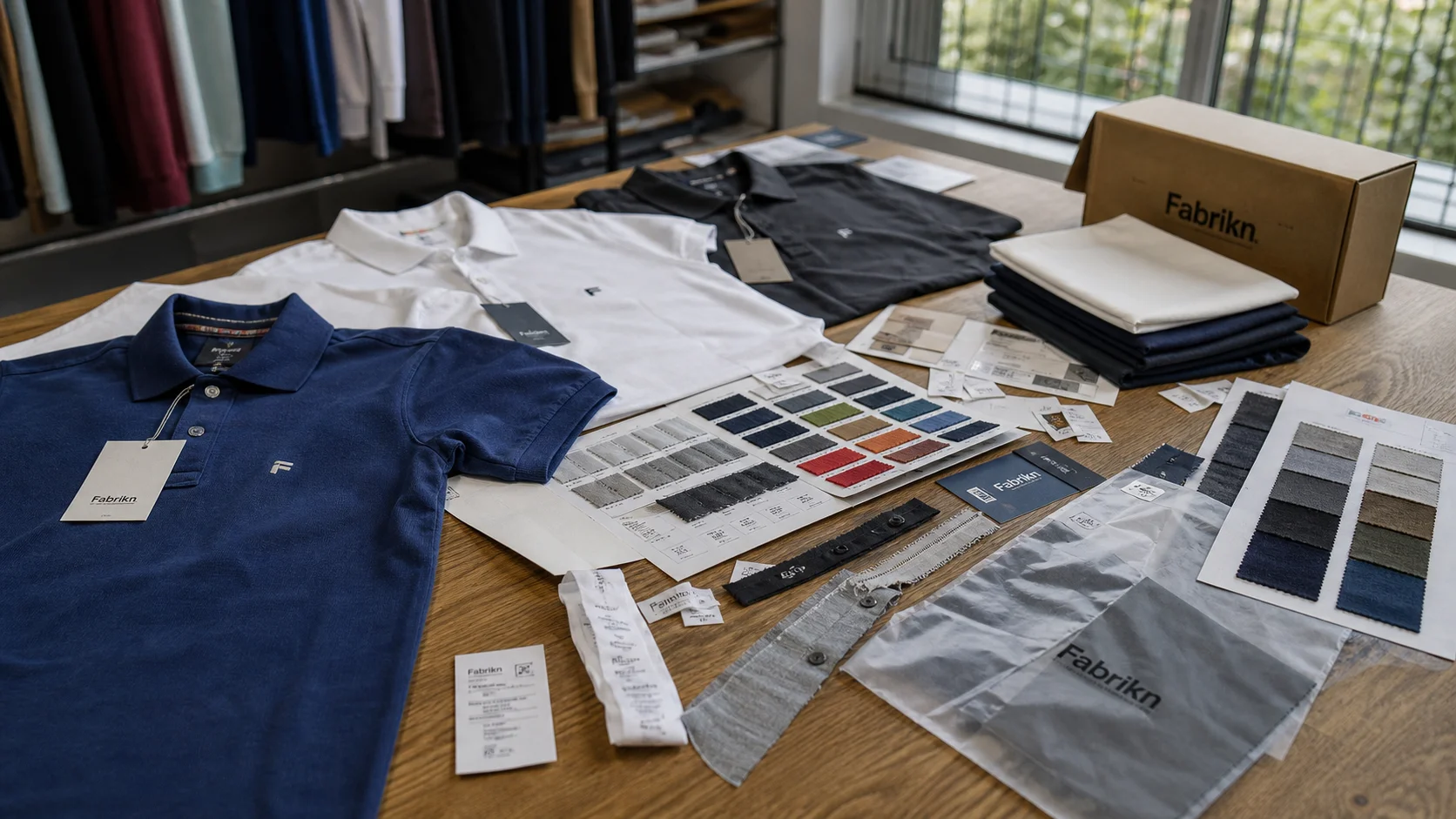
Luxury Packaging Ideas for Clothing Brands More compared by sample evidence, fabric or trim specs, MOQ, AQL terms, cost lines, delivery timing, and rework...
Fast answer: Luxury Packaging Ideas for Clothing Brands More: Material, Print, MOQ, and QC Terms should be judged by production evidence, not by a generic sourcing promise. The buyer needs sample proof, cost breakdowns, QC checkpoints, and delivery buffers in writing.
Ask for recent sample photos, measurement tolerances, fabric or print test assumptions, decoration test notes, packing examples, and a named inspection checkpoint. These details show whether the team can repeat an approved sample at bulk volume.
Separate garment cost, decoration, labels, packaging, sampling, testing, freight, and rush charges. Clear cost lines make it easier to reduce colorways, adjust size depth, or reserve more time for sampling.
Packaging has about seven seconds to make a promise, and customers usually know whether they believe it before the garment is even out of the box. Forty percent of online shoppers say packaging influences whether they buy again, and I have watched that play out on factory floors, in packing rooms, and in return data. If you are researching luxury packaging ideas for clothing brands, start here: packaging is not decorative extra; it is a pricing signal, a quality cue, and a quiet assurance that the item inside was handled with care.
When I visited factories in Portugal, Vietnam, and Los Angeles, the same pattern kept showing up. A $38 T-shirt in a soft mailer feels like a $38 T-shirt. Put it in a rigid box with tissue, a belly band, and a clean fold, and customers often read it as a $58 or $68 item before they touch the fabric. Direct-to-consumer brands use this effect to reduce discount pressure. Wholesale buyers notice it too, because a polished sample set can support a stronger buy at 2-3 season meetings. Gift purchases are even more sensitive. A box does part of the selling before the product speaks.
Premium presentation works across price points, but it does different jobs. In DTC, it raises perceived value and lowers post-purchase doubt. In wholesale, it helps a line sheet compete against brands with similar fabric specs and better storytelling. In gifting, it shortens the gap between “nice” and “worth paying more for.” Recycled mailers can work for basics, especially at $24-$42. Once you move into the $120-$300 range, the reveal has to earn its keep. Plain can be honest. Plain can also vanish.
Factory-floor reality is less romantic. Brands often spend $1.20 extra on foil stamping, then ship a wrinkled shirt in a box that is 20 mm too deep. That is money leaked into the wrong place. A $0.60 improvement in folding, tissue, and collar support can beat a $2.50 finish if the garment arrives crisp and centered. I have opened boxes where the embossing looked expensive, but the seam line was crooked and the sleeve was crushed. The customer notices the crush first.
If your packaging and product presentation are part of the same profit equation, treat them that way. I have seen brands using clothing packaging solutions treat the packout spec like a production spec, and the result is cleaner unboxing, fewer claims, and a higher sell-through rate at full price. Packaging does not need to shout. It needs to persuade.
Material choice sets the tone before design does. Rigid boxes feel expensive because they hold shape, resist crush, and create a slower, more deliberate unboxing. Foldable cartons are lighter, cheaper to ship, and better for volume, but they must be engineered carefully or they read as mid-market. In my factory visits, rigid set-up boxes usually started around 800-1,000 gsm board with wrapped paper or fabric finishes, while folding cartons often sat between 300-450 gsm. Those numbers matter because stiffness is a tactile cue, not a marketing slogan.
Soft-touch lamination, uncoated stock, embossing, foil, and magnetic closures all communicate different things. Soft-touch feels intimate. Uncoated paper signals restraint and modernity. Foil can look glamorous or dated, depending on coverage. Magnetic closures create a satisfying snap, but they add weight and cost, often 10-18 percent more than a standard tuck-top carton at similar sizes. A matte black rigid box with a blind deboss can feel richer than a busy four-color print job, especially for tailoring or premium knitwear.
Tissue paper, glassine, and dust bags are where many brands either underinvest or overdo it. Tissue at 18-22 gsm gives a clean reveal without too much bulk. Glassine is useful for delicate garments because it resists oil transfer and keeps prints from rubbing, though it is less luxurious than tissue unless paired with a strong fold and neat sticker seal. Dust bags work well for premium shirts, outerwear, and accessories, and I have seen 100 percent cotton or recycled polyester bags deliver stronger retention than a second outer box when they are reused at home.
Sustainability changes the material brief. Recycled content helps, but so does reducing shipping volume. A rigid box with a magnetic flap can occupy 25-40 percent more cubic space than a flat carton, which affects freight and warehouse cost. According to ISO packaging and transport standards, dimensional control is a real factor in logistics efficiency, not a side note. Europe tends to offer more refined paper finishes and lower MOQs for specialty boards, while Asia often wins on scale, faster printing capacity, and broader foil or lamination options. North American converters usually sit between the two on lead time, often 3-5 weeks for repeat runs and 6-8 weeks for first production.
For brands selling premium lingerie or fitted basics, I have seen packaging choices align with product category very clearly. A soft bra set can use a slimmer carton and tissue, while a structured underwire program benefits from a box that keeps shape during transit. That is one reason custom bra manufacturing projects often need a packaging spec that protects cups, trim, and delicate straps without adding excess air. Good materials are not only prettier. They are more obedient.
Packaging should follow margin, not ego. I have worked with brands selling $18 tees, $88 knit sets, and $420 coats, and the right packout looks very different at each level. A clean mailer can be perfectly rational for entry-level premium apparel. A rigid box can be justified for hero pieces, gifting, and subscription drops. Copying a luxury house without luxury gross margin is the mistake.
Here is a practical cost ladder based on factory quotes I have collected across 8 countries. A printed poly mailer or high-quality recycled mailer usually lands around $0.25-$0.80 per unit at 5,000-10,000 pieces. A folding carton often comes in at $0.70-$1.80, depending on size, print coverage, and coating. Rigid boxes can range from $2.50-$6.50, and custom bags, depending on fabric and trim, often sit between $1.20-$4.00. Add setup, and the first order can spike by $150-$800 for plates, cutting dies, or tooling.
Volume changes the math quickly. At MOQ 500 pieces, the unit price is usually painful. At 3,000-5,000, the price softens. At 10,000+, printers spread setup costs more efficiently, and the per-unit drop can be 15-35 percent. But there is a tradeoff. High MOQ can trap cash in a colorway or seasonal print that expires in one collection. I have seen founders save $0.42 a unit and lose $8,000 in dead packaging by overordering a holiday sleeve they could not use again.
For an emerging label, I usually recommend a mailer plus a premium insert card, or a slim folding carton for hero SKUs. That keeps shipping efficient and still looks intentional. For a growing DTC brand with stronger repeat purchase rates, a rigid box can work on bestsellers, while lower-margin basics stay in cartons. For a luxury house, the packaging can become part of the product story: tissue wrap, ribbon pull, custom tissue pattern, and a heavyweight hangtag that feels collectible.
Comparison is useful here:
I have also seen private label programs use packaging as a differentiator when the garments themselves are similar to competitors. That is especially visible in categories with fast comparison shopping, which is why private label clothing services often need packaging decisions made before final sampling, not after. Packaging can absorb some of the brand premium that fabric alone cannot carry.
Minimal design usually reads as more expensive because it gives the eye room to breathe. Overloaded graphics can look promotional, and promotional rarely feels premium. A strong color system does more than decorate. Deep navy, warm ivory, charcoal, bottle green, and muted clay all photograph well under retail lighting and on mobile screens, where customers often make a judgment in less than 2 seconds. Pale gray can fail on camera because it looks dusty. Cream with a subtle texture looks pricier almost instantly.
Typography matters more than many founders expect. A restrained serif or a clean sans serif, used with wide spacing and strong hierarchy, beats a crowded logo lockup every time. Embossing and debossing create shadow without needing more ink. Spot UV works best in small doses, on a logo mark or a line across the box flap. Edge painting can be beautiful on rigid boxes, but it demands precision. If the board is cut badly, the edge becomes a flaw instead of a feature.
Interior touches do the emotional work. A ribbon pull creates a slow reveal. A printed insert card can explain care instructions, fit notes, or the fabric story. Woven labels inside the lid add tactile authority. For shirts, I like crisp tissue, a collar board, and a branded sticker seal. For knitwear, I prefer a fold that shows texture without compressing the yarn. For tailoring, a heavier insert and structured box keep lapels from collapsing. Denim can take bolder branding because the fabric already carries visual weight. Lingerie needs softness and restraint; too much shine can feel wrong.
Samples expose weak points fast. Color drift shows up when black becomes brown or ivory shifts pink under different light. Adhesives fail when ribbons peel or magnets misalign. Print misregistration is common on full-bleed boxes, especially when the artwork wraps around a corner. I always inspect the sample under natural light and under a 4,000K retail bulb, because a box that looks rich in the studio can look cheap in-store. That is where factory reality cuts through mood boards.
Counterpart details should match the garment category. A heavy hoodie does not need the same finesse as silk shirting. A satin bralette does not want aggressive branding. The package should echo the product, not compete with it.
I am skeptical of eco claims that cannot be checked at factory level. A box is not sustainable because it is beige, and recycled content means little if the design makes it heavier than necessary. Reduce material first. Specify recycled or certified inputs second. Choose finishes that do not block recycling third. According to Textile Exchange, traceability and preferred materials are becoming central expectations across apparel supply chains, and packaging is now being judged in the same way.
Recycled paperboard is a strong starting point. FSC-certified paper gives buyers a verifiable chain of custody, while mono-material plastic can work for protective bags or garment covers if local recycling systems accept it. Reusable textile bags make sense for higher-ticket products, but they only help if the bag is attractive enough to keep in use. I have seen a 140 gsm cotton drawstring bag live in a drawer for months, then get used for travel and storage. I have also seen a flimsy one used once and discarded.
Weight and air are the silent culprits. Cutting a box depth by 15 mm can reduce dimensional weight, especially in parcel shipping. Across a 10,000-unit run, that can mean fewer cartons per pallet and lower freight charges. In one project, moving from a bulky box to a thinner folding carton cut pallet count by 18 percent and reduced warehouse space by roughly 12 cubic meters. That is not just greener. It is cheaper.
Buyers and retailers trust certifications when they are clear and specific. FSC matters for paper. OEKO-TEX is useful for textile-based inserts and bags. GOTS can support organic fiber claims in textile packaging components. If you need a standard reference for fibers, finishes, or test methods, AATCC remains a strong technical source for textile testing discipline. For broader export and market-entry guidance, trade.gov is a useful authority for international sourcing and compliance context. Do not claim “compostable” unless the material and local system actually support that outcome. Do not say “plastic-free” if the closure uses a synthetic sticker or film wrap.
The best sustainable luxury packaging feels deliberate, not punitive. It protects the garment, ships efficiently, and avoids unnecessary coatings or filler. A smart packaging spec can reduce landfill risk without making the unboxing feel like a compromise.
The fastest way to waste money is to brief packaging like a mood board. I want the same discipline you would use for garment production. Your packaging tech pack should include dimensions in millimeters, stock type and weight, print method, finish, closure type, insert type, folding direction, packing method, and sustainability requirements. If the box must fit a folded sweater at 280 x 240 x 40 mm, say that. If the tissue should be 20 gsm FSC paper with one-color print, say that too. Precision saves weeks.
Before placing an order, ask four questions. What is the true MOQ, not the polite one? What is the lead time for sample approval and bulk production? Which finishes require extra tooling, plates, or dies? What tolerances apply to color, size, and glue application? I have seen suppliers quote 3 weeks and deliver in 7 because artwork was delayed, and I have also seen a domestic converter take 10 days on a repeat run because the plate was already on hand. Offshore production often runs 6-9 weeks for first orders, sometimes longer if a custom insert or fabric bag is involved.
Sample approval should move in stages. Start with a dieline to confirm structure. Then review a white sample or plain prototype to check fit and folding. Next, approve a pre-production sample with final materials and print. Last comes factory approval, where the team compares the approved sample against the first bulk run. That final comparison catches things that a screenshot never will: glue squeeze-out, slightly off-center foil, or a lid that closes too tightly after humidity shifts.
When I visited a facility producing premium knitwear packaging, the supplier caught a 2 mm drift in the insert before mass production. That saved 4,000 boxes and two weeks of rework. Small errors scale fast.
Watch for delay points. Artwork revisions stall plated finishes. Confirming recycled board grades can take 5-7 extra days. Custom magnets or textile pulls often add 1-2 weeks because the component arrives separately. If you are running a seasonal launch, build in buffer time and keep approvals in writing. Packaging changes made late in the calendar tend to cost more than the original upgrade itself.
It also helps to vet your factory, manufacturer, and supplier on capability, not just price. Ask for production photos, quality-control checkpoints, and references from similar custom or wholesale programs. If you are sourcing bulk packaging from China, compare board grades, print consistency, and shipping terms alongside MOQ so you can judge value accurately. The lowest quote is rarely the best quote if the sample quality slips in bulk.
Set your packaging budget as a percentage of retail, not as a vague wish. For DTC basics, I usually see 1-3 percent of retail price as a workable range. For premium apparel and gifting-led collections, 3-6 percent can make sense if the margin supports it. On a $60 garment, that is $0.60-$3.60. On a $240 jacket, it is $7.20-$14.40, which opens the door to rigid packaging, inserts, and a more refined reveal.
Before a full launch, test five things: durability, color accuracy, fit, postage performance, and customer response. I always recommend dropping a packed box from waist height, checking scuff resistance after 24 hours, and running a mail test through your carrier’s parcel rules. If the package adds too much volumetric weight, it is costing you every time it moves. If it opens beautifully but arrives crushed, it is failing its job.
Your first production run should end with a simple checklist.
If you want a quick rule, use packaging to protect conversion, not vanity. Brands that treat packaging as part of product quality usually see fewer returns, stronger gift appeal, and a more defensible full-price position. That is why I keep pushing founders to think of luxury packaging ideas for clothing brands as a profit tool. It moves demand, and it makes the customer feel the price was earned.
Start with a premium mailer, tissue paper, and a branded insert card. In many factories, that combination lands around $0.40-$1.50 per unit, depending on quantity and print complexity. It gives you a polished presentation without the freight penalty of a rigid box.
Typical costs range from $0.25-$0.80 for printed mailers, $0.70-$1.80 for folding cartons, $2.50-$6.50 for rigid boxes, and $1.20-$4.00 for custom bags. Setup fees can add $150-$800 on the first run. MOQ and finish choices change the final price quickly.
Domestic repeat orders can take 3-5 weeks, while first offshore runs often take 6-9 weeks. Add 1-2 weeks if you need custom tooling, textile pulls, or special coatings. Delays usually happen at artwork approval, sample revision, and component sourcing.
Yes. Recycled paperboard, FSC-certified paper, and well-made textile bags can all feel expensive if the structure and print are clean. Reducing box depth by 10-15 mm can also lower shipping volume and dimensional weight. The premium effect comes from design discipline, not excess material.
Include dimensions, stock weight, print method, finish, closure type, insert details, packing orientation, and sustainability requirements. Add target MOQ, acceptable tolerances, and sample approval steps. A complete brief reduces costly rework and shortens the approval cycle by days or even weeks.