
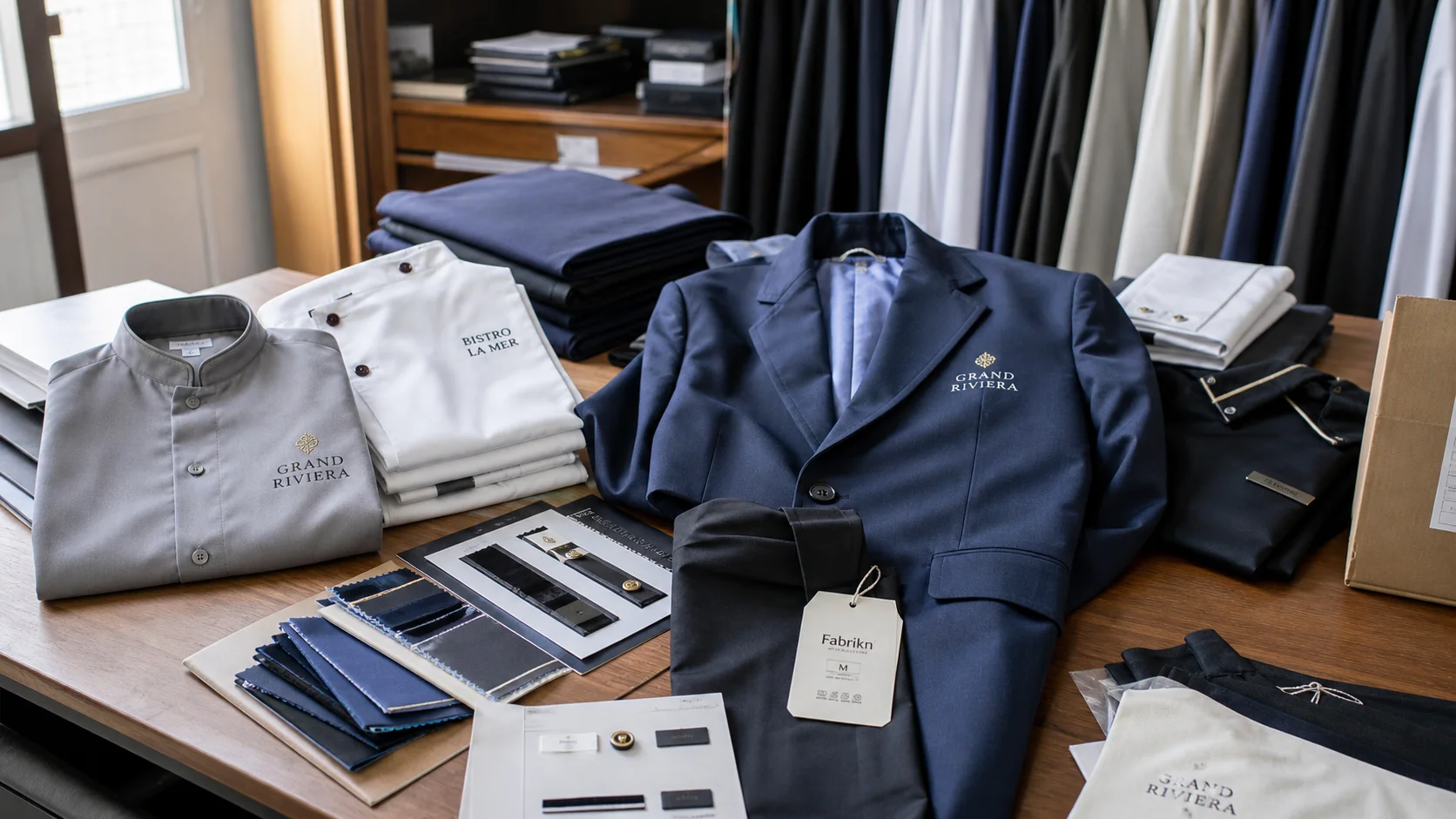
Hoodie Sampling and Bulk Production with checks for samples, fit, MOQ, QC evidence, pricing terms, and delivery risk.
Fast answer: Hoodie Sampling and Bulk Production: Fit Approval, Fabric, QC, and Timing should be judged by production evidence, not by a generic sourcing promise. The buyer needs sample proof, cost breakdowns, QC checkpoints, and delivery buffers in writing.
Ask for recent sample photos, measurement tolerances, fabric or print test assumptions, decoration test notes, packing examples, and a named inspection checkpoint. These details show whether the team can repeat an approved sample at bulk volume.
Separate garment cost, decoration, labels, packaging, sampling, testing, freight, and rush charges. When every cost line is visible, it becomes easier to reduce colorways, adjust size depth, or reserve more time for sampling.
One bad hoodie sample can cost a brand 20,000 units of regret. I have stood in sample rooms where a 320 GSM French terry hoodie looked perfect on a hanger, then shrank 7% after wash and twisted at the side seam because the rib was cut on the wrong grain. That is why the hoodie sampling and bulk production factory process starts here, not on the bulk floor. A good manufacturer uses the sample room to prove fit, shrinkage, seam strength, and cost before bulk production begins.
Before any bulk order exists, the sample already tells on the garment. Drawcord placement sitting 1.5 cm too high, embroidery crossing a chest seam, pocket bags pulling when a hand lifts—those problems show up fast. I have seen buyers approve a hoodie because the silhouette looked right, then pay for 200 pieces of rework after the rib recovery fell below 85% and the hood collapsed after three wash cycles. A sample approval is not a formality. It is the cheapest risk filter you will ever buy.
Lower-priced factories sometimes spend more time on sampling than premium ones. In visits across Vietnam and southern China, I found budget factories running 3 to 5 sample revisions before bulk, because they know their margin is tight and a 2% error in fabric consumption can erase profit. Premium workshops often move faster, but not always more carefully. That surprised me. Their confidence can be efficient, or careless.
Regional habits matter. Small-batch workshops in Portugal or Turkey often turn a revision in 5 to 10 days, especially for 80 to 300 pieces, while larger Asia-based factories usually want formal proto, fit, size set, and pre-production steps before they release bulk. That slower path can save money later. A well-run sample cycle cuts fabric waste, trims shipping delays, and reduces bulk rework. In one brand I advised, correcting the sleeve cap by 8 mm during sampling saved an estimated $4,600 in cut-and-sew waste on a 12,000-piece order.
The sample sequence should be boring in the best possible way: tech pack review, fabric submission, proto sample, fit sample, size set, and pre-production sample. I have watched factories skip straight from proto to approval, and the bill always arrives later. A competent hoodie sampling and bulk production factory checks hood depth, neckline shape, pocket angle, rib elasticity, garment wash behavior, and stitch density before anyone talks about shipment.
Those checkpoints separate a clean sample from an expensive surprise. A brushed fleece hoodie behaves differently from French terry, even when the silhouette is identical. Heavyweight cotton at 420 GSM will hold structure and hide minor pattern imperfections; recycled blends often relax more after wash and need tighter tolerance bands, sometimes within 0.5 to 1.0 cm on critical points. A $12 hoodie and a $48 hoodie may look similar on the rack, but the cheap one usually allows looser trim sourcing and simpler finishing, while the premium one demands sharper collar stand, cleaner topstitching, and better label placement.
Grading is where chaos gets expensive. I have seen brands assume the sample size 2 fit proves all sizes are safe. It does not. If the chest grades up too aggressively, the hood can become oversized by size 3XL and the pocket angle turns awkward across the scale. A proper size set catches this with real bodies or calibrated forms. I always ask for measurement tolerances in writing: chest ±1 cm on premium, ±1.5 cm on standard, sleeve length ±0.75 cm on more technical cuts. Those numbers sound small because they are. They matter because a hoodie lives or dies on proportions.
One sample can pass visually and fail after wash testing or shrinkage testing. That happens more often than buyers admit. According to AATCC test methods used across the textile industry, dimensional stability and colorfastness are separate checks, and they should be treated that way. A hoodie that looks crisp on day one but loses shape after two washes is not approved, no matter how photogenic it was in the sample room.
For brands building private label ranges, the fit conversation becomes even more specific. My experience is that custom hoodie manufacturing works best when the buyer sends reference garments, target weight, and a measured size chart rather than vague mood-board language. The factory can only grade what it can measure.
Sampling is rarely free, and the cheapest quote is often the most expensive path. In a typical hoodie development cycle, I see sample costs from $35 to $120 per piece in Asia, $60 to $180 in Turkey, and $75 to $220 in Portugal, depending on fabric sourcing, embroidery, and wash treatment. Pattern making may add $25 to $80, while lab dips, digitizing, and special trims can push a first sample to $200 or more before you even reach bulk pricing.
Low-MOQ factories often charge more per sample because they carry more development overhead on smaller runs. High-volume factories may discount development if bulk follows, especially at 1,000 pieces or above. The catch is hidden charges. Custom zippers can add $0.40 to $1.20 per unit. Specialty dyeing can add $0.60 to $2.50. Embroidery digitizing may run $20 to $150 per design, and wash tests can add another $30 to $90 per style. If you request three fit revisions, the cost is rarely just three line items. It is time, freight, and mill coordination.
I have seen a 3-sample development cycle save money over a rushed one-sample approval that led to 8% bulk rejection. On a 5,000-piece order, that difference can be the gap between a clean launch and a $6,000 to $10,000 markdown problem. Factories that accept a 30/70 payment structure often want the sample fee credited against bulk. Others work on 50/50 or ask for a development deposit of $100 to $500 per style. Tighter factories sometimes tie sample fees to confirmed bulk orders, and that is not a red flag by itself. It is a control mechanism.
Fabric sourcing is another trap. If your hoodie needs 380 GSM brushed fleece with 3% shrinkage tolerance, the mill may require a minimum of 300 to 500 kg per color before booking. That can make sampling look cheap and bulk look expensive very quickly. Add wash-house queues, custom drawcord tips, and branded neck labels, and the quote changes again. If the factory also handles private label clothing services, ask which costs are pass-through and which are factory-owned, because those are not the same thing.
A clear budget line helps. I usually break it into sample cost, development fee, pattern making, fabric sourcing, bulk production, inspection, and shipping. Then I ask for all costs by style, not by wishful “range.” On a 2,000-piece order, a $0.35 difference per unit on trims becomes $700. Small numbers stack fast.
The timeline starts before the first stitch. Initial tech pack review can take 1 to 3 days if the buyer sends complete measurements, artwork, and fabric specs. Proto samples usually take 5 to 12 days. Fit corrections may need another 4 to 8 days. Size sets and pre-production samples can add 7 to 14 days more, especially if the factory needs new lab dips, wash approvals, or revised trims. By the time bulk begins, 3 to 6 weeks may already be gone.
Simple fleece hoodies often move in 4 to 6 weeks after approval if the fabric is in stock and the order is 500 to 2,000 pieces. Complex decorated styles can take 8 to 12 weeks or longer, especially with acid wash, chainstitch, appliqué, or high-density embroidery. Bottlenecks hide in plain sight. A wash-house queue can hold a style for 4 days. A mill delay can stretch to 2 weeks. Trim shortages can stop cutting for a single missing zipper pull.
That is why bulk can slip even after the sample is approved. A sample that approves quickly can still hide a 2-week bulk delay if the fabric is not already in stock. I learned this on a 7,000-piece order where the sample used mill stock, but the bulk yarn lot had not been booked. The factory was honest. The calendar was not forgiving. The launch moved, not the buyer’s expectation.
Data from trade.gov trade guidance shows that lead times vary sharply by sourcing region and input availability, which is exactly what I see on factory floors. For seasonal drops, a 10-day delay can kill a retail window. For e-commerce restocks, it can mean missing the week when paid traffic is cheapest and conversion is highest.
When I visited factories in Bangladesh and Vietnam, the most disciplined teams booked bulk fabric only after the pre-production sample was signed. That sounds slow. It is actually faster than correcting 15,000 units later. A hoodie sampling and bulk production factory that manages calendars well will tell you whether your date is realistic, not flattering.
QC starts with measurements and ends with wear. Before sign-off, I check seam strength, shrinkage, pilling, colorfastness, print adhesion, hardware reliability, and rib recovery. A hoodie can look tidy on a table and still fail because the pocket opening stretches after 20 wears or the print cracks after one hot wash. Sample approval alone is not enough. Bulk machines, operator teams, and fabric lots all change the result.
AQL-style inspection is simpler than it sounds. It means you inspect a defined number of pieces from a shipment and classify defects by severity. Minor problems might be a loose thread. Major ones include wrong measurements, broken stitching, or bad print placement. Critical defects are items that make the garment unsellable or unsafe. Ask for defect photos and test reports. If a factory will not share them, I take that as a warning. According to ISO standards, consistent measurement and quality processes are not optional if you want repeatable output.
Price tier changes the failure pattern. Low-cost hoodies tend to show twisted side seams, weak rib recovery, and inconsistent drawcord lengths. Premium styles fail differently. The finish may be beautiful, but the consistency is unforgiving. One batch of embroidery thread shade off by 5% can trigger a rejection from a brand with strict visual rules. Higher-end orders sometimes need stricter inspection because the buyer expects near-zero visible defect rate, even if the garment itself is structurally sound.
One more reason to inspect in bulk: the same style can pass a sample wash and fail a production wash if the dye lot shifts. I ask for at least 3 wash tests on production fabric, plus 1 rubbing test and 1 dimensional stability test. That is cheap insurance against a 6% return rate later.
I start with six questions: How fast are samples? What is the MOQ? Can you source the fabric you actually want? Do you run in-house testing? How clear is communication? What bulk capacity sits behind the sales pitch? A capable hoodie sampling and bulk production factory answers with numbers, not adjectives. If the answer to sample speed is “quick,” I ask for days. If the MOQ is “flexible,” I ask for the exact range, usually 100, 300, or 500 pieces by color and style.
Factory type matters. Agent-run sourcing offices can be fast at matching buyers with mills, but they may sit between you and the actual maker. Vertically integrated mills often control fabric quality better and reduce handoff errors. Cut-and-sew specialists are strong when pattern control and sampling precision matter. Small-batch ateliers can be nimble on 30 to 200 pieces, but scale may be limited. The trade-off is real. A nimble workshop can move in 7 days. A large factory can produce 20,000 pieces more efficiently once the spec is locked.
There are red flags I will not ignore: vague costing, no measurement tolerances, no archive of previous hoodie styles, or sample approvals issued without wash testing. If a factory cannot show me a brushed fleece hoodie, a French terry sweatshirt, and a heavyweight hoodie in its portfolio, I keep looking. Region matters too. China often excels in component sourcing and large runs. Bangladesh can be highly cost-efficient at scale. Vietnam is strong on consistency and communication. Portugal and Turkey are excellent for shorter lead times, lower MOQs, and cleaner development cycles, especially for European buyers.
For brands that need garment construction support beyond hoodie basics, cut and sew manufacturing is often the better route than buying blank-based decoration. It gives you more control over seam placement, fabric mixing, and finish details.
My rule is simple: choose the factory that is honest about its weak spots. A team that admits it needs 14 days for embroidery approval is safer than one that promises 5 and then misses by 9.
Send a complete first inquiry. I want a tech pack, target price, size chart, fabric reference, artwork files, and a production calendar before the factory quotes anything. If you can, include one physical reference hoodie and one line sheet. That cuts guesswork by half. It also tells the factory you are serious.
Use one decision-maker for comments. Dated feedback matters. Side-by-side comparison photos matter more than vague language like “make it cleaner.” Freeze specs before bulk fabric cutting, and keep sample approval to one correction round whenever possible. If you need a second round, ask why the first missed by more than 5 mm. That question saves money later.
Before you pay the deposit, confirm MOQ, lead times, lab test needs, packaging, labeling, and payment terms. Ask whether the order needs 30/70 or 50/50 terms, and whether the factory will hold greige fabric or only finished goods. Then compare the final sample against the spec sheet, not against memory. Memory is expensive.
Factories reward clarity. Sloppy sample approval is the fastest route to costly bulk errors. A clean brief, one voice, and hard numbers are the difference between a 2-week correction and a 2,000-piece problem.
Most hoodie samples cost $35 to $120 in Asia, $60 to $180 in Turkey, and $75 to $220 in Portugal. Add $25 to $80 for pattern making if the style is new, and budget more for embroidery, wash tests, or custom trims.
A simple hoodie can move from approved sample to shipment in 4 to 6 weeks if fabric is in stock. Complex styles with washes, embroidery, or appliqué often take 8 to 12 weeks. Prototype and revision rounds can add another 2 to 4 weeks before bulk starts.
Many factories start at 100 to 300 pieces for development and 300 to 500 pieces per color for bulk. Large-scale runs often begin at 1,000 pieces or more for better pricing. If you need under 100 pieces, expect higher sample-like pricing.
Send a tech pack, target price, size chart, fabric reference, artwork files, and your target delivery date. If possible, include one reference hoodie and one clear photo set. That usually cuts back-and-forth by at least one revision cycle.
Pick the factory that matches your order size, fabric needs, and timeline. Check sample speed, MOQ, testing capability, communication, and bulk capacity. Ask for past hoodie examples, measurement tolerances, and wash test records before you commit.