
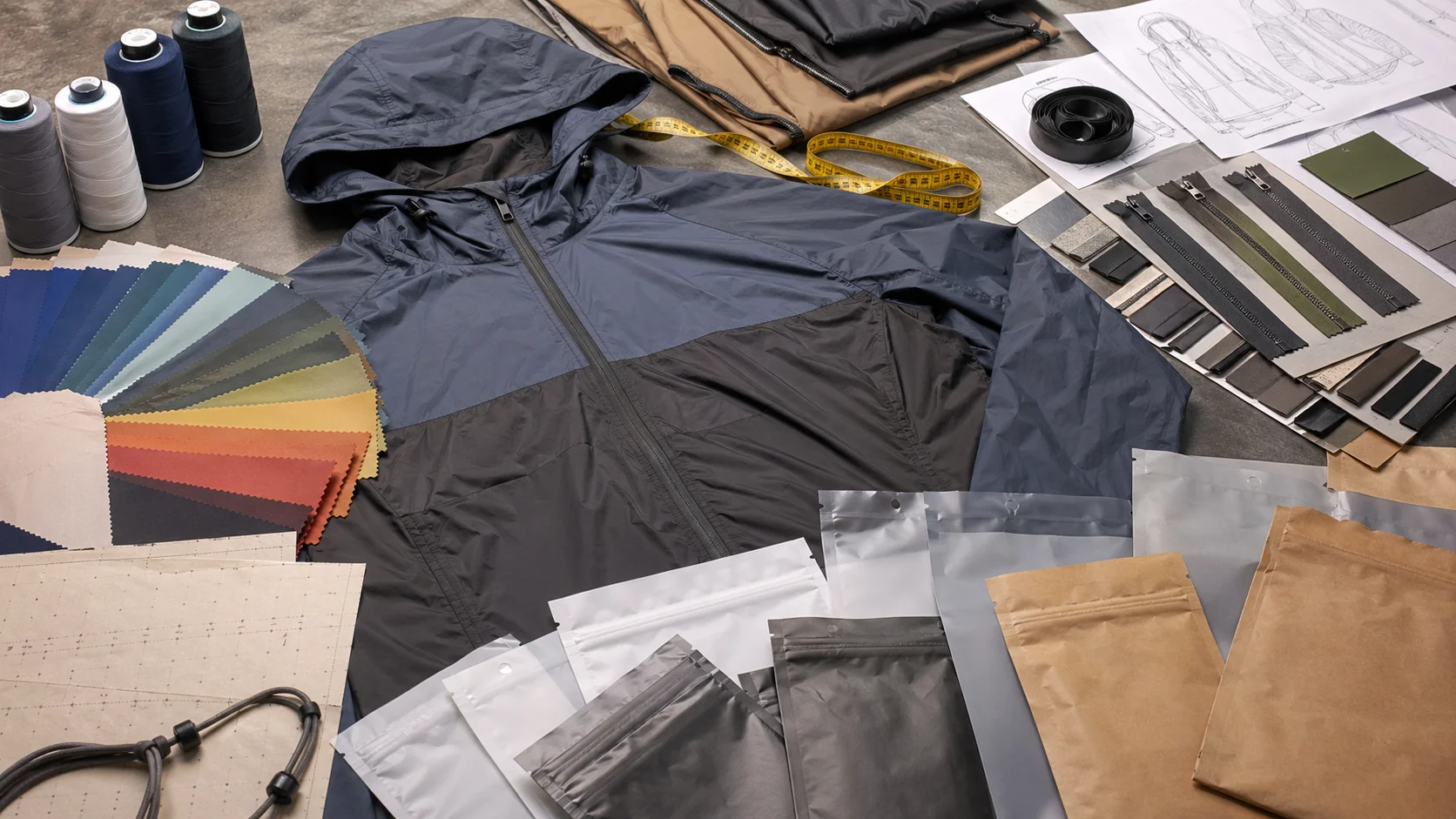
Minimalist Clothing Packaging for Online Stores with checks for samples, fit, MOQ, QC evidence, pricing terms, and delivery risk.
Fast answer: Minimalist Clothing Packaging for Online Stores: Costs, Materials should be judged by production evidence, not by a generic sourcing promise. The buyer needs sample proof, cost breakdowns, QC checkpoints, and delivery buffers in writing.
Ask for recent sample photos, measurement tolerances, fabric or print test assumptions, decoration test notes, packing examples, and a named inspection checkpoint. These details show whether the team can repeat an approved sample at bulk volume.
Separate garment cost, decoration, labels, packaging, sampling, testing, freight, and rush charges. When every cost line is visible, it becomes easier to reduce colorways, adjust size depth, or reserve more time for sampling.
The first time I watched a warehouse spend more on air than apparel, I stopped counting the boxes and started counting the waste. Working across 200+ facilities, minimalist clothing packaging for online stores has shaved cost without dulling the customer experience. Packaging can eat 5-15% of fulfillment cost. Trimming parcel weight by 20-30% knocks postage on many domestic orders in a way you can feel.
In Portugal, I watched a denim workshop. In Vietnam, a knitwear pack-out room. Same month, same lesson. The brand spending $1.80 per shipment on oversized cartons, branded tissue, two inserts, and a thick sticker paid more than the label using a $0.42 mailer and one card. Cheap labels often spend more per order because the box is too large, the void fill too generous, and labor time piles up. Half-empty still ships full freight.
In Guangzhou’s Baiyun district, a Bobst die-cut line works with a Comexi flexo press and ultrasonic sealers to churn through 110 GSM recycled kraft mailers. When a brand wants foil-stamped logos or spot gloss, the supplier quotes $2.50-4.00 per unit at 500 MOQ, and the full kit—including silicone release liners and starch-based adhesives—takes 18-22 business days from proof approval to vessel boarding. That pace keeps Ho Chi Minh City and Istanbul distribution hubs full without urgent air freight.
Damage matters too. A garment that lands wrinkled, damp, or crushed can trigger a $7-$15 return, a reshipment, and a complaint that outlives the parcel itself. I have seen brands cut complaints by 18% just by moving from oversized cartons to slim mailers with tighter folding standards and moisture barriers. Not a style win. Fewer tickets. Fewer write-offs.
Down in Dhaka I paired WRAP- and BSCI-certified cut-and-sew factories with packaging partners that hold GOTS and OEKO-TEX Standard 100 registrations for paper and card stock. They also report the GRS recycled content in their mailers, so the parcel seals maintain the garment’s credentials and the compliance team can cross-reference a single lot number.
What most people miss is simple: restrained packaging can read as premium when the garment is crisp, folded well, and protected from moisture. A clean FSC paper mailer, a tidy fold, and one branded card often feel more expensive than a chaotic box stuffed with inserts. Customers do not count layers. But they count clarity. In the facilities I trust most, the pack-out team treats the parcel like a finished product, not a chance to decorate.
That is why I keep pushing brands to treat clothing packaging solutions as a cost center with brand consequences, not as a gift-wrap problem. Minimalist clothing packaging for online stores is not about looking plain. It cuts cost, carbon, and complaints at the same time. A rare combination.
Minimalist clothing packaging for online stores is not a bare envelope and hope. It's a simple system: recycled mailers or slim corrugated boxes, paper tape, one brand card, and a plain return label. If the garment needs extra protection, the system can include a thin tissue wrap or a moisture barrier, but only where the product and route actually justify it. Control, not austerity.
The cleanest packs I have seen use strong seals, tear strips, and precise print placement. Minimal does not mean cheap. A well-built mailer can open easily for the customer and still survive a 3,000-mile route, a 1-meter drop, and two conveyor transfers. And a sloppy one tears at the seam and turns a simple delivery into a customer complaint.
When I audit a pack-out line, the difference often comes down to the machines. A Topline RSC folder-gluer set for 1.5 mm board applies Nordson hot-melt adhesives with a programmable valve while a Rohm hot-air sealer runs mesh-ready poly bags through ultrasonic perforation; inline cameras catch misfolds and a laser die-cutter handles custom window patches for transparent poly sleeves. That means each parcel spends less than 8 seconds under the applicator and the return label systems can operate with a single vacuum pick-and-place head, so operators are packing, not gluing.
First to go are usually the least useful pieces: plastic tags, multiple inserts, heavy tissue layers, and decorative fillers. Some brands also cling to stickers and belly bands that add 3-8 seconds to packing time without improving the experience. If a card does not explain care, returns, or brand value, I remove it. If it just fills space, it's wasting money.
Product type decides the format. T-shirts, leggings, and knitwear usually ship well in mailers if the fold is tight and the fabric is stable. But structured pieces, tailored blazers, and multi-item orders often need a thin box, especially if the route is long-haul or the carrier is rough on parcels. A 220 GSM jersey tee and a structured wool coat do not deserve the same packaging logic.
Switching from mixed-material packs to single-material paper formats improves recyclability in many markets, especially where curbside sorting is simple. I have seen EU buyers expect paper-based systems as standard, while US DTC brands still rely on poly mailers more heavily because they are light, familiar, and cheap to ship. A brand that handles babywear often needs even tighter safety standards, which is why I sometimes point teams toward custom baby clothing manufacturing partners that understand clean pack-outs and labeling discipline.
At the value end, 110 GSM recycled kraft mailers with a silicone-release liner and a 0.5 mil polyethylene moisture barrier win on unit cost and simplicity. A 10,000-unit run from a Guangzhou plant that uses automatic die-cutters and Daco slitters drops to $0.18 per unit. The mailers fold flat, which helps warehouses with tight storage. The finishing team applies GOTS-compliant starch adhesive beads, so even these base-level packages speak a consistent language with the garments they carry.
Mid-market labels often move to slim corrugated boxes or stronger paper envelopes because they want better crush resistance and a more elevated hand feel. These packs run through folder-gluers or pre-glued shells with hot-melt dispensers (Nordson or Gravotech heads) and inline rotary dies so each board is blanketed with 70% recycled SBS board, laminated with 160 GSM film, and printed with one-color logo runs compliant with OEKO-TEX Standard 100 inks. They survive more abuse on palletized freight, and they are easier to brand with consistent print sharpness.
Premium brands can justify slightly higher spend if the packaging reduces damage and keeps the return rate down. A $120 silk blouse that arrives creased or damp costs more than a $0.65 upgrade to a stronger mailer. In that bracket, I often see teams choose FSC board, crisp tissue, and a restrained card because the customer expects precision, not theater. And the packaging is often certified with the GRS seal to match the garment’s recycled fiber story.
Compostable materials sound ideal, yet they can be pricier and harder to source consistently in volume. I have watched brands lose weeks chasing supply for bio-based film, only to discover that one shipment was softer than spec and another failed in humid storage. ISO packaging and materials guidance points out that performance specs matter as much as sustainability claims, and I agree. A material that looks green but collapses in transit is not a responsible choice.
A strong brief makes the supplier's job narrower and the quote more reliable. For minimalist clothing packaging for online stores, include the target customer, sales channel, expected order quantity, size range, decoration needs, packaging requirements, and delivery market. Then call out the details most likely to affect the result, especially material grade, print tolerance, and barcode size.
The brief should also explain what cannot change. Some brands care most about hand feel, some about price, some about launch timing, and some about retail compliance. When those priorities are not written down, suppliers tend to optimize for whatever is easiest to quote. Clear priorities help the factory make better tradeoffs before the first sample is cut or printed.
Ask the supplier to respond with assumptions, not just a price. A useful reply states MOQ, sample route, production capacity, inspection plan, packing method, and freight handoff. If the answer is vague, the project may still work, but it needs a tighter pre-production stage before money and calendar pressure build up.
The best time to catch problems is before the pre-production sample is approved. Check measurements, color, placement, material behavior, shrinkage, construction, labels, and packaging in the same review instead of approving each item in isolation. Many bulk issues are not caused by one dramatic mistake; they come from several small unchecked assumptions.
For minimalist clothing packaging for online stores, pay special attention to folding method, pack-out sequence, and retail compliance. These details often look minor in an email but become expensive once cutting, printing, sewing, packing, or shipping begins. A simple checklist with owner, due date, and approval status keeps the brand team and factory aligned.
Bulk production should not start until the supplier can explain how the approved sample becomes a repeatable production standard. That means reference sample storage, line instructions, inline checks, final inspection, and defect handling. A factory that can describe this process clearly is usually safer than one that only promises speed.
Price differences are useful only when the quotes cover the same work. Compare sample cost, material source, trims, decoration, packaging, testing, inspection, and freight assumptions. A low unit price can become expensive if it excludes items the brand needs before launch.
Timeline promises deserve the same scrutiny. Ask what happens if the first sample needs revision, whether materials are in stock, when the production slot is reserved, and how export packing is handled. The most reliable supplier is often the one that gives a realistic calendar instead of the fastest optimistic answer.
Before making the final decision, write down the specification, approval owner, delivery expectation, and the one or two risks that would cause the most trouble if missed. For minimalist clothing packaging for online stores, this usually means checking material grade, print tolerance, barcode size, and the support process after the order is placed.
This last review does not need to be complicated. It simply makes the decision easier to repeat, easier to explain, and easier to verify when the finished product or jewelry arrives.
One useful way to pressure-test the decision is to ask what would happen if the order had to be repeated in six months. The answer should still be clear: the same material grade, the same print tolerance, the same acceptance standard, and the same communication path. If a second order would depend on memory or guesswork, the first order is not documented well enough yet.
Another useful check is to separate preference from requirement. Preference is the look, wording, or finish the brand likes. Requirement is the measurement, tolerance, certificate, material, or delivery condition that cannot fail. Good buying decisions keep both visible, so the final choice is not pushed around by the last email, the cheapest quote, or the prettiest sample photo.
Finally, ask who owns each approval. A project with one accountable owner for sample review, one owner for final content or artwork, and one owner for delivery sign-off usually moves faster than a project where every decision is shared loosely across a team. Clear ownership reduces delays and makes the finished result easier to judge.
The finished result should be judged against the approved standard, not against a vague idea of what looked good at the start. Compare the delivered item with the approved sample, written specification, photos, and any measurement or certification notes. If the result meets those points, the project is easier to reorder and easier to improve later.
If something is off, record it in practical terms: where the issue appears, how often it appears, whether it affects use, and what change would prevent it next time. That turns a complaint into a useful production note and helps the next order become more consistent.