
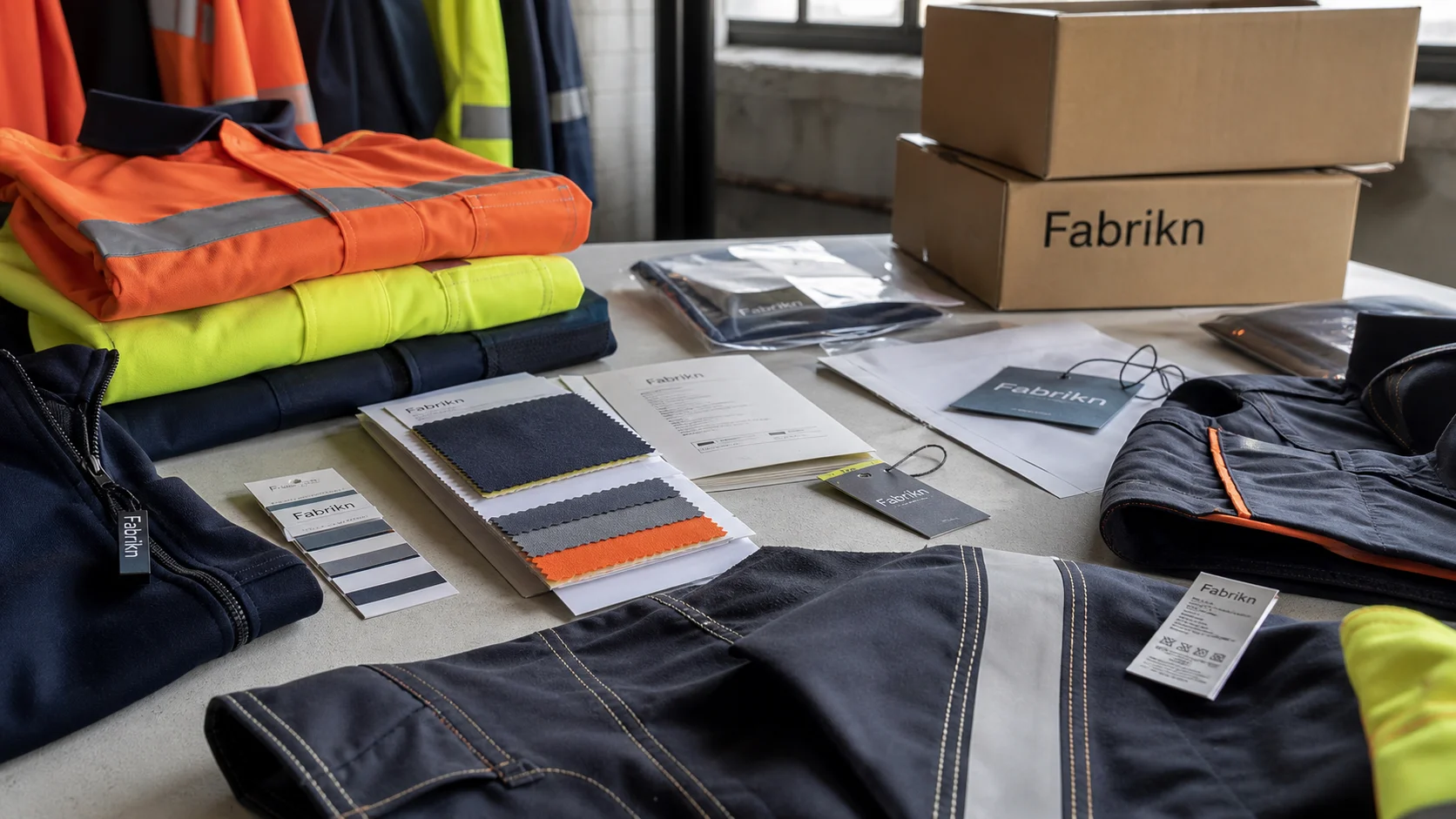
Minimalist Packaging for Clothing Brands with checks for samples, fit, MOQ, QC evidence, pricing terms, and delivery risk.
Fast answer: Minimalist Packaging for Clothing Brands: Costs, Specs, Impact should be judged by production evidence, not by a generic sourcing promise. The buyer needs sample proof, cost breakdowns, QC checkpoints, and delivery buffers in writing.
Ask for recent sample photos, measurement tolerances, fabric or print test assumptions, decoration test notes, packing examples, and a named inspection checkpoint. These details show whether the team can repeat an approved sample at bulk volume.
Separate garment cost, decoration, labels, packaging, sampling, testing, freight, and rush charges. When every cost line is visible, it becomes easier to reduce colorways, adjust size depth, or reserve more time for sampling.
At a cutting table in Ho Chi Minh City, a factory manager slid two months of outbound records across to me and tapped the numbers with a thumb that had clearly done this before. Brands that moved from rigid boxes to flat mailers cut outbound carton volume by 18-32% in one season. Not a mood shift. A ledger shift. And minimalist packaging for clothing brands keeps showing up where the math gets sharpest.
Decorative packaging looks small on a sketch board and expensive on a freight invoice. A rigid box with a lid, insert, tissue, sticker, and belly band can add 120-220 grams before the garment even lands inside. In Asia, that extra mass raises pallet count and dwell time. In Europe, it can push warehouse cube utilization down by 8-14%. In North America, dimensional weight can quietly inflate shipping costs by 10-25% on direct-to-consumer orders.
I have seen brands paying $0.65 for a printed sleeve and then losing another $0.40 to a second packing step they never budgeted. The same garment shipped in a 100% recycled poly mailer or a 350 GSM FSC carton behaves differently in transit. Less structure means fewer break points, fewer collapsed corners, fewer headaches. According to ISO packaging and transport testing standards, compression and drop performance should be measured against the actual route, not a showroom sample. That matters when a knit travels 3,000 miles and passes through three hubs.
Premium labels move first because they can afford to be selective. A $120 knit and a $20 tee can both ship with pared-back packaging, but the finish logic is different. The tee may use a one-color flexo print on kraft, while the knit gets uncoated premium stock, blind deboss, and a heavier closure. Same restraint. Different signal.
I have seen luxury buyers respond more strongly to precise alignment, tight fold memory, and quiet typography than to a stack of embellishments.
The thing nobody tells you: a simpler pack often reads as more premium when the structure is crisp and the print is restrained. Three weak details feel cheap. One strong detail feels deliberate.
That is why I keep calling packaging a business decision. A factory in Portugal quoted me 5,000 rigid boxes at €1.20 each, while a Turkish converter offered a mailer system at €0.38 with a 12-day lead time. Both were viable. Only one made sense for margin discipline.
Minimalist packaging for clothing brands is not an empty box with a logo slapped on top. It is a controlled set of parts: shipping mailer or carton, tissue wrap, garment bag, swing tag, insert card, tape, and seals. Some pieces are functional. Some are optional. Some should disappear entirely. If a garment already ships in a protective polybag, adding a second bag often creates moisture traps without improving returns.
The outer container does the heavy lifting. For e-commerce basics, a 250-350 GSM kraft mailer or a 60-90 micron recycled poly mailer can be enough. Tissue paper is useful when the fold has to survive 7-10 days in transit, but it should not become decorative clutter. Insert cards work when they carry care instructions, QR codes, or return details. Swing tags matter most at retail, yet many DTC brands pay for oversized tags that customers remove in four seconds.
In factory visits across China, Turkey, India, Italy, and Vietnam, I have seen converters with very different finishing strengths. China and Vietnam often win on speed and repeatability at 3,000-10,000 units. Italy can deliver exceptional paper feel and precise embossing, but minimums rise fast. India and Turkey often sit in the middle with good value on FSC board and water-based inks. Region matters because the same spec can look matte and refined in one mill, then dull and fuzzy in another.
FSC paper, recycled poly mailers, kraft board, molded pulp, compostable film, and water-based inks are the core materials I see most often. The rule is brutally simple: one strong detail often beats five weak details. That detail might be a soft-touch texture, a blind stamp, a single-color print, or a sharply cropped typography system. I would rather see one 100% black logo on 450 GSM uncoated board than four colors fighting for attention.
For brands building a tighter packaging system, clothing packaging solutions can consolidate formats so the outer mailer, insert, and seal all work from the same dieline logic. That saves time in sampling and reduces the chance of mismatched stock across SKUs.
At 5,000 units, a rigid box plus insert plus tissue can cost 2.5x to 5x more than a flat mailer system. I have seen a premium box program land at $1.45 per set, while a simpler mailer, sticker, and card combination came in at $0.29 to $0.58 depending on print coverage. That gap is not abstract. On a 20,000-order season, it can shift packaging spend by $18,000 to $30,000 before labor and freight are counted.
Unit cost is the number buyers like to quote. Landed cost is what your finance team actually pays. A one-color flexo print on kraft may be $0.11 to $0.18 per piece at scale, while full-coverage CMYK with lamination can push the same item to $0.35 or more. Add a second assembly step and you may lose another 1-2 weeks in production. I have watched factories build an entire packaging lane just to fold inserts that never affected sales.
Freight changes the math again. Dimensional weight punishes oversized packs, especially on air shipments. A carton that nests 24 units per master case can sometimes be reworked to 36 units with flatter packaging, which cuts pallet count by 25% and reduces warehouse cube use by 12-18%. That is why minimalist packaging for clothing brands is often strongest in the finance meeting, not just the brand review.
MOQ reality is messy. Some factories can produce minimalist kits at 1,000-3,000 units, especially if the spec uses standard board, stock mailers, and one-color print. Once you ask for soft-touch varnish, foil, or custom molded pulp, minimums often climb to 5,000-10,000. I have seen a babywear startup pay more per unit at 1,500 pieces than a mature intimates brand paid at 8,000 because the smaller order could not absorb the setup cost.
For niche categories like custom baby clothing manufacturing, the packaging spec often has to stay lighter to protect margin from day one. Turnaround follows the same logic. Fewer components usually remove 1-2 production stages: no separate sleeve lamination, no belly-band folding, no multi-part kitting. That can bring the lead time from 28-35 days down to 14-21 days, provided the converter has the substrate in stock. In one Vietnamese plant, a reduced pack saved 11 days simply because the operator no longer had to re-run alignment checks across three separate parts.
Customers read packaging faster than they read a brand manifesto. Less packaging can signal sustainability, price discipline, and design maturity, but only when the details feel intentional. A DTC basics label using a clean recycled mailer can look disciplined. A luxury label using the same thing may look cheap. Category framing matters.
I have seen athleisure brands benefit most because their customers are used to clean silhouettes and welcome the signal. Minimalist wrap keeps the focus on how the garment moves, not how ornate the packaging is. That said, the messaging has to match the rest of the experience—tone-deaf minimalism feels like cost-cutting dressed up as design.
Entry-level DTC brands often start with kraft mailers, tissue, and a single label. That combo keeps costs under tight control and still gives the parcel a thoughtful touch. Brands sitting in the mid-tier can layer in heavier stock for inserts, use spot coatings, or add a simple hangtag that mirrors the garment’s proportions. Luxury houses may keep the overall structure sparse but lean on tactile finishes—suede-like laminates, satin tapes, or architectural closures—to signal care.
Region plays a role, too. Asian converters usually have shorter lead times and competitive pricing for high-volume kraft and poly pieces. European mills shine when you need specialty board or artisanal embossing, yet the minimums make them expensive for low runs. North American suppliers mix sustainability claims with quick-turn flexibility, which works best for brands shipping across the continent. Matching price point to regional strength keeps the system cohesive and avoids the “new sample, mismatched batch” headache.
Start by asking what each component actually does. If the mailer already protects the garment, does the tissue need to be custom printed? Do the swing tags carry any more than a SKU? Those answers guide whether a piece stays or goes. Document the decision with photos, so the factory knows whether the empty pocket was intentional.
Next, work backward from the garment. Slimmer silhouettes tolerate flatter seals, whereas structured pieces still need rigid supports in transit. Sample every combination, including how the product arrives on the final customer’s doorstep. That’s where performance testing finishes the spec: drop tests, compression trials, and transit simulations highlight whether the streamlined kit still survives the actual route.
Pick one SKU and one market to pilot the new kit. Roll it through sampling, production, and a real shipment before you touch the rest of the line. Let the pilot inform training materials for packers, so everyone knows how to fold, seal, and ship without extra flair.
After that, track metrics that matter: freight costs per unit, return rates tied to packaging failure, and unboxing sentiment from customers. Adjust the spec based on those signals, not on what looks best in a mockup. Over time, the pared-back kit will feel like the default, not the experiment.
A strong brief makes the supplier's job narrower and the quote more reliable. For minimalist packaging for clothing brands, include the target customer, sales channel, expected order quantity, size range, decoration needs, packaging requirements, and delivery market. Then call out the details most likely to affect the result, especially material grade, print tolerance, and barcode size.
The brief should also explain what cannot change. Some brands care most about hand feel, some about price, some about launch timing, and some about retail compliance. When those priorities are not written down, suppliers tend to optimize for whatever is easiest to quote. Clear priorities help the factory make better tradeoffs before the first sample is cut or printed.
Ask the supplier to respond with assumptions, not just a price. A useful reply states MOQ, sample route, production capacity, inspection plan, packing method, and freight handoff. If the answer is vague, the project may still work, but it needs a tighter pre-production stage before money and calendar pressure build up.
The best time to catch problems is before the pre-production sample is approved. Check measurements, color, placement, material behavior, shrinkage, construction, labels, and packaging in the same review instead of approving each item in isolation. Many bulk issues are not caused by one dramatic mistake; they come from several small unchecked assumptions.
For minimalist packaging for clothing brands, pay special attention to folding method, pack-out sequence, and retail compliance. These details often look minor in an email but become expensive once cutting, printing, sewing, packing, or shipping begins. A simple checklist with owner, due date, and approval status keeps the brand team and factory aligned.
Bulk production should not start until the supplier can explain how the approved sample becomes a repeatable production standard. That means reference sample storage, line instructions, inline checks, final inspection, and defect handling. A factory that can describe this process clearly is usually safer than one that only promises speed.
Price differences are useful only when the quotes cover the same work. Compare sample cost, material source, trims, decoration, packaging, testing, inspection, and freight assumptions. A low unit price can become expensive if it excludes items the brand needs before launch.
Timeline promises deserve the same scrutiny. Ask what happens if the first sample needs revision, whether materials are in stock, when the production slot is reserved, and how export packing is handled. The most reliable supplier is often the one that gives a realistic calendar instead of the fastest optimistic answer.
Yes, but it depends on execution. Keep the structure clean, use one standout finish, and let the typography do some of the work. Customers sense when restraint is intentional versus when it’s a shortcut.
Test. Swap a few units into the new kit, send them through the same channels, and track damage rates. You might find that the lighter pack performs just as well, especially when the garment itself already has shape-retention.
Not always. Some finishes still carry a premium, and bespoke dielines can cost more than stock formats. The savings usually show up in reduced weight, fewer assembly steps, and streamlined logistics rather than in the sticker price.