
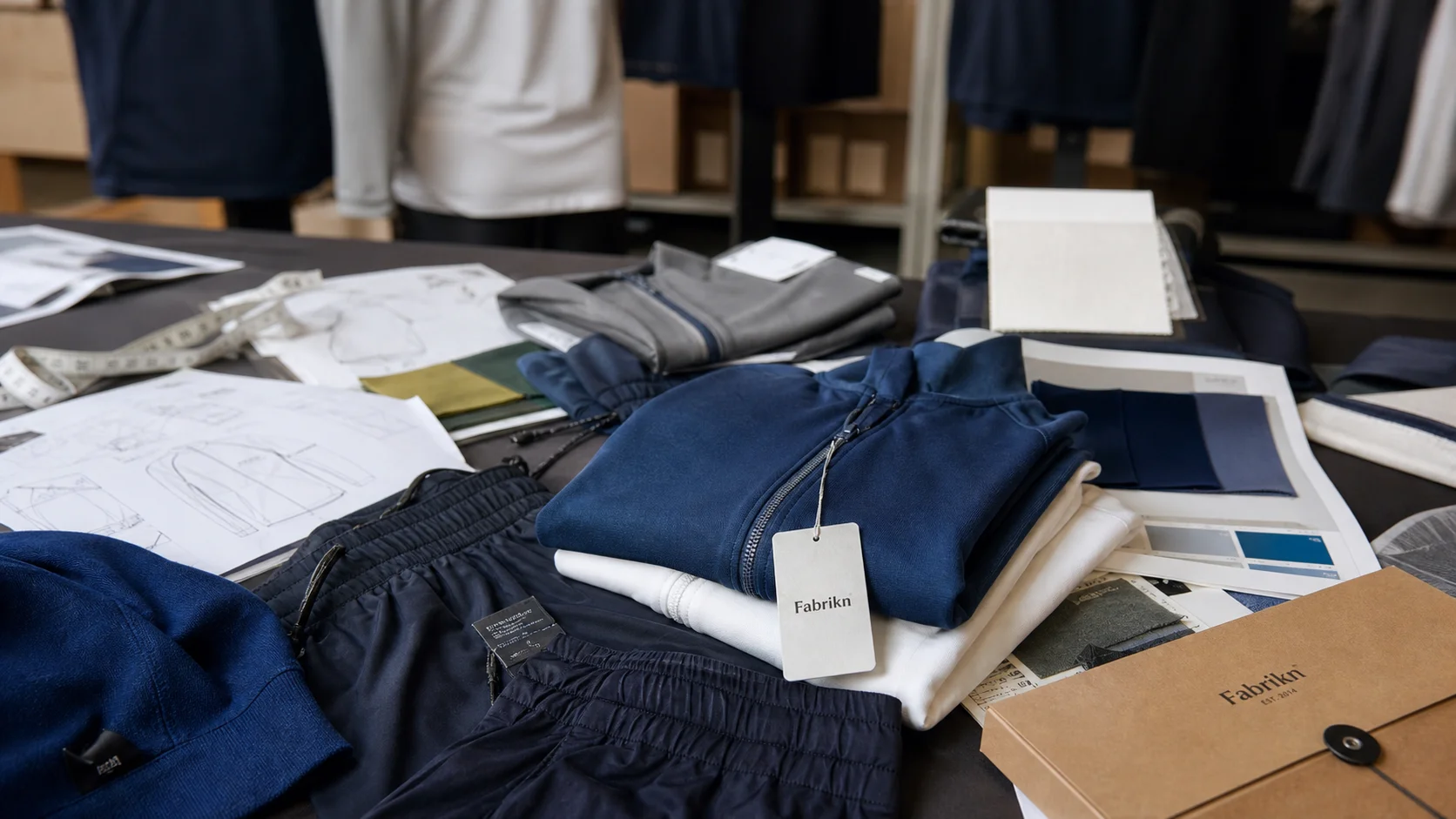
Private Label Packaging for Clothing Brands with checks for samples, fit, MOQ, QC evidence, pricing terms, and delivery risk.
Fast answer: Private Label Packaging for Clothing Brands: Cost, Quality, Speed should be judged by production evidence, not by a generic sourcing promise. The buyer needs sample proof, cost breakdowns, QC checkpoints, and delivery buffers in writing.
Ask for recent sample photos, measurement tolerances, fabric or print test assumptions, decoration test notes, packing examples, and a named inspection checkpoint. These details show whether the team can repeat an approved sample at bulk volume.
Separate garment cost, decoration, labels, packaging, sampling, testing, freight, and rush charges. When every cost line is visible, it becomes easier to reduce colorways, adjust size depth, or reserve more time for sampling.
In Ho Chi Minh City, I once watched buyers from three countries judge a box before they even touched the garment. That is private label packaging for clothing brands in the real world, and it is why first impressions matter so much. Seven seconds, maybe less — and the verdict was already forming: margin, quality, premium shelf or discount bin.
Packaging is often the first branded object a customer sees, and it can change the mood before the fabric has a chance to speak. In e-commerce, a well-built reveal can lift repeat purchase behavior by 10% to 20% when the order arrives intact and the experience feels deliberate. I have watched return rates drop 3 to 5 percentage points after brands moved from flimsy poly mailers to structured packaging with proper corner protection. Same garment. Better story.
Retail buyers in the US usually scan for clean print, rigid edges, and shipping resilience. UK buyers lean harder into sustainability claims and paper weight. In Asia, especially Japan and South Korea, restraint is the cue: fewer colors, tighter typography, immaculate folding. A $25 tee brand in Los Angeles may use a simple fold-over hang tag and one-color tissue wrap. A $75 knitwear label in London often jumps to a rigid mailer, embossed label, and FSC paper. At $150, brands in New York, Seoul, and Tokyo routinely spend $1.20 to $3.50 per pack because packaging is part of the price architecture.
I have been in wholesale buying rooms where a $25 top sat beside a $150 cashmere sweater. Nobody led with fabric. The package came first. Buyers know presentation can support premium-price acceptance by 8% to 15% in categories where handfeel is hard to judge from a distance. Online, the box does half the storytelling before anyone reads a product detail.
Heavier is not always better. Mid-market brands have burned through $0.95 to $1.40 per unit on thick rigid cartons that added freight, pushed carton cube up 12% to 18%, and did almost nothing for shoppers buying basics. In one case, a brand sold $48 sweatshirts and spent more on packaging than on the barcode, label, and tissue combined. Pretty package. Weak sell-through.
By contrast, a cleaner system using 350 GSM paperboard, 18 x 12 x 6 cm mailers, and a well-placed insert often performs better because it protects the product and keeps the freight bill sane. When I visited a manufacturer factory serving private label packaging for clothing brands programs, the disciplined brands treated packaging as a margin tool, not theater. The best programs made the garment feel intentional. They never tried to make a T-shirt feel like jewelry.
Material choice is where many packaging plans quietly lose money. A paperboard hang tag may cost $0.04 to $0.18, while a printed rigid box can jump to $0.75 to $2.20 before freight. Add inserts, labels, and outer cartons, and the packaging stack can swallow 2% to 6% of revenue on a lower-margin apparel line. Fine for premium. Too much for basics.
Results shift across China, India, Vietnam, Turkey, and Portugal because resin availability, paper mill access, and carton minimums vary. In China and Vietnam, poly mailers and tissue are easy to source in low quantities, often with 5,000-piece print runs. In Turkey and Portugal, paper-based formats tend to be more consistent on color and board stiffness, but carton minimums are often higher, sometimes 3,000 to 5,000 units per SKU. India can be cost-efficient on paper labels and hang tags, yet moisture control gets harder in monsoon months.
Paperboard works well for folding cartons, hang tags, and sleeve wraps. It prints sharply, especially at 300 to 350 GSM, and it travels lighter than rigid box formats. Corrugated board is the safer bet for shipping protection. A single-wall E-flute mailer can cut crease damage by 20% to 30% versus a thin paper envelope, especially for folded knits and denim.
Poly mailers stay cheap, often $0.06 to $0.22 depending on thickness and print coverage, but they feel weak when the customer expects premium. Tissue, on the other hand, is a small spend with outsized visual return. A printed tissue sheet can cost $0.03 to $0.09 and instantly changes how a blouse, hoodie, or bra set reads on opening. For intimates, the same logic shows up in adjacent programs like custom bra manufacturing, where presentation and protection are welded together.
In factory audits, I check moisture resistance, print yield, and shelf life. A compostable mailer that looks great on paper can soften after 60 to 90 days in humid storage. A recycled paper box may warp if the warehouse sits above 75% humidity. Route, warehousing, handoffs — that is the actual decision tree.
Sustainability claims only matter if they survive inspection. FSC paper means the chain of custody can be traced. PCR content should be stated clearly, usually as a percentage, because “recycled” alone is too vague for serious buyers. Compostable claims need testing against recognized standards, and brands should ask for documentation, not slogans. According to OEKO-TEX, material safety and traceability depend on verifiable testing, not marketing language.
Data from trade.gov also helps brands benchmark export readiness, supplier compliance, and sourcing risks before they place bulk orders. That matters because mixed laminates can block recycling streams, which defeats the claim you paid for. A paper box with a water-based coating is easier to explain and audit than a foil-laminate sleeve that looks premium but causes end-of-life headaches.
The best factories can show test reports, batch labeling, and material certificates without scrambling. If they cannot, the claim is decoration. And decoration does not clear customs.
Factory quotes can look tidy. Real budgets are messy. A hang tag might be quoted at $0.06, but once embossing, string, packing labor, and freight allocation are added, the landed cost can move to $0.11 or $0.14. A poly mailer may start at $0.08 in a quote and land at $0.15 once overage, carton packing, and split-shipment fees show up. That gap is why unit price and total landed cost never belong in the same bucket.
Across the brands I have audited, packaging becomes dangerous when the buyer treats it like an isolated purchase instead of a system. A $38 sweatshirt line might need a $0.22 hang tag, a $0.05 tissue sheet, a $0.14 mailer, a $0.03 size label, and $0.06 in carton allocation. Small numbers. Then you multiply by 12,000 units and find a $6,000 packaging bill hiding inside a line carrying only 58% gross margin.
Pricing shifts sharply at 1,000, 5,000, and 10,000 units. At 1,000 units, a folded carton might cost $0.68 to $1.10 because setup is spread across too few pieces. At 5,000, the same carton may drop to $0.28 to $0.55. At 10,000, it can fall again to $0.18 to $0.38, depending on board grade and print count. Tissue, labels, garment bags — same pattern.
Budget programs for $25 products often stay under $0.35 total packaging cost per unit. Mid-tier $75 programs can tolerate $0.60 to $1.20 if the box or mailer protects the product and supports repeat orders. Premium $150 lines may spend $1.50 to $4.00, especially when the package includes a rigid structure, special print, and layered unboxing. The issue is not spending more. It is paying premium money for packaging that still feels generic.
Hidden costs rewrite quotes. Artwork changes can trigger new plates at $40 to $150 per color. Sampling may run $25 to $120 per format. Tooling for custom die cuts or embossing can add $80 to $500. Freight then twists the numbers again, especially if the packaging moves by air for speed, which can cost 3 to 6 times more than ocean on light but bulky items.
Last year I worked with a brand that reordered 8,000 tissue sheets because the logo had shifted 2 mm off center in proofing. The supplier was right. The file was wrong. That kind of mistake can turn a $0.04 item into a $400 reprint once labor, delay, and extra cartons are counted. Carton overage also creeps in quietly, adding 3% to 8% when buyers forget spoilage, QA rejects, and pack-out losses.
Comparing programs works best by price point. A budget brand selling $25 tops may run hang tags, a basic mailer, and one label family. A mid-tier brand at $75 may add tissue, printed inserts, and a stronger mailer. A premium brand at $150 may use rigid boxes, custom sleeves, and branded dust protection. Fit matters. So does restraint. That is the line between smart packaging and expensive clutter.
Supplier selection starts with proof, not promises. I want to see print capability, substrate sourcing, QA systems, export history, and how fast a supplier answers a technical question. A factory that can quote in 30 minutes but cannot explain GSM tolerance or moisture resistance is a risk. A factory that asks for your carton spec, color reference, and packing method is usually more credible than one that says yes to everything.
Direct factory sourcing can save 8% to 20% versus a trading company, but only if the buyer can manage communication and approvals. Trading companies help with speed and language support, though they may add a margin layer. Local converters are useful for smaller runs, sometimes 300 to 1,000 units, and for emergency reprints. They are less attractive when you need consistent batch-to-batch color on 20,000 units.
Samples can lie. I have approved beautiful samples that later failed in production because the factory stored board in a humid room, used a different die, or swapped paper stock after quoting. During a visit, I check humidity storage, die-cut consistency, and whether color drifts from the first carton to the last carton on the line. If the sample looks perfect but the warehouse is chaotic, the sample is propaganda.
One red flag: vague GSM specs. Another: no test reports for board strength, ink adhesion, or moisture tolerance. Inconsistent batch labeling is a third. Unrealistic turnaround promises, like 5-day production on a 10,000-unit carton run, usually mean the factory is planning to outsource or cut corners. I have seen that movie too many times.
For packaging, MOQs can be deceptively low on paper and high in practice. A supplier may offer 500 units, but the real price only makes sense at 3,000 or 5,000. Lead times range from 10 to 20 days for simple labels to 25 to 45 days for more complex boxes and printed mailers. If a supplier cannot provide material declarations, test reports, and packing specs, I walk away. Fast.
When I audit packaging suppliers for brands using clothing packaging solutions, I look for the same discipline I expect in the garment factory itself: traceability, documentation, and consistent output. The packaging vendor should stand next to your sewing partner, such as a cut and sew manufacturing team, without making the supply chain look amateurish. That is especially important when you are comparing a manufacturer, a factory, and a supplier in China for wholesale or bulk production.
Design does not need to shout to convert. It needs to signal competence in 2 seconds. I have seen minimalist systems outperform busy ones because customers read restraint as confidence. I have also seen luxury packaging fail because the box was too heavy, the closure chipped in transit, and the unboxing felt awkward rather than premium.
Design influences damage claims, social sharing, and reorder behavior. A clean insert can reduce confusion about sizing and care, which cuts support tickets. A good closure or seal can keep garments folded, lowering crease complaints. In some DTC programs, a stronger visual system raises repeat purchase rates by 6% to 12% because customers remember the brand, not just the product.
Unboxing is not theatre for its own sake. It is a memory device. If the package opens cleanly, the logo is readable, and the garment sits flat, the brand feels organized. If the package arrives crushed or the tissue tears, the customer notices the failure before the fabric. That is why I favor packaging that protects first and photographs well second.
Minimalist systems suit basics, athleisure, and lower-price DTC lines. Luxury packaging works when the garment itself carries strong margin and the customer expects ceremony. Eco-led systems perform best when the sustainability message is specific. A recycled mailer with a clear claim and simple print can outperform a glossy package that merely looks green. For more examples of thoughtful apparel presentation, see private label clothing manufacturing approaches that align product and pack.
Typography should be readable at arm’s length. Color should align across the box, tag, and label set. Inserts should answer the three questions customers actually ask: what is this, how do I care for it, and where do I contact the brand if there is a problem. Sustainability messaging should mention a measurable fact, such as 70% PCR content or FSC paper, instead of vague claims about caring for the planet.
Brand consistency matters across DTC, wholesale, and marketplace sales channels. A marketplace order may ship in a plain outer mailer, but the inner pack still has to feel like your brand. Wholesale partners expect efficiency and stackability. DTC buyers expect a slightly richer reveal. The package should flex without losing identity.
The fastest way to waste money is to approve packaging before the specs are fixed. I have seen buyers rush into art files, then discover the garment dimensions changed, the barcode format was wrong, or the carton did not fit the fold. A disciplined 30-day process avoids that mess and keeps launch dates intact.
Days 1 to 5: define your format, size, board grade, print count, and target landed cost. Days 6 to 10: request quotes from at least 3 suppliers and compare not just unit price but tooling, sampling, and freight. Days 11 to 18: sample, photograph, and test the package for scuffing, humidity, and drop resistance. Days 19 to 24: approve final artwork. Days 25 to 30: lock production and confirm carton counts.
Before contacting suppliers, prepare measurements, logo files in vector format, barcode specs, Pantone references, fold method, and pack-out instructions. If there are multiple SKUs, list each one separately. A supplier can only quote accurately if it knows the folded garment dimensions, the number of units per carton, and the required print area.
Check barcode placement at least 2 times before sign-off. Verify color standards under daylight and warehouse lighting. Confirm whether the package ships flat or assembled. Confirm the number of units per inner pack and master carton. Confirm whether there is an overage allowance of 2% to 5% for spoilage. Confirm the carton count by SKU, not just the total order.
Do not wait for perfect conditions. Order a pilot run of 300 to 1,000 units, test the packaging on the real product, and review the results in the warehouse and in customer hands. The brands that move first learn faster, correct cheaper, and launch cleaner than the ones still polishing mockups.
Approve five things before mass production: cost, durability, brand fit, compliance, and freight efficiency. If one fails, the packaging is not ready. Reorder speed matters too, because the best program is useless if it cannot be replenished in 3 to 4 weeks without a panic surcharge.
Measure ROI with margin lift, damage reduction, conversion, and reorder speed. For a new brand, scale the simplest format first: one mailer, one tissue, one tag family. For an established label, scale the format that already performs best across 2 or 3 SKUs and standardize it. The disciplined brands I admire do not buy louder packaging. They buy cleaner decisions, and the profit shows up in the numbers. If you want packaging that earns its keep, start with the spec sheet, then make the design earn the right to be printed.
Basic packaging often lands between $0.20 and $0.60 per unit for tags, tissue, and a simple mailer. Mid-tier programs usually run $0.60 to $1.20, while premium rigid-box systems can reach $1.50 to $4.00 depending on print, board, and freight.
Simple labels or hang tags can take 10 to 20 days. Printed mailers and folding cartons usually need 25 to 45 days, especially if sampling, color approval, or die-cut tooling is involved. Air freight can shorten delivery, but it raises cost sharply.
Check dimensions, barcode placement, Pantone references, board weight, moisture resistance, and carton counts. I also verify print registration, batch labeling, overage allowance, and whether the supplier can provide material and compliance documents before production starts.
Yes, if the package supports product quality and reduces damage or confusion. I have seen repeat purchase behavior improve by 10% to 20% in brands that upgraded from flimsy packaging to better-structured mailers or boxes with clearer branding and inserts.
China and Vietnam are often strong for low-cost print and flexible MOQs. Turkey and Portugal can perform well on paper-based premium work, while India can be efficient for tags and labels. The right source depends on humidity, carton minimums, and your target landed cost.