
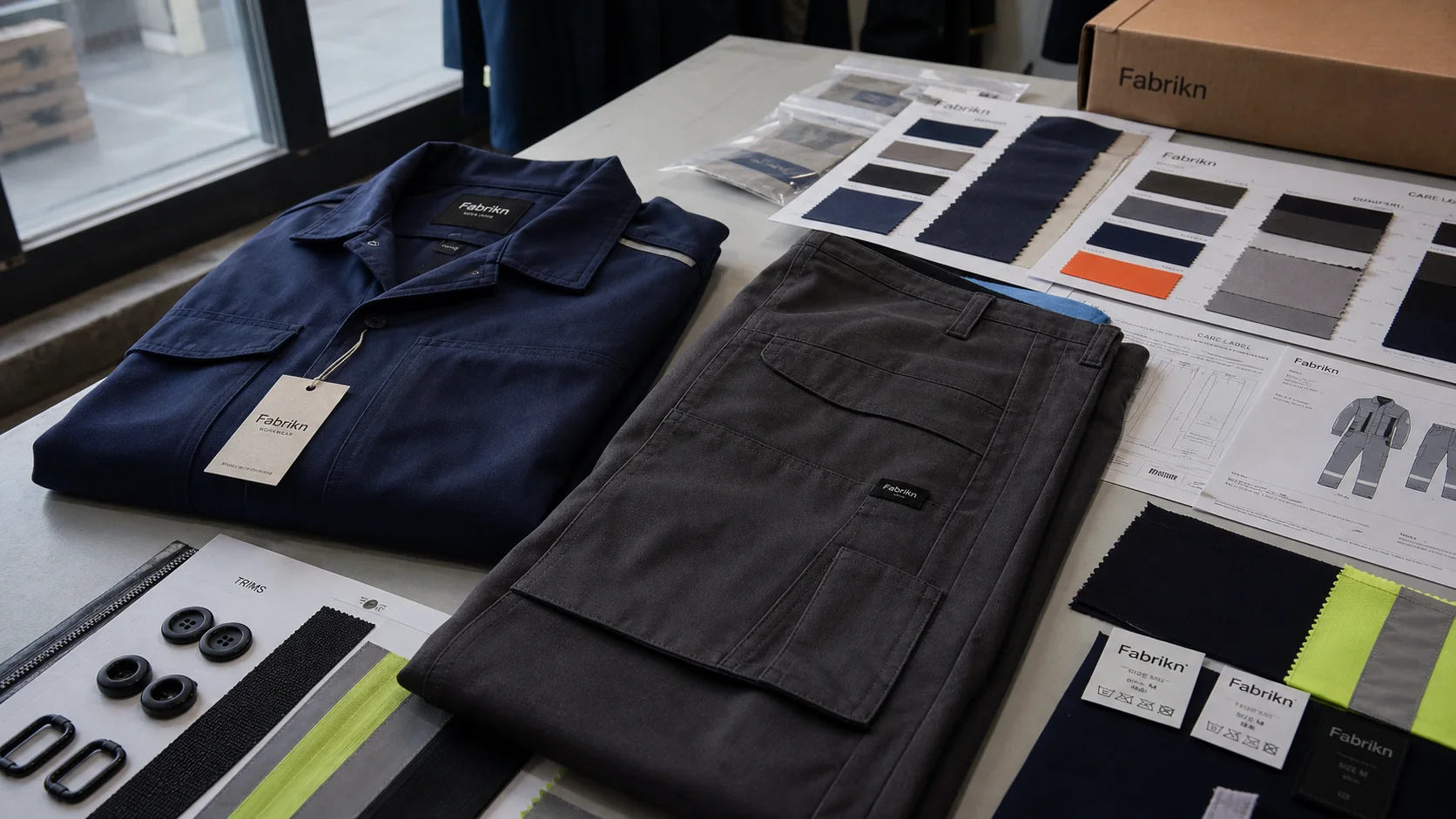
Premium Clothing Packaging Design for Ecommerce Brands with checks for samples, fit, MOQ, QC evidence, pricing terms, and delivery risk.
Fast answer: Premium Clothing Packaging Design for Ecommerce Brands: Material, Print, Packing Flow, and Cost should be judged by production evidence, not by a generic sourcing promise. The buyer needs sample proof, cost breakdowns, QC checkpoints, and delivery buffers in writing.
Ask for recent sample photos, measurement tolerances, fabric or print test assumptions, decoration test notes, packing examples, and a named inspection checkpoint. These details show whether the team can repeat an approved sample at bulk volume.
Separate garment cost, decoration, labels, packaging, sampling, testing, freight, and rush charges. When every cost line is visible, it becomes easier to reduce colorways, adjust size depth, or reserve more time for sampling.
I have watched a $34 tee arrive in a bent polymailer while a $180 knitwear set lands in a rigid box with 18-point cardstock, tissue, and a folded return slip. But the second order usually earns the better review before the garment is even touched. That is what most brands miss when they ask me about premium clothing packaging design for ecommerce brands. Seven seconds. That is the window. Fabric handfeel, seam quality, fit — all of that comes later.
Across 200-plus factory and fulfillment visits in 8 countries, packaging changed damage rates, customer sentiment, and reorder intent with almost absurd efficiency. A packaging upgrade that costs $1.20 to $2.40 per order can shift review language from “nice basics” to “felt expensive” or “worth the price.” Repeat orders stay cheaper than acquisition by a wide margin. One DTC basics program I tracked put packaging at 3.8% of order value on a $42 average basket. In a luxury label it stayed near 1.1% on a $240 basket. Same idea. Different math. And most of those programs were sourced out of Guangzhou and Ho Chi Minh City, with lead times stretched to 18-22 business days whenever ocean freight booked through the Shenzhen port got backed up, so margin calculations had to factor transit time as much as per-unit cost.
Details matter. The box weight matters. So does tissue opacity. So does the way an insert sits against the collar instead of bouncing loose in transit. I have seen a 280 GSM mailer with a snug insert protect garment edges better than a prettier but oversized rigid box that let the product travel inside its own container. Customers read that as care, not cost. And in the factory, care shows up as fewer returns tied to creasing, crushed trims, and scuffed hardware. I consult packaging engineers who tune die-cut tolerances using a 200-ton press brake and a Heidelberg UV varnish line to keep edges flush and avoid stress on seams.
Higher spend does not always equal better perception. Fast-fashion premium lines often overspend on gloss and ignore structure. Luxury labels, by contrast, sometimes use fewer components but execute them with cleaner folds, tighter tolerances, and more consistent print registration. But DTC basics win when they keep it honest: a 350 GSM box, 2 sheets of FSC tissue, one low-ink insert, and a well-sized mailer that does not swallow the product. Premium should feel considered, not bloated. And when you measure pack-out speed, a factory running a Komori Lithrone offset press for the board and a Zünd digital cutter for inserts can hold down setup time while still delivering stable registration for foil and blind debossing.
When I benchmark packaging against broader apparel sourcing standards, I compare the material story with credible references such as Textile Exchange for fiber and material guidance and U.S. Trade and market resources for sourcing and export context. Certifications like GOTS, OEKO-TEX Standard 100, and GRS keep fiber content honest, while factory-level WRAP and BSCI audits confirm the human side of labor compliance.
Premium packaging is a system, not a single box. It usually starts with a primary pack, then a secondary pack, and finally a shipping pack. In practice the lineup might include a folded garment bag, a printed mailer, a rigid or corrugated box, tissue, a sticker seal, a thank-you card, a return label sleeve, and protective inserts. Knitwear benefits from corner support and a crease-minimizing fold. Denim needs abrasion protection more than visual theater, while silk should focus on stopping friction. Outerwear has to survive bulk and weight, often 900 g to 1.8 kg per unit. That means the glue line for 24-point SBS board is set with a rosin-based hotmelt applied by a Nordson high-speed melter, and the boxes exit the folder-gluer with a diagonal seal for rigidity.
Visual luxury and functional protection are not the same thing. A glossy coating can look premium under studio lights and still scuff badly in a fulfillment line that moves 600 to 1,200 units per hour. A matte, uncoated stock may look simpler, but it often photographs better and absorbs ink with more restraint. So some of the strongest packaging I have seen used low-ink printing, embossed sleeves, and FSC paper with no plastic lamination. The image is quieter. The shelf and screen effect is better. On the production floor in Istanbul, a prepress team runs solid CMYK overprint tests on a Heidelberg Speedmaster and then uses a Timesavers 37-inch wide-belt sander to knock down fringe edges before folding.
Materials should signal value without creating waste. Rigid board works for hero products and giftable sets. Recycled polybags still make sense when the garment needs moisture protection. Compostable mailers can work for lighter orders, though they require careful testing for puncture resistance. Need a practical starting point? Our custom clothing packaging solutions page shows how packaging components can be built around product type, not just aesthetics. And we often pair RSC corrugated boxes, kraft inserts, and silicone-release sleeve closures so tissue can be added without static issues in the packing line.
Here’s what most people miss: overbuilt packaging can increase transit damage if it forces bad cartonization. A box that is too stiff, too large, or too empty shifts more in the shipper, which creates crushed corners and dented lids. I have seen simpler systems outperform expensive ones by cutting void space from 28% to 11% and reducing damage claims by 14% over a 3-month window. And that kind of efficiency becomes critical when a folding carton ships from Dhaka through the Port of Chittagong to Los Angeles or when a Ho Chi Minh City converter has to balance carton strength with weight-sensitive DIM charges.
A $40 tee brand should not copy a $400 outerwear label. The AOV, margin, and customer expectation are too different. In the DTC basics space under $80 AOV, premium clothing packaging usually works best at 2.5% to 5% of order value, meaning a printed mailer, a branded tissue wrap, one insert card, and a clear return instruction. On a $58 basket, that is roughly $1.45 to $2.90. Spend more, and the packaging starts to fight the product economics. I have watched brands spend $4.80 per order on rigid boxes for tees and then wonder why contribution margin collapsed. At a Guangzhou converter we audited, the cost baseline was $2.50-4.00 per unit at 500 MOQ for a 16-point rigid box with foil-stamped lid. And the math had to include volume discounts for larger runs.
Mid-market labels and premium essentials can afford more structure. That's where a 1-piece folding box, a better board grade, custom tape, and a cleaner insert system make sense. Portugal and Turkey often deliver tighter finishing on textile-led brands because the local supply base understands garment folding, cartonization, and retail-ready packing. India can bring lower unit labor, but print consistency depends on the supplier tier and the finishing partner. China usually offers the broadest range, from stock-based 3-5 week programs to fully custom 8-14 week systems, depending on the dieline and embellishment level. And when we worked with a factory near Istanbul, we standardized on B1-size UV-cured decks for fast turnarounds and kept foil blocking in-house to avoid long subcontracted waits.
Luxury and limited-edition drops justify more theatrical treatment, but only when the margin can absorb it. A 300 GSM cotton jersey tee does not need a velvet-lined coffin; a well-placed insert and tactile band can do the heavy lifting. When prices head toward the high end, you can justify foil, embossing, and a two-part mailer, but cheap goods need leaner rituals to keep the math working.
A strong brief makes the supplier's job narrower and the quote more reliable. For premium clothing packaging design for ecommerce brands that sells, include the target customer, sales channel, expected order quantity, size range, decoration needs, packaging requirements, and delivery market. Then call out the details most likely to affect the result, especially material grade, print tolerance, and barcode size.
The brief should also explain what cannot change. Some brands care most about hand feel, some about price, some about launch timing, and some about retail compliance. When those priorities are not written down, suppliers tend to optimize for whatever is easiest to quote. Clear priorities help the factory make better tradeoffs before the first sample is cut or printed.
Ask the supplier to respond with assumptions, not just a price. A useful reply states MOQ, sample route, production capacity, inspection plan, packing method, and freight handoff. If the answer is vague, the project may still work, but it needs a tighter pre-production stage before money and calendar pressure build up.
The best time to catch problems is before the pre-production sample is approved. Check measurements, color, placement, material behavior, shrinkage, construction, labels, and packaging in the same review instead of approving each item in isolation. Many bulk issues are not caused by one dramatic mistake; they come from several small unchecked assumptions.
For premium clothing packaging design for ecommerce brands that sells, pay special attention to folding method, pack-out sequence, and retail compliance. These details often look minor in an email but become expensive once cutting, printing, sewing, packing, or shipping begins. A simple checklist with owner, due date, and approval status keeps the brand team and factory aligned.
Bulk production should not start until the supplier can explain how the approved sample becomes a repeatable production standard. That means reference sample storage, line instructions, inline checks, final inspection, and defect handling. A factory that can describe this process clearly is usually safer than one that only promises speed.
Price differences are useful only when the quotes cover the same work. Compare sample cost, material source, trims, decoration, packaging, testing, inspection, and freight assumptions. A low unit price can become expensive if it excludes items the brand needs before launch.
Timeline promises deserve the same scrutiny. Ask what happens if the first sample needs revision, whether materials are in stock, when the production slot is reserved, and how export packing is handled. The most reliable supplier is often the one that gives a realistic calendar instead of the fastest optimistic answer.
Before making the final decision, write down the specification, approval owner, delivery expectation, and the one or two risks that would cause the most trouble if missed. For premium clothing packaging design for ecommerce brands that sells, this usually means checking material grade, print tolerance, barcode size, and the support process after the order is placed.
This last review does not need to be complicated. It simply makes the decision easier to repeat, easier to explain, and easier to verify when the finished product or jewelry arrives.
One useful way to pressure-test the decision is to ask what would happen if the order had to be repeated in six months. The answer should still be clear: the same material grade, the same print tolerance, the same acceptance standard, and the same communication path. If a second order would depend on memory or guesswork, the first order is not documented well enough yet.
Another useful check is to separate preference from requirement. Preference is the look, wording, or finish the brand likes. Requirement is the measurement, tolerance, certificate, material, or delivery condition that cannot fail. Good buying decisions keep both visible, so the final choice is not pushed around by the last email, the cheapest quote, or the prettiest sample photo.
Finally, ask who owns each approval. A project with one accountable owner for sample review, one owner for final content or artwork, and one owner for delivery sign-off usually moves faster than a project where every decision is shared loosely across a team. Clear ownership reduces delays and makes the finished result easier to judge.