
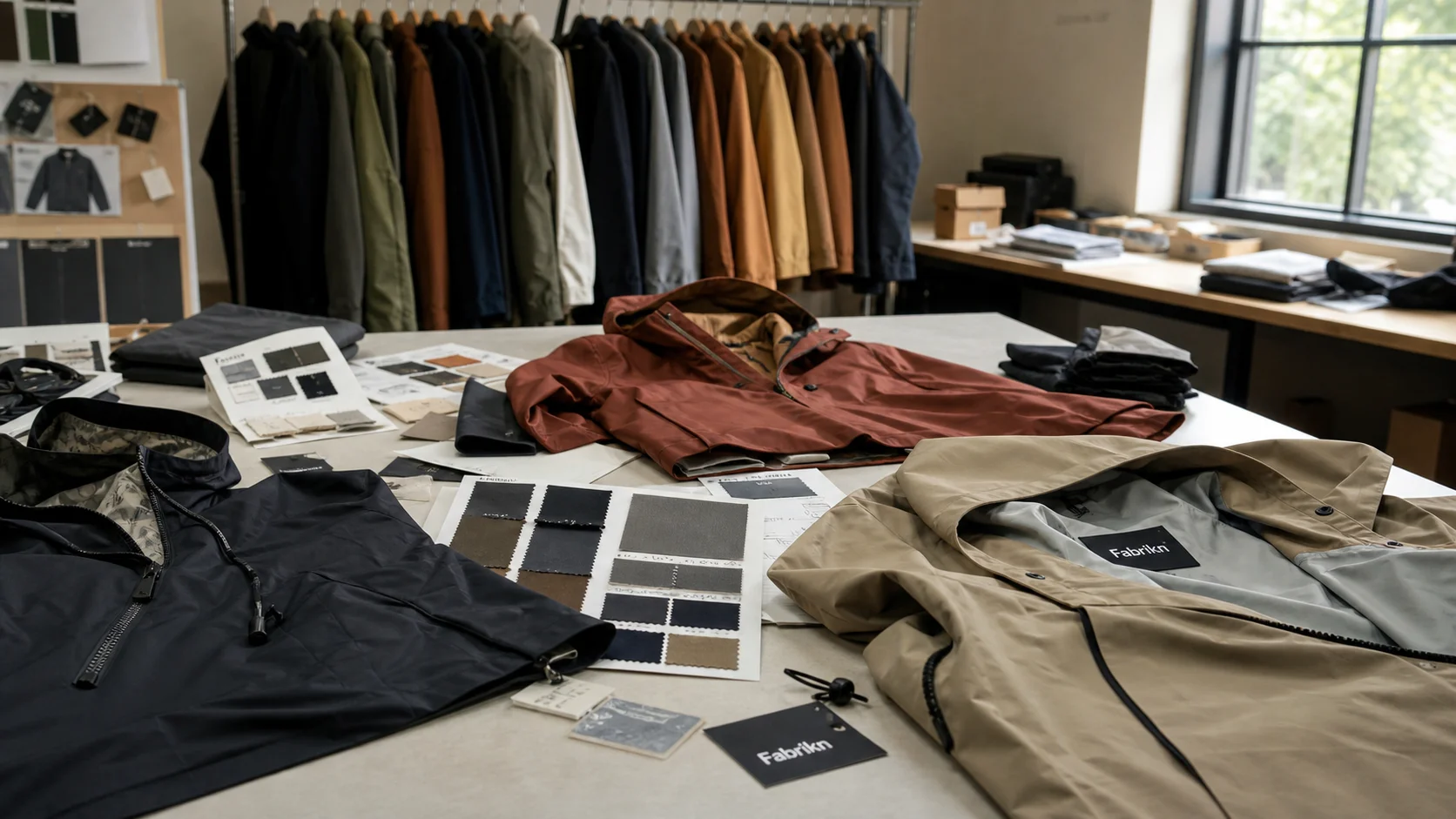
Fashion Packaging Premium Perception with checks for samples, fit, MOQ, QC evidence, pricing terms, and delivery risk.
Fast answer: Fashion Packaging Premium Perception: Inserts, Finish, and Cost should be judged by production evidence, not by a generic sourcing promise. The buyer needs sample proof, cost breakdowns, QC checkpoints, and delivery buffers in writing.
Ask for recent sample photos, measurement tolerances, fabric or print test assumptions, decoration test notes, packing examples, and a named inspection checkpoint. These details show whether the team can repeat an approved sample at bulk volume.
Separate garment cost, decoration, labels, packaging, sampling, testing, freight, and rush charges. When every cost line is visible, it becomes easier to reduce colorways, adjust size depth, or reserve more time for sampling.
A dress can feel twice as expensive the moment the box arrives with weight, restraint, and a clean reveal. Premium packaging ideas for fashion brands matter because packaging shifts price perception fast. In luxury and premium DTC, that swing can be 20% to 40% in perceived value, which is why premium packaging ideas for fashion brands now sit inside margin discussions, not just branding decks.
At factories in Guangzhou, Ho Chi Minh City, Prato, and Izmir, the same pattern kept showing up. Brands selling $12 tees often overspend on layered inserts, sleeves, and tissue that add $1.40 to $2.20 per order yet do little for repeat purchase. A $120 blazer, by contrast, can justify a $3.50 to $6.00 packaging system because the box protects structure, keeps the garment crisp, and supports gifting. The logic changes with basket size. A low-ticket item needs efficiency and one sharp moment. A high-ticket piece needs calm, protection, and a sense that someone thought through the whole route from factory to front door.
Packaging also affects returns in subtler ways than most founders admit. In my own audits, brands with crushed mailers, wrinkled garments, or flimsy hangtags saw 8% to 14% more customer service complaints tied to presentation, and 3% to 6% more “did not meet expectations” returns in premium basics. That is not vanity. That is margin erosion. A branded mailer, better folding spec, and tighter carton sizing can cut void space, reduce damage rates by 1 to 2 points, and trim freight costs by 5% to 9% on dense product lines. If your packaging improves gifting, it also increases shareability and repeat purchase because customers remember the opening, not just the fabric hand.
The thing nobody tells you: some of the most expensive-looking packs use fewer components, not more. One Japanese supplier showed me a two-piece rigid box with 600 gsm board, 1-color foil, and no sleeve that looked more premium than a six-part system with ribbons and foam. The simpler pack cost less to assemble, took 18 seconds instead of 41, and reduced damage in transit. That is the kind of quiet efficiency I trust.
Material choice sets the tone before the product is even touched. For premium packaging ideas for fashion brands, the first fork is rigid box versus folding carton. Rigid boxes usually start around 1.5 mm to 3 mm board thickness, while premium folding cartons often run 400 gsm to 700 gsm with reinforced inserts. Rigid structures cost more, but they hold edges, survive shipment better, and read as giftable. A folding carton works beautifully for knitwear, small leather goods, and premium basics, especially when the print is disciplined and the fit is exact.
Surface finish matters as much as structure. Soft-touch lamination adds roughly $0.18 to $0.45 per unit depending on run size, and it changes the hand immediately. Embossing can add another $0.10 to $0.30, while foil stamping may sit anywhere between $0.12 and $0.60 depending on coverage and plate complexity. Spot UV is useful for logos, but too much gloss can cheapen the look if the rest of the package is matte. I have seen a $2.80 box appear more luxurious than a $7.50 box simply because the lower-cost pack used one finish, one logo placement, and a tighter color palette.
For apparel, soft-touch rigid boxes or heavy cartons suit shirts, knitwear, and occasionwear. Accessories like belts, wallets, and sunglasses do well in compact rigid setups or wrapped cartons with magnetic closures only when the product value justifies them. Footwear needs crush resistance first, image second. Outerwear usually benefits from a durable carton with dust protection and a polybag or recycled garment bag inside. If you are building clothing packaging solutions, the material needs to support folding, stacking, and warehouse efficiency before it becomes beautiful.
Regional sourcing changes the calculus. In Europe, specialty board, textured papers, and narrow-run embossing often cost 15% to 30% more than comparable options in China or Vietnam, but lead times can be tighter for local brands. Asia offers broader board grades, more finish combinations, and lower unit pricing once you cross 3,000 to 5,000 units. According to ISO standards for quality management, repeatability matters as much as the material itself; a premium package that varies in shade or crush strength loses trust quickly.
Sustainability does not have to look like compromise. Recycled content board can still feel expensive if it has tight formation, a clean gray core, and restrained print. FSC-certified paper, water-based inks, and soy-based coatings help, but recycled stock can go dull when overprinted. The smartest premium packaging ideas for fashion brands usually rely on texture, structure, and design discipline rather than heavy decoration.
Packaging should scale with margin, not ego. For entry-luxury basics priced at $18 to $45, I would keep it lean: a strong mailer, branded tissue, a single sticker seal, and a folded insert with care instructions. That combination might cost $0.80 to $1.60 per order and still feel premium if the typography is clean. For a $95 knit or $140 blouse, a heavier carton or presentation sleeve starts to make sense, because the packaging becomes part of the gift and the post-purchase memory.
Footwear, handbags, and outerwear belong in a different category. Shoes need structure, dust control, and stacking efficiency. Handbags often justify dust bags, card inserts, and reinforced boxes if the retail price sits above $150. Outerwear needs protection from abrasion, fold marks, and warehouse dust. If you already run private label clothing, you can align packaging to your brand tier rather than treating every style the same. That is where many brands waste money. A $24 tank top does not need the same reveal as a $260 trench.
Gift-ready packaging has its own math. During holiday and wedding seasons, I have seen higher AOV from bundles that included a structured box, message card, and color-matched tissue. The pack added $2.20 to $4.80, yet the basket grew by $18 to $37 because customers bought with gifting in mind. For limited-edition drops, scarcity is the point. A numbered sleeve, a small certificate, or a fabric swatch card can create collectability without flooding the box with extras.
Here is a practical pricing frame:
That range works best when the packaging supports an obvious revenue lift. If it does not, cut it.
At $1 per unit, you are usually buying a branded mailer, one-color print, basic tissue, and perhaps a sticker seal. This is enough for many DTC essentials if the presentation is crisp and the carton fit is accurate. At $3 per unit, the options widen: heavier board, custom inserts, soft-touch lamination, simple embossing, and better inside printing. At $7 per unit, you can add rigid construction, foil, magnetic closures, fabric pulls, and custom compartments. The jump is real, and so is the pressure on margin.
Hidden costs matter more than the unit quote. Tooling can add $150 to $900. Plates may run $40 to $180 per color. Sample rounds often cost $60 to $250 each, and I rarely trust a pack after only one round. Freight is another trap. A low-cost carton from Asia can become expensive once boxed volume, pallet count, and warehousing are added. Storage fees can climb 10% to 20% if your packaging is oversized and awkward to stack. Damage rates also matter. If a cheaper pack lifts damage from 1% to 4%, the savings disappear fast.
Minimum order quantities vary widely. Conventional offset printing usually wants 1,000 to 5,000 units for sane economics. Digital decoration can work below 500 units, especially for launches and test runs, but the unit cost is often 20% to 50% higher. For a small brand, that can be smart if the drop is limited and the packaging is tied to a specific campaign. For a stable core line, it usually becomes too costly.
Here is a simple decision rule I use: spend on the packaging element customers see first, touch longest, or reuse most often. That usually means box structure, outer print, and one tactile finish. Skip secondary embellishments unless the product price clears $100 or the pack is part of gifting. If you sell technical garments or premium intimates, a good supplier for custom bra manufacturing will often advise packaging dimensions alongside cup shape and shipping format, because the wrong box warps both product and perception.
For very small launches, short-run digital printing is useful, but I would not use it as a permanent answer unless volumes stay below 300 to 500 units per colorway. Once demand stabilizes, conventional production usually wins on unit cost and consistency. A premium pack that costs $4.90 but increases conversion and reduces returns by even 1.5 points can pay for itself. A $7 pack on a $19 item usually cannot.
Good sustainable packaging feels deliberate, not preachy. The cleanest premium packs I have seen use less ink, fewer layers, and stronger paper choices. Recycled board, molded fiber, and mono-material designs can look expensive if the proportions are right and the print is restrained. A 500 gsm recycled carton with one debossed logo often reads better than a glossy multi-layer box with plastic windows. Minimalism helps because it exposes quality or exposes weakness. There is nowhere to hide.
Factory floors tell a harder story than marketing decks. Recycled stock can vary in shade, fiber length, and stiffness. Molded fiber looks good for inserts and shoe trays, but it can scuff or shed if compression standards are weak. Mono-material packaging is attractive for recycling, yet coatings, adhesives, and mixed inserts can quietly break the claim. Data from WRAP shows how packaging choices affect recyclability in practice, not just in theory, which is why I ask suppliers to state exactly what is removable, coated, or glued.
For premium retail, less layering often reads as more luxurious. A single sturdy box, one tissue sheet, and one recycled insert feels cleaner than a pile of extras that create trash before the customer reaches the garment. Water-based inks reduce chemical load, FSC paper supports traceability, and 100% recycled content may work well for some lines. Still, recycled packaging is not automatically premium. The board must hold its edge, and the print must be sharp. Dull gray stock with fuzzy type is not sustainable chic. It is just dull.
Here is the practical compromise I prefer: use premium texture on the outer shell, keep interiors simple, and avoid laminations that block recycling unless the wear resistance truly matters. For cut-and-sew brands that want their packaging to match their production discipline, a supplier offering cut and sew manufacturing can often coordinate garment bag specs, carton dimensions, and fold methods so the whole system wastes less space.
The sustainability claim that fails most often is “fully recyclable” printed on a pack with plastic coating, metallic foil, and glued foam inserts. That claim may survive a brochure. It will not survive a materials audit. Keep it honest.
A clean brief saves weeks. I start with dimensions: product size, folded size, and packed size. Then I specify target cost, MOQ, shipping mode, and the exact finish stack. A good spec sheet should include Pantone references, logo placement, board thickness, closure type, insert requirements, and whether the pack needs to fit into a master carton for e-commerce or retail display. If the brand is a technical apparel label, alignment with production matters just as much as decoration, especially when you are scaling private label clothing across several colorways.
Sampling should mimic real production, not a polished showroom mock-up. I ask suppliers for one pre-production sample, one color proof, and one transit test sample. The differences can be dramatic. A prototype may have better paper than the factory run, tighter folds, and cleaner foil than mass production. That is deceptive. I want the sample built on the same line, with the same board, the same glue, and the same print method whenever possible.
QC should be non-negotiable. Ask for compression strength if the box will stack. Ask for color tolerance, usually within Delta E 2 to 3 for brand colors. Ask for scuff resistance if the pack ships through warehouses or retail back rooms. Ask for assembly time, because a beautiful pack that takes 55 seconds to fold is a labor cost you will feel at scale. I have seen brands ignore fold time and then wonder why their fulfillment budget grows by 12%.
Regional lead times differ. Asia can handle 25 to 45 days after approval, depending on finish complexity and season. Europe may run 20 to 35 days, often with tighter compliance documentation. North America can be faster for short runs, sometimes 10 to 20 days, but unit costs tend to be higher. According to trade.gov, sourcing decisions should factor in freight, duties, and local compliance, not just ex-factory cost. That is where many first-time buyers misread the quote.
Ask for one final confirmation before purchase order release: print method, material weight, total landed cost, and exact carton count. Then sign nothing until those four numbers are fixed.
Start with a 30-day audit. Measure cost per order, damage rate, return reasons, assembly time, and storage volume. I would also track unboxing complaints and repeat purchase within 60 days. If packaging is truly working, you should see lower damage, fewer presentation complaints, and stronger social share rates. If you do not measure all three, you are guessing.
Then rank upgrades by impact. One useful test matrix compares three variables: perceived quality, repeat purchase, and operational cost. A better mailer might boost quality scores by 18%. A rigid box might increase gifting but slow fulfillment. A tissue-and-sticker refresh might improve sharing without touching labor. Test one premium packaging upgrade at a time, for 500 to 1,000 orders if possible, before locking a full rebrand.
Do not personalize everything. Standardize outer cartons, shipping inserts, and core finishes. Personalize only the touchpoints that customers see and keep: thank-you cards, sleeve colors, and event-specific sleeves. Leave out anything that adds cost without moving conversion or retention. That is the simplest way I know to make premium packaging ideas for fashion brands earn their keep rather than drain it. Start there, measure honestly, and let the packaging prove itself in the numbers.
For smaller budgets, use one strong mailer, branded tissue, and a single insert or sticker seal. That usually costs $0.80 to $1.80 per order and still feels elevated if the print is clean and the fit is exact. Keep the structure simple and spend on the first touchpoint customers notice.
Most brands see three common tiers: about $1 for basic branded packaging, around $3 for upgraded finishes and heavier board, and $7 or more for rigid presentation packs. Setup fees, samples, and freight can add $150 to $900 before production starts. MOQ often ranges from 300 to 5,000 pieces.
Short-run digital packaging can take 10 to 20 days once artwork is approved. Conventional production usually takes 25 to 45 days in Asia and 20 to 35 days in Europe, depending on finishes and seasonality. Add another 5 to 10 days for sample rounds and sign-off.
Yes. Recycled board, FSC paper, water-based inks, and restrained printing can look highly premium when the structure is solid and the typography is tight. Minimalist packs often read as more expensive than heavily layered ones. The key is board quality, crisp cuts, and fewer mixed materials.
Start with your highest-margin product or your most giftable SKU, then test one packaging upgrade against your current pack. Track conversion, returns, damage rates, and social shares over 500 to 1,000 orders. If one change lifts perception without slowing fulfillment, scale that first.