
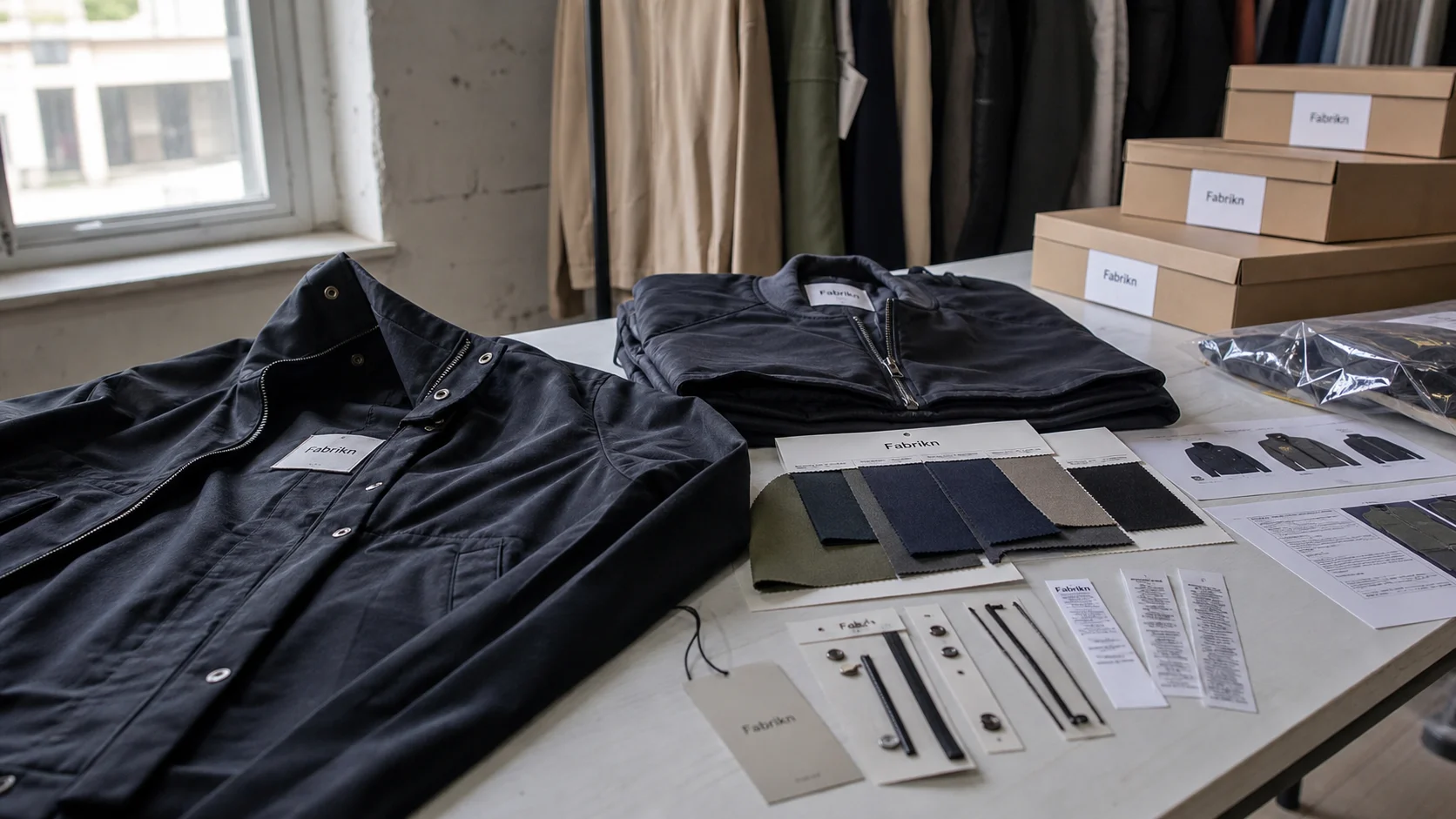
Recycled Packaging Ideas for Clothing Brands with checks for samples, fit, MOQ, QC evidence, pricing terms, and delivery risk.
Fast answer: Recycled Packaging Ideas for Clothing Brands: Material, Cost, and MOQ should be judged by production evidence, not by a generic sourcing promise. The buyer needs sample proof, cost breakdowns, QC checkpoints, and delivery buffers in writing.
Ask for recent sample photos, measurement tolerances, fabric or print test assumptions, decoration test notes, packing examples, and a named inspection checkpoint. These details show whether the team can repeat an approved sample at bulk volume.
Separate garment cost, decoration, labels, packaging, sampling, testing, freight, and rush charges. When every cost line is visible, it becomes easier to reduce colorways, adjust size depth, or reserve more time for sampling.
A stylish package can still be a trash pile with better lighting. If you are researching recycled packaging ideas for clothing brands, start with the waste problem most teams underestimate. Apparel fulfillment can send 2 to 5 pieces of packaging with a single order, and return-heavy categories can double that waste before a garment is even resold. I have watched a $28 T-shirt leave a warehouse in a 14 x 10 x 4 inch box, stuffed with 18 grams of tissue, 2 inserts, and enough void fill to protect a ceramic lamp. Normal, not rare.
The recycled packaging ideas for clothing brands conversation usually starts with branding, but the real pressure shows up in freight, storage, and labor minutes. Across factory audits in Vietnam, Portugal, and Los Angeles, the same mess kept showing up: overboxing for basics, mixed-material mailers that cannot be recycled cleanly, and tissue paper used like confetti to create a luxury feel. DTC basics often ship in 1 outer mailer plus 1 hang tag, while luxury drops can stack 3 to 6 components: rigid box, ribbon, tissue, sticker seal, dust bag, and insert card.
Recycled packaging gets introduced as a visual cue first. Brands want the kraft look, the muted ink, and the environmental signal. Then finance runs the numbers. A box that costs $0.42 instead of $0.26, or a mailer that adds 12 grams of fiber, matters when monthly volume hits 50,000 units. Warehouse teams notice it too. Extra assembly steps slow pick speed by 6 to 12 seconds per order, which is the difference between smooth throughput and overtime.
Waste piles up where people least expect it. Rarely the outer box alone. It is the combination: oversized void fill, poly tape on a paper box, laminated inserts, separate plastic garment bags, and a second branded sleeve that adds no protection at all. I once audited a premium knitwear line that used a recycled corrugated shipper, yet the inner presentation relied on four non-recyclable elements. Their packaging looked sustainable on a shelf, then failed the recycling test in five seconds.
According to ISO, packaging design should account for intended use, recoverability, and material efficiency, not just appearance. That sounds obvious. In practice, many apparel teams still optimize for the unboxing video, not the waste stream.
The strongest recycled packaging ideas for clothing brands are not glamorous. They are practical. Recycled paper mailers work well for lightweight tops, socks, swimwear, and soft knits under 500 grams. Recycled corrugated boxes are better for denim, outerwear, shoes, and bundled orders that need crush resistance across 3 to 7 transit touches. For premium apparel, a well-printed recycled box with a single insert often looks more expensive than a layered package built from three mixed materials.
Subscription boxes often rely on molded pulp inserts to keep items from shifting during cross-country shipping, while recycled tissue protects folded shirts from scuffing and static. Recycled poly mailers still have a place for brands shipping from humid regions or moving through rainy delivery networks, especially when the outer layer needs moisture resistance more than display value. A 60 to 80 percent recycled-content mailer can survive better than a paper-only format in monsoon season, particularly on last-mile routes with 2 or 3 handoffs.
For denim and heavyweight fleece, crush resistance matters more than romance. A 320 GSM French terry hoodie packed in a weak paper mailer will arrive wrinkled or torn. A recycled corrugated box with a fitted insert and minimal tissue protects the product and reduces claims. For luxury labels, a rigid-looking presentation can still be built from recycled board, but the trick is restraint: one box, one seal, one insert. That is enough.
Most people miss the part where better brands often use less material than budget brands. I saw a premium European label ship silk blouses in a single recycled paper envelope with an integrated closure, while a discount marketplace seller used a box, a poly sleeve, tissue, and a postcard stack. The premium team paid more per unit, around $0.58 versus $0.31, but they used 42 percent less material and cut storage volume by nearly half.
If your assortment spans categories, match the format to the garment. Lightweight basics need mailers and tissue. Denim needs strength. Premium apparel needs calm, not clutter. For maternity or infant lines, I would route packaging decisions alongside custom baby clothing manufacturing requirements, because tiny garments often ship in small volumes where a 2-cent packaging change scales fast across 20,000 units.
For sourcing standards and recycled content claims, it also helps to review guidance from Textile Exchange, especially when comparing fiber inputs across suppliers.
Packaging pricing shifts sharply by material, print complexity, and region. A recycled paper mailer might land around $0.18 to $0.45 each at 5,000 units, while a recycled corrugated box can run $0.26 to $0.75 depending on wall strength, board grade, and whether it ships flat. Recycled poly mailers often sit in the $0.08 to $0.22 range, but that number rises once you add custom print, thicker film, or dual adhesive strips. A molded pulp insert can be $0.12 to $0.40, and recycled tissue usually falls near $0.02 to $0.06 per sheet.
Unit price is only half the story. The total system decides whether packaging saves money or burns it. A box that saves $0.10 but increases damage rates by 1.5 percent can erase the savings fast, especially if your average return label, restock labor, and shipping loss add up to $8 to $15 per claim. A warehouse with 12,000 units in storage also feels packaging weight in cubic space. Flat-packed mailers may save 30 to 40 percent on storage versus assembled boxes, which matters when rent is charged by pallet position.
MOQs vary just as much. Small specialty vendors in Europe may offer 1,000 to 3,000 units on recycled paper mailers, but with longer lead times, often 4 to 6 weeks. Large converters in Asia can quote 10,000 to 20,000 units with 3 to 4 week production windows, yet freight exposure and sample iteration can stretch the calendar. North American suppliers often sit between those models, with MOQs around 2,500 to 5,000 units and faster reorders, especially for standard sizes. If you need custom packaging at wholesale or bulk quantities, ask for sample cartons early and verify production timelines before approving artwork.
Size changes drive cost faster than brands expect. Moving from a flat mailer to a gusseted version can raise material use by 15 to 25 percent. Full-bleed print, foil, UV coating, and windows all add expense, and some of those extras make recycling harder. I have seen brands save $4,000 on a first order by simplifying artwork, only to lose it again because the custom insert forced a second production run of 8,000 units.
When teams ask me for a starting point, I tell them to price packaging the way they price fabrics: by use case, not by category vanity. The recycled packaging ideas for clothing brands that survive budgeting season are the ones that hold up in transit, reduce storage waste, and do not force the warehouse to spend 20 extra seconds per order. That is the real math. A low unit price with high failure rates is expensive. A slightly pricier pack that cuts claims by 30 percent is usually the better buy.
Recycled packaging only looks cheap when the design is lazy. The cleanest packages I have seen use 1 or 2 ink colors, matte finishes, and disciplined typography. No excessive gloss. No layered laminates. No metallic crash print pretending to be eco-conscious. A recycled kraft mailer with sharp black type often reads more premium than a busy white box covered in gradients and spot varnish.
Single-material thinking matters here. If the box is recycled board, avoid plastic windows, laminated sleeves, and foil stickers that block recycling streams. Water-based inks, paper-based adhesive labels, and minimal tape keep the package compatible with standard recovery systems. For boxes, I prefer printed inside flaps or a simple belly band over multiple glued components. For hang tags, recycled uncoated stock at 300 to 350 GSM feels substantial without turning into waste theater.
Luxury labels can signal quality with restraint. Streetwear brands can lean into raw textures, stamped marks, and heavyweight recycled tissue. Athleisure brands can use crisp white space, one strong logo, and a box that opens fast for busy consumers. The identity changes, but the rule does not: less material, better execution. I have seen a $220 cashmere set shipped in a plain recycled box look more premium than a $65 hoodie packed in three decorative layers.
Sustainability mistakes are often visual. A package can look green and still fail the recycling system if it mixes paper, plastic, foil, and foam adhesives. That is why recycled packaging ideas for clothing brands need both design restraint and material discipline. The package should be easy to open, easy to sort, and easy to recover. If the customer needs a knife, scissors, and 4 separate bins, the design has already failed.
Asia, Europe, and North America each come with different packaging trade-offs. In China, Vietnam, and India, unit pricing can be lower because converters run larger volumes and labor is cheaper, but MOQs are often higher and sampling may take 2 to 3 rounds before color and fold accuracy are right. Europe tends to offer strong recycled fiber availability and stricter certification habits, which helps with traceability, though prices can be 10 to 25 percent higher for comparable specs. North America often gives faster communication and lower freight risk for regional brands, especially if you reorder 2 or 3 times a year.
Factory visits taught me that scale matters more than geography alone. A large converter in Guangdong can produce flawless recycled boxes at 50,000 units with tight registration and consistent board strength, while a smaller specialty supplier in Poland may excel at short-run premium finishes but struggle when demand jumps from 4,000 to 25,000 units. I have also seen excellent small mills in Mexico and the Midwest that win on speed and flexibility, even if their print capabilities are narrower. For brands comparing a manufacturer, factory, or supplier, the right choice usually depends on production scale, quality controls, and whether you need custom packaging in wholesale or bulk runs.
Feedstock availability affects quality. Higher post-consumer recycled content is easier to source in some European markets, while other regions rely more on pre-consumer scrap because it is cleaner and easier to process. Compliance norms matter too. Brands selling into multiple markets should check fiber certification, ink compliance, and packaging waste rules before approving artwork. Data from Textile Exchange shows the industry’s recycled material commitments have grown sharply, but access to verified inputs still depends on supplier networks and regional recovery systems. For packaging compliance and trade requirements, Trade.gov is also a useful reference for export and import planning.
Shipping can erase a cheap quote. A box made in Asia and flown to the U.S. for a launch drops your margin fast. A more local supplier with a slightly higher per-unit cost can be cheaper overall once freight, duties, and emergency air shipments are counted. For brands building private-label programs, the packaging choice should sit beside private label clothing services planning, because package lead time and garment lead time need to match or inventory gets stranded.
Testing should be simple and ugly, because real shipping is simple and ugly. I start with 3 checks: drop tests from 3 heights, humidity exposure for 24 to 48 hours, and a return-flow trial on 50 to 100 orders. Run the same SKU in 2 package formats, then track damage, unboxing feedback, and warehouse speed. If the recycled mailer saves 2 seconds per pick and cuts damage from 4 percent to 1 percent, you have a decision.
Track the numbers that matter: damage rate, customer complaints, pick speed, cubic storage efficiency, and the percent of returns that can be reshipped without repacking. If a box takes up 20 percent less space but adds 8 seconds to assembly, that cost belongs on the scorecard. Test by SKU tier, shipping zone, and season. Winter freight and monsoon freight are not the same as a dry spring lane.
Lab samples are polished. Transit is not. I have seen a package survive a 1-meter drop test and fail on a real route because the outer carton absorbed moisture during a 6-hour sortation delay. Field pilots expose that gap fast. A brand can launch with 500 units in one region, one size run, and one packaging format before committing to 10,000 pieces.
Start with a packaging brief, not a mood board. List the garment type, folded dimensions, target box or mailer size, board or film GSM, recycled content percentage, print colors, closure method, and expected monthly volume. Include whether the package must survive humid transit, luxury retail presentation, or direct-to-consumer shipping. Suppliers quote accurately only when they know the shipment weight, destination regions, and whether you need 1,000 units or 50,000.
Set internal targets before you shop for samples. I recommend three numbers: recycled content target, packaging weight reduction target, and maximum acceptable damage rate. Many brands start with 80 percent recycled content, 10 to 20 percent material reduction, and a damage ceiling below 2 percent. If your current packaging weighs 62 grams per unit, aim to cut it to 48 or 52 grams without increasing claims.
Then compare packaging against profit, not aesthetics. The best recycled packaging ideas for clothing brands reduce waste without making the customer feel shortchanged. That usually means choosing fewer components, simpler print, and a package size that fits the garment instead of the other way around. I have seen brands save money, space, and freight by changing one carton dimension by 15 millimeters. Small change. Big result.
Work with suppliers who can quote garment and packaging together if possible, especially for categories like bras, babywear, and multi-piece sets. That alignment keeps cartons, inserts, and hang tags from drifting out of sync with the product line. The best next step is not a big launch. It is a 100 to 300 unit pilot, a clean scorecard, and a decision based on damage data, not boardroom taste. If you need a clothing manufacturer that can support packaging coordination too, choose one that can handle quality checks, production planning, and repeat bulk orders with a sensible MOQ.
The strongest options are recycled paper mailers, recycled corrugated boxes, recycled tissue, molded pulp inserts, and recycled poly mailers for moisture-prone routes. Lightweight basics usually work in mailers, while denim and outerwear need stronger boxes. Most brands should test 2 formats before scaling.
Typical unit costs range from $0.08 to $0.22 for recycled poly mailers, $0.18 to $0.45 for recycled paper mailers, and $0.26 to $0.75 for recycled corrugated boxes. Print complexity, coatings, and size changes can raise that by 10 to 25 percent.
Lead times usually run 3 to 6 weeks, depending on region, material, and artwork approval. Standard recycled mailers can be faster, while custom printed boxes and inserts often take longer. Add 1 to 2 weeks if you need sample revisions or freight.
Yes. Premium packaging usually relies on clean typography, 1 or 2 ink colors, matte finishes, and disciplined structure rather than glossy extras. A recycled board box with precise print and a single insert often looks more premium than a layered package.
Brands source from Asia for volume, Europe for tighter certification norms, and North America for speed and smaller replenishment runs. Large converters handle 10,000-unit-plus orders well, while specialty suppliers can better support 1,000 to 5,000 unit pilots and faster redesigns.
Look for a supplier with clear quality controls, sample support, transparent MOQ terms, and proven production experience with your packaging format. Ask whether they can handle custom printing, wholesale replenishment, and bulk reorders without changing material specs.