
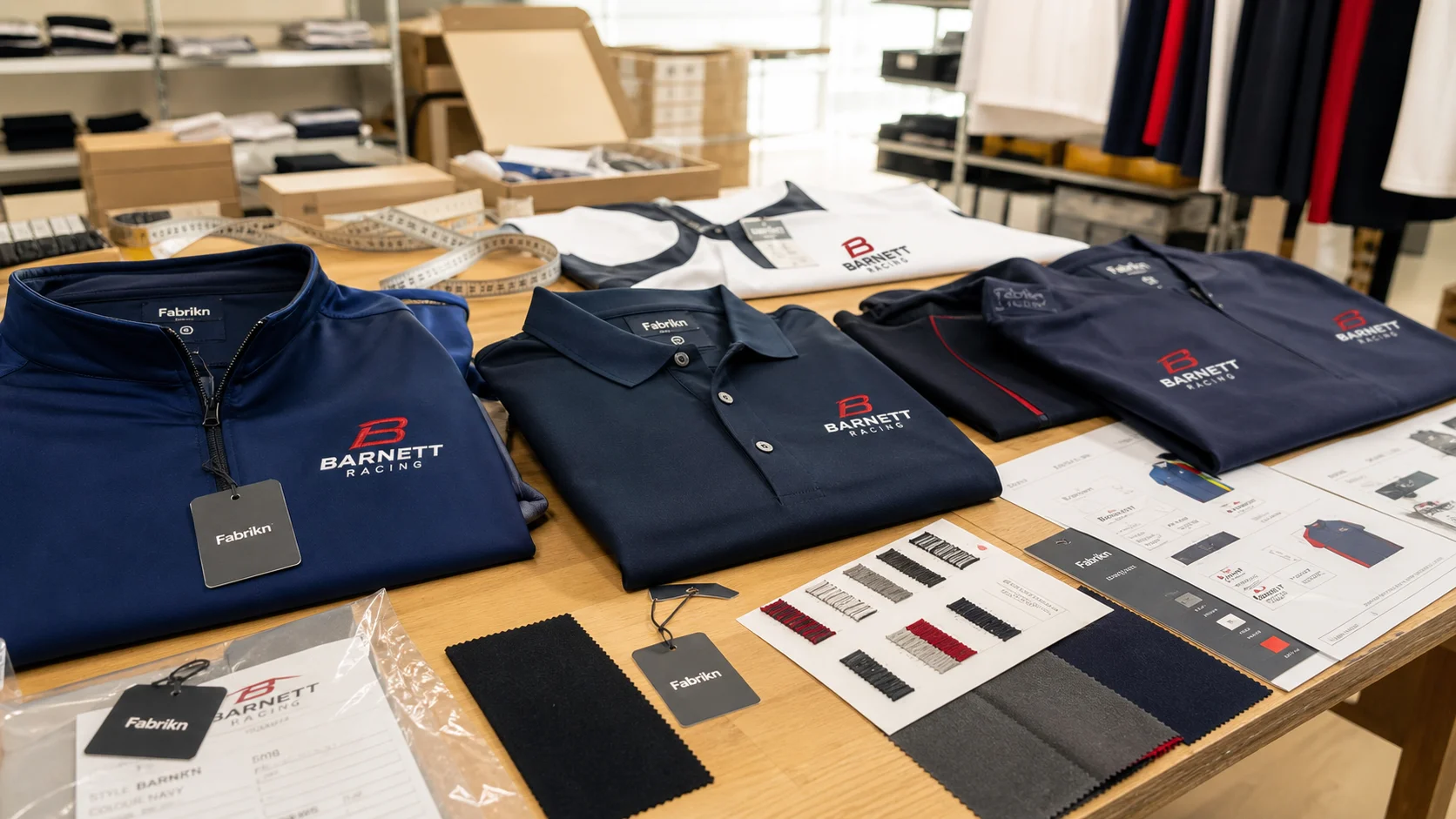
Printed Clothing Ecommerce Mailers with checks for samples, fit, MOQ, QC evidence, pricing terms, and delivery risk.
Fast answer: Printed Clothing Ecommerce Mailers: Film, Print, Seal, and Freight should be judged by production evidence, not by a generic sourcing promise. The buyer needs sample proof, cost breakdowns, QC checkpoints, and delivery buffers in writing.
Ask for recent sample photos, measurement tolerances, fabric or print test assumptions, decoration test notes, packing examples, and a named inspection checkpoint. These details show whether the team can repeat an approved sample at bulk volume.
Separate garment cost, decoration, labels, packaging, sampling, testing, freight, and rush charges. When every cost line is visible, it becomes easier to reduce colorways, adjust size depth, or reserve more time for sampling.
A parcel can change a shopper’s mind before the garment ever leaves the bag. Sounds unfair, but that’s retail: the first impression arrives before the product does. In clothing ecommerce, printed mailer bags for clothing ecommerce are the brand’s handshake, its warning label, and its promise, all in one.
I’ve stood on packing lines in China, Turkey, Vietnam, and Poland and watched the same shirt pick up a different value depending on the bag around it. A plain poly mailer makes a $22 tee look like a commodity. Printed mailer bags for clothing ecommerce, especially a matte bag with a clean tear strip and a crisp logo, can make a $68 knit set feel intentional. Couriers drag parcels, returns desks reopen them, and customers inspect the seal, the print, and the scuff resistance before they touch the fabric.
Price point shapes the packaging brief. A $12-25 basket usually cannot carry a box, so the mailer has to do the branding. At the premium end, a $100-250 order often uses packaging to justify the higher AOV and quiet the little doubts that follow a luxury purchase. I’ve seen brands spend $8,000 a month on ads and get nowhere near the repeat rate they wanted, then switch to printed mailer bags for clothing ecommerce at an extra $0.09-0.18 per unit and win more shares, fewer complaints, and better recall. No miracle. Just better execution.
The thing nobody tells you: I’ve seen low-price brands improve repeat purchase rates more by upgrading mailers than by adding more ad spend. A shift from a $0.06 plain bag to a $0.14 printed one can change perception faster than a broader media campaign.
That is why packaging sits in two ledgers at once. Cost line. Marketing asset. One side is measured in cents and freight weight. The other is measured in trust, recall, and return handling. If your parcel tears, the brand looks cheap. If the print smudges, the story weakens. If the bag survives the route and looks deliberate on the porch, the customer often notices the brand before the fabric content.
The first decision is not “plastic or paper.” It is strength, barrier, print quality, and how the bag behaves after a few handling events. Virgin LDPE remains the workhorse for apparel. It is usually spec’d at 50-80 microns, resists puncture well, and keeps light rain out. Recycled poly can run at 30-60 percent PCR content, sometimes more, but recycled resin is not automatically weaker or greener in every region. I’ve handled recycled mailers that outperformed flimsy virgin film because the supplier controlled gauge consistency instead of hiding behind vague eco language.
Paper mailers look clean on a shelf and photograph well, yet they can crease, split at the fold, and absorb moisture in humid warehouses. They work best for light tops, accessories, and controlled distribution. Compostable films are more complicated. Some are industrially compostable only under tightly controlled conditions, and many municipalities do not collect them separately. If your product ships across multiple countries, a compostable claim can become a logistics headache unless the disposal path is clear.
Print method matters just as much as substrate. Flexographic printing is usually the sweet spot for runs of 10,000 units and up, with good consistency and lower per-unit cost once plates are made. Gravure can deliver rich coverage on very large orders, often 100,000-plus, but tooling is expensive. Digital printing works for short runs, seasonal drops, and private label clothing services that need 500-3,000 bags per artwork version. For brands that update colors often, digital can save months of dead inventory.
Lower-cost suppliers often omit three details from the spec sheet: actual thickness tolerance, seal quality, and abrasion resistance. A bag listed at 60 microns may vary by 10 percent. Small gap, big problem. You see tearing at the side weld. I ask for film thickness, seal width, and drop-test data, not marketing adjectives. According to ISO standards guidance, consistent material testing and documented tolerances matter far more than supplier claims when you compare products across batches.
Finishes change perception more than brands admit. Gloss looks bright but shows scratches faster. Matte hides fingerprints and feels more premium. Soft-touch laminates can look expensive, yet they add cost and may reduce recyclability if they create a multilayer structure. For printed mailer bags for clothing ecommerce, I usually match finish to product category. A technical activewear line can handle a crisp matte. A partywear drop may need higher contrast and stronger ink density. For a children's range, such as those produced through custom baby clothing manufacturing, I prefer softer visuals and lower-odor inks because parents notice packaging smell immediately.
Sustainability claims need discipline. Recycled content is not the same as recyclability, and recyclability is not the same as real-world recovery. UK and EU systems are generally more developed for film collection than many U.S. local programs, though performance varies city by city. In parts of Asia, informal recovery can improve collection but reduce traceability. I ask suppliers for recycled input percentages, chain-of-custody documents, and regional disposal guidance. If the ink, adhesive, or laminate blocks sorting, the “eco” label becomes decoration.
At 1,000 units, printed mailer bags for clothing ecommerce can feel expensive because setup costs dominate. A basic two-color print in 60-micron LDPE might land around $0.20-0.38 per bag from Asia, $0.32-0.55 from Eastern Europe, and $0.45-0.75 from a local domestic supplier, before freight. Add a tear strip or return seal and the price can climb another $0.03-0.08. At this volume, a $90-180 plate fee matters almost as much as the film itself.
At 10,000 units, the unit cost usually drops sharply. I often see $0.11-0.22 per bag from Asia, $0.18-0.32 from Eastern Europe, and $0.28-0.48 domestically. By 50,000 units, the same bag can fall to $0.06-0.14 depending on print coverage, size, and thickness. Bigger bags use more resin, and more resin means higher freight weight. A 38 x 52 cm bag at 70 microns costs more than a 28 x 35 cm bag at 50 microns, even before you add ink coverage.
Lead time also changes the math. Asian production often needs 3-5 weeks for manufacturing plus 2-6 weeks freight depending on sea or air. Eastern Europe may deliver in 2-3 weeks with shorter inland transport to the EU. Domestic suppliers can ship in 7-15 days, but the unit price may be 20-40 percent higher. For brands with seasonal launches, that speed can save the collection.
Hidden costs show up everywhere. Artwork revisions can add $25-100 per change. Sampling may cost $50-150, sometimes more if multiple substrates are tested. Storage is easy to ignore until 50,000 bags occupy pallet space for 4-8 months. Damage rates matter too. If under-specced bags burst at 1.5 percent, your true cost rises fast because replacements, customer service, and reshipments are not in the quote.
Here’s my simple rule. Brands under $40 AOV should optimize for acceptable durability, low MOQ, and predictable freight, because packaging cannot eat margin. Premium apparel labels above $100 AOV can justify thicker film, refined print, and return-ready details if the packaging supports unboxing and complaint reduction. For private label clothing services, packaging economics should match the product margin, not the founder’s taste. If you already use private label clothing services, align the bag spec to the collection’s gross margin, not the mood board.
The biggest sizing mistake I see is brands guessing by parcel dimensions instead of garment mix. A folded T-shirt in 180-220 GSM cotton needs very different space from raw denim, which is bulky and unforgiving. Knitwear traps air. Multi-item orders stack unpredictably. I ask teams to build around actual packing scenarios: one tee, two tees, a hoodie, slim denim, and mixed sets. That usually reveals that a 30 x 40 cm bag is too small for 30 percent of orders, while a 40 x 55 cm bag wastes resin on single-item shipments.
Specify closure type clearly. Adhesive strips vary in tack strength. Tear strips should open cleanly without ripping the side seam. Return strips are useful for brands with 15-35 percent return rates, especially in women’s fashion, but they add cost and bulk. Opacity matters too. If the bag is too thin, print and contents telegraph through under light. A 60-70 micron opaque film gives better privacy and looks more deliberate.
Artwork errors are common. I’ve seen logos placed too close to the seal, barcodes printed over dark blocks, and artwork sent without bleed. Ask for 3 mm bleed minimum, Pantone references, and ink coverage limits. If you are running seasonal artwork for garments made through sublimation printing services, the packaging should not clash with the product graphic language. Consistency builds memory. Mismatched reds and weak blacks damage it.
Factory-side mistakes repeat across countries. Oversized bags rattle and look careless. Weak seals split at the courier hub. Logos fade after abrasion because nobody specified rub testing. I request a brief spec sheet with bag dimensions, micron target, tolerance, closure type, print colors, finish, and pack count. Five lines can save three revision rounds and one expensive dispute. A reliable manufacturer or factory will welcome that clarity, and a strong supplier should be able to confirm it before production.
Buyers trust measurable claims, not adjectives. “Made with recycled content” means something only if you state the percentage, the resin source, and whether the bag is mono-material or multilayer. “Recyclable” means little if local systems will not collect film. In the UK, soft plastic collection is improving through retail drop-off and local pilots. The EU varies by country. In the U.S., access can swing from decent suburban store programs to almost nothing in rural markets. That gap shapes actual recovery rates.
Certifications and documentation matter. Ask for chain-of-custody records, recycled input proof, material test reports, and any relevant standards references. According to Textile Exchange guidance on material transparency, transparency around material origin is essential when brands make fiber-related environmental claims. Packaging is not fabric, but the same discipline applies: document the source, the composition, and the end-of-life path.
The factory detail that many marketers miss is simple. Some “eco” mailers fail because the adhesive, ink, or multilayer structure blocks recycling even when the base film contains PCR. I have seen bags with tidy green icons that were impossible to sort cleanly in mixed waste streams. Honest language works better: recycled content, reduced thickness, lower transport weight, or mono-material construction. Each claim can be tested. Each can be defended.
For brands using sublimation printing services or complex graphics across product lines, keep the packaging story aligned with what you can prove. Regulators are becoming less tolerant of vague green messaging, and consumers notice when a claim sounds too polished to be real.
Start with the spec, not the quote. Define bag size, material, thickness, closure, finish, print colors, and target order volume before you ask suppliers for prices. If you lead with price, you will compare three different products and think they are the same. I have watched brands lose weeks because one supplier quoted 50 microns, another 60, and a third quietly switched to a thinner recycled blend. The unit price looked better. The damage rate did not.
Next, shortlist suppliers by MOQ, print lead time, tooling fees, export experience, and evidence of apparel work. Ask three questions that expose capability fast: Can you hold a tolerance of ±2 mm on size? What is your standard seal strength? How many artwork changes are included before extra charges apply? I also want to know whether they have shipped to your destination market before, because customs, labeling, and palletization can add 1-2 weeks if the team is inexperienced. If you are comparing a China-based factory with a regional supplier, ask the same questions so quality is measured on equal terms.
Then sample. Compare at least three samples side by side under warehouse light and daylight. Check print alignment, color match, and whether the bag feels flimsy after 20 seconds of rubbing with a denim seam. Test water resistance with a 30-second splash and a 10-minute damp hold. Run a basic drop test from 1 meter with a folded garment inside. If the seal pops open once, it will pop open again.
After that, place a pilot order. I prefer 1,000-3,000 units for one product line or one market first, then review damage rate, customer feedback, and pick-pack speed over 4-6 weeks. That phased rollout is especially helpful for brands moving from plain poly to printed mailer bags for clothing ecommerce, because it isolates variables. If the new bag slows the pack line by 12 seconds per order, you will know before you buy 50,000 units.
If your line includes premium outerwear or made-to-order pieces, such as those handled through cut and sew manufacturing, use a bag spec that respects the garment’s shape and return risk. For team alignment, I give marketing, logistics, and sourcing one checklist: the bag must fit the product, survive transit, support returns, and fit the target margin. If any one of those fails, revise the spec before launch. A capable supplier or wholesale partner should be able to quote bulk production options that meet your MOQ without forcing you into wasteful overbuying.
Apparel returns can run 20-40 percent in some categories, which makes packaging part of reverse logistics, not just front-end branding. A simple single-use bag is cheap, but a return-ready format with a second adhesive strip or tear-and-reseal panel can reduce re-bagging friction and improve customer convenience. That convenience is not trivial. Every extra step in returns creates delay, and delay creates support tickets.
I’ve seen mid-tier brands offset a packaging upgrade with a small retention lift. If a $0.10 higher packaging spend helps hold just 1-2 percent more repeat buyers, the margin math can work quickly for brands with AOVs in the $60-120 range. Social sharing is harder to quantify, but a cleaner unboxing and tidy return experience can nudge referral behavior without any grand claims. The effect is cumulative, not dramatic.
For printed mailer bags for clothing ecommerce, the real test is whether the bag earns its keep twice. First on arrival. Then on the return trip. A package that tears, leaks, or looks sloppy on the desk costs more than the unit price suggests. The brands that win usually buy a bag that protects the garment, signals value, and does not create operational drag. That is the standard I use in every factory visit.
At 1,000 units, expect roughly $0.20-0.38 per bag from Asia, $0.32-0.55 from Eastern Europe, and $0.45-0.75 domestically, before freight. At 10,000 units, the range often drops to $0.11-0.22, depending on thickness, print colors, and extras like tear strips.
For most apparel brands, LDPE or recycled poly is the safest choice because it balances puncture resistance, moisture protection, and print quality. Paper mailers work for light items, but they struggle in humid conditions and can split more easily with denim or bulky knitwear.
Production usually takes 3-5 weeks in Asia, 2-3 weeks in Eastern Europe, and 7-15 days from domestic suppliers, assuming artwork is approved quickly. Add 2-6 weeks for sea freight if you are importing at scale.
Some can, but recyclability depends on the material structure and local collection systems. Mono-material poly bags have the best chance of recovery in film collection programs, while multilayer or heavily laminated bags may not be accepted in many regions.
Ask about MOQ, tooling fees, print lead time, thickness tolerance, seal strength, and export experience. Request samples, test abrasion and drop performance, and confirm whether the quoted bag matches the one shown in the spec sheet.