
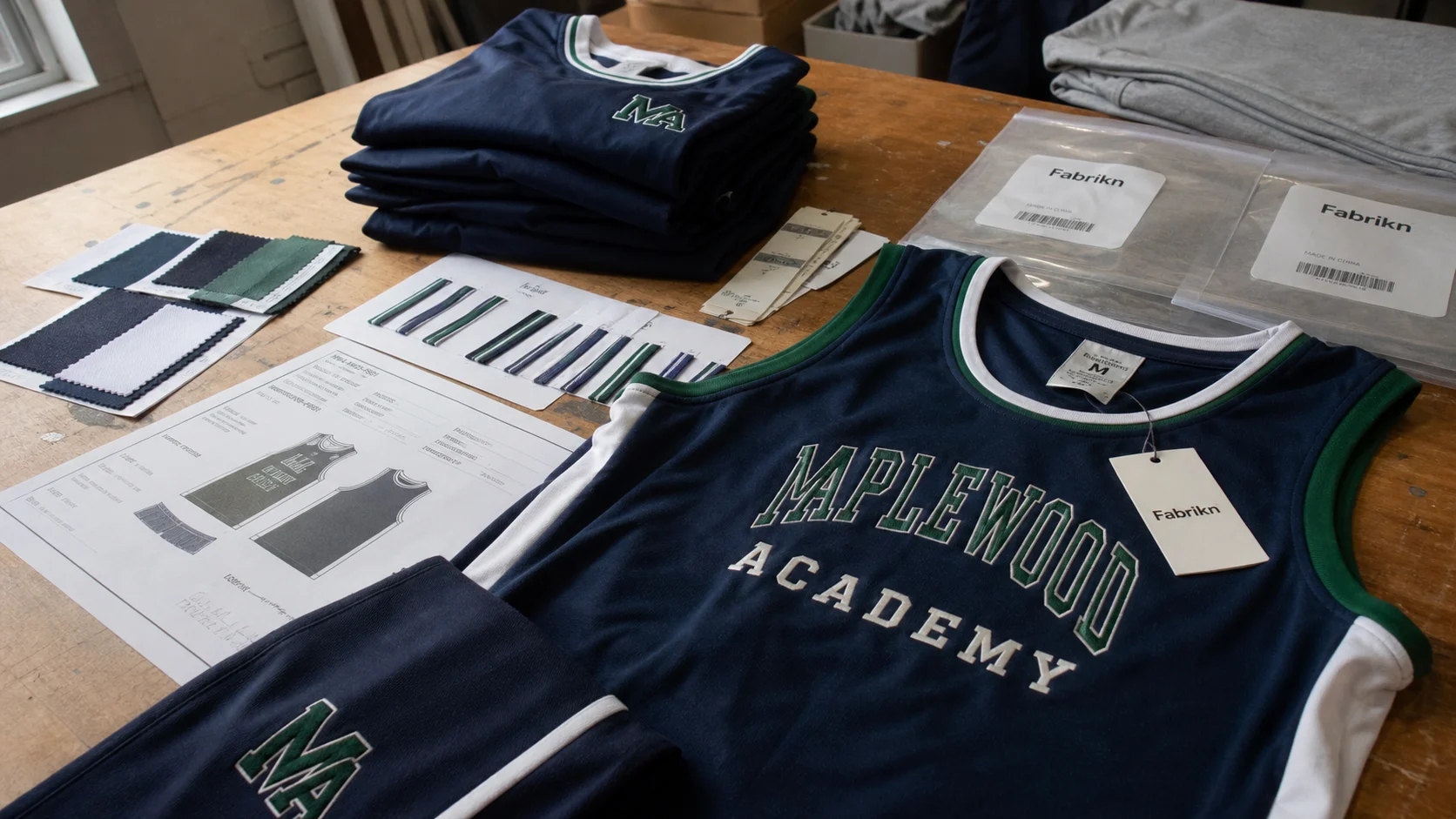
How school teams and athletic departments can spec, brand, and order private label jerseys built for roster changes, durability, and fast season turnarounds.
Private Label Jerseys for School Athletics Orders - Clothing Manufacturer manufacturing guide
Private label jerseys for school athletics orders sit at the intersection of branding, durability, and scheduling discipline. Schools do not buy jerseys the same way a fan shop does. They need dependable repeatability, clear size coverage, consistent decoration, and a factory process that can handle roster changes without turning every order into a new project.
For buyers comparing a private label jerseys factory for school athletics orders, the real question is not only whether the garment looks good on a spec sheet. The better question is whether the factory can deliver the same fabric handfeel, the same color standard, and the same decoration quality across multiple seasons, teams, and reorder cycles. That is where private label manufacturing earns its value.
Organizations that want to understand factory capability can start by reviewing the supplier’s services page, checking the company background on the about-us page, and using the contact-us page early in the sourcing process to confirm sampling, timelines, and minimums before any artwork is finalized.
Private label jerseys are produced by a factory that manufactures the garment under the school’s brand, mascot, colors, or athletic program identity. In practical terms, the factory may supply a blank or semi-custom base style, then apply school-specific details such as woven labels, heat-transfer logos, player names, numbers, sleeve marks, or branded neck prints. The school or purchasing group presents the final item as its own program asset, even when the manufacturing is outsourced.
This model works well for athletics because many programs need a controlled appearance across multiple sports or age groups. A basketball jersey, practice top, warm-up layer, or spirit piece can all be built from the same brand standards. A private label approach also gives buyers more control over consistency when they reorder next season or expand from varsity to junior varsity and freshman teams.
The tradeoff is that private label usually requires more preparation than buying stock garments. Artwork files need to be clean. Color references need to be defined. Trim selection needs approval. If the school wants a polished result, the front-end work matters.
School athletics orders are not just about fitting athletes. They must account for equipment use, frequent washing, budget constraints, team identity, and schedule pressure. A jersey that looks acceptable in a showroom can fail in a school setting if it pills too quickly, loses shape after repeated laundering, or breaks down where numbers are heat-applied.
School purchasing often follows annual budgets, booster club fundraising, or district approval cycles. That creates a narrower decision window than most retail programs. Buyers usually want a realistic unit cost, stable repeat pricing, and low waste in size curves. A factory that quotes a low initial price but builds in surprise artwork charges or large overage requirements may be a poor fit.
School programs need inclusive sizing. Youth and adult runs may overlap, and some programs need extended sizes. Private label factories should be able to handle a full grade-to-team progression without forcing the buyer into a separate product family for each subgroup. That is one reason a clear size spec sheet is essential before production begins.
Unlike generic apparel projects, school orders are tied to seasons, registration dates, first games, tournaments, or spirit days. A shipment that arrives late can be nearly useless. Buyers should build in time for artwork approval, sample review, production, in-house inspection, and freight delays. A factory that promises a very short timeline without asking for artwork readiness is usually underestimating risk.
Fabric selection drives how a jersey performs, how long it lasts, and how expensive it becomes. For school athletics, the usual priority is durability first, appearance second, and advanced performance features only when the budget allows.
Polyester mesh: A practical standard for team jerseys because it breathes well, accepts decoration reasonably, and holds shape.
Poly interlock: Smoother and often more polished than mesh, with a cleaner surface for print and a more substantial feel.
Birdseye or performance knit: Useful for practice tops and lower-cost athletic pieces where moisture management matters.
Recycled polyester blends: Worth considering when the school has sustainability goals, though buyers should confirm handfeel, color consistency, and wash performance.
Typical jersey weights can vary widely, but many school athletic programs end up in the midweight polyester range because very light fabrics may feel cheap and very heavy fabrics may trap heat. A factory should provide GSM or oz/yd specs, not vague language like “premium quality.”
Seams: Flatlock or reinforced seams can improve comfort and reduce irritation during play.
Neckline: Rib-knit, self-fabric, or taped neck construction all affect appearance and durability.
Armholes: Cut and finish must suit the sport and age group; too wide can look sloppy, too tight can restrict movement.
Hem treatment: Double-needle hems usually hold up better than basic finishes in repeated laundering.
Decoration method should match the fabric. Sublimation offers strong color flexibility and can be efficient for complex graphics, while screen print, heat transfer, tackle twill, or embroidery may suit different branding goals. The cheapest method is not always the best choice. A durable school jersey needs decoration that survives the wash cycle the school actually uses, not the ideal one printed on the brochure.
Private label is strongest when it goes beyond a logo on the chest. The school identity should appear in a coordinated way across the jersey, tag, packaging, and repeat order system. That does not mean overdesigning the garment. It means making each custom element serve a purpose.
Woven neck label: Helps present a branded garment and can support size or care information.
Printed neck label: Often lower cost and useful for athletic comfort when the school wants a tagless feel.
Heat-transfer logo: Good for small orders or multiple personalization points if the factory controls application quality.
Sublimated artwork: Useful for bold graphics, gradients, and full-panel designs.
Player name and number: Essential for most team sports, and one of the easiest ways to create production errors if the data is not checked carefully.
Packaging can also support the private label program. Polybag inserts, size stickers, barcode labels, or team-sorted bundles can save time for athletic directors and boosters. A factory should confirm whether those services are included or billed separately. Small extras can become expensive if they are added late.
School colors are emotionally important. A navy that leans teal or a red that prints too orange can create immediate dissatisfaction. Buyers should request Pantone references, lab dips, strike-offs, or digital print proofs where appropriate. Color approval should be treated as a formal step, not an informal glance in a chat thread.
For school orders, the cheapest mistake is often a color miss or trim mismatch. That error is visible in every photo, every assembly, and every game-day lineup. Spending a little more time on samples is usually cheaper than replacing a full run.
A reliable private label jerseys factory for school athletics orders should make the process predictable. The best suppliers are not the ones that move fastest on day one. They are the ones that reduce surprises after the purchase order is issued.
Inquiry and spec review: The buyer shares garment type, sport, target age group, quantity, branding needs, and delivery window.
Quote and feasibility check: The factory confirms materials, decoration methods, MOQ, lead time, and any special trims or packaging.
Artwork and tech pack: Logos, number layouts, sizing, placement, and color standards are finalized.
Sample or prototype: A size set, pre-production sample, or strike-off is reviewed and approved.
Bulk production: Cutting, sewing, decoration, finishing, and packing move forward under the approved sample standard.
Inspection and shipment: The order is checked for measurements, stitching, decoration accuracy, and packing quality before dispatch.
Sample approval is where many school orders either stay on track or drift. Buyers should not approve a sample based only on appearance. A practical review should include measurements, print alignment, seam quality, wash instructions, and size consistency. When possible, the school should compare the sample against a known reference garment or an approved size spec.
Lead times depend on fabric availability, decoration complexity, artwork changes, and the factory’s current production queue. A simple jersey in stock fabric may move quickly. A fully customized private label run with special trims, custom dyeing, or unique packaging may require much more time. The buyer should ask for a timeline that separates sample development from bulk production. That makes delays easier to diagnose.
Minimum order quantity is one of the first practical issues in school sourcing. Many factories set MOQs based on fabric type, print method, or label customization. A school district or booster program may be able to manage a moderate MOQ, while a smaller team may need a supplier that tolerates lower volume or offers style consolidation across multiple teams.
Typical MOQ ranges vary by supplier and complexity, but school athletics buyers often encounter these broad patterns:
Order Type Common MOQ Range Typical Use Case Watch-Out Basic stock-style jersey with private label trim 50-100 pieces Small team or pilot order Limited color or trim customization Custom jersey with printed graphics 100-300 pieces Varsity, JV, or school-wide programs Artwork and size data must be locked early Fully sublimated private label jersey 100-500 pieces Multi-team or athletic department programs Sample approval is critical because rework is costly Complex branded program with packaging and multiple SKUs 300+ pieces District or reseller programs More coordination and higher inventory riskPrice is usually driven by fabric weight, decoration method, number of colors, trim complexity, label type, packaging, and order size. Smaller runs typically pay more per unit. A school that wants a premium look with woven labels, custom numbering, and special hangtags should expect a different cost structure than a team buying a basic practice jersey.
Freight also matters. Air shipment may protect a deadline but compress margins. Sea freight may lower transport cost but requires longer planning and greater tolerance for schedule variance. A buyer focused on school deadlines should consider total landed cost, not only factory price.
School athletics orders can look straightforward, yet several defects show up again and again. Most of them are preventable when the factory and buyer take the spec sheet seriously.
Size drift: Jerseys may vary too much between samples and bulk production, especially across mixed size runs.
Decoration misplacement: Logos, numbers, or names can sit too high, too low, or off-center.
Color inconsistency: Panels, trim, and print shades may fail to match approved references.
Stitching defects: Loose threads, skipped stitches, and weak seam points can show up after laundering.
Label errors: Incorrect size labels or care labels create sorting problems for schools and distributors.
Inspection should not be treated as an optional extra. For school programs, a simple AQL-based inspection, a measurement check, and a decoration review can catch most expensive failures before shipment. If the factory cannot describe its inspection process clearly, that is a warning sign.
Another common issue is approval drift. A buyer may approve a sample, then change logo placement, neckline, or color during bulk production. Every revision creates a new risk. Schools should keep a written approval trail and make sure the final production file matches the signed-off sample.
A strong factory is not defined only by equipment. It is defined by process discipline, clarity, and the ability to handle school priorities without confusion. Buyers should look for a supplier that can explain how it manages design files, sample changes, size grading, production tolerances, and shipping coordination.
Clear product specification support: The supplier should help define fabric, trim, and sizing details instead of forcing the buyer to guess.
Transparent sampling terms: Sample fees, remake rules, and approval steps should be stated in advance.
Consistent communication: School buyers need status updates that are direct and easy to act on.
Capacity for repeat orders: Reorders should match previous production more closely than a brand-new style development would.
Documentation discipline: Tech packs, approved artwork, and size charts should be stored cleanly for future seasons.
It is worth asking how the factory handles substitutions. Some suppliers may swap fabrics or trims when inventory becomes tight. That can be acceptable only if substitutions are disclosed and approved. A private label school program is built on consistency. Silent substitutions create unnecessary risk.
Buyers can also compare supplier communication against the structure shown on a company’s service pages. A supplier that presents clear categories, realistic lead times, and straightforward contact paths is often easier to work with than one that relies on vague promises. In practical terms, the pages at /services/, /about-us/, and /contact-us/ should help a sourcing team judge whether the company is prepared for a structured order.
A simple checklist reduces the chance of delays and rework. Before issuing a purchase order, the buyer should confirm the following:
Garment type is defined by sport, age group, and intended use.
Fabric type, fabric weight, and handfeel reference are approved.
Decoration method matches the budget and wear expectations.
Logo files, number formats, and spelling are verified.
Size range and grade rules are documented.
Sample approval steps and remake policy are understood.
MOQ and overage allowance are clear.
Lead time includes sampling, production, and freight.
Inspection requirements are set before shipment.
Repeat order records will be saved for next season.
The most useful habit is also the least glamorous: keep the same spec language from inquiry to approval. A school that changes terminology halfway through a project can create problems for itself even when the factory is competent. Stability in the paperwork tends to produce stability in the garment.
Private label jerseys make the most sense when the school wants more than a generic team top. They are a strong option when branding matters, repeat orders are likely, or multiple athletic groups need a unified look. The model also works well when the buyer needs tighter control over quality than a retail-style stock item can provide.
A standard off-the-shelf jersey may be enough for a one-off event or a very small team. A private label factory becomes more valuable when the school wants program consistency, better margin control, or a uniform appearance across seasons. The right choice depends on how much customization is truly needed. Over-customizing a small order can raise cost without improving on-court or on-field value.
For many school athletics programs, the best approach is balanced: use a proven base construction, keep decoration disciplined, and invest only in the custom details that students, coaches, and administrators will actually notice. That tends to deliver the strongest combination of cost control and brand quality.
Get a free quote from Fabrikn — your trusted B2B clothing manufacturer with 10+ years of experience. MOQ as low as 200 pieces.
Get a Free Quote →A private label jersey is a custom-made athletic jersey produced by a factory under the school’s branding. It may include school colors, logos, woven or printed labels, player numbers, and other program-specific details.
Many factories work in broad ranges from about 50 to 300 pieces, depending on the jersey style, decoration method, and customization level. Fully custom programs can require higher quantities.
Lead time depends on sample approval, fabric availability, artwork complexity, and order volume. Simple projects may move faster, while fully customized orders usually need more time for sampling and production.
Polyester mesh and poly interlock are common choices because they are durable, relatively easy to decorate, and suitable for repeated wear and washing. The best option depends on the sport, budget, and performance target.
The buyer should approve the sample, size spec, artwork placement, color references, decoration method, and label details before the factory starts bulk production.
The main risks are size inconsistency, decoration errors, color mismatch, weak stitching, and missed deadlines. Clear specs, formal sample approval, and inspection help reduce those risks.
Some factories can. The important point is whether they understand athletic movement, wash durability, size grading, and team-specific decoration standards. Capability should be confirmed with samples and production references, not assumed from the product category alone.
Private label jerseys for school athletics orders work best when the factory, buyer, and design files are all disciplined from the start. A good supplier should make the process predictable, not complicated. A good buyer should focus on the details that affect fit, wear, and repeatability, then keep the order language stable through approval and production.