
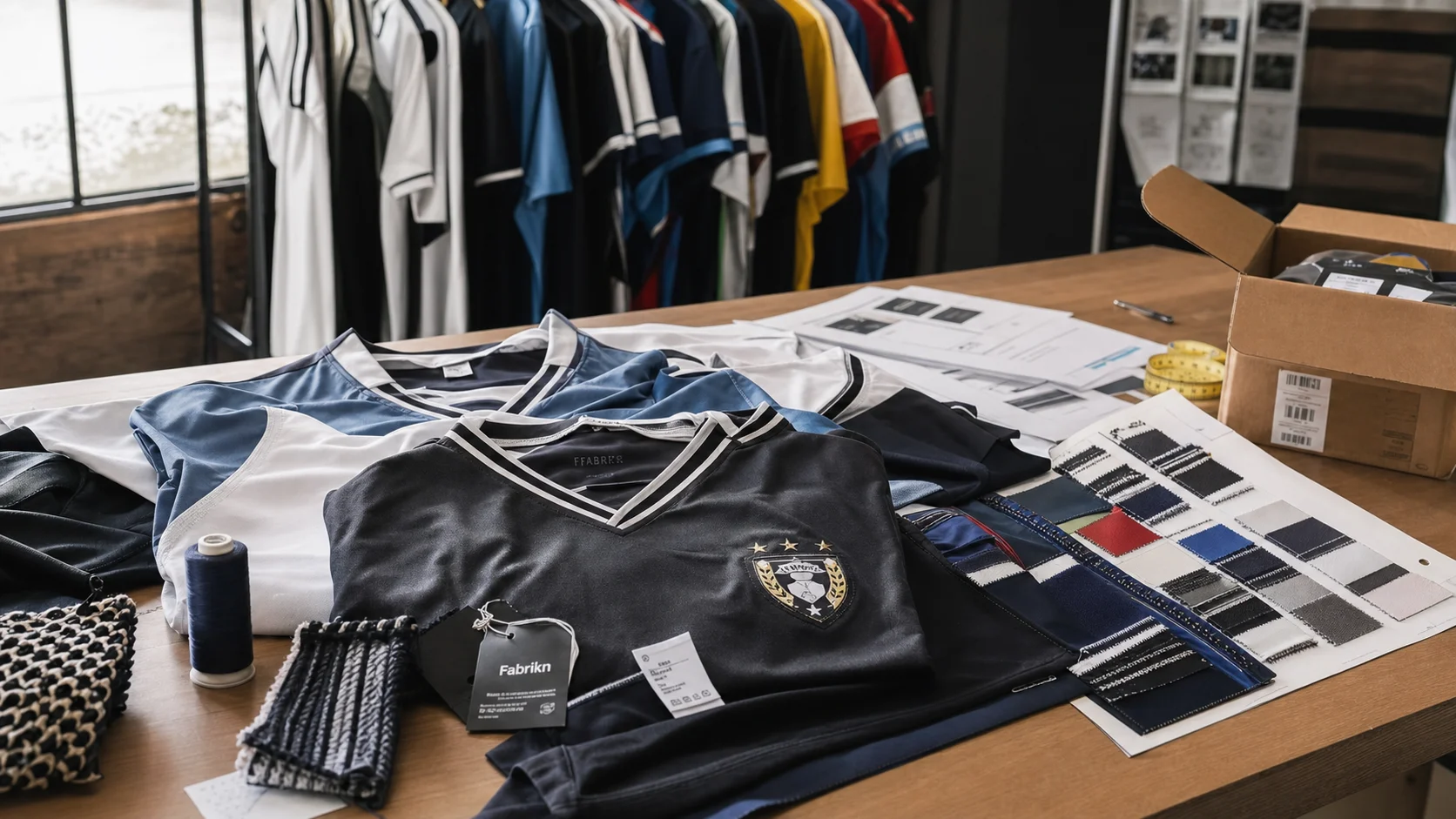
Recycled Cardboard Apparel Boxes with checks for samples, fit, MOQ, QC evidence, pricing terms, and delivery risk.
Fast answer: Recycled Cardboard Apparel Boxes: Board Claims, Print, and Shipping should be judged by production evidence, not by a generic sourcing promise. The buyer needs sample proof, cost breakdowns, QC checkpoints, and delivery buffers in writing.
Ask for recent sample photos, measurement tolerances, fabric or print test assumptions, decoration test notes, packing examples, and a named inspection checkpoint. These details show whether the team can repeat an approved sample at bulk volume.
Separate garment cost, decoration, labels, packaging, sampling, testing, freight, and rush charges. When every cost line is visible, it becomes easier to reduce colorways, adjust size depth, or reserve more time for sampling.
The first sign of packaging trouble is rarely dramatic. It is a crushed corner, a split seam, or a carton that technically closes but no longer protects the folded shirt, tissue-wrapped blazer, or polybagged knit set inside. In cross-border apparel fulfillment, 2% to 5% of cartons arrive damaged, and that small number can snowball into chargebacks, returns, and ugly reviews. Recycled cardboard boxes for apparel shipments are not a virtue signal. They are a control point.
Factories in Vietnam, Turkey, and Mexico kept showing me the same mistake. Brands obsess over the garment, then treat the shipping carton like an afterthought. The box gets oversized, under-specified, and loaded with too much void fill. A 12-piece order shipped in a carton built for 20 pieces will rattle around on a 3,000 km lane. By the time it lands, folds are soft, hangtags are bent, and the customer notices before the warehouse does.
Premium garments often get packed in low-grade corrugate because purchasing teams focus on unit price, not landed cost. A carton that saves $0.08 can trigger a $9.50 reshipment, a $14 return label, or a refund that wipes out the margin on the whole order. I have seen brands with 65% gross margin on product lose 6 to 8 points because packaging failed on only a small share of shipments. The box was cheap. The failure was not.
Protection, print quality, cost, and speed all need to work together. That is why I start with recycled cardboard boxes for apparel shipments before I talk about branding or sustainability claims. The carton has to survive the warehouse, the line haul, the last-mile sort, and the unboxing table. If it cannot do that, the rest is just pretty paper.
Recycled cardboard boxes for apparel shipments are made from recovered fiber, usually a mix of post-consumer material and post-industrial scrap. Post-consumer fiber comes from used packaging collected after a box has already served its first life. Post-industrial fiber comes from factory trimmings and offcuts. A typical apparel shipper might use 60% to 100% recycled content, depending on the board grade and the supplier’s mill source. The box is still corrugated; the liner and fluting just come from a different feedstock.
Strength gets measured through specs such as ECT, or edge crush test, and burst strength, sometimes called Mullen. A 32 ECT single-wall carton can be perfectly fine for a 2 kg tee pack or a 3-piece basics set. A 44 ECT or double-wall box starts to make sense for heavier denim orders, shoe bundles, or multi-item kits that hit 6 kg to 10 kg. I have seen recycled board outperform weaker virgin board because the spec was tighter and the flute profile matched the load better. More recycled content does not automatically mean less performance.
Printability changes with fiber quality, coating, and surface smoothness. High recycled content can still hold crisp one-color logos, QR labels, and size markings, though it may show more fiber speckling than virgin kraft. For a brand shipping 500 to 2,000 units a week, that is usually a fine trade if the carton stays consistent. For rigid premium mailers or subscription kits, you may need better caliper control and tighter folding tolerances.
Not every apparel shipment needs the same box. Lightweight tees and loungewear often ship well in single-wall recycled cartons. Denim, outerwear, and footwear may need extra rigidity. If the route is humid, includes 20 to 30 days on water, or passes through monsoon-season ports, ask for moisture resistance or higher wet strength. I have seen perfectly good cartons sag after 72 hours in a 75% humidity warehouse. The garment inside was fine. The carton was not.
Price varies sharply by volume and spec. A plain recycled shipping carton might cost $0.32 to $0.55 per unit at 5,000 pieces, while a branded one-color box can land around $0.48 to $0.85. Premium printed cartons with die-cuts, better board, or special finishes often run $0.90 to $1.80, and smaller runs can push beyond $2.00 if the quantity drops below 1,000. At 20,000 pieces, those numbers can fall by 15% to 25%. The carton that looks expensive at first can become cheap once you factor in breakage and labor.
Compared with virgin-fiber cartons, recycled boxes are usually competitive on price and often easier to source in standard apparel sizes. Virgin board can edge ahead on brightness and print clarity, but it is not automatically stronger or faster to buy. In my factory visits, the biggest difference was not the raw material. It was scheduling. A domestic corrugator in the US or EU may turn samples in 3 to 7 days and production in 10 to 15 days. Offshore sourcing often means 2 to 4 weeks for production, then 20 to 35 days in transit, plus customs and domestic drayage. That is before you add a 7-day buffer for artwork corrections.
Hidden costs are where many buyers get caught. Minimum order quantities can sit at 500, 1,000, 3,000, or 5,000 pieces, which matters if you are testing a seasonal drop. Storage also matters. A carton that saves $0.10 but requires 90 days of warehousing can erase its own savings through cube and handling fees. Freight from Asia can add $0.12 to $0.40 per box, depending on route and carton size. Duty, if applicable, can add another 2% to 6% on landed value.
Last year I worked with a brand that chose the cheapest box at $0.41 for a spring capsule. The cartons held for domestic orders, then failed on export because they were packed too loosely for a 5 kg mixed-SKU order. Damage was only 3.8%, but the brand spent $7,800 on replacements and expedited freight for 4,600 units. If they had paid $0.14 more per carton, they would have saved money within the first month. To request a sample spec and pricing benchmark, get a free quote and compare at least two board grades before you buy.
For teams building a private label line or testing new SKUs, I often pair carton sourcing with garment development. A box spec should reflect the product, not sit beside it in a separate spreadsheet. If your team needs help matching packaging to product category, private label clothing services are easier to align with packaging decisions than a last-minute procurement scramble.
The tests that matter are straightforward: ECT, Mullen, compression, and drop testing. ECT tells you how much stacking force the board can handle. Mullen shows puncture resistance. Compression testing matters when cartons sit 6 to 8 high in a warehouse or on a pallet. Drop tests reveal what happens when a parcel hits a conveyor edge, a dock plate, or a concrete floor. According to the ASTM testing framework, shipment packaging should be evaluated in conditions that mirror real handling, not ideal lab handling.
On short domestic routes, a well-designed single-wall recycled carton can perform beautifully. In my experience, 32 ECT with proper right-sizing is enough for many folded apparel orders under 4 kg. Long-haul export lanes are a different story. A carton that survives in a dry Midwest warehouse can soften on a humid route from South Asia to Northern Europe, especially if the shipment sits on the tarmac or in a port shed for 24 to 48 hours. Moisture is the quiet killer. It does not announce itself until the box buckles.
I have seen failure points repeat across factories and fulfillment centers: overfilled cartons that bulge at the seams, underfilled cartons that collapse at the corners, and die-cuts that are off by 2 to 3 mm, which sounds tiny until the lid no longer locks properly. The box design matters as much as the board grade. A neat fold, a tight closure, and a carton matched to the product size can prevent wrinkled shirts, bent hangtags, and smashed inserts better than a thicker but sloppy box.
Right-sizing is the easiest win. A carton with 15% to 20% empty space wastes paperboard and encourages movement. Reduce void fill, keep fold lines snug, and use dividers only when the order mix needs them. For apparel shipments that include pins, cards, belts, or perfume samples, the internal layout should protect the garment first and the extras second. I have watched brands spend $0.20 on decorative filler and ignore a $0.05 carton insert that would have done a better job. For broader packaging guidance on recyclable materials and retail fulfillment, see U.S. market entry and trade guidance and Textile Exchange sustainability standards.
Recycled board does not mean dull branding. It can carry sharp logos, tone-on-tone graphics, embossing, and structured closures that feel more considered than loud print ever could. Water-based inks perform well on kraft surfaces, and low-coverage graphics keep costs contained while preserving recyclability. In one audit, a minimalist 2-color carton cost 18% less than a full-wrap print version, yet customers rated it higher in post-purchase surveys because it felt organized, not overworked.
Full-print cartons sit at the higher end of the range, often adding $0.12 to $0.40 per box depending on coverage, die-cut complexity, and quantity. Minimalist kraft boxes are cheaper and usually faster to approve. Premium cartons can still make sense for limited releases, gift sets, or a $150+ average order value, but they should not be the default. Brands often confuse visual drama with quality. The reality is plainer.
The thing nobody tells you: many customers read “simple and sturdy” as higher quality than glossy overdesigned cartons. I have watched a $28 basics brand outperform a $180 fashion label on unboxing sentiment because the box opened cleanly, stayed flat, and did not shed excess material.
If you want the packaging to feel premium without overpacking, use structure instead of excess. A good tuck flap, a precise lid fit, and a clean label placement can do more than foil stamping on a flimsy carton. Sustainable finishing choices matter here too. Recyclable adhesives, low-coverage graphics, and restrained ink use support both the recycling stream and the brand story. For teams reviewing assortments, I often suggest you browse our product catalog and compare carton formats against actual garment categories, not mood boards.
Supplier selection is where paper claims meet factory reality. I ask for recycled content declarations, fiber source details, ECT or burst strength reports, and the supplier’s defect tolerance before I ask for a price. Certifications help, but they are not enough on their own. Look for chain-of-custody proof where relevant, clear recyclability statements, and documented QC steps for die-cut accuracy, glue lines, and print registration. According to WRAP, packaging design should support reuse or recycling without creating unnecessary contamination or complexity.
Sample testing should happen before any seasonal launch, not after the purchase order lands. I have seen buyers approve a box from one sample and then receive a production batch with flimsier fluting or a different liner color because the supplier swapped board grades to save pennies. Ask for a retained sample, then test three things: fit, stacking strength, and appearance after 24 hours in 65% to 75% humidity. If the box dents in the sample room, it will not improve in a warehouse.
During a factory visit, I inspect the die-cut edges, the glue squeeze-out, the corner squareness, and the stacking test results. If the supplier cannot show you a compression test or explain why the board was chosen for a 3 kg versus 8 kg use case, keep looking. Bad suppliers often quote low on day one and trim the print finish or substitute a weaker board later. The quote is not the contract. The spec sheet is.
For teams moving apparel production and packaging together, the two decisions work best when they move on the same timeline. If you are coordinating with a cut and sew partner, cut and sew manufacturing and carton sourcing should be reviewed in the same approval cycle, not months apart. When you evaluate a manufacturer, factory, supplier, production workflow, quality standards, MOQ, custom options, wholesale pricing, bulk capacity, and China-based sourcing, ask how each step affects the final carton spec.
If you are comparing manufacturers in China or elsewhere, request a sample from each candidate and score the results side by side. The best supplier is not always the cheapest; it is the one that can hold quality at scale, meet your MOQ, and repeat the same carton spec in production without surprises. That consistency matters more than a one-time savings of a few cents.
A clean rollout takes 30, 60, and 90 days. In the first 30 days, define the carton spec, request samples, and test fit against your top 10 SKUs by volume. In days 31 to 60, approve the supplier, run a pilot by region or by one product line, and measure damage, cube utilization, and pick-pack labor. By days 61 to 90, move to full launch only if the carton passes three numbers: damage rate below 1.5%, cost within budget by 5%, and no increase in returns tied to packaging.
The metrics should be boring and precise. Track carton cost per unit, freight per carton, storage days, and customer return reasons. If a carton improves cube utilization by 8% but slows packing by 10 seconds per order, that may still be a net win or a quiet loss, depending on your labor rate. I use a simple decision matrix with four owners at the table: packaging, logistics, finance, and brand. If any of the four cannot sign off, the launch is not ready.
Start with one SKU family or one region. That keeps the data clean. A pilot of 1,000 to 3,000 units usually shows enough to learn without risking a full season. Then compare your pilot against the old box on return rate, customer comments, and warehouse complaints. If the recycled carton performs, scale it. If it fails, fix the spec, not the story.
Move from theory to procurement with disciplined testing, not sentiment. Recycled cardboard boxes for apparel shipments work best when the carton spec, garment profile, and route are matched on purpose. When the numbers hold, the packaging becomes quiet, and that is exactly what good logistics should do.
They are made from corrugated fiberboard that uses post-consumer and post-industrial recycled fiber. Common recycled content ranges from 60% to 100%, depending on the board grade and supplier. Strength still depends on ECT, flute type, and liner quality.
At 5,000 units, plain cartons often cost $0.32 to $0.55 each, while branded versions can run $0.48 to $0.85. Premium printed cartons may reach $0.90 to $1.80 per unit. Freight, duty, and storage can add another $0.12 to $0.40 or more.
Domestic production can take 10 to 15 days after sample approval, with samples ready in 3 to 7 days. Offshore sourcing often takes 2 to 4 weeks to produce, plus 20 to 35 days in transit. Add a 7-day buffer for artwork or spec changes.
Yes, if the board spec is chosen correctly. For humid or long-haul lanes, ask for better compression strength, moisture resistance, and a tighter carton fit. A 32 ECT single-wall box may work for light tees, while heavier mixed orders may need 44 ECT or double-wall construction.
Ask for recycled content proof, ECT or burst test data, defect tolerance, and sample cartons before placing an order. Inspect die-cut precision, glue lines, stacking strength, and humidity performance. A supplier that changes board grade or print quality after quoting should be rejected.