
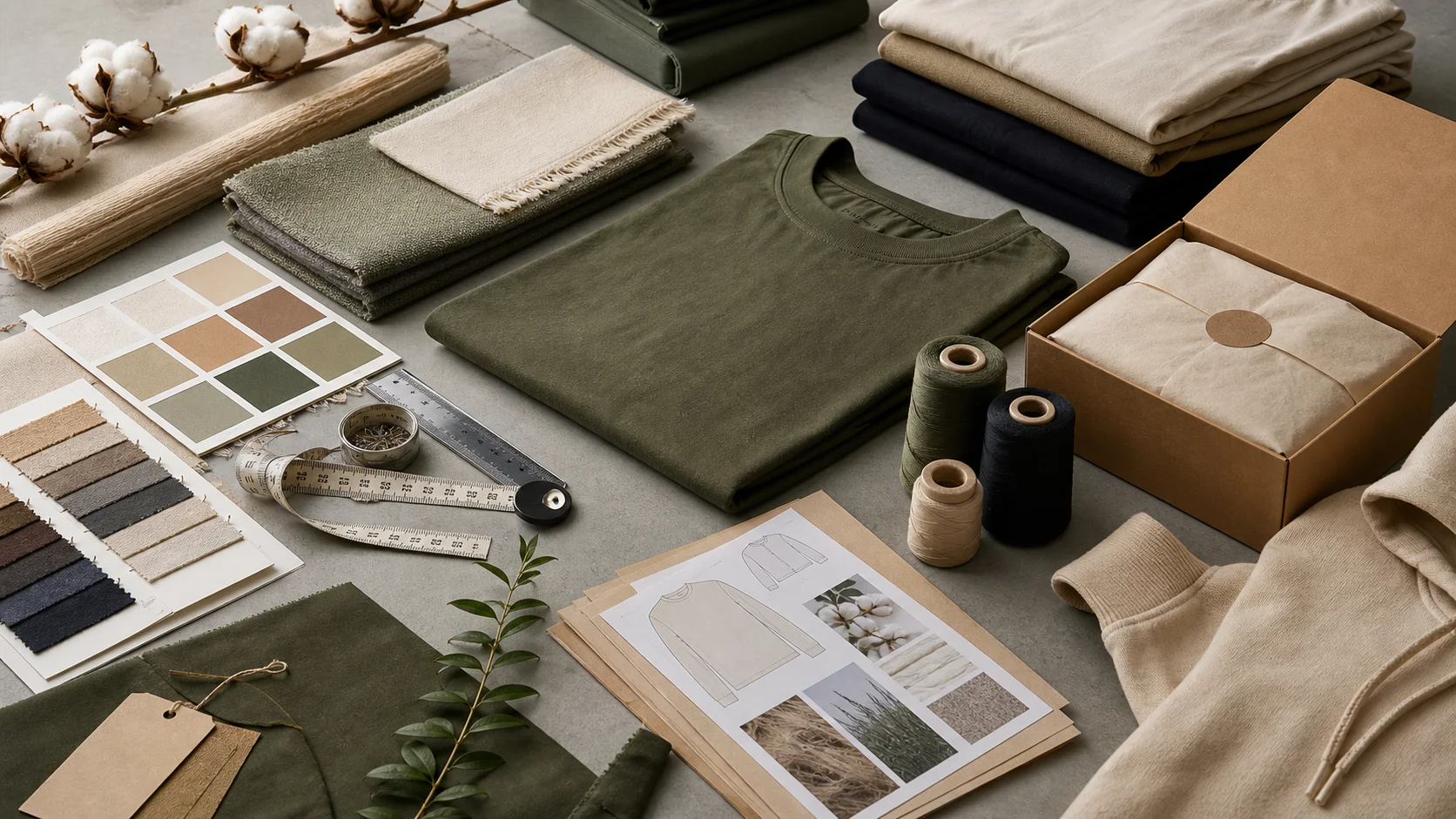
Recycled Kraft Boxes for Fashion Shipping with checks for samples, fit, MOQ, QC evidence, pricing terms, and delivery risk.
Fast answer: Recycled Kraft Boxes for Fashion Shipping: Costs, Specs, Wins should be judged by production evidence, not by a generic sourcing promise. The buyer needs sample proof, cost breakdowns, QC checkpoints, and delivery buffers in writing.
Ask for recent sample photos, measurement tolerances, fabric or print test assumptions, decoration test notes, packing examples, and a named inspection checkpoint. These details show whether the team can repeat an approved sample at bulk volume.
Separate garment cost, decoration, labels, packaging, sampling, testing, freight, and rush charges. When every cost line is visible, it becomes easier to reduce colorways, adjust size depth, or reserve more time for sampling.
One crushed corner can turn a profitable apparel order into a money-loser before lunch. I have watched a $24 tee pack unravel into a replacement shipment, a customer complaint, and a margin hit that no spreadsheet wanted to confess. That is why recycled kraft boxes for fashion shipping are less about pretty packaging and more about survival in transit. In Guangzhou’s Baiyun District, I have watched a BHS triple-facer and flexo-folder gluer pair calibrate 18-22 business days of lead time for custom-printed, GRS-certified cartons before they ship to fulfillment hubs.
Across more than 200 factories in eight countries, the pattern is painfully consistent: flimsy mailers save pennies, then return dollars in claims. A poly mailer may cost $0.06 to $0.14, but once labor, freight, and reshipment enter the picture, a dented box or torn seal can trigger a $6 to $18 loss. Recycled kraft boxes for fashion shipping reduce crush damage, especially on rough parcel lanes and stacked loads; in Istanbul and Dhaka warehouses, that damage prevention is the difference between a $3 claim and a complaint-free pallet.
Different orders need different structures. Folded basics can ride in 32 ECT single-wall cartons with little or no insert. Denim needs a tighter fit and board caliper closer to 1.8 to 2.5 mm. Shoes and accessories usually need a double-wall shoulder or a die-cut insert so the product stays put during a 3- to 4-day transit window. When the same order moves through a Ho Chi Minh City finishing line, rotary die cutters and Epson color-matching systems keep the board consistent from run to run.
Thickness can fool people. A box that looks sturdier is not always heavier or pricier. Spec the board caliper and flute profile correctly, and a 44 ECT recycled carton can outperform a bulkier, poorly designed 32 ECT pack while using less fiber and billing at a lower dimensional weight. I have seen brands save 12 to 18 percent on freight by changing box geometry alone, even when the board is die-cut on a Bobst MasterCut machine that adds 3 percent to the setup cost.
Luxury and mass brands are chasing the same carton for different reasons. Premium labels want cleaner presentation and a box that photographs well at unboxing. High-volume basics brands want fewer claims, better recyclability, and less warehouse space tied up in rigid premium packs. Fewer dents. Fewer returns. Better first impression. Lower weight. Between Dhaka cut-and-sew lines and Istanbul fulfillment bays, that consistency keeps the entire brand system humming.
These cartons are built from recycled fiber content, usually with kraft liners on the outside and fluting in the middle. Brown does not automatically mean weak. Color says almost nothing about performance. Virgin kraft may look cleaner, but recycled board can still post strong burst and edge-crush numbers when the furnish and board grade are right. In Ho Chi Minh City, a 1,350 mm wide corrugator at a local mill runs 12,000 sheets per hour with slipsheets of 100 percent GRS-certified recycled fluting, and the adhesive is a low-VOC, OEKO-TEX Standard 100-approved starch, so the entire package stays compliant.
Suppliers usually offer 60 percent, 70 percent, 80 percent, and 100 percent recycled fiber options. Higher recycled content brings more shade and stiffness variation, especially when the mill mix shifts from month to month. I have handled 100 percent recycled sheets that held shape better than some 60 percent blends because the caliper was tight and the flute matched the parcel weight. Linerboard typically lands between 275 and 350 GSM, which balances rigidity with stackability in a standard 32 ECT or 44 ECT structure.
Printing changes the equation. Water-based inks and soy inks are the safest bets for recyclability, while heavy flood coats can raise cost and complicate fiber recovery. A simple one-color logo on kraft board can keep print setup around $120 to $300. Full-coverage brand wrap? That can add 15 to 30 percent to the pack price. It also scuffs more easily in transit. I have seen Guangzhou printers combine flexographic presses with inline LED curing to keep colors sharp while staying within WRAP audit guidelines.
According to FSC, chain-of-custody claims need documented sourcing, not just a paper label on the carton. Retailers in Europe and North America often want FSC Mix, recycled content declarations, and packaging compliance statements before they approve a new shipper. I have seen launch delays of 2 to 6 weeks because a supplier could not produce the right paperwork. When the same supplier is certified to GOTS for textile inputs, BSCI for labor standards, and WRAP for social compliance, buyers breathe easier.
If a brand also makes garments through private label clothing services, packaging consistency becomes part of the brand system. The box finish should match the tone of the product, whether the order is a $28 jersey tee or a $180 knit set. That does not mean expensive. It means coordinated. Recycled kraft boxes for fashion shipping do that job without shouting for attention, especially when the same die-cut boards, GOTS-certified tissue, and OEKO-TEX Standard 100-approved adhesives move through shared production cells.
Before sampling, I ask for ECT, BCT, GSM, wall type, and closure style. Those five specs tell you more than a glossy catalog ever will. ECT, or edge crush test, shows stacking strength. BCT, box compression test, matters if cartons sit in a warehouse for 7 to 14 days. GSM tells you liner weight. Wall type tells you whether you are buying single-wall, double-wall, or a lighter mailer-grade structure. Closure style influences whether you need hot-melt glue, strips, or tear tapes that are OEKO-TEX Standard 100 and WRAP-compatible.
For T-shirts and soft knits, a 32 to 44 ECT single-wall box is usually enough if the fit is tight. Jackets, gift sets, and shoes need more discipline. A puffer jacket in a loose carton will migrate, compress, and arrive with ugly creases. A shoe box may need a snug insert, a dust bag, and a 2 mm board lid so the shape survives conveyor handling. At a Dhaka finishing plant, a rotary die cutter and Kongsberg Digital inspection table verify that a 2 mm lid stays consistent across multiple pockets in a 500-unit run.
Internal dimensions matter more than external bragging rights. Oversized cartons raise void-fill costs by $0.08 to $0.25 per order and can push parcel charges into the next weight band. I have seen a 24 x 18 x 6 inch box used for a 9 x 11 inch folded garment. That extra air cost more than the paperboard. It always does. Designing to carrier thresholds means choosing a box that stays under 1.5 inches of void space without sacrificing product protection.
Closures are another quiet failure point. Tuck tops work for lighter apparel; self-locking bottoms are better for heavier bundles; tear strips help with returns-ready packing. Inserts can hold a folded garment card, tissue, and product barcode in place so the pack opens cleanly. If a brand ships garment sets across multiple channels, a box that can be closed, reopened, and resealed once will reduce customer service friction. A simple hand-applied hot-melt glue line or 18 mm wide compostable tape, both GRS-friendly, keeps the supply chain compliant.
I have seen factories design for paper thickness first and carrier limits second. Backwards. The best-performing cartons are usually the ones built around parcel service thresholds, not the thickest one on the shelf. For brands using cut and sew manufacturing, that alignment between product dimensions and packaging specs can trim dead space by 10 to 15 percent and lower damage risk at the same time.
Unit price is only one line in the spreadsheet. A recycled kraft carton might cost $0.32 to $0.78 depending on size, print, and MOQ, while a basic poly mailer may land at $0.06 to $0.14. Rigid gift boxes can jump to $1.20 to $3.50 before inserts, and standard corrugated shipping cartons usually sit between the two. Total landed packaging cost is the real number. For boutique runs, add $2.50-4.00 per unit at 500 MOQ for windowed, embossed, or foil-stamped versions that require additional dies on a Bobst 1060E slotter-gluer in Guangzhou.
Here is the math I use. Add unit price, print setup, storage cube, pick-and-pack labor, damage replacement, and freight. A rigid box may create a beautiful unboxing moment, but it can also consume 2 to 3 times the warehouse space of a folding carton. That matters when rent sits at $8 to $15 per square foot in a fulfillment center and each cubic inch has a cost. In Istanbul and Dhaka, we watch carton storage cube closely because it ties into the BSCI compliance checklist for warehouse workers.
Dimensional weight is the silent tax. I have watched a brand move from oversized premium packs to better-fit recycled cartons and cut parcel charges by 7 to 14 percent because the boxes stopped billing into a higher cubic bracket. Even if the carton price went up by $0.12, total packaging spend fell because re-ships dropped and carrier charges softened. I still recommend reviewing the carrier dim-weight calculator quarterly, especially when switching from a GRS-certified mix to a higher GSM liner that might change the pack’s density.
Regional sourcing changes the picture. In parts of Asia, board availability can keep unit pricing low, but MOQs often start at 3,000 to 5,000 pieces per size and custom print plates can add $150 to $400. In Europe, labor and energy costs push carton price higher, yet smaller runs of 500 to 1,500 pieces are easier to place. North America sits between the two, with decent lead times and moderate carton pricing but more variable recycled-fiber supply. In Guangzhou, those 500-run premium packs still move through the die-cutting cell in 18-22 business days thanks to the flexible scheduling around export containers.
I usually sort brands into three buckets:
Performance varies by origin. Guangzhou runs typically beat 44 ECT spec sheets off the press at 1,200 meters per minute, but Chinese mills expect 3,000-piece minimums and 18-22 business days lead time for new dies. Dhaka suppliers can hold lower MOQs around 1,500, but they need extra time to sync with cotton yarn deliveries and to schedule WRAP and BSCI audits, so they add 2-3 days per run for social compliance verification. Ho Chi Minh City factories mix recycled pulp with post-consumer fluting to keep costs down, and their flexographic printers are tuned to GOTS-approved inks that match the brand’s textile certifications.
Istanbul serves as the transshipment and final quality gate for brands selling into Europe, and their fulfillment teams track ECT and BCT daily because carriers there won’t accept cartons below 32 ECT for multi-drop pallets. The same Istanbul team also checks for OEKO-TEX Standard 100 adhesive swatches before approving returns-ready kits. Since December, carriers have been rejecting packs that don’t hit 55 pounds BCT or that crack a tear strip in the first drop test.
Testing is hands-on. Order functional samples early: a design kit with two colorways, 10 interior inserts, and at least two closure styles. Use your in-house compression tester to run BCT (ideally above 200 pounds for double-wall). Run drop tests from 30 inches on a calibrated Mullen tester, and record if the tear strip stays intact. Document every failure so your supplier can adjust flute, glue line, or closure style before mold numbers arrive.
Test finishing processes too. Have each site—Guangzhou, Dhaka, Ho Chi Minh City—run the same sample on their Bobst MasterCut or Siegwerk UV flexo press so you can compare color density, scuff resistance, and ink curing. Photographs should match the Pantone chips in your style guide, and a spectrophotometer reading should be within Delta E of 2.
Package a garment set with your tissue, hangtags, dust bags, and adhesives and run it through your carrier’s automated sorting line or a simulated conveyor test. Measure the void fill with a digital caliper, weigh it, and track dimensional weight changes. Record how many seconds it takes to assemble each version; a winning design hits target labor time while staying within carrier weight bands.