
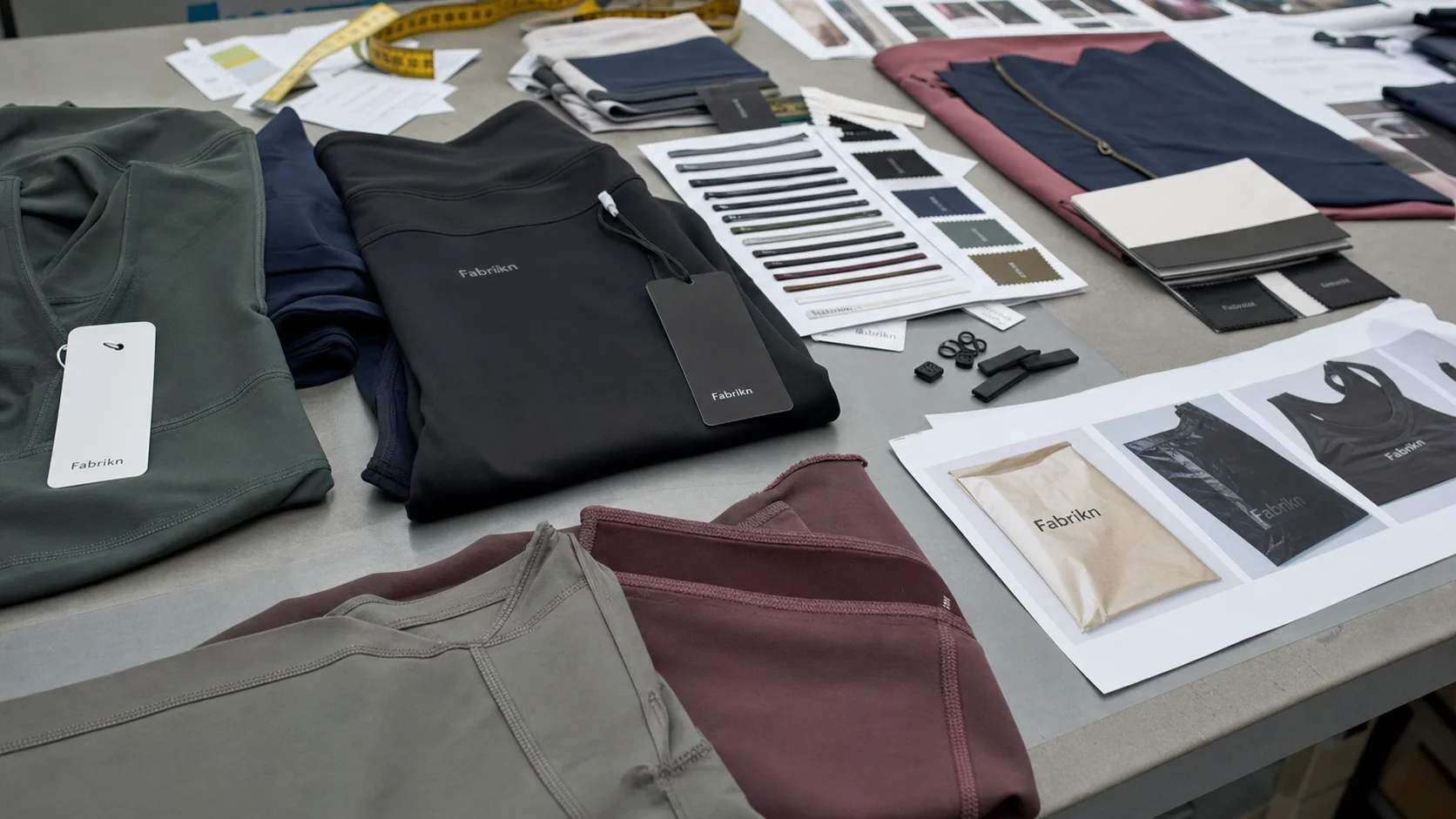
Spot UV Apparel Boxes with checks for samples, fit, MOQ, QC evidence, pricing terms, and delivery risk.
Fast answer: Spot UV Apparel Boxes: Finish Area, Cost, Craft, and Retail Impact should be judged by production evidence, not by a generic sourcing promise. The buyer needs sample proof, cost breakdowns, QC checkpoints, and delivery buffers in writing.
Ask for recent sample photos, measurement tolerances, fabric or print test assumptions, decoration test notes, packing examples, and a named inspection checkpoint. These details show whether the team can repeat an approved sample at bulk volume.
Separate garment cost, decoration, labels, packaging, sampling, testing, freight, and rush charges. When every cost line is visible, it becomes easier to reduce colorways, adjust size depth, or reserve more time for sampling.
Three seconds, if you are lucky. That is often all a box gets on shelf, and sometimes less in an unboxing clip. I have watched a buyer choose a carton in under that window. Spot uv branded boxes for fashion brands work because contrast does the heavy lifting. A matte surface stays quiet until a logo, border, or monogram catches the light. Then the message lands.
Across factory visits in China, Italy, and Vietnam, the best-selling packaging was rarely the loudest. Controlled, not flashy. That was the pattern. Fashion brands use spot UV on rigid boxes, mailers, and folding cartons because they want premium presence without flooding the whole board with gloss. A soft-touch mailer with a 25 mm UV logo looks sharper than full varnish, especially next to a simple one-colour base print and a clean dieline.
And the bill can bite. A rigid box for a premium DTC launch may land at $1.80-3.50 per unit before inserts. Folding cartons can sit around $0.25-0.60 at 5,000 units, depending on board and finish. Spot UV adds setup, proofing, and registration control, which feels painful on a 500-piece test run. Still, the perceived value usually rises faster than the cost. Buyers see shine. They read craftsmanship.
What nobody says out loud: a small UV accent often looks richer than full-board gloss because contrast reads as control, not excess. I saw that again and again on factory floors. Full gloss pushed a box toward mass-market. A restrained 8-12% UV hit on the logo made the same artwork feel tailored. Luxury fashion needs that. So do private label clothing labels trying to move out of commodity territory.
Fashion packaging has one job before all others: win the first contact. It must protect a garment, signal price point, and survive brutal photography lighting. Spot UV helps when the artwork is planned properly. It fails loudly when designers ignore bleed, line weight, or the fact that a 0.2 mm logo stroke may disappear after lamination. Good shine is precise. Bad shine looks like a mistake.
Different categories reward spot UV in different ways. Apparel boxes do well with a restrained logo lockup, a monogram band, or a seasonal pattern on the lid. Footwear boxes can carry a larger accent because they are bigger, usually 320-450 mm wide, and sit on shelf longer. Bags and scarves need less. A subtle mark on a two-colour print does more than a busy full-surface treatment ever will.
For hosiery and small accessories, narrow highlights usually win: a 15 mm label window, a thin border, a repeating motif over 5-8% of the surface. Limited-edition drops are a different game. Streetwear teams and capsule collections often want stronger contrast, especially when the launch is tied to a 7-day seeding push or MOQs of 300-1,000 units. Then the finish becomes part of the story.
Luxury houses usually keep it spare. One logo. One corner. Sometimes only a deboss paired with spot UV on a rigid set-up box. Mid-market brands lean into pattern accents because they need more visual energy to justify a $25-60 retail item. Premium DTC labels sit between those poles. A $68 knitwear brand may use UV on the monogram only. A $12 basics label may still want theatre if it is pushing customers toward a higher AOV.
Regional taste is less uniform than agencies like to admit. In Milan and Porto, European buyers asked for quieter finishes, lower contrast, smaller glossy areas. New York and Los Angeles often pushed for larger logo hits and stronger sheen on mailers. Neither side is wrong. They are selling to different ideas of status. A box that feels elegant in Paris can look underdesigned in Dallas.
Beyond aesthetics, spot UV does useful work. It can help anti-counterfeit efforts by making the logo harder to copy accurately, especially when paired with serial labels or microtype. It also supports seasonal campaigns, where recognition matters more than subtlety. A holiday box with a UV snowflake pattern can be spotted from 2 metres away. A handbag launch box can be sorted on a warehouse line in seconds.
For brands comparing OEKO-TEX certified materials and sustainable packaging options, spot UV can still fit a responsible brief when the substrate, inks, and coatings are selected carefully. The finish should support the product story, not fight it.
On paper, the sequence looks simple. In the plant, it is unforgiving. Base print first. Then the varnish file is split from the artwork file so the factory knows exactly where the UV should land. After that comes the plate or digital setup, the spot coating, UV curing, and a final sheet check before packing. A good production line can turn around a fashion carton in 3-5 working days after setup. A poor one spends that long correcting registration.
Several technical calls need approval before the first sheet runs. Coated board gives sharper contrast. Uncoated stock can mute the effect unless the varnish is tuned carefully. Resolution matters too. I ask for 300 dpi artwork at minimum, plus vector files for logos and type. Clearcoat thickness matters as well. Too thin, and the shine disappears under light. Too heavy, and the surface turns blotchy. Matte lamination under UV usually gives the cleanest premium read, especially on rigid boxes and mailers.
Factory-floor reality is messier. A 0.5 mm misregistration can ruin a logo edge. At 1 mm, an intentional border starts to look crooked. I always ask how the plant measures alignment. Do they check at the press and again after curing? How many QC checkpoints sit inside the run? One line inspects every 300 sheets. Another samples every 1,000. That difference shows up in the final box.
Material pairings change the risk profile. Soft-touch lamination plus spot UV is a favourite for premium apparel because the matte background amplifies the gloss. Foil plus spot UV can be striking, but the layers need the right sequence or the foil edge lifts. Emboss plus spot UV can look expensive on a luxury lid, yet the die must register exactly or the raised area shadows the gloss and distorts the mark. I have seen a 0.3 mm shift turn a $4.20 box into scrap.
According to ISO, process control and documented inspection sit at the core of repeatable quality systems. That matters here because spot UV is not just decoration; it is a registration-sensitive finish that punishes sloppy handling. Plants serving fashion and beauty brands often store boards flat, keep humidity around 45-55%, and run light-box checks before release.
And if a brand already produces custom bra manufacturing or other delicate categories, the packaging needs the same precision standard. The box is often the first tactile proof of quality. Careless packaging hands the customer that mistake before the product even comes out.
Quantity drives the quote. Hard stop. On a 500-unit order, setup charges dominate. On a 10,000-unit run, they spread thin enough to disappear into the unit price. For folding cartons with one UV logo, I have seen short runs land at $0.55-1.20 per piece, mid runs at $0.28-0.65, and larger runs at $0.16-0.38 depending on board, print count, and carton size. Rigid boxes are a different animal. Expect $1.50-4.50 at lower volumes, more if inserts or special wraps enter the picture.
Three drivers move price fast. Board weight. Finish complexity. Labour. A 350 gsm folding carton with one die line and a single spot UV plate is far cheaper than a rigid 1200 gsm wrapped box with foil, lamination, UV, and a magnetic closure. Mailers sit in the middle. Easier than rigid boxes, but still sensitive to board choice, especially when shipping strength and presentation value need to live in the same format.
Hidden costs catch teams off guard. Extra proof rounds can add 1-2 weeks and $80-250 per iteration, depending on the factory. Freight damage from poor packout is another quiet drain, especially when UV surfaces scuff against each other because separators are missing. Rework hurts most. A mistaken artwork layer can force plate remakes, new screens, and a second press run. That can add 10-25% to a project before anyone notices the margin slip.
Data from trade.gov shows how export logistics and lead-time expectations vary by market, and packaging buyers feel that difference immediately in landed cost. A box that costs $0.42 ex-works can become $0.68 delivered once cartonization, inland transport, and air freight are added. Compare delivered cost, not factory quote. A beautiful unit price means little if the shipment lands late or crushed.
There are ways to spend less without flattening the brand. Narrow the UV area to the logo or a signature line. Simplify the dieline. Use one premium box for multiple SKUs by changing only the insert or sleeve. Lock artwork early so plates do not need remaking. I also push teams to align the packaging brief with the garment brief. A 280 gsm French terry hoodie does not need a box built like a fragrance gift set. Discipline saves money.
If the box must do several jobs, build it around the most demanding one. A rigid shoebox used for seasonal gifting may need stronger board and a cleaner finish than a standard T-shirt carton. A simple box can still feel rich when UV placement is deliberate and the print file is prepared properly. That approach has beaten expensive clutter every time.
Start with the boring questions. Boring questions expose bad suppliers fastest. What is the MOQ? Is proofing digital or press-based? Is finishing in-house or outsourced? How do they manage colour across reprints? What QC documents can they show from the last 3 months? A serious manufacturer answers with numbers, not adjectives. I want 1,000-unit minimums, 2-3 proof rounds, and a written defect threshold. Not “we can handle anything.”
Ask for three samples. One current fashion client box. One worst-case production sample showing where the plant failed and corrected course. One pre-production proof with your exact artwork. That last one should match the intended board, finish, and insert structure, not a generic stock example. If the supplier refuses, or sends only a glossy sales kit, treat it as a warning sign.
Capability varies by factory, not country. In China, some plants are excellent at complex finishing at scale, especially for runs above 5,000 units with foil, emboss, and spot UV combined. Parts of Europe often offer tighter lead times for shorter premium orders, sometimes 7-14 days faster once tooling is approved. But I have also seen strong and weak shops in both regions. Plant management matters more than postcode.
Red flags show up quickly once you know where to look. Vague answers on curing time. No light-box inspection. Board stored in humid corners. Promises of a 72-hour turnaround for a three-finish rigid box with inserts. Weak file handling is another tell. If the team cannot explain how they separate UV layers, registration errors are likely. That is how a 0.4 mm shift becomes your problem.
When a brand is building a larger product mix, I compare packaging sourcing with garment sourcing. The same discipline used in cut and sew manufacturing applies here: ask who owns quality, who signs off on the sample, and who pays for mistakes. Packaging vendors who respect process usually respect timelines too.
For broader sourcing due diligence, it also helps to review guidance from the U.S. Commercial Service and verify any sustainability claims with recognized standards bodies before you place a bulk order.
Good calendars save launches. Design sign-off usually takes 2-5 days if the brand has clear artwork and dielines. Sampling adds 5-10 days, especially when UV, foil, or emboss are involved. Plate or setup can take 1-3 days. Production often needs 7-15 days for folding cartons and 12-25 days for rigid boxes. Shipping can add another 3-30 days depending on destination and method. Delays usually hit sampling first, not production.
Complexity changes speed. A simple UV logo on a folding carton moves faster than a rigid box with foil, emboss, and internal inserts. I watched a two-finish rigid programme slip by 8 days because the matte lamination and UV layers needed a second registration check. Build buffer for colour correction and approval, especially before seasonal launches, celebrity seeding, or influencer mailers that must land on a specific date.
Packaging timelines need to sit beside merchandising calendars, not behind them. If the product lands in warehouse on Monday and the shoot is on Thursday, the box has to arrive before the garment. Miss the carton, and photo production stalls, inventory intake slows, substitutes appear. A $0.40 packaging delay turns into a $4,000 shoot problem. Teams that track apparel and packaging together ship on time more often.
For brands already coordinating trims, labels, and hangtags, the package should be briefed at the same time. Especially when the collection uses multiple formats, from outerwear cartons to accessory mailers. One packaging delay can ripple across the whole drop.
Start with SKU count. Confirm box structure, board type, and whether the UV will sit on the logo, a border, or an all-over pattern. Separate the UV layer from the print file. Request material samples. Approve a production proof. Lock shipping terms. That sequence cuts waste and trims revision loops, which is where packaging budgets leak.
Ask for pricing at 1,000, 3,000, and 10,000 units. Request at least two board options so you can compare cost and feel. Then compare delivered cost, not unit price alone. A slightly dearer ex-works quote can win if it includes cleaner packing, fewer damages, and faster transit. Negotiate on structure, not just price. Sometimes a 5 mm reduction in box depth saves more than a 10% unit discount.
Decide what deserves gloss and what should stay matte. The finish should support the brand, not decorate every surface. The best packaging spends less on spectacle and more on precision. Clean registration and disciplined restraint read as luxury. Noise rarely does.
If sustainability is part of the brief, build it into the sourcing checklist from day one. Confirm substrate options, coatings, and documentation before you move to bulk, especially for wholesale or seasonal spot uv branded boxes for fashion brands orders that will be repeated across multiple drops.
For folding cartons, I usually see $0.16-1.20 per unit depending on quantity, board, and finish complexity. Rigid boxes range more widely, often $1.50-4.50 at lower volumes. A 500-unit order absorbs setup costs more heavily than a 10,000-unit run.
Many factories start at 500-1,000 units for simple folding cartons and 300-500 for select rigid programmes, though some premium plants prefer 1,000+ units. MOQ rises when you add foil, emboss, inserts, or special board wraps.
Simple cartons can finish in 7-15 days after approval. Rigid boxes with multiple finishes usually need 12-25 days. Sampling and colour correction can add another 5-10 days, so build in buffer time before launch.
Yes. Soft-touch lamination plus spot UV is common, and foil plus spot UV works well if the registration is tight. Emboss plus UV can look excellent, but the die and varnish layers must align within about 0.5 mm.
You can request a custom packaging quote by preparing your dieline, artwork, quantity, and delivery destination before you ask. That usually speeds up pricing and helps factories quote the real delivered cost, not just the ex-works unit price.