
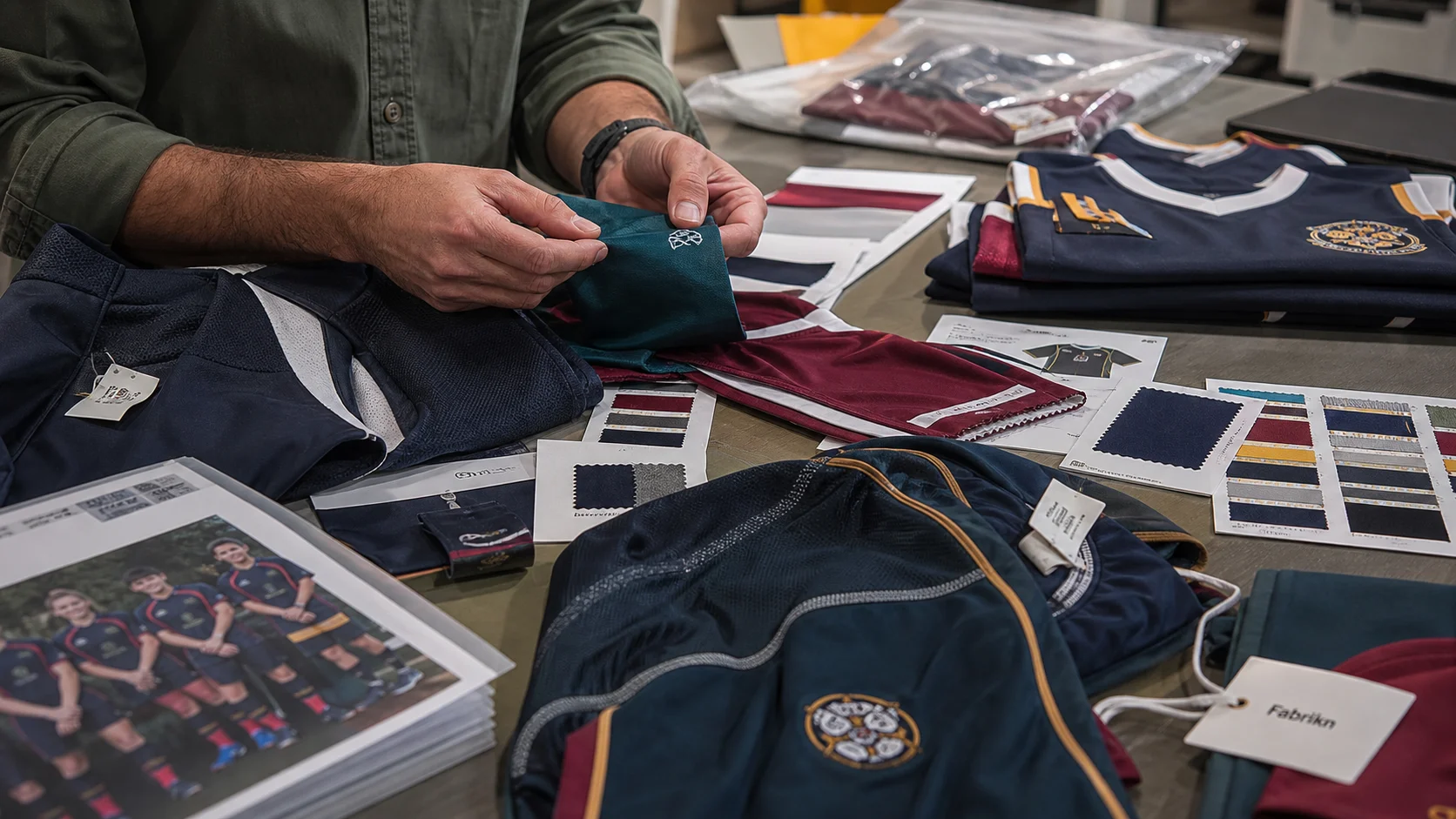
Wholesale Sustainable Clothing Boxes with checks for samples, fit, MOQ, QC evidence, pricing terms, and delivery risk.
Fast answer: Wholesale Sustainable Clothing Boxes: Board Claims, MOQ, and Cost should be judged by production evidence, not by a generic sourcing promise. The buyer needs sample proof, cost breakdowns, QC checkpoints, and delivery buffers in writing.
Ask for recent sample photos, measurement tolerances, fabric or print test assumptions, decoration test notes, packing examples, and a named inspection checkpoint. These details show whether the team can repeat an approved sample at bulk volume.
Separate garment cost, decoration, labels, packaging, sampling, testing, freight, and rush charges. When every cost line is visible, it becomes easier to reduce colorways, adjust size depth, or reserve more time for sampling.
A premium tee can lose half its perceived value in 10 seconds if it lands in a flimsy mailer. I watched that happen in a Guangdong factory last year: a $12 wholesale jersey tee, packed beside the exact same SKU in two box formats, was judged by two buyers as “retail-ready” and “discount-bin” before they ever touched the fabric. Same tee. Different signal. That is why sustainable clothing packaging boxes wholesale is not a side issue. It sits on the same line as fit, hand-feel, and margin.
Retailers spot packaging defects fast. Crushed corners, warped lids, ink scuffs — one of those is enough to sink approval before anyone checks stitching or GSM. In several factory audits, packaging defect rates of 2% to 5% wiped out acceptance on small launch orders, while garment defects stayed below 1%. A box is not decoration. It is part of the sell-through story.
Budget labels and premium labels often sell the same shirt, then use packaging to move it into different price brackets. I have seen a $7.50 tee in a plain tuck-end box sitting beside a nearly identical tee in a two-piece rigid box with a printed insert. First one reads mass market. Second one reads giftable. The cost delta was only $0.42 to $1.10 per unit, depending on board grade and print coverage, yet the perceived retail value moved by several dollars. That gap is why buyers obsess over packaging structure as much as they do over hangtags.
Sustainability claims get judged harder on packaging than on apparel labels. Consumers can forgive a garment made from complex blends if the fit is good. They are less forgiving when a box uses plastic lamination, heavy foam inserts, or vague “eco” language with no proof. According to ISO and OEKO-TEX, packaging and textile-related claims need traceability, and retailers now ask for recycled content data, paper origin, and ink chemistry before approval. In practice, I see more scrutiny on a packaging spec sheet than on a basic T-shirt fiber declaration.
The box is the first physical proof of a brand’s discipline. Buyers who treat packaging as a cost afterthought pay for it later in damage claims, slower approvals, and lower shelf confidence. The factory floor makes that obvious. One mis-sized carton. One weak glue line. One dented lid. The whole product starts looking cheaper.
In practical sourcing language, sustainable clothing packaging boxes wholesale means boxes made from materials and processes that reduce virgin input, simplify recycling, and limit toxic finishes. That usually includes recycled board, FSC paper, soy or vegetable-based inks, water-based coatings, and fewer plastic components. A credible spec sheet should tell you recycled percentage, basis weight, caliper, coating type, and whether the adhesive is water-dispersible. If those numbers are missing, the claim is weak.
What does not count is the slippery stuff. “Eco-friendly paper” without post-consumer content data is marketing, not sourcing. “Recyclable” means little if the box is laminated with mixed plastic film that most municipal systems will reject. I have seen brands pay a premium for a green label on the outside while the inside tray used foam or PET. That is not sustainable packaging. That is green paint.
Certification mixes vary by region. North American suppliers often show FSC chain-of-custody documents, SFI references, and recycled content declarations. European factories more often provide FSC plus EN 13432 or similar compostability-related references where relevant, and they tend to speak more fluently about EPR obligations. In Asia, strong factories will still show FSC and sometimes Global Organic Textile Standard-aligned documentation for adjacent textile programs, but paper packaging certification depth can vary widely. I ask for the paper mill certificate, not just the carton converter’s logo sheet.
Wholesale terms change the sustainability equation more than many buyers expect. MOQ 500 pieces for a custom size sounds flexible, but if that size forces a dedicated die line and a special board order, waste rises. A standard-size run of 5,000 to 10,000 units often reduces offcut waste by 8% to 15% and makes reorders cleaner. Reusing die lines also saves setup time, usually 2 to 4 hours per job, which matters when a factory is running 12 to 20 packaging SKUs a day.
I pay attention to the boring details: how many sizes a supplier stocks, whether they can combine runs, and whether the board is made with post-consumer fiber or only pre-consumer trim. Those details separate a real sourcing program from a glossy claim. If you already work with clothing packaging solutions, you know the fastest savings usually come from standardization, not from exotic materials.
Three box types dominate apparel sourcing: paperboard folding cartons, corrugated mailer boxes, and rigid boxes. They do not compete on price alone. They compete on appearance, freight cube, damage resistance, and storage cost. A folding carton for a basic tee can land around $0.18 to $0.45 per unit at scale, depending on print and board. Corrugated mailers usually run $0.35 to $1.20. Rigid boxes start closer to $1.10 and can climb past $3.50 with specialty wrap, inserts, and high-coverage print.
Paperboard works best for lightweight garments, inner packaging, and retail presentation where the box is not carrying long-distance stress. Corrugated wins on protection, especially for DTC shipping and export lanes where parcels see more handling. Rigid boxes serve luxury, gifting, and press packs, where the reveal matters as much as the protection. I have seen a boutique swim label sell a $64 set in a corrugated mailer because the outer structure was printed beautifully and survived freight. The same product in a flimsy folding carton would have felt underbuilt.
But landed cost is where many buyers get sloppy. Factory price is only part of the bill. A box that saves $0.20 in unit cost but increases cube by 18% can cost more in freight and warehouse space than the “expensive” option. On one U.S. program, switching from a bulky rigid lid-and-base to a tighter corrugated mailer reduced pallet count by 14% and cut inbound freight by about $0.09 per unit across a 30,000-unit order. Real money.
Here’s what most people miss: a slightly thicker board can reduce damage claims enough to lower total cost. I have seen a move from 300 GSM to 350 GSM paperboard raise packaging cost by $0.06, then cut dent-related claims by 30% to 40% on a return-heavy DTC program. The math worked because fewer re-sends and fewer customer complaints outweighed the extra board. Not theory. It showed up in weekly claims reports.
Price point should guide the structure. DTC basics at $20 to $45 retail often do well with a simple mailer or folding carton. Boutique labels at $60 to $150 can justify textured board, spot embossing, and a better insert. Mass retail programs need standardized formats, high run counts, and the lowest possible variance. On high-volume lines, even a 2 mm change in box depth can alter palletization enough to affect the entire logistics plan.
For brands balancing garment development and packaging, the same sourcing discipline used in private label clothing services applies here: standardize what the customer cannot see, spend where the customer can feel value, and compare the full landed cost, not the invoice alone. That is how sustainable packaging becomes commercially rational.
I start with questions that make a weak factory uncomfortable. Where is the fiber sourced. What percentage is post-consumer content. Which glue system do you use. Is the ink soy-based, water-based, or solvent-heavy. How do you handle trim waste. Can you show the mill certificate and the converted carton spec. A confident supplier answers with numbers. A vague supplier answers with adjectives.
On-site, I inspect moisture control, cutting accuracy, folding consistency, and scrap recovery. Moisture above 10% in board stock can warp boxes after conversion, while poor die-cut tolerance of even 1 to 2 mm creates lids that buckle and closures that split. I also look at stacking behavior. If 100 boxes lean after 24 hours in a 28°C warehouse, the paper recipe or glue cure is weak. That flaw usually shows up later as claims.
Factories differ sharply by region. In China, the best plants often have strong automation and very tight output, but capability varies widely from one city to the next. Vietnam and India can offer competitive labor and improving conversion quality, though consistency may depend more on operator skill than machine age. In parts of Europe, labor costs are higher, usually $12 to $25 per hour equivalent, but color control and documentation tend to be stronger. I have seen all three regions produce excellent boxes. I have also seen all three produce bad ones.
Verification should never stop at a sales deck. Ask for third-party audits, FSC or other chain-of-custody paperwork, and sample testing that includes compression, drop, and rub resistance. For apparel programs with heavier hangtags or inserts, I also ask for evidence of glue and ink safety, especially if the pack will sit near babywear or skin-contact products. Buyers sourcing adjacent categories, including custom baby clothing manufacturing, should be even stricter about odour, migration, and finish stability.
When I visited factories in two provinces with nearly identical equipment, the one with a disciplined QA room and a 48-hour sample log outperformed the cheaper plant every time. Price only tells part of the story. Process tells the rest.
Size discipline is the easiest waste cut in packaging, and most brands still miss it. Oversized boxes inflate board use, raise freight cube, and waste warehouse space. A box that is 10% larger in each dimension can use roughly 33% more volume, which means fewer units per pallet and more empty air paid for in shipping. I have seen a brand spend an extra $18,000 a year just because its mailer was 12 mm too deep for the folded tee inside.
Printing choices matter too. Fewer spot finishes often mean better recyclability. Heavy lamination, glitter coatings, and plastic windows can turn a recyclable paper pack into a sorting headache. One-color print on kraft board, paired with a sharp logo and clean dieline, often reads more premium than a crowded design that needs three coatings to survive handling. Water-based varnish usually performs well, and soy inks help keep the profile simpler for recyclers.
Premium does not require clutter. I have seen embossed logos, blind deboss, and a single-color wrap deliver a stronger shelf impression than full-bleed graphics. Minimal inserts also help. A folded card divider can replace a molded tray in many cases, saving 15% to 25% of material and reducing assembly time. For a brand shipping 20,000 units, that can mean a real labor reduction, not just a theoretical one.
Luxury labels often spend more on structure because the box itself is part of the item. Fast-fashion and value brands usually win by using standard formats across many SKUs, then changing only the print face or label. That is where brands tied to cut and sew manufacturing can coordinate garment and packaging specs early, instead of fixing packaging after the apparel is already frozen.
I have seen a $180 sweater package use a rigid box with a narrow reveal edge and still stay recyclable because the structure was all paper, no magnets, no foam. I have also seen a $28 hoodie arrive in a giant decorated box that looked expensive but cost too much to ship. Presentation matters. So does restraint.
Start with documents, not promises. Request the spec sheet, fiber source proof, board weight, coating details, ink system, and recycled-content declaration before you talk about artwork. Then order samples from at least 2 factories and test them with the actual garment. A folded 320 GSM French terry hoodie behaves differently from a lightweight tee. Real products expose weak packaging fast.
Run drop tests from 76 cm to 100 cm, check corner crush, and compare scuff resistance after 10 to 20 rub cycles. If the box is meant for retail display, test how it opens after 50 cycles. If it is meant for DTC, test parcel compression and stack load. I usually want 3 sample rounds before approving a design, with 7 to 14 days between revisions depending on tooling changes.
A pilot order should be fixed and small. I prefer 1,000 to 3,000 units across one or two SKUs before committing to a full season. That pilot will tell you whether the vendor hits the target defect tolerance, whether print registration stays within 1 mm, and whether the pallet plan actually works in your warehouse. Quote to sampling usually takes 5 to 10 days. Sampling to sign-off often takes another 7 to 14. Mass production can take 15 to 30 days, depending on tooling and board availability.
Your checklist should include MOQ, lead time, certification proof, defect tolerance, recycling claims, packing method, and reprint policy. If the supplier cannot tell you how much waste they recover or where trim scrap goes, keep looking. Good suppliers answer directly and send evidence. Weak ones send slogans.
Regulatory pressure is rising, and packaging is squarely in the frame. Extended producer responsibility laws are spreading across Europe and several U.S. states, while recycled content disclosure rules are becoming harder to dodge. The trade data is clear: packaging waste is no longer treated as a side stream. According to trade.gov and Textile Exchange, global buyers are facing tighter compliance expectations on materials disclosure, and those rules are moving upstream into procurement.
Retailers are tightening scorecards too. I have seen vendor forms that now score packaging by weight per garment, recyclability, recycled content percentage, and ink removal risk. A box that was acceptable three years ago can fail today because it uses too much virgin board or too many mixed materials. That shift is pushing suppliers toward mono-material paper structures, lighter calipers, and fewer decorative extras.
What I expect in the next 24 months is simple. More standardized dielines. More 280 GSM to 350 GSM board instead of unnecessarily heavy stock. More disclosure on recycled content, often in the 30% to 100% range depending on application. More pressure to show test data, not just a green badge. The brands that adapt early will not just reduce waste. They will reduce friction in approval, freight, and returns.
Packaging should be treated like a measurable brand asset, not a cost center. Buyers who keep chasing the cheapest box will spend more later on defects, freight, and image damage. Buyers who price it properly will see the box do what it is supposed to do: protect the garment, carry the brand, and survive scrutiny.
Sustainable packaging uses recycled board, FSC paper, soy or water-based inks, and fewer plastic parts. Regular packaging may still look similar, but it often relies on virgin fiber, plastic lamination, or mixed materials that are harder to recycle. Buyers should ask for fiber content, coating type, and certification documents.
Folding cartons often start around $0.18 to $0.45 per unit, corrugated mailers around $0.35 to $1.20, and rigid boxes from about $1.10 upward. Freight, storage, and damage rates can change the total by 10% to 30%. Always compare landed cost, not just factory price.
Quote to sampling often takes 5 to 10 days. Sampling to approval usually takes another 7 to 14 days, and mass production can take 15 to 30 days. Complex structures or new tooling can push the schedule longer, especially if board supply is tight.
Yes, but low MOQs often raise unit cost and waste if the size is custom. A run of 500 to 1,000 units can work for testing, while 5,000 to 10,000 units usually improve pricing and reduce setup waste. Standard sizes are easier to reorder and audit.
Ask for recycled-content declarations, FSC chain-of-custody certificates, ink and glue specs, and third-party audit reports. Then test samples for drop strength, fold accuracy, and print rub resistance. If the factory cannot provide documents within 48 hours, treat the claim as unproven.