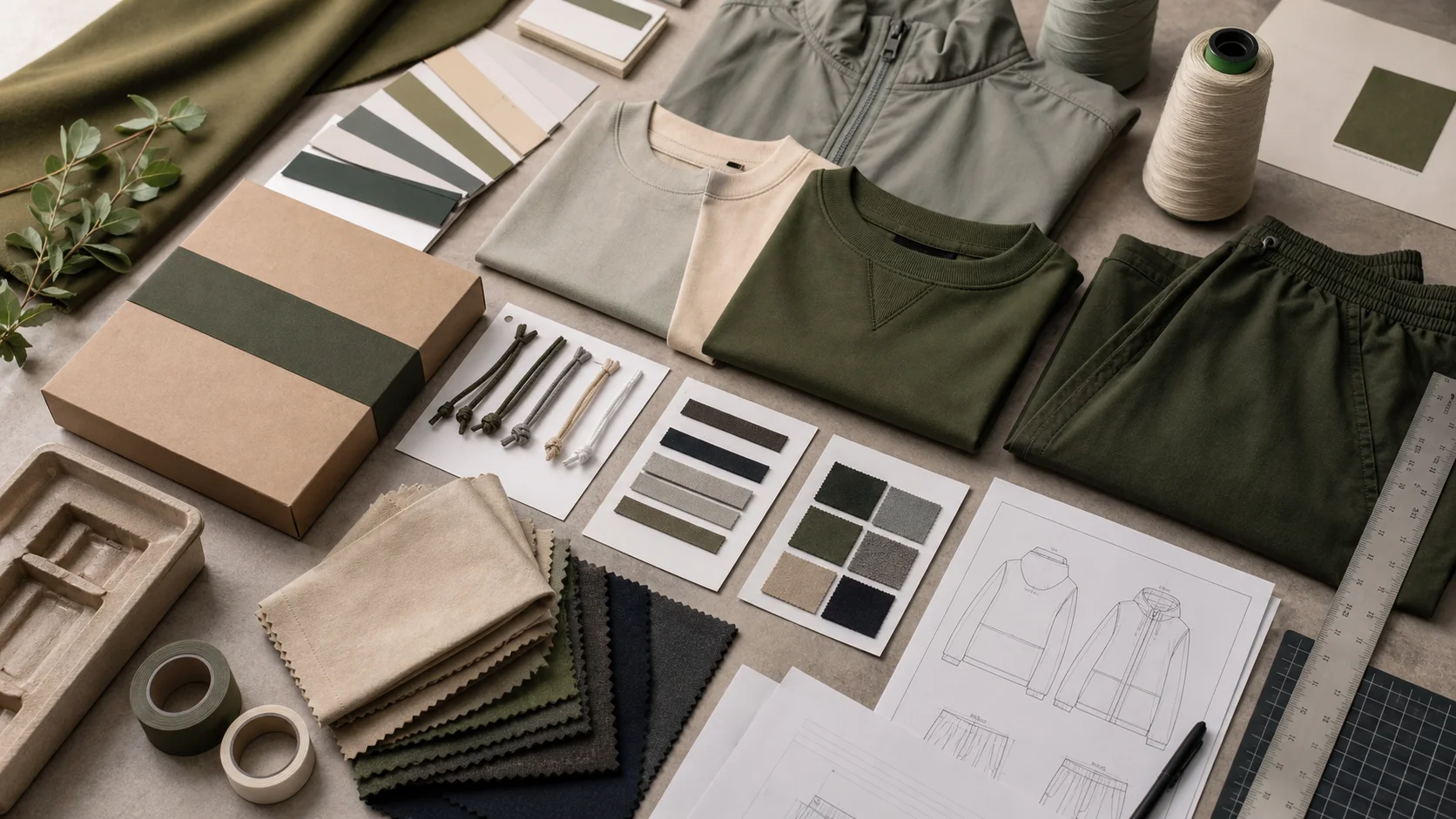
Custom Apparel Manufacturers China with checks for samples, fit, MOQ, QC evidence, pricing terms, and delivery risk.
Buyer Fit Snapshot
Best fitcustom apparel manufacturers china for apparel buyers comparing samples, material specs, QC ownership, landed cost, lead time, and supplier risk where fit consistency, decoration durability, and delivery dates decide the vendor choice.
Files to prepareTech pack, size run, color list, artwork, label and packing notes, target quantity, inspection level, and required delivery window.
Sample gateApprove fabric handfeel, shrinkage, measurements, logo placement, wash result, packing method, and every change log before bulk cutting.
Quote riskLow unit prices can hide trim substitutions, rushed sampling, weak AQL rules, or unclear rework responsibility.
Fast answer: Custom Apparel Manufacturers China: Samples, MOQ, QC, and Lead Time should be judged by production evidence, not by a generic sourcing promise. The buyer needs sample proof, cost breakdowns, QC checkpoints, and delivery buffers in writing.
Production evidence to request before a deposit
Ask for recent sample photos, measurement tolerances, fabric or print test assumptions, decoration test notes, packing examples, and a named inspection checkpoint. These details show whether the team can repeat an approved sample at bulk volume.
How to make the quote easier to compare
Separate garment cost, decoration, labels, packaging, sampling, testing, freight, and rush charges. When every cost line is visible, it becomes easier to reduce colorways, adjust size depth, or reserve more time for sampling.
Table of Contents
Introduction
The global demand for bespoke fashion and technical apparel continues to surge, and for many brands, partnering with Chinese manufacturers remains a strategic choice. China has long been synonymous with mass production capacity, but today’s thriving apparel industry offers much more than volume. Leading manufacturers deliver sophisticated custom or private-label programs, rapid prototyping, and nimble supply chains, making them ideal partners for retailers, startups, and established labels alike. This 2024 guide explores the top custom apparel manufacturers in China, outlining what sets them apart, the regions where they operate, the technologies they embrace, and how to navigate the sourcing process with confidence.
While the market includes thousands of vendors, a select group of manufacturers focuses on custom clothing programs that balance quality, agility, innovation, and compliance. Throughout this article, we will examine what characteristics define these leaders, how they manage design-to-delivery workflows, and how you can position your brand for success in this competitive landscape. We also highlight how Fabrikn supports clothing brands with expert sourcing, supply chain management, and production execution.
Why China Remains a Powerhouse for Custom Apparel
China’s dominance in apparel manufacturing stems from decades of investment in infrastructure, a deep talent pool, and an unmatched network of suppliers. Even as other regions aspire to capture share, China’s ecosystem is uniquely capable of servicing high-volume and high-complexity orders. Its custom apparel manufacturers deliver value across many dimensions:
- Scale and Capability – China can handle everything from prototyping to large-scale production runs, often offering flexible capacities that respond to seasonal demand.
- Supplier Ecosystem – Access to trims, fabrics, hardware, and subcontracted specialists allows for faster turnarounds and integrated sourcing strategies.
- Technical Expertise – Skilled labor and advanced machinery enable manufacturers to execute intricate garments, functional wear, and tech-enabled apparel.
- Speed to Market – Many top manufacturers operate lean production lines and digital product development tools to compress lead times.
- Cost-Competitiveness – While not the lowest-cost destination anymore, China strikes a balance between price, quality, and reliability.
Even with rising labor costs and global geopolitical shifts, Chinese manufacturers continue to evolve, adopting automation, improving workplace standards, and expanding their service offerings. When assessing partnership choices in 2024, understanding the nuances of top manufacturers in China requires looking beyond price to their ability to deliver end-to-end solutions.
Criteria for Evaluating Top Custom Apparel Manufacturers
To determine the best partners, brands should assess providers through a structured lens. The following criteria capture the attributes most associated with top custom apparel manufacturers in China:
- Design and Development Support – Superior manufacturers offer collaborative product development, tech-packs, CAD support, and sampling expertise.
- Fabric Sourcing and Innovation – Access to domestic and international fabric mills, along with fabric lab testing and prototyping, ensures material integrity.
- Production Flexibility – The ability to handle varying order sizes, manage colorways, and fulfill multi-style capsules is crucial.
- Quality Assurance Processes – Rigorous inspection protocols, inline quality control, and third-party verification programmes help maintain high standards.
- Compliance and Ethical Practices – Certifications, social responsibility programs, and transparent auditing practices demonstrate commitment to ethical manufacturing.
- Technology Investment – Advanced machinery, digital pattern making, and PLM systems support efficiency gains.
- Logistics and Delivery – Integrated shipping services, accurate lead-time projections, and full documentation ease the path to global distribution.
Manufacturers that excel against these benchmarks often specialize in custom apparel niches—performance wear, athleisure, technical outerwear, workwear, or luxury ready-to-wear. Brands should conduct a comprehensive vetting process, utilizing factory tours, third-party audits, and small-scale pilot runs to confirm capabilities before scaling production.
Key Manufacturing Hubs in China
China’s apparel industry is geographically diverse. While Guangdong has long been the epicenter, other regions contribute critical strengths. Top custom apparel manufacturers tend to situate themselves near robust logistics, talent, and raw material supply chains. Below are the most prominent hubs:
- Guangdong Province – Cities like Guangzhou, Shenzhen, Dongguan, and Zhongshan house many full-service manufacturing complexes. This area is ideal for brands requiring rapid sampling, complex production, and global shipping.
- Fujian Province – Known for knitwear, hosiery, and emerging sportswear specialists. The coastal location provides easy access to ports and fabric suppliers.
- Jiangsu and Zhejiang Provinces – These provinces are especially strong in woven apparel, denim, and fashion-forward garments, hosting advanced dye houses and finishing facilities.
- Shanghai and Surrounding Areas – This region supports high-end fashion manufacturing, CAD studios, and digital product development teams.
- Sichuan and Hunan Provinces – While farther inland, they offer cost advantages and are gaining traction for private-label production, particularly for casual wear and home textiles.
Choosing a manufacturing hub depends on the garments you intend to produce and the supply chain logistics you favor. Guangdong’s density of services and proximity to Hong Kong often make it the default choice for brands launching comprehensive custom apparel programs. However, exploring Fujian or Zhejiang can uncover manufacturers with niche expertise or favorable lead-times for specific product families.
Technology and Innovation in Custom Apparel Production
Top manufacturers integrate technology across planning, design, and production. Today, expecting digital symbiosis is no longer optional—brands rely on transparency while manufacturers aim for higher productivity and lower waste. Here are critical technological capabilities to look for:
- Computer-Aided Design and Pattern Making – Digital patterning significantly reduces iteration time. Advanced manufacturers utilize 3D software, nested cutting tables, and virtual fitting to reduce physical samples.
- PLM and ERP Systems – Product lifecycle management software consolidates style data, BOMs, and revision histories. ERP systems ensure inventory accuracy and production scheduling fidelity.
- Automated Fabric Cutting and Laser Technology – This enhances precision, enabling complex multi-layer cutting for fabrics and trims, crucial for functional apparel.
- Digital Printing and Dye Sublimation – Capabilities to print photorealistic patterns and color gradients on textiles are critical for custom fashion brands.
- Smart Manufacturing – IoT sensors, inline quality checks, and machine learning insights help manufacturers identify bottlenecks, trace defects, and minimize downtime.
Manufacturers investing in these technologies can offer consistent delivery performance and better collaboration with brands located around the globe. As part of your due diligence, request virtual factory tours, insight into software tools used for planning, and examples of how technology improved quality or lead times.
Sustainability and Ethical Practices
Brands increasingly prioritize environmental stewardship and ethical labor in their sourcing decisions. Many top Chinese manufacturers now hold certifications and actively participate in sustainability initiatives. Key considerations include:
- Certifications – Look for ISO 14001 (environmental management), ISO 9001 (quality management), WRAP, SMETA, or bluesign approval, which demonstrate a factory’s compliance with global standards.
- Responsible Material Sourcing – Partnerships with recycled material suppliers, OEKO-TEX standard 100 fabrics, and initiatives to reduce water usage align manufacturer practices with brand values.
- Waste Reduction – Efficient cutting systems, dye wastewater treatment, and circular design strategies limit environmental impact.
- Labor Practices – Manufacturers committed to inclusivity, fair wages, and safe working conditions recruit skilled professionals and invest in worker training.
Chinese factories that make sustainability a priority tend to work with international brands and are comfortable undergoing third-party assessments. By choosing such partners, brands can better communicate their ethical supply chain commitments to consumers while mitigating reputational risk.
Quality Control and Compliance
High-performing custom apparel manufacturers in China never compromise on quality control. They maintain robust inspection protocols to detect issues early. Quality initiatives typically include:
- Inline Inspections – Dedicated QC staff review workmanship at every production stage, reducing rework and ensuring compliance with technical specs.
- Final Inspection Reports – Transparent reporting, often through digital platforms, gives brands access to metrics such as defect rates, grading, and measurement data.
- Material Testing – Laboratories verify tensile strength, colorfastness, shrinkage, and other fabric properties critical to garment performance.
- Traceability – Batch tracking ensures any issue can be traced back to specific suppliers or machinery.
- Third-Party Audits – Many factories welcome audits from organizations like SGS, Intertek, or Bureau Veritas to validate compliance.
A reliable manufacturer will present historical quality metrics, explain root causes of any past defects, and demonstrate how they implement corrective actions. This transparency builds trust and ensures your custom apparel retains consistent quality once scaling up.
Developing Strong Supplier Relationships
Reaching successful outcomes with Chinese manufacturers requires more than selecting a vendor—it demands cultivating a collaborative relationship. Top manufacturers invest time in understanding brand vision, design language, and target markets. Brands should engage through:
- Early Engagement – Bringing manufacturers into planning and design discussions ensures production realities inform creative decisions.
- Structured Communication – Regular meetings, shared project management tools, and clear expectations on timelines mitigate delays.
- Shared KPI Tracking – Agreeing on metrics such as on-time delivery, defect rate, and sample iterations fosters accountability.
- Mutual Growth Initiatives – Co-developing seasonal capsules, exploring new technologies, or investing in joint marketing showcases commitment to long-term partnership.
Manufacturers that prioritize relationship-building typically provide higher service levels and are willing to adjust workflows to meet brand-specific requirements. Effective communication, cultural sensitivity, and clarity on technical packs reinforce alignment.
Why Partner with Fabrikn for Custom Apparel
As a global clothing manufacturer with deep roots in China, Fabrikn understands the complexities of sourcing and managing custom apparel programs. We connect brands with an extensive network of vetted factories, leveraging technology, sustainability practices, and comprehensive quality oversight. When you work with Fabrikn, you benefit from:
- Expert Sourcing – Our team curates manufacturer profiles based on material expertise, capacity, and production specialties.
- Design-to-Production Services – From tech packs to product development, Fabrikn ensures every garment meets design intent and technical criteria.
- End-to-End Project Management – We coordinate sampling, production, inspections, and logistics to keep your custom apparel program on schedule.
- Commitment to Transparency – Through consistent reporting and shared systems, brands stay informed throughout the manufacturing lifecycle.
To explore how Fabrikn can improve your custom apparel offerings, visit our Services page for insights into our capabilities. If you are ready to discuss a project or request a partnership, our team is always available through our Contact Us channel. Learn more about our history and values on the About Us page.
Practical Tips for Working with Chinese Manufacturers
Success when partnering with custom apparel manufacturers in China hinges on informed, proactive management. Follow these practical strategies:
- Invest in Technical Documentation – Detailed tech packs, fabric swatches, and measurement charts reduce assumptions and revisions.
- Request Samples Early – Pre-production samples allow you to approve fit, fabric behavior, and finish before committing to full runs.
- Build Safety Stock for Core Styles – Accounting for lead times and transit delays helps maintain inventory continuity during peak demand.
- Travel for Factory Visits – Whenever feasible, site visits build trust, clarify expectations, and allow you to meet the teams executing your garments.
- Plan for Cultural Nuances – Understand holidays, decision-making styles, and communication etiquette to avoid misunderstandings.
- Audit Regularly – Whether through third parties or internal review, ongoing audits maintain compliance and drive continuous improvement.
- Leverage Technology – Embrace digital tools for approval, samples, and real-time dashboards to stay synchronized with production progress.
Adopting a collaborative, respectful approach helps brands navigate the complexities of international supply chains and fosters mutual growth with Chinese partners.
Ready to Start Your Custom Clothing Project?
Get a free quote from Fabrikn — your trusted B2B clothing manufacturer with 10+ years of experience. MOQ as low as 200 pieces.
Get a Free Quote →
Comparison table for top custom apparel manufacturers in china
Supplier optionBest fitWhat to verifyDecision signal
Cut-and-sew factoryCustom silhouettes, private-label capsules, and fit-sensitive programsPattern capability, size-set process, sewing-line capacity, and QC checkpointsThe factory can explain how samples move into bulk without guesswork
Decoration specialistEmbroidery, screen print, heat transfer, sublimation, and branded trimsArtwork limits, wash testing, color tolerance, and reject handlingThey show production proofs and test results before bulk approval
Full-package partnerTeams that need sourcing, development, packaging, and export supportMOQ, lead time, material sourcing, compliance documents, and communication rhythmYou get one accountable timeline instead of several disconnected vendors
Decision checklist before committing
- Define the target product, audience, order quantity, and selling channel before discussing price.
- Ask whether the supplier can document material source, sample revisions, bulk inspection, and export packing.
- Request a clear quote split between product cost, decoration, packaging, testing, and freight assumptions.
- Set approval points for artwork, trims, fit sample, pre-production sample, and final inspection.
- Keep one change log so the factory, brand team, and logistics contact work from the same version.
Frequently Asked Questions
What should I look for in a top custom apparel manufacturer in China?
Seek partners with proven experience in your garment category, strong technical development capabilities, reliable quality control, and a willingness to collaborate closely. Certifications, transparent communication, and scalability are equally important when evaluating top manufacturers.
How can Fabrikn support my custom apparel production in China?
Fabrikn provides end-to-end solutions, including sourcing, sampling, quality assurance, and logistics coordination. We act as your strategic partner, simplifying complexities while helping you scale globally.
Is it risky to rely on Chinese apparel manufacturers?
While any international partnership carries risks, working with reputable, transparent manufacturers mitigates challenges. Thorough onboarding, robust documentation, quality inspections, and trust-based relationships reduce uncertainty and elevate reliability.
How do I ensure ethical and sustainable manufacturing practices?
Collaborate with factories that have verified certifications, documented environmental protocols, and track records of responsible labor practices. Request audits, review sustainability reports, and integrate these priorities into your sourcing criteria.
What is the typical lead time for custom apparel production in China?
Lead times vary based on product complexity, order size, and fabrication needs. Small batches may require 6-8 weeks, while more extensive production runs may take 12-16 weeks. Fast-fashion or pre-production sampling can be expedited through agile factories.