
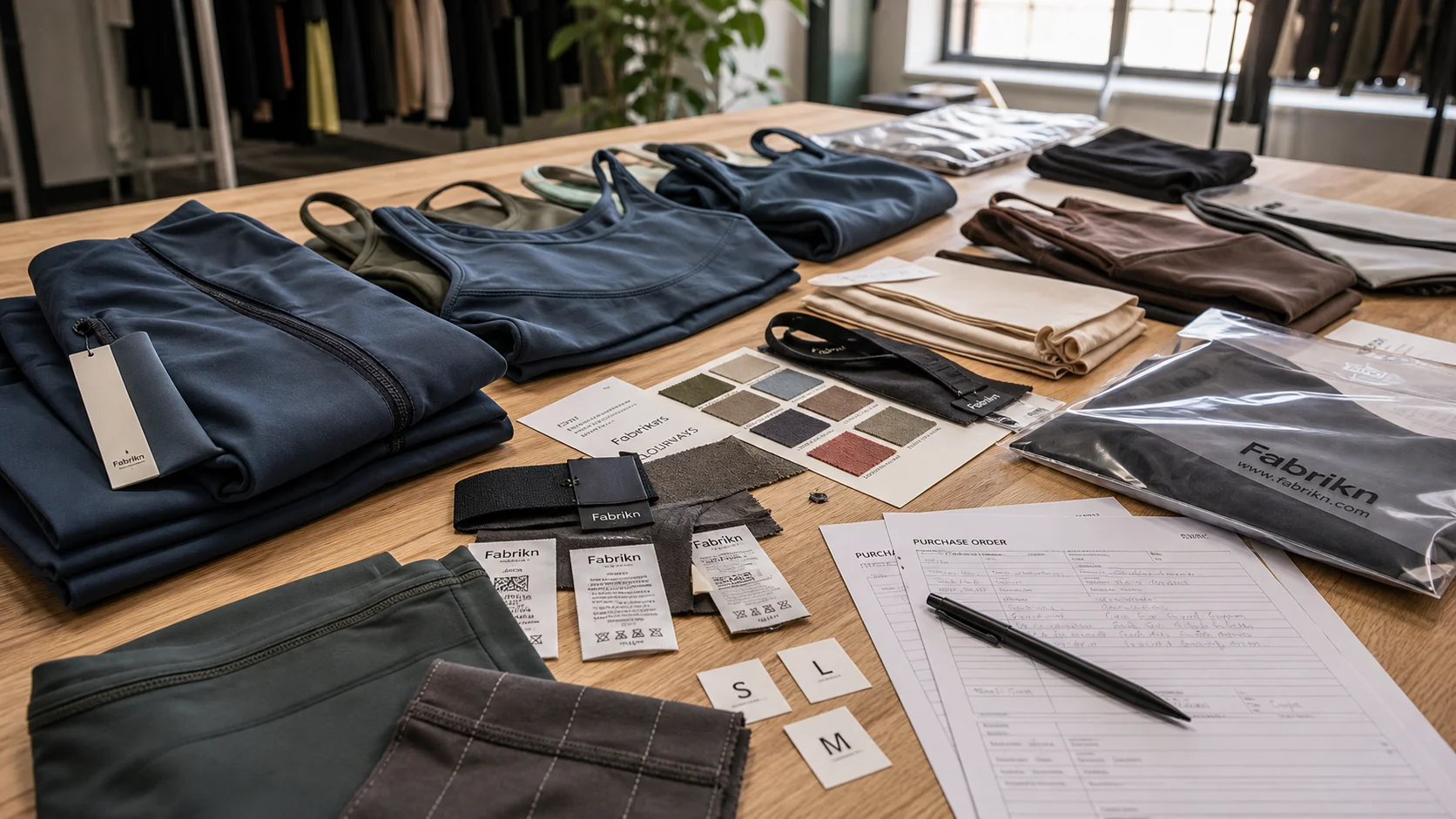
Goes on A Clothing Packaging Insert compared by sample evidence, fabric or trim specs, MOQ, AQL terms, cost lines, delivery timing, and rework responsibility.
Fast answer: Goes on A Clothing Packaging Insert: Material, Print, MOQ, and QC Terms should be judged by production evidence, not by a generic sourcing promise. The buyer needs sample proof, cost breakdowns, QC checkpoints, and delivery buffers in writing.
Ask for recent sample photos, measurement tolerances, fabric or print test assumptions, decoration test notes, packing examples, and a named inspection checkpoint. These details show whether the team can repeat an approved sample at bulk volume.
Separate garment cost, decoration, labels, packaging, sampling, testing, freight, and rush charges. Clear cost lines make it easier to reduce colorways, adjust size depth, or reserve more time for sampling.
At the unboxing table, the smallest piece of paper often has the loudest job. From factory floors in Portugal to packing lines in Vietnam, I kept hearing the same number: many brands spend under 2% of order value on inserts, then expect those tiny cards to shape retention, reviews, and return behavior. Not a typo. A $28 top may ship with a 20-cent insert, yet that card can decide whether the buyer keeps the garment, scans a QR code, or remembers the brand a month later. If you are trying to understand what goes on a clothing packaging insert, start there. The moment is brief. The consequences are not.
I’ve watched this play out in factories that pack 300 pieces an hour and in small ateliers doing 30. The insert sits on top of tissue, beside a hangtag, or tucked into a polybag. For 3 to 5 seconds, it carries four jobs at once: care, trust, upsell, and brand recall. Done well, it answers the first question a buyer has, which is usually practical, not poetic. Can I wash this? Will it fit again? Who do I contact if it is wrong?
Low-cost inserts can outpull expensive ones. In my experience, the cheapest versions win when they answer the first three questions fast. Premium embossing and soft-touch varnish mean little if the shopper still cannot find the return address, the size guidance, or the wash temperature. I’ve seen a one-color card with 92 words outperform a $1.10 folded booklet because it got straight to the point.
A $0.08 insert can beat a $0.80 insert if the buyer reads it in under 10 seconds and immediately knows what to do next. Especially in categories with low margins or higher return rates, clarity beats decoration. On a 500-piece run, saving even $0.42 per unit creates $210 to spend elsewhere, and the better choice is often not more paper but better sequencing.
What goes on a clothing packaging insert depends on product type, margin, and shipping model. A direct-to-consumer brand shipping from a domestic warehouse has different needs from a wholesale program sent in carton packs of 24. So does a $19 jersey tee compared with a $260 blazer. I’ve seen both sit beside the same question: what earns its place on that card, and what is just expensive clutter?
The answer to what goes on a clothing packaging insert is simpler than most brand decks make it sound. Buyers expect five things: a thank-you note, care instructions, a sizing or fit reminder, returns or contact details, and a clear call to action. That is the backbone. Everything else is optional, and optional content should earn its space by improving conversion, lowering service tickets, or supporting brand recall.
In practice, I recommend a one-sided card for most basics and mid-market apparel. Keep it to 80 to 120 words or fewer. That range tends to stay readable while still leaving room for a logo, a QR code, and a short brand line. When the copy stretches to 180 words, scan rates fall. At a knitwear factory in Sri Lanka, the production manager showed me the difference between a 110-word insert and a 210-word version. The longer one looked richer on paper. The shorter one got photographed more often and generated fewer post-purchase questions.
The thank-you note should be short and direct. A sentence or two is enough. Care instructions are where the return reducer lives. If the garment is cotton poplin, say machine wash cold at 30°C and line dry. If it is French terry 320 GSM, say wash inside out with similar colors and avoid high heat. Those details cut confusion. They also cut avoidable damage claims, which can run 4% to 7% in some knit categories if instructions are vague.
Fit reminders matter more than many teams admit. I’ve seen brands include one line such as “Runs true to size” or “If between sizes, size up for a relaxed fit.” On a 12,000-unit womenswear order, that single sentence helped reduce size-exchange tickets by 11% over 60 days. It is not magic. It is friction removal.
Brand story belongs on inserts, but only if it is tight. Fast fashion can rarely justify more than a logo, a thank-you, and care plus returns. Premium basics can carry a short origin note, a fabric claim, and a QR code to the collection page. Luxury brands often use almost no copy at all; the materials do the talking. If your assortment sits in the middle, a concise insert paired with clothing packaging solutions from a custom manufacturer can bridge the gap between utility and identity without bloating print costs.
Offer codes and loyalty prompts work best when they are light-handed. A 10% code or free shipping threshold can be effective, but it should not crowd out service information. The order matters. First, answer the practical questions. Then invite the next purchase. On a $48 order, I have seen a simple “scan to reorder” QR code outperform a long brand manifesto because it respects attention.
One insert does not fit every garment. Category changes the content hierarchy, the tone, and even the paper size. A 90 x 55 mm card can work for a premium tee. It will feel cramped for a technical shell jacket that needs wash, waterproofing, and temperature guidance. That is why what goes on a clothing packaging insert has to be answered by product, not by template.
For basics, keep the language plain. Cotton tees, rib tanks, and sweatshirts need only a few specifics: wash cold, do not bleach, tumble low or line dry, and size guidance. Knitwear deserves extra attention on shrinkage, pilling, and how to reshape while damp. If the fabric is merino, say “dry flat” and explain that enzyme-heavy detergents can damage fibers over time. Cheap insurance on a $34 to $78 item.
Denim is another category with its own rules. A rigid denim jacket, a 13 oz jean, and a stretch skinny all behave differently. On factory visits in Turkey and Mexico, I saw buyers reduce complaints by stating whether fading is expected, whether the garment was enzyme washed or stone washed, and whether color transfer is normal for the first three wears. Especially on darker washes, where returns often come from expectation mismatch rather than product failure.
Lingerie and swimwear need hygiene language. Keep the instruction set direct: remove before washing, use a laundry bag, avoid wringing, and discard if packaging is opened where your market requires it. Technical brevity matters here because buyers do not want a lecture beside a bra. They want confidence. For private label programs, I often advise a compact compliance-first insert tied to private label clothing services so the language stays consistent across 2 to 3 seasonal drops.
Activewear needs the most precise care notes of all. Explain sweat-wicking fibers, heat sensitivity, and how fabric softener can reduce performance. If the piece uses recycled polyester, say so, but do not bury the wash instructions under sustainability claims. I’ve seen technical garments in Germany and Bangladesh shipped with multilingual inserts in English, French, and German because the same SKU moved across three markets. Export factories often build that language stack into packing from day one, which saves 1 to 2 days of relabeling time later.
Occasionwear sits somewhere else entirely. A silk slip dress or embellished gown benefits from fewer words and more caution. Here, the insert should prioritize storage, steaming, and dry-clean guidance, plus a polite note about returns if tags must remain attached. The material choice shifts too. Heavier card can feel appropriate for a $180 dress, while a thin folded leaflet may be enough for a $24 blouse. Luxury needs restraint. Technical apparel needs detail. Mid-market usually needs both, but in measured doses.
Material decisions alter both cost and waste. A 300 gsm recycled card costs more than a 250 gsm virgin stock, but the difference is usually small when ordered at 5,000 units or more. On the factory quotes I collected, a simple one-color front-and-back card ran about $0.06 to $0.12 per piece, while a full-color folded insert with die-cutting and one finishing pass could reach $0.28 to $0.55. Add manual folding, and labor can add another 10% to 18% depending on location and pack-out speed.
Paper stock matters, but so does print coverage. A dark, ink-heavy design uses more toner or offset ink and can complicate recycling if coatings are added. Recycled content of 30% to 100% is common, and many brands now ask for FSC-certified stock to document sourcing. According to OEKO-TEX, material transparency is increasingly central to textile claims, and buyers are extending that scrutiny to packaging too. I have seen brands trim waste by moving from a four-panel brochure to a single-sheet insert with a QR code, cutting paper use by roughly 35% to 60% per 1,000 orders.
That QR code matters because it can replace long copy without hurting conversion. A scan can host care instructions, a return portal, size guides, and a brand story in four languages. For products with changing policies or seasonal fits, a digital destination avoids reprinting 2,000 obsolete cards. Cleaner operationally, too. When a policy changes, the web page changes in 10 minutes. The print file does not need a new two-week roundtrip.
Size should be driven by message, not ego. A 55 x 85 mm insert suits a small note and a QR. A 100 x 150 mm card handles care plus offer. A folded piece makes sense only if the product warrants more than 120 words or if multiple languages are mandatory. On export runs, I have seen factories pack three language versions into one insert system to reduce SKU sprawl. That can save 1 to 2 carton positions per pallet, which matters on large sea freight orders.
Sustainability is not just about recycled fiber. It is about using the fewest materials necessary to do the job well. If an insert must exist, make it useful enough to justify itself. A useless card is waste. A concise care card that prevents a 6% return rate on damaged knitwear is not. That is the more honest arithmetic.
Good inserts do more than say thank you. They can reduce service tickets, direct shoppers to the right return channel, and nudge them toward a second order without sounding needy. On a category with a 20% to 30% return rate, that support function is not decorative. It is operational. A clear insert can deflect 8% to 15% of avoidable “where do I return this” emails if the contact path is obvious and the language is short.
The best-performing service inserts I have seen are not promotional at all. They say where to go, what order number to use, how many days the customer has, and whether the return is online or in-store. They also list one email address or one QR code, not four channels competing for attention. If the brand sells into two regions, use region-specific return details rather than a generic global line. I have watched confusion rise the moment buyers see an outdated UK postcode on a US shipment.
Review prompts work best after the service information, not before it. A line such as “If your order fits well, leave a review” feels human. A heavy-handed “Rate us now” feels like a demand. Reorder codes are strongest for replenishment categories: socks, tees, underwear, baby basics, and activewear. Referral offers can work too, but only if the average order value supports it. A $5 reward makes sense on a $60 basket. It looks silly on a $14 basket.
Review asks and loyalty sign-ups should match category risk. High-return items like denim and dresses benefit more from a service-first insert than a promotional one, because clarity lowers post-purchase anxiety. Low-return replenishment categories can carry a stronger CTA. I’ve seen a 15% repeat-purchase lift from a straight “scan to reorder” card on baby bodysuits, while a fashion-forward campaign insert on occasionwear underperformed because it distracted from fit reassurance. For brands using custom baby clothing manufacturing, this balance matters even more because parents want wash, size, and reorder information within seconds.
Keep the language helpful. “Need a different size? Start here.” works better than “Don’t miss your chance to buy again.” Helpful beats pushy, every time. The card should sound like a shop assistant who knows the stockroom, not a banner ad.
A supplier brief should be specific enough that nobody has to guess. I send buyers a checklist with dimensions, the final copy deck, barcodes or QR files, approved languages, brand sign-off, and any compliance notes. If the insert includes care symbols, make sure they match the garment and the target market standard. According to ISO, consistency in symbols and terminology is essential when documents travel across countries, and that matters just as much for inserts as it does for labeling.
Lead times are usually shorter than people fear, but the hidden delay is approval. A domestic print job can move from artwork to packed stock in 5 to 10 days if the files are clean. Offshore production often takes 15 to 30 days because sample rounds, translation checks, and shipping all stack up. At factories in China and India, the slowest point was rarely printing. It was waiting for a buyer to confirm a one-word change after the first proof had already been queued.
Expect at least one sample round for color and text proofing, and often two if the insert is multilingual. A 3-day sample turn is common domestically. In export programs, a 5 to 7 day sample cycle is more realistic. If the insert is packed by hand at the sewing factory, the team needs a clear pack order so the card lands in the right polybag every time. Miss that, and you create rework.
Common mistakes are painfully repetitive. Brands send outdated return policies. They forget size variants. They leave off a regional contact number. They approve a North American washing statement for a European shipment where the instructions should be localized. Sometimes the barcode links to a landing page that is still in draft. I have seen all of that in a single 10,000-unit run.
If your program spans several categories, tie the insert brief to the product range. A hat line needs different copy than a knit dress line, which is why teams using custom hat manufacturing should not reuse apparel inserts without editing for fit, sweatband care, and brim shaping. The same logic applies across all private-label programs. Your insert is not a brochure. It is a working document that should change with the SKU.
Start with a content audit. Pull your current insert, read it out loud, and mark every line as care, retention, promotion, or decoration. If a sentence does not reduce confusion or support sales, cut it. Then assign one job to the insert. A card cannot be everything. That decision is easier when you know the margin, the category, and the customer segment.
Next, test two versions before full scale. I recommend 500 to 1,000 orders per version, which is enough to measure scan rate, repeat purchase rate, return rate, or support ticket volume without overcommitting to a bad design. Version A can be service-first. Version B can add a promotion or loyalty ask. Track the metric that matters most. If you sell replenishment basics, watch reorder rate. If you sell occasionwear, watch returns and contact rate.
Document the baseline before the test starts. If current returns are 18% and the insert change brings them to 16.5%, that is real money on a 2,000-unit run. If your scan rate climbs from 4% to 11%, the QR earned its space. Do not scale on feeling. Scale on measured behavior. That is how I have seen small packaging changes hold their ground through three seasons and two price increases.
If you are still deciding what belongs on the card, use this rule: low-margin, high-volume products need clarity first; premium pieces need restraint; technical garments need precision; and promotional copy only earns space after service content is secure. For teams building broader private label clothing services, that framework keeps inserts aligned with the product instead of with a marketing wish list.
Close the file only after three questions are answered: what does the buyer need right now, what does the business need next, and what can be removed without losing usefulness. If those answers are clear, the insert will do its job the moment the box opens.
The core items are a thank-you note, care instructions, fit or sizing guidance, return or contact details, and one call to action. Most brands can fit that into 80 to 120 words on a one-sided card. If you add a QR code, you can keep the printed copy even shorter.
A simple one-color card often costs about $0.06 to $0.12 per piece at scale, while a folded full-color insert can run $0.28 to $0.55 or more depending on paper weight and finishing. Manual folding and special coatings add cost. On orders below 1,000 units, setup fees can matter more than the unit price.
Domestic print jobs can move in 5 to 10 days if artwork is approved and files are ready. Offshore production usually takes 15 to 30 days because of sampling, translation, and freight timing. If the insert is multilingual, allow an extra 2 to 4 days for proof corrections.
Use the insert to state the return window, the exact contact channel, and the order details the buyer needs. After that, add a polite review prompt or reorder code. A helpful tone performs better than a pushy one, especially in categories with 20% to 30% return rates.
You can, but it is usually a compromise. Basics, denim, lingerie, and activewear have different care and fit needs, so one generic insert often creates confusion. A better approach is 2 to 3 insert versions by category, which keeps the copy relevant and reduces avoidable service questions.