
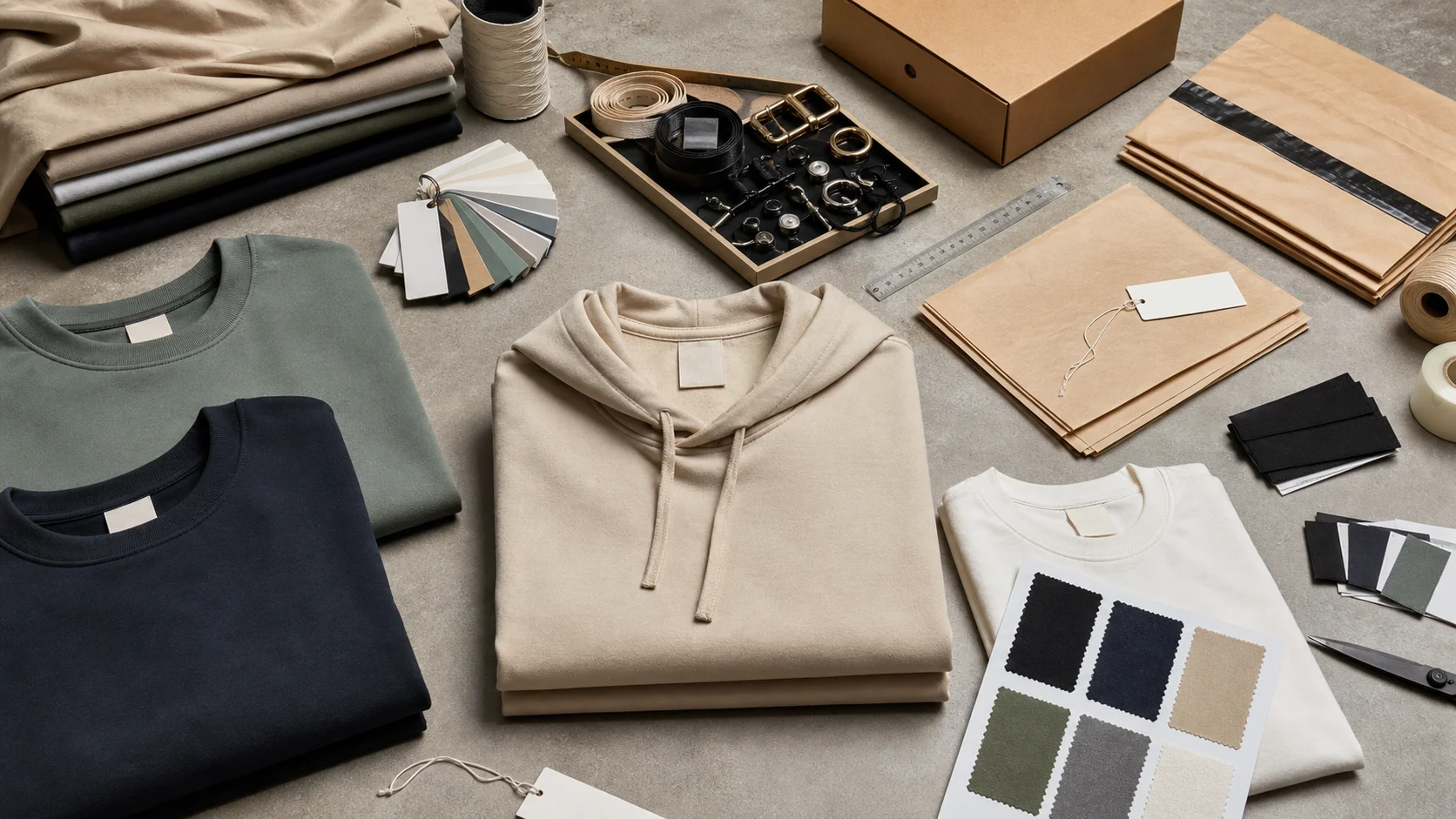
A Capsule Collection in Fashion compared by sample evidence, fabric or trim specs, MOQ, AQL terms, cost lines, delivery timing, and rework responsibility.
Fast answer: A Capsule Collection in Fashion: Tech Pack, Sample Gate, MOQ, and QC Terms should be judged by production evidence, not by a generic sourcing promise. The buyer needs sample proof, cost breakdowns, QC checkpoints, and delivery buffers in writing.
Ask for recent sample photos, measurement tolerances, fabric or print test assumptions, decoration test notes, packing examples, and a named inspection checkpoint. These details show whether the team can repeat an approved sample at bulk volume.
Separate garment cost, decoration, labels, packaging, sampling, testing, freight, and rush charges. Clear cost lines make it easier to reduce colorways, adjust size depth, or reserve more time for sampling.
If you have ever looked at a wardrobe full of clothes and felt like you still had “nothing to wear,” you are not alone. That is exactly the problem a capsule collection is designed to solve. In fashion, a capsule collection is a small, carefully curated set of versatile pieces that work together to create many different outfits. Instead of chasing every trend, capsule dressing focuses on quality, coordination, and longevity.
For sustainable fashion brands, designers, and retailers, the concept of a capsule collection is more than a styling idea. It is a business strategy that reduces waste, simplifies production, and encourages consumers to buy better, less often. In this guide, we will explain what a capsule collection in fashion really means, why it matters for sustainability, how to build one, and how brands can use capsule collections to create lasting value.
A capsule collection in fashion is a limited selection of garments designed to be worn together across multiple occasions. The pieces are usually coordinated by color, silhouette, fabric, and style, allowing the wearer to mix and match items easily. A capsule collection can include essentials such as tops, bottoms, dresses, outerwear, and accessories, but the overall assortment remains intentionally small.
The term is often used in two ways. For consumers, it refers to a streamlined wardrobe of versatile essentials. For brands, it can describe a small seasonal product drop, designer collaboration, or themed edit that communicates a clear point of view. In both cases, the idea is the same: fewer pieces, better coordination, and more styling possibilities.
A true capsule collection is not just a reduced version of a normal collection. It is a deliberate edit. Every piece should serve a purpose, complement the others, and reflect the brand’s aesthetic and values. That is what makes it especially relevant in sustainable fashion, where intentional design is central to reducing overproduction and improving product longevity.
Sustainable fashion is about more than using eco-friendly fabrics. It includes responsible design, efficient production, lower waste, and longer-lasting garments. Capsule collections support these goals in several important ways.
First, they encourage less consumption. When shoppers are presented with a small number of versatile pieces, they are less likely to make impulsive, trend-driven purchases. Instead, they can buy items they will wear repeatedly.
Second, capsule collections reduce design and production complexity. Brands can focus on a tighter range of SKUs, which helps minimize dead stock, unsold inventory, and fabric waste. This is particularly useful for emerging labels and B2B clients who want a more controlled production strategy.
Third, capsule collections often highlight timeless design rather than fast-fashion cycles. This shift supports longer product life spans and a stronger emotional connection between the customer and the garment.
For fashion businesses looking to align style with responsibility, capsule collections can be a practical and profitable model. If you are considering a more thoughtful production approach, Fabrikn can support your development process through our services and manufacturing capabilities.
Although every capsule collection is different, successful ones usually share a few common traits.
A capsule collection typically includes a small assortment of items, often between 8 and 30 pieces depending on the brand and purpose. The limited size helps maintain clarity and cohesion.
Capsules often rely on a restricted color scheme. Neutral tones, earth shades, or a focused seasonal palette make it easier to mix pieces without visual conflict.
Each item should pair naturally with multiple others in the range. A well-designed capsule allows consumers to create many outfits from only a few garments.
Instead of following micro-trends, capsule pieces often use classic cuts, refined details, and wearable silhouettes that remain relevant beyond one season.
Every product in the capsule should have a clear role. Whether it is a layering piece, a statement item, or an everyday essential, nothing should feel unnecessary.
Because quality is central to the concept, capsule collections usually require durable fabrics and reliable manufacturing. This supports garment longevity and consumer satisfaction.
Capsule collections offer advantages for both the fashion business and the end customer.
From a customer perspective, capsule collections make dressing simpler and more enjoyable. From a brand perspective, they make product development more focused and sustainable. That combination is one reason capsule collections continue to grow in popularity across premium, contemporary, and eco-conscious markets.
Creating a capsule collection requires strategic planning. Whether you are launching a retail line or developing a B2B private label project, the process should begin with a clear concept.
Start with a strong reason for the collection. Is it seasonal? Designed for a specific customer segment? Built around a sustainability message? The purpose will guide every decision that follows.
A capsule collection works best when it tells a coherent story. This could be inspired by travel, minimalism, workwear, urban living, or a particular lifestyle. The story should inform color, fabric, and silhouette choices.
Understand who the collection is for. A capsule for professional women will look very different from one aimed at resort wear buyers or Gen Z consumers. Define age, lifestyle, budget, and style preferences.
Choose the garments that will anchor the collection. These usually include versatile basics such as shirts, trousers, skirts, blazers, dresses, or knitwear. Make sure every piece supports multiple styling combinations.
Design each item so it works with the others in the range. This means aligning proportion, fabric weight, color tones, and construction details. A capsule collection should feel unified, not random.
Before finalizing the collection, map out as many outfit combinations as possible. This helps confirm that the assortment is truly versatile and that no piece feels isolated.
Because capsule collections are meant to last, quality matters. Fit consistency, stitching, and fabric durability should be reviewed carefully during development and sampling.
If your business is developing a capsule line and wants support from concept to production, explore Fabrikn’s manufacturing services or reach out through our contact page.
Materials play a major role in whether a capsule collection feels premium and sustainable. The right fabric choices can improve durability, comfort, and the collection’s overall environmental profile.
Choosing the right materials is especially important in a capsule collection because each piece has to perform across frequent wear. A garment that loses shape, fades quickly, or pills after a few washes undermines the whole idea. Sustainable fashion depends not only on responsible sourcing, but also on products that truly last.
To understand the concept better, it helps to look at a few common capsule collection formats.
A workwear capsule might include tailored trousers, a blazer, a blouse, a knit top, a pencil skirt, and a shirt dress. These pieces can be combined for meetings, office days, and business travel.
A travel capsule may feature wrinkle-resistant basics, lightweight layers, comfortable pants, a neutral dress, and a weather-friendly jacket. The goal is to pack light while maintaining style flexibility.
This type of capsule focuses on essential wardrobe staples in neutral colors. Think T-shirts, jeans, button-downs, knits, and a few outerwear options. The wardrobe remains small but highly functional.
Fashion brands often use capsule collections to test a new aesthetic, launch a collaboration, or introduce a limited seasonal drop. These collections can generate excitement while keeping production more controlled than a full line.
While capsule collections are simple in concept, they can be difficult to execute well. Here are some common mistakes to watch for.
If there are too few options, the capsule may not feel useful. A successful collection needs enough variety to support real-life dressing.
Every item may look beautiful on its own, but if it does not work with the rest of the capsule, the collection loses coherence.
Even a strong concept can feel disjointed if the palette, texture, or fit are inconsistent across the line.
A capsule collection should have some longevity. If it is built entirely around short-lived trends, it may not deliver the sustainability or value customers expect.
Great design must be supported by practical manufacturing. Brands should consider lead times, minimum order quantities, material availability, and quality control from the start.
For fashion labels, capsule collections are more than a design format. They are a strategic tool for brand building. A well-executed capsule can introduce a new audience to the brand, strengthen a sustainable positioning, and create a more focused product experience.
Because the assortment is limited, brands can spend more time refining each style. This often leads to stronger storytelling, better merchandising, and more thoughtful marketing campaigns. A capsule collection can also be used to test demand before expanding into a larger line, making it a smart choice for brands that want to reduce risk.
At Fabrikn, we understand that successful collections depend on both creativity and manufacturing discipline. Our approach supports brands that want to build collections with intention, from initial concept through production. Learn more about our company on the about us page.
So, what is a capsule collection in fashion? It is a small, intentional selection of clothing designed to work together seamlessly. In the context of sustainable fashion, capsule collections are especially valuable because they promote smarter buying, reduce waste, and encourage long-term wardrobe use.
For consumers, a capsule collection makes dressing simpler and more consistent. For brands, it offers a practical way to control production, tell a focused story, and build stronger relationships with conscious customers. Whether you are creating a minimalist wardrobe or launching a branded seasonal edit, the capsule collection model is a powerful example of how fashion can be both stylish and responsible.
If you are ready to develop a sustainable capsule collection, Fabrikn can help you turn your concept into a production-ready line. Start by visiting our services page or get in touch through our contact us page.
Get a free quote from Fabrikn — your trusted B2B clothing manufacturer with 10+ years of experience. MOQ as low as 200 pieces.
Get a Free Quote →A capsule collection is a small, curated set of clothing pieces designed to coordinate with one another and create multiple outfit combinations.
There is no fixed rule, but many capsule collections contain between 8 and 30 pieces depending on the brand, customer, and purpose of the collection.
They often reduce overproduction, encourage intentional purchasing, and focus on durable, versatile clothing that can be worn for longer periods.
Yes. A capsule collection can be seasonal, but the pieces should still be coordinated and versatile enough to support multiple outfits.
Common choices include organic cotton, linen, wool, Tencel, recycled polyester, and deadstock fabrics, depending on the collection’s purpose and season.
No. While minimalism is often associated with capsule wardrobes, brands can create capsule collections in many styles, from workwear to travel, luxury, and casualwear.
Begin with a clear concept, define the target customer, select versatile core pieces, choose coordinated colors and fabrics, and work with a reliable manufacturing partner.
Yes. Fabrikn supports fashion brands with manufacturing services and production guidance for focused, high-quality collections. You can learn more on our services page or contact us directly.