
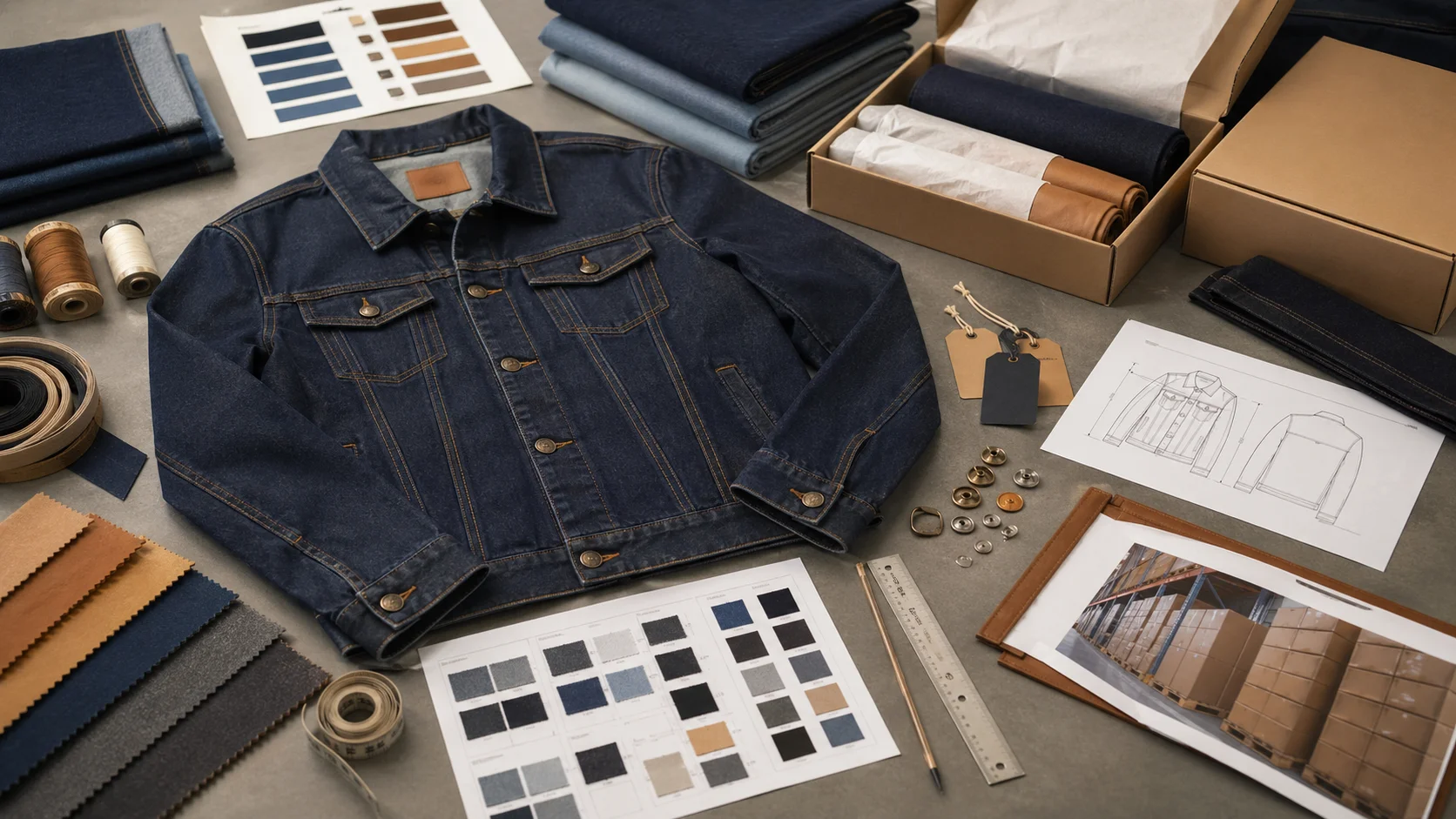
Clothing Box Insert Checklist with checks for samples, fit, MOQ, QC evidence, pricing terms, and delivery risk.
Fast answer: Clothing Box Insert Checklist: Required Message, Size, and Paper should be judged by production evidence, not by a generic sourcing promise. The buyer needs sample proof, cost breakdowns, QC checkpoints, and delivery buffers in writing.
Ask for recent sample photos, measurement tolerances, fabric or print test assumptions, decoration test notes, packing examples, and a named inspection checkpoint. These details show whether the team can repeat an approved sample at bulk volume.
Separate garment cost, decoration, labels, packaging, sampling, testing, freight, and rush charges. When every cost line is visible, it becomes easier to reduce colorways, adjust size depth, or reserve more time for sampling.
At a fulfillment center in Vietnam, I watched a packer slide a $140 silk dress into tissue, place one card on top, and seal the box in under 18 seconds. That tiny ritual made the order feel considered before the customer even touched the fabric. It is why what should be included in clothing box inserts is never a small decision. In the first 30 seconds, customers decide whether the order feels intentional or improvised.
At Guangzhou's Baiyun District, packaging engineers run the Heidelberg Speedmaster SM 52 with UV-curable inks on 100% GOTS-certified cotton pulp, then pass the sheets through a Bobst MasterCut 106 for perfect creasing and a Komori H-UV for spot varnish. Once the tissue envelope and card stack are trimmed, a 3M 300LSE hot melt sealer tacks a thank-you card in place before a packer hand-seals the carton, recreating the same choreography we see in Los Angeles, Ho Chi Minh City, and Porto.
I have seen the same pattern in Los Angeles, Dhaka, Porto, and Istanbul. The box opens. The customer scans for size, care, and return information. The brain makes a fast judgment. A missing care instruction can trigger avoidable returns and a wave of customer service emails, especially in categories with fit sensitivity above 25 percent. In my experience, one missing line about wash temperature can cost more than the insert itself.
The job of inserts is practical. They reduce returns. They answer care questions. They make the delivery feel complete. A basic $4 tee may need a slim card with care and returns details, while a $140 dress may justify a fuller set with fit notes and a handwritten-style note. The logic is the same. Clarity beats clutter.
Brands often overestimate how much packaging shoppers keep. Most people keep information, not decoration. A thick belly band, foil stamp, and layered sleeve can look expensive, but if the customer cannot find the return window in 10 seconds, the money went into theater. I have handled boxes with five separate inserts and boxes with two. The cleaner version usually wins on trust.
That is the real point: what should be included in clothing box inserts is not about stuffing a box with paper. It is about function, trust, and memory that lasts beyond the first wear.
The baseline insert stack should be short and useful. I would standardize five pieces: a thank-you card, care instructions, returns or exchange details, size or fit guidance, and brand contact information. Those five items answer the most common questions after purchase, especially for apparel where fit issues account for a large share of post-purchase friction. For many brands, that friction shows up as two or three extra emails per 100 orders.
Each insert should do a job in under 10 seconds. If the customer has to search for policy language, they will not search. They will leave the box on the counter and call support later. Concise copy, clear headings, and a scannable layout matter more than illustration-heavy collateral that gets tossed with the mailer. If an insert does not answer a likely question fast, it probably should not be included.
Ideally, the stack is printed on GOTS-certified 280 gsm cotton rag board or GRS-certified recycled PET with vegetable-based inks on a Komori H-UV or Heidelberg Speedmaster press in Guangzhou, then die-cut on a Bobst MasterCut 106. Finishing steps such as foil stamping or embossing take place on a Heidelberg Diana folder-gluer or a MecPaper fold, and the adhesives used are OEKO-TEX Standard 100 certified water-based glues, so the scent and off-gassing stay minimal. In short runs we sometimes send vector files to an Epson SureColor T3170 for personalization, then tape the cards with WRAP-compliant tape from a Dhaka supplier.
For sustainable brands, the paper itself deserves scrutiny. Heavier stock, full-bleed ink, and oversized trims increase waste. I have seen startups spend carefully on recycled mailers and then burn through the eco story with a five-card insert pack on glossy 350 gsm stock. Better choices exist. FSC paper, smaller formats, and QR codes can cut material use while keeping the box informative.
The essentials are not glamorous. They are useful. A brand that sells knit tops, denim, and dresses needs different wording, but the same structure applies. If the customer can identify what they bought, how to care for it, and what to do if it does not work, the insert has earned its place.
Fit guidance is the insert most brands underinvest in. I have visited factories where the box cost $1.80, the printed sleeve cost $0.42, and the brand still skipped a proper fit card that could have prevented a return worth $12 to $18 in lost margin and shipping. Backwards. The cheapest printed card often protects the most expensive customer outcome.
A size or fit card should be category-specific. Denim needs rise, inseam, and stretch notes. Knitwear needs recovery and body-hugging guidance. Tailoring needs shoulder width, waist placement, and whether the garment is meant to skim or structure the body. Activewear needs compression level, opacity, and squat-test notes. A 320 GSM French terry hoodie can feel generous, while a 180 GSM jersey tee may cling after one wash. Those differences matter.
Care instructions need to match fiber and finish. Cotton poplin may tolerate 30°C washing and low tumble drying. Merino should usually be washed cold and laid flat. Silk prefers steaming over direct heat. Denim often benefits from turning inside out and reducing wash frequency. If a garment uses enzyme wash, stone wash, or pigment dye, the care card should say so in plain language. That small detail can preserve handfeel and color through 10-15 wears longer than a vague symbol-only label.
Returns and exchange cards should be blunt. State the return window, like 14 days or 30 days. State the portal URL or QR code. State whether prepaid labels are included or generated online. State any exclusions, such as final sale items or worn garments. According to ISO guidance on standardized communication, clarity lowers interpretation errors. The same holds for apparel packaging. If a customer must decode policy, your support team pays for it later.
At the Ho Chi Minh City returns hub, we print return labels on Zebra ZT410s, fold them with a Duplo DC-618 folder, and place them inside a matte 250 gsm card tucked under the garment. The readability of the QR code and the presence of a hotline stamped in Pantone 187 ensures the customer is never asking, “Where do I send this?” after they open the box.
Here is what most people miss: a beautiful insert that hides the return process is worse than a plain one that makes returns easy. In one factory in Portugal, a brand spent 28 percent more on embossed packaging and still received more exchange emails than a competitor using a plain matte card with a QR code. Customers reward speed and honesty, not ornament.
Price point changes the mix, but not the logic. Budget brands need utility-first inserts. Mid-market brands need utility plus voice. Premium brands need brand storytelling with restraint. Luxury needs controlled minimalism, where one card does the work of three. A $22 blouse and a $2,200 coat may sit at opposite ends of the rack, yet both need the same three answers: what is this, how do I care for it, and what happens if it does not fit?
Regional expectations are different too. North America usually wants fast returns, plain language, and a visible support email. Europe often expects stronger multilingual coverage and tighter sustainability claims. Asia can be more QR-friendly, especially in urban markets where mobile-first shopping is standard. In some markets, a two-language insert is enough; in others, four languages are necessary because the shipment crosses borders before it reaches the customer.
I have seen recycled paper perform especially well in Germany and the Netherlands, where buyers notice material choices quickly. In the United States, recycled content matters, but a QR code to care and fit videos can matter more because customers want speed. That is why regional insert sets should not be cloned from one warehouse to another. The same piece of paper can signal intelligence in one market and indifference in another.
Cost differences are real. A basic set with a 170 gsm recycled card, an 80 gsm tissue layer, and a QR-coded sticker produced in a WRAP-certified shop outside Istanbul can be $1.95 per set, while the same stack produced in Dhaka on a BSCI-compliant press with foil stamping on a Heidelberg Speedmaster can go to $2.60. The higher spend in Istanbul often buys smaller runs, multilingual copy, and a silk-screened sleeve, while the Dhaka line is optimized for speed and volume. Ho Chi Minh City sits in the middle, with the local supplier offering $2.10 sets that include a short printed slip describing the garment’s dyeing process.
The upshot: choose inserts that match both your price tier and the expectations of each fulfillment city. A single beautifully debossed card might impress Istanbul shoppers, but a clear bilingual care card is what matters more to a customer receiving the same garment in Guangzhou three days later.
Design always begins with material and supply chain compliance. We select GOTS-certified cotton rag boards and GRS-certified recycled PET for inserts that live inside a garment box, and we verify the mill’s OEKO-TEX Standard 100 certification before approving artwork. The printing run is usually scheduled on a Heidelberg Speedmaster or Komori H-UV in Guangzhou, with vegetable-based inks and water-based adhesives passed through a Bobst die-cutter. The result is a tactile, matte surface that still meets recycled-material claims without using a glossy laminate that would hinder recycling.
Social responsibility is just as important. Our partners in Dhaka, Ho Chi Minh City, and Istanbul all present WRAP and BSCI audit certificates so we can prove safe working conditions. When a brand references its environmental story on an insert, we back it up with lab reports from SGS showing the paper uses 40 to 60 percent post-consumer fiber and that the adhesives are free of phthalates and heavy metals. The same inserts may include a GRS seal on the back for pieces with recycled polyester content or a small OEKO-TEX Standard 100 logo to prove the inks and finishes are safe for babies and small fingers.
Process controls matter too. Every new insert concept goes through a digital proof, color matched on an X-Rite i1Pro 3 spectrophotometer before press checks. We record the Pantone numbers, run plate checks, and keep a log for our Istanbul-based creative director to approve. If a revision is needed, we rerun an automatic PDF out of Adobe Illustrator, load it into a Fiery XF RIP, and then update the quotes, so the Guangdong print shop and the Dhaka bindery always work with the same version.
A standard run of five inserts produced in Guangzhou at 500 MOQ costs between $2.50-4.00 per unit, delivered to the port, depending on the complexity. The lower end of the range uses simple CMYK printing on 200 gsm recycled card with no finishing, while the higher end includes foil debossing, spot UV, and a two-color silk screen on a second card. Quality control happens on the press with inline densitometers, and the final touches—folding, scoring, and packing—run through a Komori booklet maker before being bagged for shipment.
Turnaround time is typically 18-22 business days from proof approval to port-ready pallets. That window includes 3-4 days for artwork adjustments, 5-7 days for printing and die-cutting, 4-5 days for finishing (including any cold foil or embossing on a Heidelberg Diana), and 6-7 days for folding, bundling, and shipping consolidation. If an insert needs personalization, the run shifts to a digital system like an HP Indigo 7K, which adds an extra 2-3 days but allows for variable data without sacrificing tactile quality.
Expedited options are available from Dhaka and Ho Chi Minh City suppliers, but they usually raise the price by 12-18 percent due to overtime, express freight, and compressed press time. The lesson: plan ahead, allow at least a 22-day window if you need multiple versions, and coordinate your packaging schedule with the fulfillment center in Guangzhou or the distribution hub in Istanbul to avoid last-minute rush fees.
Before making the insert final, run through a checklist with your production and creative teams:
Testing is just as important as design. Send the inserts with sample orders to your fulfillment center in Ho Chi Minh City and a resale store in Los Angeles. Measure the number of customer inquiries that came in after each launch, and see if they align with your target of fewer than three follow-up emails per 100 orders.
Most brands find that five inserts (thank you, care, fit, returns, and contact) cover the essentials. If you go beyond that, make sure each card has a clear goal, a scannable layout, and is made from recycled or GOTS-certified stock so it still reinforces your sustainability story.
Yes, but keep the explanation short. Use UE-coded QR labels printed on OEKO-TEX Standard 100 stickers, and mention that the video is about fit or care. QR codes work across markets—from Dhaka to Istanbul—when you include a short call to action like “Scan for fit guidance” in both local and English languages.
Foil stamping, embossing, and digital personalization drive costs more than raw paper. The location also matters: printing in Guangzhou with a Heidelberg press is cost-effective for large runs, while Istanbul’s smaller shops charge more for custom foil or metallic inks. Factor in turnaround time (typically 18-22 business days) and the $2.50-4.00 per unit spread at 500 MOQ, and you can budget properly before launch.