
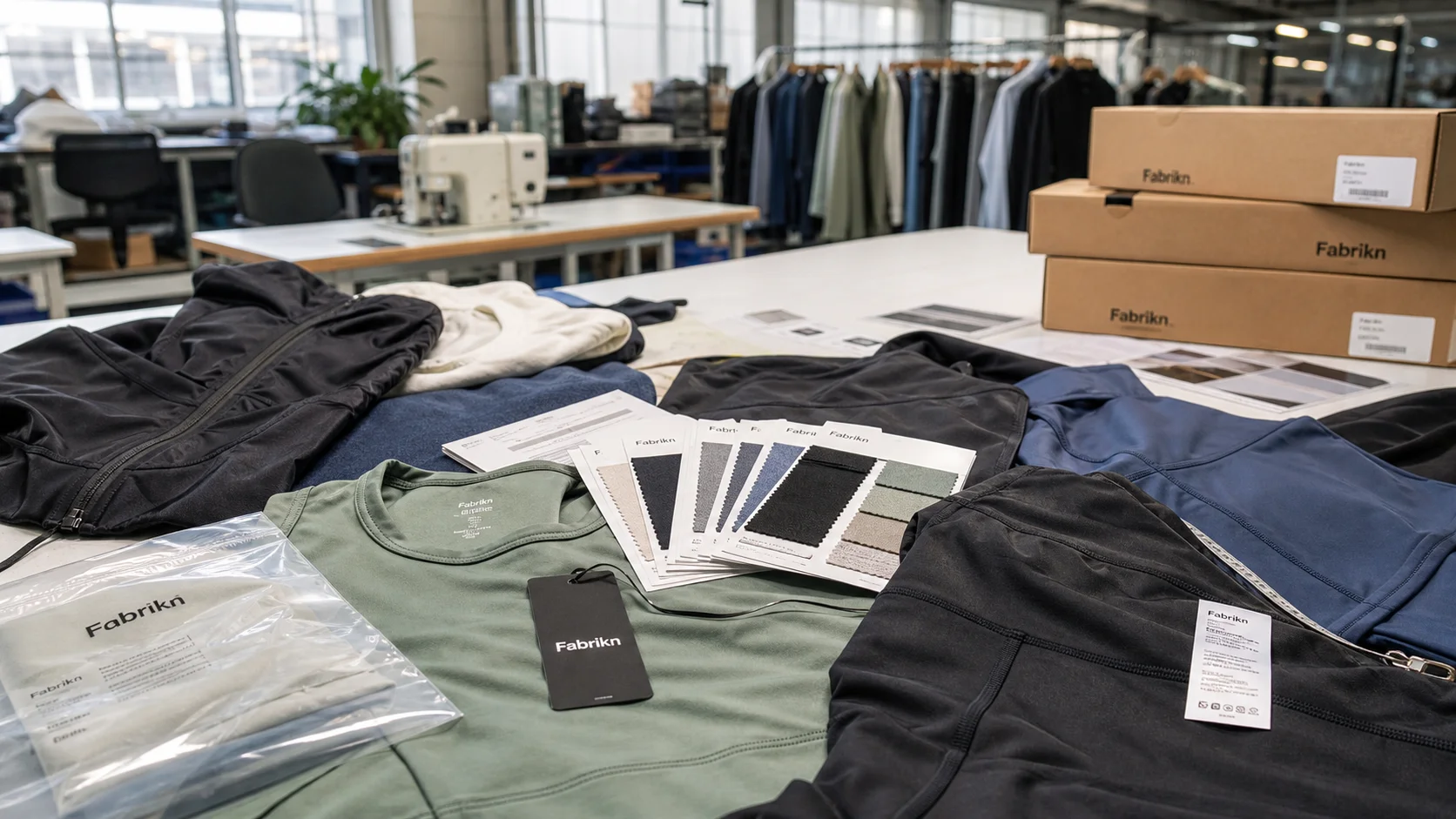
A detailed outline for gym chain buyers comparing wholesale tracksuit colorfastness testing pricing, test methods, cost drivers, and production decisions that affect activewear durability at scale.
Wholesale Tracksuit Colorfastness Testing Pricing - Fabrikn production reference
For gym chain buyers, tracksuits do more than fill a uniform program. They carry brand colors, support staff presentation, and often sit in a retail corner as merchandise for members. That makes colorfastness testing a purchasing issue, not just a technical fabric issue.
When a wholesale tracksuit loses color after repeated washing, crocking, sweat exposure, or friction from equipment use, the problem usually travels fast. Members notice fading. Staff complain about inconsistent appearance across locations. Reorders become difficult if later batches do not match earlier deliveries. Returns, replacement claims, and reputational friction often cost more than the testing itself.
This is why buyers searching for wholesale tracksuits colorfastness testing pricing need a practical view of cost. The cheapest lab line item is not always the lowest landed risk. A low testing budget can look efficient on paper, then create avoidable expense through failed approvals, delayed production, or store-level complaints.
For a gym chain, the best purchasing approach is usually balanced: test enough to control risk, but do not overload the program with unnecessary standards that slow launch timing. If your product is a basic polyester interlock tracksuit in dark navy with white stripe tape, your test matrix may be tighter than a fashion-heavy brushed fleece set with contrast panels, sublimation print, heat-transfer logos, and rib trim from multiple vendors.
Buyers that want more structure around vendor setup and production support often start by reviewing supplier process pages such as /services/ and using early sourcing conversations to define testing ownership before sampling starts.
Colorfastness refers to how well a dyed or printed textile holds its color under expected conditions of use. In tracksuits, that usually means resistance to washing, rubbing, perspiration, light, and sometimes water or chlorinated conditions depending on the program.
Gym chain buyers should view tracksuits as a mixed-risk product category. A single set often includes several components:
Each component can react differently in testing. A fabric body may pass wash color change standards while the contrast panel bleeds. A heat-transfer logo may crack or stain the surrounding area. Rib trim can shift shade after laundering even if the main fabric remains stable.
That is why “passed colorfastness” is too vague for a serious bulk order. Buyers should ask which material was tested, which colorway was tested, which standard was used, and whether the result covered the final garment or only a fabric swatch.
Direct purchasing judgment: for gym chain programs, garment-level risk is often more important than mill-level optimism. Fabric test reports are useful, but they do not replace confirmation on the final combination of fabric, trim, print, and construction.
Wholesale tracksuit colorfastness testing pricing is usually structured in one of three ways: per test, per color or material, or as part of a broader laboratory package. Different suppliers and labs handle this differently, so buyers should not assume one quote is directly comparable to another.
This is the most common format. A lab charges separately for each test method, such as colorfastness to washing, rubbing, or perspiration. If a tracksuit program requires four test methods across two fabrics and three colorways, the budget rises quickly.
Some programs are quoted based on the number of submitted items. That means jacket shell fabric, pant fabric, rib trim, and logo print may be counted separately if they are different constructions or colors.
For larger activewear orders, a supplier may offer a package covering selected physical and colorfastness tests together. This can be cost-effective, but buyers need a clear list of inclusions. Bundled pricing sometimes looks attractive because it excludes retests, trim checks, or final garment confirmation.
In practical sourcing terms, typical entry-level third-party lab costs for common colorfastness methods often start around the low tens of dollars per method and can move into higher double digits or more per submission depending on the standard, urgency, and market. A modest tracksuit testing program may land in the low hundreds of dollars. A more complex gym chain program with multiple colors, fabrics, prints, and confirmation rounds can move into several hundred dollars or beyond.
That range is broad for a reason. Pricing depends on what you are actually asking the lab to confirm. One black polyester training set for staff uniforms is very different from six branded colorways across men’s, women’s, and youth size runs.
For wholesale tracksuits intended for gym chain use, the most common colorfastness test scope includes the following items.
This checks whether the color changes after laundering and whether dye transfers onto adjacent fabrics. It is one of the first tests buyers should require because gym uniforms and retail activewear are repeatedly washed.
This evaluates dry and wet rubbing. It matters for dark shades, brushed surfaces, and heavily dyed materials. In gym environments, repeated contact with benches, bags, and equipment can expose weak performance quickly.
For activewear and teamwear, this is often non-negotiable. Sweat exposure can trigger staining, bleeding, or color change that might not appear in standard wash testing alone.
This is relevant where garments may be used in damp transit, light rain, or cleaning contact. It is usually not the highest-risk test for standard tracksuits, but it can still be useful in uniform programs.
If tracksuits are frequently displayed in storefronts, worn outdoors, or stored in sunlit areas, lightfastness can matter. This is not always the first test a buyer funds, though it becomes more important for bright brand colors and long program durations.
For sublimated polyester panels or heat-applied branding, buyers may need to evaluate heat-related color migration risk. This is especially relevant when white logos are applied over dark synthetic fabrics.
The final test plan should match the product design. It is poor buying discipline to copy a generic testing grid without considering fabric content and end use.
Tracksuit Element Common Risk Likely Testing Priority Dark polyester tricot body Wet crocking, wash shade loss High Contrast stripe tape Bleeding onto lighter panels High Brushed fleece interior Surface rub-off, shade variation Medium to high Heat-transfer logo Migration, staining, cracking side effects Medium to high Rib cuff and waistband Tone mismatch after laundering MediumTesting budgets rise or fall based on several purchasing variables. Buyers should focus on these before asking why one supplier quote is cheaper than another.
A black tracksuit, a red tracksuit, and a heather grey tracksuit do not carry the same dye risk. Dark and saturated shades often deserve more attention. If your gym chain has strict brand color matching, each major colorway may need its own confirmation.
Programs using a single 100% polyester interlock are easier to test than programs combining polyester shell, cotton-blend lining, rib trim, and printed mesh inserts.
Embroidery, silicone badges, transfer logos, and contrast tapes can each add testing needs. The more decoration methods involved, the less reliable a simple fabric-only report becomes.
In-house testing is faster and often cheaper, but independent reports usually carry more weight if there is a dispute. For gym chains with multiple sites and formal procurement review, third-party verification is often the safer purchasing choice.
Rush testing almost always costs more. If lab booking is left until after bulk fabric is dyed, expedite charges and production delays can stack together.
This is one of the most underestimated cost drivers. A failed wet crocking result can trigger dye process adjustment, shade re-approval, fresh submission, and bulk date movement. The original test fee is only part of the financial impact.
Most overspending and most preventable failures come from process gaps, not from labs charging too much.
A common buyer error is treating testing as a compliance formality rather than a decision gate. If the vendor knows that failures will not stop shipment, the whole testing exercise becomes weaker.
Practical tradeoff: if budget is tight, reduce unnecessary style variation before reducing core performance tests. Fewer fabrics and trims often save more money than cutting the test plan to an unsafe minimum.
The cleanest way to control wholesale tracksuits colorfastness testing pricing is to build testing into the sourcing calendar from the start.
Are the tracksuits for staff uniforms, promotional resale, member merchandise, academy teams, or all of the above? Heavy daily staff use may justify tighter standards than occasional event wear.
Buyers should specify fabric content, weight, surface, and trim types before multiple rounds of color development. For example:
Once these elements keep changing, testing cost control disappears.
Use the purchase specification or tech pack to state minimum acceptable grades and required methods. Buyers do not need to overcomplicate this, but they do need to be explicit.
A sensible sequence often looks like this:
Programs that assume perfect first-pass results are fragile. Leave room for at least one technical correction if a key colorway misses grade.
Buyers needing help structuring vendor communication and pre-production controls can use contact points such as /contact-us/ to discuss development workflows before bulk commitments are made.
Testing and pricing cannot be separated from MOQ and lead time. They affect each other directly.
Wholesale tracksuit MOQs vary by supplier setup, fabric route, and customization level. As a cautious market guide:
These are not fixed market rules. They shift based on fabric availability, mill minimums, and whether tops and bottoms are ordered as matched sets.
If buyers skip pre-production approval and jump straight to bulk, they may save one week on paper and lose four weeks when a test failure forces rework.
Colorfastness testing is tied to several lead-time variables:
A typical custom tracksuit timeline may run several weeks from development approval to shipment, with testing windows embedded inside. Dark shades, contrast-heavy designs, and multiple logo applications usually need more buffer.
Testing alone does not remove shipment risk. Buyers still need inspection discipline because some issues appear in production consistency rather than the initial lab result.
One practical problem in tracksuit production is that lab approval may be based on one submitted sample, while bulk garments are assembled from separate lots. If lot segregation is weak, colorfastness performance and shade consistency can both become unstable.
This is where buyers need direct tradeoff judgment. A lower-cost vendor with limited lot control can erase any savings if the gym chain depends on uniform appearance across many branches. On the other hand, a simple single-color staff tracksuit program may not need the same inspection intensity as a retail-facing capsule collection.
When budgeting wholesale tracksuits colorfastness testing pricing for gym chain buyers, it helps to break cost into layers.
This covers early fabric or color approval work. Buyers use it to screen obvious risks before bulk commitments.
This confirms that the actual production route still meets the expected standard. It is often the most valuable spending point because it catches issues before full assembly and packing.
Serious buyers should carry a reserve for one retest or corrective submission. Not every program needs it, but many do.
If the order value is meaningful or the program spans multiple gym locations, budget for final inspection or at least in-line QC review. Colorfastness failures sometimes show up as production inconsistency rather than pure lab non-compliance.
Budget Area Purpose Buyer Judgment Initial lab testing Screen fabric and color risks Do not skip on dark or saturated shades Garment confirmation Check final combination of materials Worth it for contrast-heavy designs Retest reserve Cover corrective round Important for tight launch calendars Inspection Control lot and packing consistency High value for chain-wide uniform programsIn many cases, the right question is not “How cheap can testing be?” but “What is the minimum testing needed to avoid expensive field failure?” That shift usually leads to better sourcing decisions.
Suppliers do not all manage testing with the same discipline. Some are comfortable with formal activewear programs and structured approvals. Others are more suited to simple promotional orders.
Buyers should ask:
These questions quickly reveal whether a supplier understands gym chain risk or is just quoting a unit price.
Background pages such as /about-us/ can also help buyers understand how a manufacturing partner presents its development and production positioning before deeper negotiation.
For gym chain buyers, wholesale tracksuits colorfastness testing pricing should be treated as a controlled sourcing cost, not a nuisance surcharge. The real objective is stable brand presentation across repeated wear, washing, and reorder cycles.
The best-value program usually includes:
Cheap testing can be enough for low-risk, simple products. It is rarely enough for multi-location gym chains buying custom-branded tracksuits in high-visibility colors. Buyers that understand this tend to spend more accurately, launch with fewer delays, and see fewer complaints after rollout.
Get a free quote from Fabrikn — your trusted B2B clothing manufacturer with 10+ years of experience. MOQ as low as 200 pieces.
Get a Free Quote →It usually includes one or more lab methods such as washing, rubbing, perspiration, or water fastness. Pricing may be charged per test, per fabric, per colorway, or as part of a package. Buyers should confirm whether trims and logos are included.
For a simple program, the testing budget may sit in the low hundreds of dollars. Complex programs with multiple colors, fabrics, trims, and retests can move higher. The exact amount depends on test scope, urgency, and sample count.
Not always, but relying on one color to represent all others is risky. Dark, bright, and contrast-heavy shades often behave differently, so key brand colors usually deserve individual review.
The strongest sequence is after color approval and before full bulk shipment, with testing done on production-representative material. If trims or logos create added risk, a final garment-level confirmation is often worthwhile.
Yes, especially if the garments are for visible staff use or resale. Smaller orders do make testing a larger percentage of the order value, but that does not remove the risk of fading, bleeding, or complaints.
The biggest risk is field failure after delivery: fading, staining, color transfer, or inconsistent appearance across locations. At that point, replacement cost and brand damage are usually much higher than the original testing fee.