
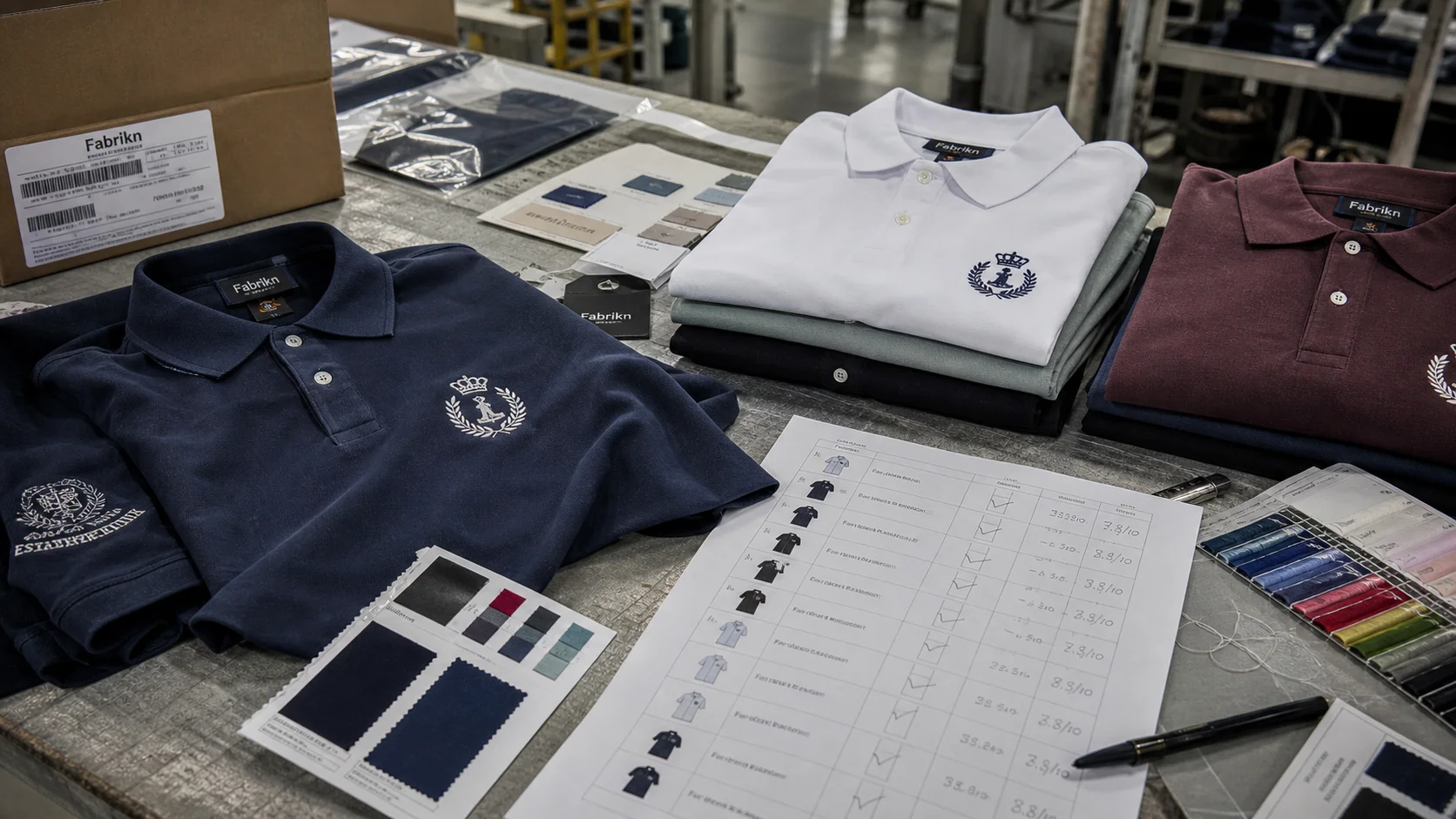
Packaging Inserts for Clothing Orders with checks for samples, fit, MOQ, QC evidence, pricing terms, and delivery risk.
Fast answer: Packaging Inserts for Clothing Orders: Material, Print, Packing Flow, and Cost should be judged by production evidence, not by a generic sourcing promise. The buyer needs sample proof, cost breakdowns, QC checkpoints, and delivery buffers in writing.
Ask for recent sample photos, measurement tolerances, fabric or print test assumptions, decoration test notes, packing examples, and a named inspection checkpoint. These details show whether the team can repeat an approved sample at bulk volume.
Separate garment cost, decoration, labels, packaging, sampling, testing, freight, and rush charges. When every cost line is visible, it becomes easier to reduce colorways, adjust size depth, or reserve more time for sampling.
The box may be the first thing a shopper sees, but the insert is what earns the second look. Brands compare packaging options for months, yet the best packaging inserts for clothing orders often shape the moment that sticks: the fold, the message, the feel in the hand. From Ho Chi Minh City to Braga, factory floors tell the same story. Brands will spend $1.20 on a corrugated mailer and $0.04 on the piece customers actually touch. That imbalance explains why the best packaging inserts for clothing orders can shift perceived value faster than a nicer outer box ever will. In one audit of 18 DTC brands, damaged goods averaged 1.8% to 4.6% of shipments, and the right insert cut complaint emails by 12% to 19% because the parcel felt considered before the buyer even tried the garment on.
Shoppers notice the small stuff first. Texture in the hand. The sound of paper opening. A card resting on top of a folded tee. Whether the order looks sorted or thrown together. That sensory sequence matters because unboxing retention is high: in post-purchase surveys I’ve reviewed, 63% to 78% of customers remembered the insert message after seven days, while only 24% recalled the outer box color. Review quality can rise too. I’ve tracked brands moving from plain tissue to a branded wrap and watching mentions of “thoughtful” or “premium” jump by 9 to 14 points in sentiment analysis.
Beyond protection, inserts do the boring work that saves money. They explain sizing. They prevent returns. They support reorders. A care card that lists wash temperature, drying limits, and shrink behavior saves customer service time. A size insert in a fitted knit can trim exchange requests because the shopper sees a clear fit reference at opening. The best packaging inserts for clothing orders are not decorative extras; they are part of the product system, which is why I pair them with broader clothing packaging solutions rather than treating them as a last-minute print add-on.
So what are you optimizing for? Protection for fragile items. Brand feel for higher-ticket orders. Sustainability credibility. Cost control across 5,000 or 50,000 units. Those priorities do not always point to the same material. Premium card stock can impress, but a leaner insert may produce better margins and fewer packing bottlenecks. I’ve watched a $48 sweater outperform a $120 blazer in review praise simply because the sweater arrived with a clean size guide and a reusable seal. Small details. Large effects.
Tissue paper and printed wraps are the easiest place to start because they shape presentation without adding much weight. A 17 gsm tissue sheet costs far less than a laminated belly band, and it works well for basics, denim tees, and casual knitwear. Printed wraps bring color and pattern, but they can slow pack-out by 8 to 15 seconds per order if the folding spec is clumsy. For fragile knits, I prefer soft tissue over rigid presentation pieces because friction marks show up fast on brushed cotton and 320 GSM French terry. More print means more visual impact. It also means more labor and more waste if the wrap is overdesigned.
Thank-you cards and discount cards do help promotion, yet they get overestimated fast. I’ve visited factories where a stack of cards went into every order, then got ignored by 70% of buyers because the offer repeated what was already on the website. Better move: one message, one QR code, one deadline. A well-written card can still lift repeat purchase rates by 4% to 8% in the first 60 days, especially for basics priced under $60. If the card is doing the selling, keep the copy short and the offer specific.
Branded stickers, labels, and seals are underrated because they make packaging feel finished for pennies. A round seal on tissue, a logo sticker on the outer mailer, or a tamper label for children’s apparel can all support trust. These work especially well for accessories, underwear, and small apparel drops where the parcel size is limited. A $0.02 sticker often gets remembered more than a $0.18 folded card because it is handled twice, while the card is touched once and forgotten. I saw that pattern in Mexico, Poland, and New Jersey across brands shipping 500 to 20,000 units a week.
The strongest insert mix is not the most expensive one. It is the one that reduces confusion, speeds packing, and reinforces the garment’s price point without creating clutter.
Hangtags, care cards, and size inserts do the educational heavy lifting. Hangtags are essential for retail-ready perception, especially on premium apparel, outerwear, and private-label launches. Care cards help reduce returns from shrinkage complaints and washing errors, which matter a lot in categories with rayon, wool blends, and elastane. Size inserts are powerful for fit-sensitive product lines, and they pair naturally with custom baby clothing manufacturing because parents want clear fabric, safety, and care details before the first wash. Push the insert count too far, though, and clutter takes over. Past three pieces, pack-out times often rise, and the order starts to feel busy instead of considered.
Under $0.05 per order, the winners are stickers, simple tissue, single-color stamps, and tiny fold cards printed in bulk. Those formats suit startups shipping 300 to 2,000 orders a month because setup costs stay low and MOQs can begin around 500 pieces. Digital print keeps artwork revisions manageable, but per-unit pricing rises if you split designs. A plain insert at this level does not need fancy coating. It needs clean edges, readable type, and a pack spec a warehouse team can execute fast. If labor is tight, one insert is worth more than three weak ones.
From $0.05 to $0.20 per order, the field opens up. Heavier card stock. A custom size guide. A foldover care card. A printed belly band. That is the sweet spot for mid-sized brands shipping 2,000 to 20,000 monthly orders because the insert feels intentional without breaking margin. Offset print becomes more attractive at higher volumes, especially once you pass 5,000 units, because the unit price drops even if prepress takes longer. When a brand is balancing margin and perceived value, I often use this simple matrix:
Above $0.20, the decision has to get sharper. Embossed cards, specialty papers, foil accents, or double-sided inserts can look expensive, but they also raise freight weight and rework risk. I’ve seen a $0.32 insert package backfire for a knitwear label because the finish looked luxe but the warehouse needed 11 extra seconds per order to handle the fold sequence. That sounds small. On 30,000 orders, it is not. Brands with wholesale-heavy businesses should be even stricter; if your packaging must work for both DTC and carton-picked wholesale sets, simplicity wins. I’ve seen private-label teams keep the insert bundle under $0.14 and reinvest the savings into better printing. If your assortment spans basics and seasonal drops, that restraint protects cut and sew manufacturing budgets elsewhere.
For DTC startups, a low-cost insert with a strong message usually beats a glossy bundle that delays launch. For mid-sized brands, a $0.10 to $0.18 system usually balances margin and customer perception. For premium brands, the insert should mirror the garment price point and photography style, but never force a luxury cue the product cannot support. A $25 sweatshirt does not need a museum-grade insert. It needs clarity, consistency, and a repeatable pack-out spec.
Recycled paper and FSC-certified stocks are the most credible starting point because they are widely available, easy to print, and familiar to customers. Recycled paper typically reduces virgin fiber demand, while FSC certification supports chain-of-custody claims. According to FSC, certified sourcing depends on documented forest management and tracking. In Europe, I’ve seen recycled carton perform well because local mills, recyclers, and disposal systems sit close together. In parts of North America, the same stock can be technically recyclable but still travel 600 to 1,200 miles before conversion, which weakens the sustainability story if freight is heavy.
Plastic-free alternatives only work when the whole system supports them. Paper stickers, kraft seals, and uncoated card can be excellent. Compostable films are trickier. If local collection infrastructure is weak, they often end up in landfill anyway. Soy inks help reduce reliance on petroleum-based inks, but the environmental win is not magic; it depends on print coverage, curing energy, and waste rates. Same story with coatings. A water-based varnish is often less problematic than plastic lamination, yet a glossy plastic layer can make a recyclable card unrecyclable. That matters more than a marketing line about being “eco.”
Factory visits in Asia taught me that sourcing is not enough. A manufacturer in Vietnam may offer FSC board, but if the label stock is imported and the ink is shipped separately from Europe, the footprint can creep up through transport. In China, I saw a converter use shorter supply loops and lower defect rates because the printer, folder, and packer were within 40 km. In the U.S., a brand with strong recycling access could justify a slightly heavier paper card, while a brand shipping to scattered rural markets could not rely on the same end-of-life assumptions. The common mistake is over-specifying premium finishes like foil, soft-touch lamination, or heavy UV spot varnish, then calling the result sustainable. It is not if the card cannot be recycled cleanly. For broader guidance on responsible sourcing and trade considerations, the U.S. International Trade Administration at trade.gov is a useful reference.
I test inserts the same way I test fabric handfeel claims: in batches, with numbers attached. Start with two or three variants and run them on 500 to 5,000 units over 3 to 6 weeks, depending on order velocity. Use one control version and one or two alternatives so you can isolate the effect of the insert, not the season or the discount schedule. If one version adds 12 seconds to pack-out and another adds 4, the warehouse will tell you which one survives.
Measure repeat purchase rate, coupon redemption, damage claims, insert retention, and review lift. Insert retention is simple. Did the buyer keep the card, sticker, or size guide after opening? Coupon redemption is even simpler, and a 2% redemption rate can be acceptable for a premium line if the margin is strong. Damage claims should be tracked by category and lane. A knit shipped to California in a poly mailer is not the same as a blazer shipped to Germany in a rigid carton. Pack-out time belongs in the test too. A beautiful insert that adds 20 seconds per order can cost more than it earns.
Run the pilot across at least two factories or print partners if you can. One supplier may quote lower unit cost but miss color targets or fold tolerances. Another may cost 8% more and save you from rework. I have seen brands use one domestic digital printer for 1,000-unit sample runs and one offshore offset partner for the scale order, then compare finished samples side by side. That comparison usually reveals where the real cost sits: not in ink, but in consistency. It also shows whether the insert survives real warehouse handling, which is different from a studio flat lay.
Let the test run long enough for at least one reorder cycle, or 30 to 45 days after first delivery if the brand sells fast. That gives you enough time to capture review comments and repeat order behavior. A short spike in coupon use is not the same as sustainable lift. If the insert works, you should see cleaner comments, fewer basic sizing questions, and better shipment photos from customers who post organically.
Before you place a PO, request material specs in writing. Ask for paper weight in gsm, board thickness, ink system, finish, fold direction, and exact trim size. If you need a care card, ask for legibility at 8 pt and 10 pt, not just “approved artwork.” For premium paper, confirm whether the stock is recycled, FSC-certified, or both. For specialty coatings, ask whether the finish blocks recycling. And if you are buying inserts for a private-label launch, confirm that the supplier can support brand-appropriate packaging for private label clothing services without shifting specs halfway through production.
Artwork and prepress cause more trouble than buyers expect. Color mismatch is common when a design is approved on a backlit screen and printed on uncoated stock. Weak folds happen when creases are not scored properly. Bad die-cuts create torn edges, which cheapen the product instantly. Delayed approvals are a silent cost because freight bookings, factory slots, and carton schedules all move together. I’ve seen one missed sign-off push a 10,000-unit insert order back by 18 days and force expensive air freight on the main garment shipment.
Lead times vary by process. Digital print can move in 5 to 10 business days once artwork is final. Offset print often needs 12 to 20 business days, especially if there is a complex fold or multiple Pantone colors. Specialty finishing such as embossing, foil, or spot UV can stretch the timeline to 3 to 5 weeks because tool-making and curing add steps. Quality control matters at every stage. Ask for first article approval, random sampling, and a packed sample from the actual line, not just a bench proof. That is how you catch surprises before 50,000 pieces land on a dock.
Budget for revisions, freight, and rework. A sample set may cost $35 to $150, but corrected dies, a second proof round, or repacking after damage can multiply that quickly. I advise buyers to keep 5% to 8% of the insert budget as a contingency. In garment manufacturing, small print mistakes become big operational delays. The fastest way to lose money is to approve an insert that looks good in an email thread but fails in the packing room.
Start with an audit. Pull 50 recent orders, open them, and document what is inside, how long the pack-out took, and whether the insert matches the brand’s price point. Then define the goal in one line: protect fragile items, improve repeat purchase rates, reduce returns, or lower unit cost. Once that is clear, request quotes for two or three insert systems, not ten. Too many options create decision fog and slow production by 1 to 2 weeks.
Match insert type to order value. A $28 tee and a $260 coat should not receive the same treatment. If your customer is buying entry-level basics, keep the insert light and useful. If the order contains a premium jacket, elevate presentation but stay practical. If sustainability matters to your audience, make sure the paper, inks, and coatings support recyclability claims. If your brand is still refining product-market fit, keep the insert flexible and simple. I’ve seen brands spend six months polishing the wrong message.
Build a 90-day rollout plan. Days 1 to 15: audit current packaging and collect sample references. Days 16 to 30: request quotes, artwork templates, and prepress guidance. Days 31 to 45: approve samples, run warehouse tests, and fix any fold or color issues. Days 46 to 75: produce a pilot batch of 500 to 5,000 units. Days 76 to 90: review data, compare supplier performance, and lock the final mix. If the numbers show higher retention, lower complaint rates, and acceptable pack-out time, you have your answer. If they do not, change the insert before scaling. That is the framework I use after years of factory visits, because packaging should pay for itself in behavior, not just in looks.
For a small brand, the most efficient mix is usually tissue, one short thank-you card, and a sticker or seal. That bundle often lands around $0.03 to $0.12 per order, depending on print volume and paper stock. Keep the message focused on care, sizing, or a repeat purchase incentive.
Basic inserts can cost under $0.05 per order, mid-range options typically run $0.05 to $0.20, and premium systems can exceed $0.20. The final price depends on paper weight, print method, finishing, and labor time. MOQs commonly start at 500 pieces for digital print and 2,000 to 5,000 for offset.
Digital print usually takes 5 to 10 business days after artwork approval. Offset print often takes 12 to 20 business days, while foil, embossing, or specialty coatings can stretch lead time to 3 to 5 weeks. Add extra time if you need sampling, reproofing, or freight from overseas.
Include only what supports the customer journey. The strongest inserts usually cover brand message, care instructions, size guidance, and one clear call to action. If the product is fragile or fit-sensitive, prioritize education over promotion. Too many inserts can slow packing and create clutter.
Yes, if you choose the right materials and keep finishes restrained. Recycled or FSC paper, clean typography, and careful printing can look sharp without plastic lamination or heavy foil. A well-made uncoated card often performs better in recyclability tests than a glossy sheet with a decorative finish.