
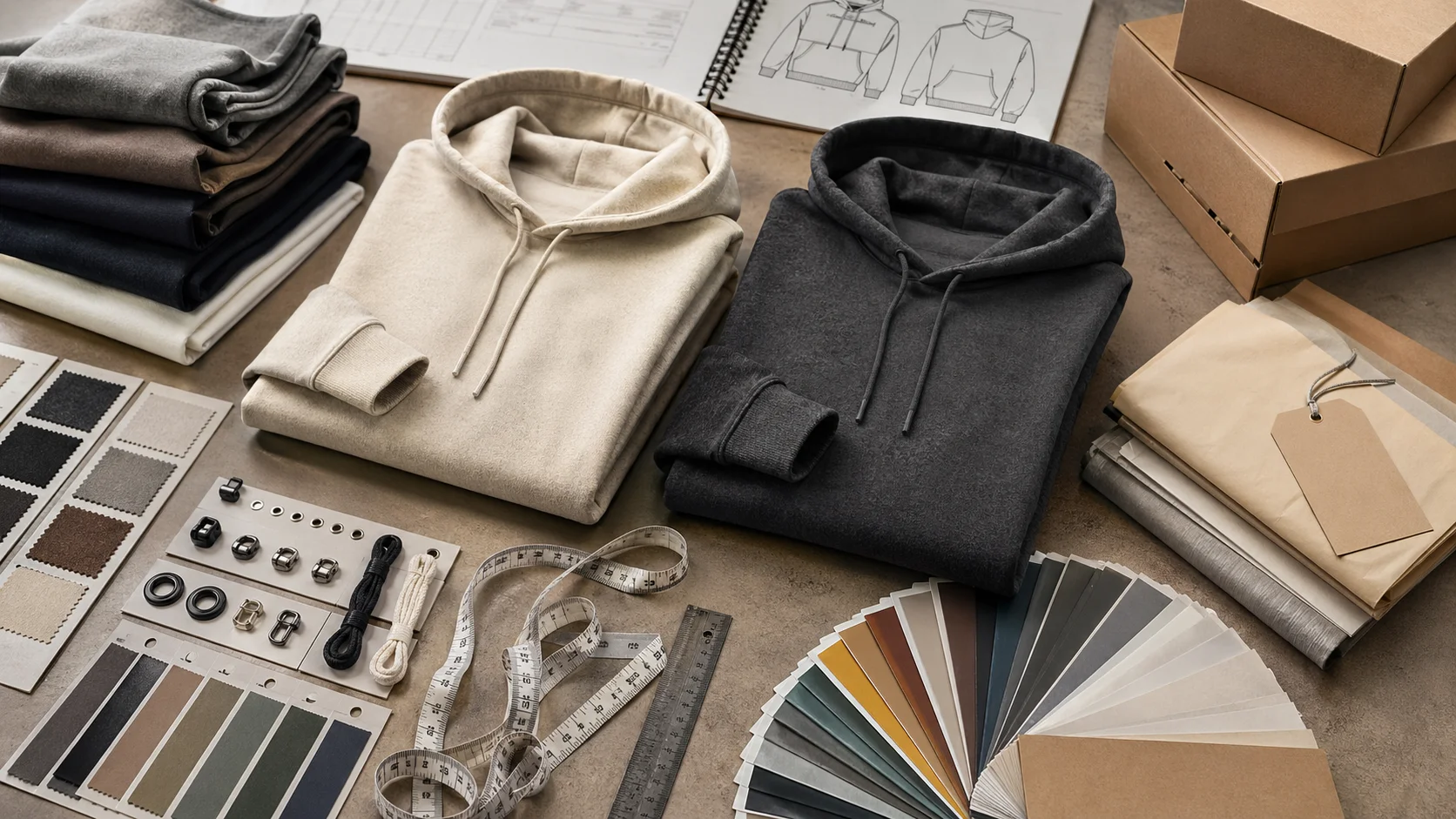
Branded Inserts for Clothing Unboxing with checks for samples, fit, MOQ, QC evidence, pricing terms, and delivery risk.
Fast answer: Branded Inserts for Clothing Unboxing: What Actually Works should be judged by production evidence, not by a generic sourcing promise. The buyer needs sample proof, cost breakdowns, QC checkpoints, and delivery buffers in writing.
Ask for recent sample photos, measurement tolerances, fabric or print test assumptions, decoration test notes, packing examples, and a named inspection checkpoint. These details show whether the team can repeat an approved sample at bulk volume.
Separate garment cost, decoration, labels, packaging, sampling, testing, freight, and rush charges. When every cost line is visible, it becomes easier to reduce colorways, adjust size depth, or reserve more time for sampling.
A parcel can make up its mind about your brand before the customer does. I’ve watched that happen in factories and fulfillment rooms across eight countries, and the trigger is often not the garment at all, but the first sheet of paper that lands in the box. That is why branded inserts for clothing unboxing matter so much: the first 10 seconds set the tone for perceived quality, care, and whether the parcel feels bought or merely shipped.
In one DTC warehouse I visited in Portugal, a simple matte thank-you card lifted social sharing enough that the brand tracked a 14% increase in customer-posted unboxings over 12 weeks. A second brand, selling $280 wool coats, used a thicker story card with a garment-care panel and saw repeat purchase rates rise by 6 points among first-time buyers. Those numbers are not magic. They come from the fact that people judge packaging faster than product. Paper speaks before cloth does.
The difference between a basic thank-you card, a care card, and a premium insert is sharper than most finance teams expect. Mass-market brands often get by with a 250 gsm uncoated card and a short note. Premium labels usually need 300-400 gsm stock, tight color management, and one clear brand story. Luxury players may add embossing or foil, but in many cases the real value is still the weight, the finish, and the precision of the fold. I’ve seen $8 cost-per-order brands use cleaner branded inserts for clothing unboxing than $800 resort labels. The irony is hard to miss.
Here’s what most people miss: once a brand orders 25,000 or 50,000 pieces, a heavier, nicer insert can cost less per unit than a messy “budget” version that needs multiple proof rounds, hand packing fixes, and reprints. On one Italian run I audited, a premium 350 gsm card with one foil pass landed at $0.18 per unit, while a flimsy multi-piece insert set ended up at $0.22 after waste. The expensive look was actually cheaper. Paper, not fabric, often decides whether the box feels considered or careless. That first touch can shape retention, referral behavior, and the odds that the customer bothers to photograph the parcel at all.
Most branded inserts for clothing unboxing fall into five families: thank-you cards, care cards, brand story cards, folded leaflets, and promo inserts with QR codes or referral offers. Each does a different job. A thank-you card reassures. A care card reduces misuse. A story card explains why the brand charges $72 instead of $24. A folded leaflet can carry size guidance, returns instructions, and a small campaign message. Stickers and tissue wraps add mood, but they do not replace clarity.
Paper choice changes the message as much as the copy. Uncoated 250-300 gsm stock feels friendly and easy to write on. Coated 300-350 gsm stock holds color better and looks sharper under strong warehouse lighting. Recycled paper can work well, though the surface is often less crisp, which matters for fine typography. Foil and spot UV signal premium positioning, but they add cost and can create recycling friction. I’ve seen embossed cards in France and Japan that felt refined, yet the same effect in lower-precision plants from less controlled finishing lines produced uneven registration and a cheap look.
For basics and activewear, a clean care card is usually enough. For luxury outerwear, a heavier brand story card in 400 gsm stock can justify the price tag better than a bulky leaflet set. Seasonal drops work best with short-lived promo inserts because they can be tied to 3-6 week campaigns. In India and Vietnam, I found excellent print capacity for simple cartons and cards, while specialty foil and complex die-cuts were more consistent in parts of Italy and the UK. Availability matters. So does waste. The wrong finish can add $0.06 and nothing else.
Brands waste money when they decorate every surface. A soft-touch laminate, foil edge, embossed logo, and two-sided spot UV may look impressive in a mock-up, but the customer often notices only one or two cues. For private label clothing, a cleaner hierarchy works better. The insert should fit the product price, the audience, and the logistics. A basic $38 knit top does not need a brochure that reads like a perfume launch. A better choice is a single card with one strong message and a practical action.
Pricing shifts fast with volume. At 1,000 pieces, a digitally printed 300 gsm card may cost $0.32 to $0.60 each, depending on size, color count, and packing. At 10,000 pieces, offset printing usually drops that to $0.10 to $0.22. At 50,000 pieces, a simple two-sided insert can reach $0.04 to $0.12, with premium finishing pushing the range to $0.18 or more. The unit price falls sharply, but set-up fees, proofing, and freight do not disappear.
Digital print wins for short runs and fast turns. Offset print wins when the design is stable and the run is long. Specialty finishing, such as foil or embossing, adds $0.03 to $0.12 depending on the region and the complexity. If a brand wants spot UV, die-cutting, and folded construction, the labor bill can rise faster than the paper bill. I have seen one London label pay $420 for prepress and artwork adjustment on a 2,500-piece test run, then repeat the same cost on a revision because the first proof missed the brand’s warm gray by a visible margin.
Domestic production usually shortens lead time to 5-10 days, while overseas can sit at 15-30 days before freight. But domestic quotes can look cheap until you add warehousing, smaller print economies, and higher labor. Overseas production, especially in China or Vietnam, may save 15%-35% on unit price, yet freight, duties, and customs handling can erase part of that gain if the shipment is tiny. The true landed cost matters more than the headline quote. For brands comparing suppliers, it is worth checking trade rules and customs guidance from Trade.gov import and export resources.
I break insert programs into three tiers. Budget: a 250 gsm card, one color family, no finishing, $0.05-$0.14 at scale. Mid-range: 300-350 gsm, two-sided print, QR code, maybe a matte varnish, $0.12-$0.28. Premium: 350-400 gsm, foil or emboss, custom folding, $0.22-$0.55. The cheapest quote often becomes the priciest choice once delays, reprints, and excess wastage show up on the ledger. I’ve audited three factories where the first quote looked 18% lower, but miscut sheets and color rejects made the final cost 9%-14% higher. Pricing on paper is never just paper pricing.
Good inserts are not decoration. They are operations. A care card that tells a customer to wash a merino knit cold and lay it flat can reduce avoidable returns tied to shrinkage, pilling complaints, or mistaken care by 3%-8%, depending on category and buyer behavior. Denim brands benefit from fit guidance and wash-fade warnings. Activewear brands need sweat-and-wash advice. In a warehouse I visited in Turkey, a small underwear label cut size-related complaints by 11% after it added clearer fit notes and a QR-linked measurement guide tied to custom bra manufacturing norms for cup and band education.
Static inserts are fine for basic reassurance, but QR-coded inserts give brands a trackable trail. A static card may be seen by every customer; a QR insert tells you who cared enough to scan. In my sample audits, scan rates ranged from 2% to 19%, with the highest numbers coming from new customer orders and seasonal drops. Referral codes can be tracked too, though they work best when the offer is simple: 10% off the next order, free shipping above $75, or early access to the next release. If the code is buried under five conditions, response collapses.
Repeat order rate and customer lifetime value often rise modestly rather than dramatically. A 1.5-point lift in repeat purchase rate can matter more than a small shift in average order value if the brand has healthy margins and a strong replenishment cycle. That is why inserts should be measured against revenue, not vibes. Last year I worked with a brand that sold baby basics through custom baby clothing manufacturing channels and saw better retention from a plain feeding and washing guide than from a glossy coupon card. The message was useful, not flashy.
Modest packaging budgets can outperform luxury labels because the messaging is tighter. A $90 sweatshirt brand with one useful card, one QR code, and one follow-up email may beat a $390 cashmere label that sends a heavy box with three inserts and no clear action. Customers do not reward paper volume. They reward clarity. The smartest programs give the buyer one reason to keep the card, one reason to scan it, and one reason to buy again.
Sustainability claims around inserts need proof, not adjectives. If a supplier says the paper is recycled, ask for the recycled-content percentage, the certification number, and the mill traceability. If they say FSC, ask for the chain-of-custody document. If they mention soy inks or compostable coatings, ask whether the finish is compatible with local recycling streams. According to Forest Stewardship Council standards, chain-of-custody documentation matters as much as the logo on the sheet. Claims without paperwork are marketing, not compliance.
Recycled stock often costs 5%-18% more than virgin paper at smaller volumes, though that gap narrows with scale. FSC-certified stock can add a small premium too, but buyers usually recover some of it through stronger brand trust and lower risk on audits. Soy-based inks are common and practical. Plastic-free coatings are improving, yet some still sacrifice scuff resistance. Embossing and foil can raise perceived value, but they complicate recycling. Spot UV is particularly troublesome in mixed-material waste streams. The customer rarely separates paper from film with enthusiasm.
Regional print discipline matters. In northern Europe, waste rates can sit under 3% on well-run insert programs because operators plan imposition carefully and approve color faster. In smaller plants I inspected in other regions, waste climbed to 7%-12% when color targets were vague or when brands approved too many variations. The issue is not geography alone. It is control. A well-run Vietnamese or Polish facility can beat a sloppy premium plant anywhere if the file is clean and the approvals are tight. That is especially true for private label clothing brands trying to align packaging with broader material sourcing targets. For additional guidance on material transparency and preferred fiber choices, brands can review Textile Exchange and OEKO-TEX.
The greenest insert is often the one a brand designs once, prints accurately, and uses fully. Not the one with four decorative extras and a recycled badge. If the insert becomes obsolete after 8 weeks, the environmental story weakens fast. I would rather see one 300 gsm FSC card with durable printing than three layered pieces that go straight to recycling or, worse, the bin. Sustainability is not abundance. It is restraint, plus execution.
Send a supplier more than a logo and hope. I ask for dimensions, stock weight, finish, fold style, color expectations, pack format, order volume, delivery deadline, and whether the insert will be packed loose, nested, or inserted with garments. If the brand expects a card inside each polybag, say so. If the run is 3,000 pieces now and 12,000 later, say that too. Good quoting depends on facts. Vague requests produce vague pricing.
When comparing quotes, line up the same variables. Paper type, gsm, print method, finishing, packing labor, sampling, cartons, palletization, and freight should all be visible. A quote that excludes proofing is not cheaper if the proof is billed later. A supplier offering $0.11 with no packaging detail can become more expensive than a $0.15 quote that includes full packing and inland transfer. For brands using cut and sew manufacturing, the packaging brief should match production timing so inserts do not sit in storage for weeks.
QC starts before mass production. I want one approved physical sample, not just a PDF. Check registration, trim, fold accuracy, color consistency, and rub resistance. Ask how they handle a misprint rate above 2% or a cutting variance above 1.5 mm. The weak signs are familiar: inconsistent cutting, weak adhesive on folded pieces, poor color matching, and lead times that sound like wishes rather than schedules. In one factory in Eastern Europe, a supplier promised 7 days, missed by 11, and blamed paper shortages. The paper was not the problem. Their planning was.
Region matters, but so does discipline. China and Vietnam often offer speed, broader finishing capacity, and lower unit cost at scale. Italy and Spain may deliver stronger premium finishing and tighter visual control. The UK and some US printers can handle fast small runs, which is useful for drops and seasonal testing. Whatever the country, ask for sustainability documentation, defect tolerances, and packaging photos from a live production run. If they cannot show those, walk. The best factory partner will also be clear about MOQ, bulk pricing, and whether custom sampling is included in the production quote.
Start with a single objective. If the insert is meant to reduce returns, build the copy around fit and care. If it is meant to drive repeat orders, keep the CTA clear and short. If it is meant to support launch buzz, tie it to one QR destination and one offer. Then pilot it. I recommend two versions at most, each running through equal order volumes of 1,000 to 5,000 parcels. Use the same garment mix, same shipping lane, and same customer segment if you want usable data.
Measure cost per order, scan or response rate, repeat purchase rate, return reduction, and waste volume. Do not stop at open rates. A beautiful insert that no one uses is a cost center. A plain insert that lowers returns by 4% can pay for itself quickly, especially in knitwear and denim where size errors are expensive. For seasonal collections, test one short insert against one more detailed card, then compare over 30-60 days. That gives enough time for second purchases to appear without waiting a full quarter.
Packaging, marketing, and operations need one brief. Marketing wants story. Operations wants accuracy. Fulfillment wants speed. The insert should satisfy all three without becoming clutter. I have seen brands ask for a recycled card, a coupon, a care guide, a loyalty pitch, and a brand manifesto on one piece of paper. The result looked busy and performed badly. Simpler usually wins. A clean message on 300 gsm stock, a readable QR, and one measurable offer can do more than a six-panel brochure. For teams sourcing custom programs, it helps to align the insert plan with your manufacturer, factory, and supplier timelines before artwork is finalized.
If the test lifts response by 10% or more, scale it. If the result is flat but the return rate drops, keep the care element and remove the promo. If nothing moves, simplify or cut it. I would rather kill an insert after a controlled test than keep funding a pretty habit. Data should decide. Emotion should not. Used well, branded inserts for clothing unboxing can be a low-cost custom tool that supports wholesale, bulk, and DTC growth at the same time.
They are printed items placed inside an apparel parcel, such as thank-you cards, care cards, story cards, or QR-coded promo inserts. Most brands use 1 to 3 pieces per order, depending on price point and category. The best inserts combine brand feel with a clear customer action.
At 1,000 pieces, basic digital inserts often run $0.32-$0.60 each, while offset printing at 10,000 pieces can drop to $0.10-$0.22. Premium finishing such as foil or embossing can add $0.03-$0.12 per piece. Freight, proofing, and packing can add another 10%-25% to the landed cost.
Domestic runs can take 5-10 days once artwork is approved. Overseas production usually takes 15-30 days, plus freight and customs time. If the design is new, add 2-5 days for sampling and color approval.
Yes, especially when the insert gives clear care or fit instructions. In denim, knitwear, and activewear, I’ve seen return reductions of 3%-8% when buyers understand wash rules and sizing better. Inserts work best when the advice is specific and easy to follow.
Ask for paper stock, gsm, print method, finish, exact dimensions, MOQ, proofing process, lead time, and freight terms. Request a physical sample and written defect tolerances. If those details are missing, the quote is not reliable enough to compare.