
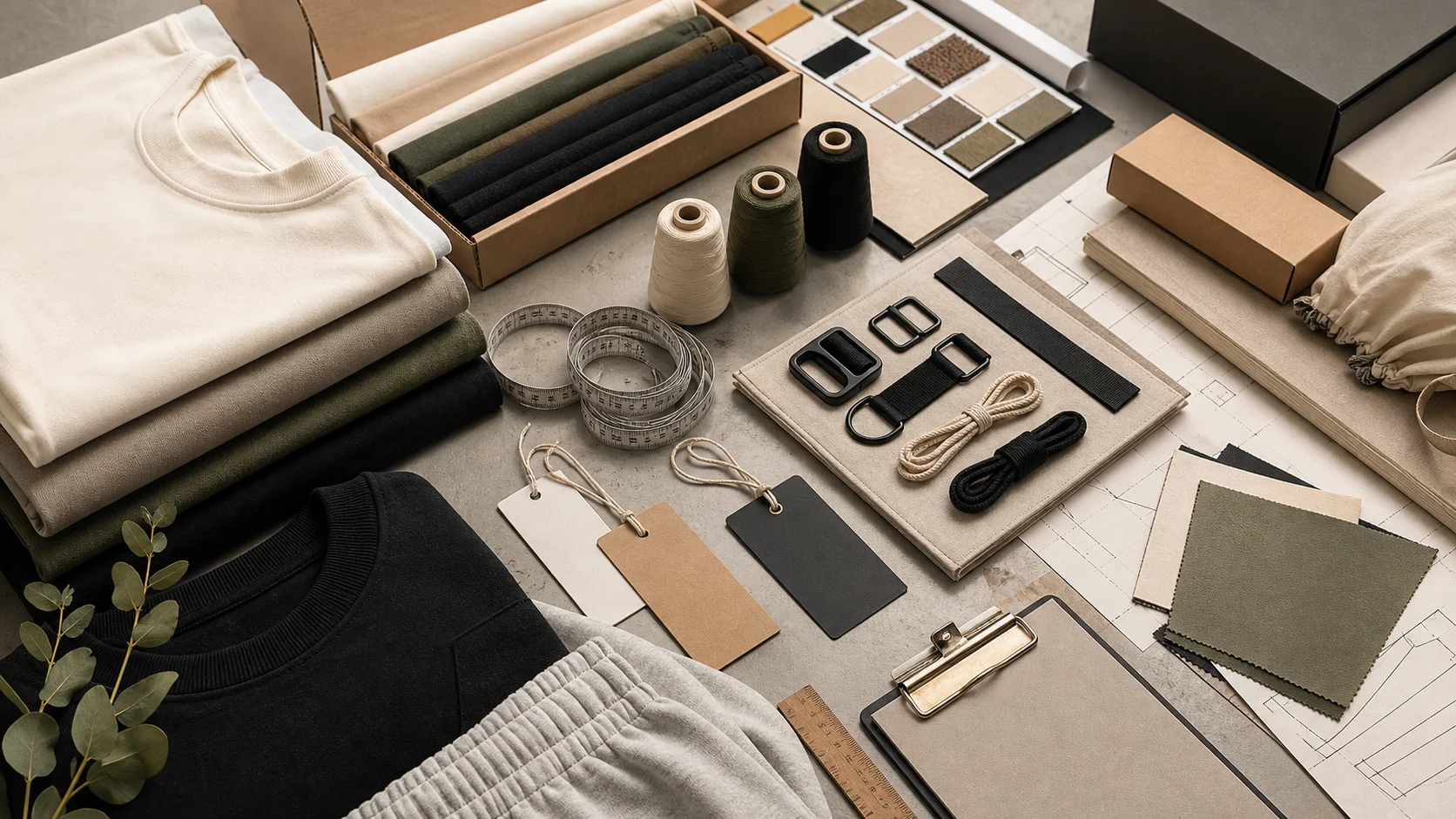
Questions To Ask Clothing Factories Before Wholesale Production with checks for samples, fit, MOQ, QC evidence, pricing terms, and delivery risk.
Fast answer: Questions To Ask Clothing Factories Before Wholesale Production: Samples, MOQ, QC, and Lead Time should be judged by production evidence, not by a generic sourcing promise. The buyer needs sample proof, cost breakdowns, QC checkpoints, and delivery buffers in writing.
Ask for recent sample photos, measurement tolerances, fabric or print test assumptions, decoration test notes, packing examples, and a named inspection checkpoint. These details show whether the team can repeat an approved sample at bulk volume.
Separate garment cost, decoration, labels, packaging, sampling, testing, freight, and rush charges. When every cost line is visible, it becomes easier to reduce colorways, adjust size depth, or reserve more time for sampling.
If you are planning to launch or scale a clothing brand, choosing the right manufacturing partner is one of the most important decisions you will make. Before placing a wholesale production order, it is essential to ask the right questions so you can avoid costly mistakes, reduce delays, and ensure your products meet your quality standards. The best questions to ask clothing factories before wholesale production can help you evaluate whether a supplier is truly a fit for your business.
In this guide, we will walk through the most important questions to ask clothing factories, why they matter, and what kind of answers you should expect. Whether you are sourcing your first bulk order or switching manufacturers, these business tips will help you make a more informed decision. If you want to learn more about how Fabrikn supports clothing brands, visit our services page, or reach out through our contact us page.
Wholesale production is a major investment. Once you commit to a factory, you are not just buying garments. You are buying process reliability, communication quality, product consistency, and business peace of mind. A factory that looks good on paper may not be the right fit if it cannot meet your technical requirements, deadlines, or quality expectations.
Asking detailed questions before production helps you:
The right manufacturing partner should answer your questions clearly and confidently. If they cannot, that is often a warning sign.
Before you discuss pricing, ask whether the factory is actually equipped to produce your specific clothing line. Not every factory specializes in every product category, fabric type, or production method.
This is one of the first questions to ask clothing factories before wholesale production. A factory that specializes in activewear may not be ideal for tailored outerwear, and a knitwear supplier may not have the best setup for structured woven pieces.
Ask about their core product categories, such as:
The closer the factory’s expertise is to your product, the better your chances of getting consistent results.
Ask whether the factory can follow your tech pack, measurement sheet, trim details, stitching requirements, and finishing instructions. This question helps you determine whether they can handle custom production or only standard styles.
If you do not yet have a complete tech pack, ask whether they can support development. A professional factory should be able to review your design and explain what is needed before sampling begins. You can also explore our about us page to learn more about Fabrikn’s approach to quality and partnership.
Different garments require different machinery and production expertise. For example, cut-and-sew basics, embroidery, printing, washing, bonding, and specialty finishing all require the right equipment and skilled operators. Ask what machines and methods are available in-house and whether any parts of production are outsourced.
A factory with modern, well-maintained equipment is usually better positioned to deliver consistent quality and efficiency.
Quality control is one of the most important areas to cover before wholesale production. A small defect may seem minor on a sample, but when multiplied across hundreds or thousands of units, it can become a serious issue.
Ask about their quality control process at each stage. Do they inspect fabric before cutting? Do they check pieces during sewing? Do they perform final inspections before packing? The best factories have multi-stage quality checks, not just a final review.
Useful follow-up questions include:
Sampling is essential before mass production. Ask whether you will receive a prototype sample, size set sample, and pre-production sample. These samples help you verify fit, construction, fabric, color, and branding details before large-scale manufacturing begins.
Never skip sampling if you care about quality. It is far more expensive to fix mistakes after bulk production starts.
Ask the factory how it handles errors, rework, and replacements. A reliable manufacturer should be willing to explain their policy for defects, tolerances, and corrective actions. This gives you clarity on accountability and helps protect your order.
Fabric and trims often determine the overall feel, performance, and durability of a garment. Before production, it is important to understand where materials come from and whether the factory can source what you need.
Some clothing factories offer full-package production, meaning they source all materials for you. Others expect the brand to provide fabrics, labels, zippers, buttons, or other trims. Knowing this early helps you plan timelines and budgets correctly.
If the factory sources materials, ask:
Fabric hand-feel, stretch, weight, and color can vary significantly. Ask for fabric swatches or sample yardage before approving bulk production. This helps you confirm that the material aligns with your design goals and customer expectations.
In wholesale production, consistency matters. A great factory should have a system for checking color matching, shrinkage, fabric defects, and roll-to-roll variation. If your order includes multiple sizes or production batches, consistency becomes even more important.
Price is important, but the cheapest option is not always the best. Understanding how a factory structures pricing can help you compare suppliers more accurately.
MOQ is one of the most important questions to ask clothing factories before wholesale production. Some factories require high minimums that may not suit smaller brands, while others are more flexible.
Ask if the MOQ applies to:
You should also ask whether the MOQ changes if you use stock fabrics or standard trims.
Request a detailed breakdown of the quote. Does it include cutting, sewing, finishing, labels, packaging, testing, and freight? Are sampling fees separate? Are there charges for revisions or special packaging?
Comparing total landed cost is more useful than comparing base manufacturing price alone.
Factories may charge for sample development, pattern making, fabric sourcing, special trims, embroidery digitizing, printing plates, quality inspections, rush orders, or packaging upgrades. Clarify all possible extra charges before you commit.
Delivery timing can affect your launch, cash flow, and sales calendar. Delays in production can cause missed seasons and customer dissatisfaction, so timelines should be discussed early.
Ask for separate lead times for sampling and wholesale production. A clear timeline helps you plan your launch schedule and avoid unexpected delays. Be sure to ask when the clock starts—after payment, after sample approval, or after fabric arrival.
Common delays may include fabric availability, sample revisions, shipping delays, machine breakdowns, factory capacity, or holiday closures. A transparent factory should explain these risks openly.
If your brand has strict launch dates or seasonal drops, ask whether the factory can accommodate tight timelines. Some factories may offer rush production, but that usually comes with extra cost and stricter conditions.
Strong communication is critical when working with a clothing factory. Even a capable factory can become a problem if updates are slow or unclear.
Ask whether you will work with a sales representative, account manager, product developer, or project coordinator. Knowing the point of contact helps avoid confusion later. It is also useful to know who handles technical questions and who approves order changes.
Ask how the factory communicates progress. Will they send photos, video updates, inspection reports, or milestone confirmations? Regular updates help you stay informed and spot issues early.
Different factories prefer email, WhatsApp, WeChat, phone calls, or project management tools. Make sure their communication style matches yours, especially if you need fast feedback during development or production.
Today’s brands are expected to care about compliance, labor standards, and responsible production. If your customers value transparency, this section is especially important.
Ask about working conditions, workplace safety, and labor compliance. A trustworthy factory should be willing to discuss how they manage employee welfare and production standards.
Depending on your market, you may need certifications related to quality, sustainability, organic materials, or social compliance. Ask whether the factory has any of the following:
If your brand has strong ethical commitments, this question is non-negotiable.
If you want eco-friendly production, ask about recycled materials, low-impact dyes, waste reduction, and energy-saving processes. Not every factory can support sustainable sourcing, so it is important to confirm this early.
Sampling is where concepts become real products. It is also where many avoidable problems are caught before bulk production begins.
Ask how many rounds of revisions are included in the development process. This helps you understand what is covered in your budget and what may cost extra.
Most factories require final approval on sample, fabric, color, and labeling before they begin wholesale production. Confirm the approval process so there is no confusion later.
This is a key question. While minor production tolerance is normal, the finished goods should closely match the approved sample in construction, dimensions, and overall appearance.
Once your order is complete, you still need it delivered correctly and on time. Shipping and packaging questions are often overlooked, but they matter a great deal in wholesale production.
Ask about folding standards, polybags, hangtags, carton labeling, size stickers, and shipping cartons. If you have specific retail-ready packaging requirements, make sure the factory can follow them.
Some factories can support customs paperwork, freight booking, and export documentation, while others leave shipping arrangements to the buyer. Clarify responsibilities so you know what to manage yourself.
If you use a 3PL, warehouse, or direct-to-consumer fulfillment partner, ask whether the factory can deliver to that location. This can simplify your logistics process and reduce transfer costs.
After you have asked these questions, compare factories based on more than price alone. A lower quote may look attractive, but it can come with poor communication, inconsistent quality, or long delays.
Use a simple comparison checklist based on:
The best factory for your brand is usually the one that offers the right balance of quality, reliability, communication, and cost.
Before you approve bulk production, make sure you have answers to the following:
If any of these are unclear, pause before placing the order. A few extra questions now can save significant time and money later.
Choosing the right clothing factory is about more than finding someone who can sew garments. It is about finding a manufacturing partner that understands your product, meets your standards, and supports your business growth. The best questions to ask clothing factories before wholesale production help you uncover important details about capability, quality, pricing, timelines, compliance, and communication.
When you ask the right questions, you make better decisions and reduce risk. That means smoother production, stronger products, and a better customer experience. If you are looking for a reliable clothing manufacturing partner, Fabrikn is here to help. Learn more on our services page or get in touch through our contact us page.
Get a free quote from Fabrikn — your trusted B2B clothing manufacturer with 10+ years of experience. MOQ as low as 200 pieces.
Get a Free Quote →The most important questions cover factory capabilities, quality control, materials, pricing, MOQ, lead time, communication, compliance, sampling, and shipping. These help you assess whether the factory is a good fit for your brand.
A reliable factory gives clear answers, provides samples, explains pricing transparently, communicates consistently, and can show examples of similar work or compliance documentation.
Yes. Samples help you confirm fit, fabric, construction, and branding details before committing to wholesale production. They are one of the best ways to reduce costly mistakes.
It depends on the garment type, fabric, and factory size. Some factories accept small runs, while others require larger orders. Always ask whether MOQ is per style, color, or size.
Yes. Fabrikn works with clothing brands looking for manufacturing support, production guidance, and reliable service. Visit our services page to learn more or contact us to discuss your project.