
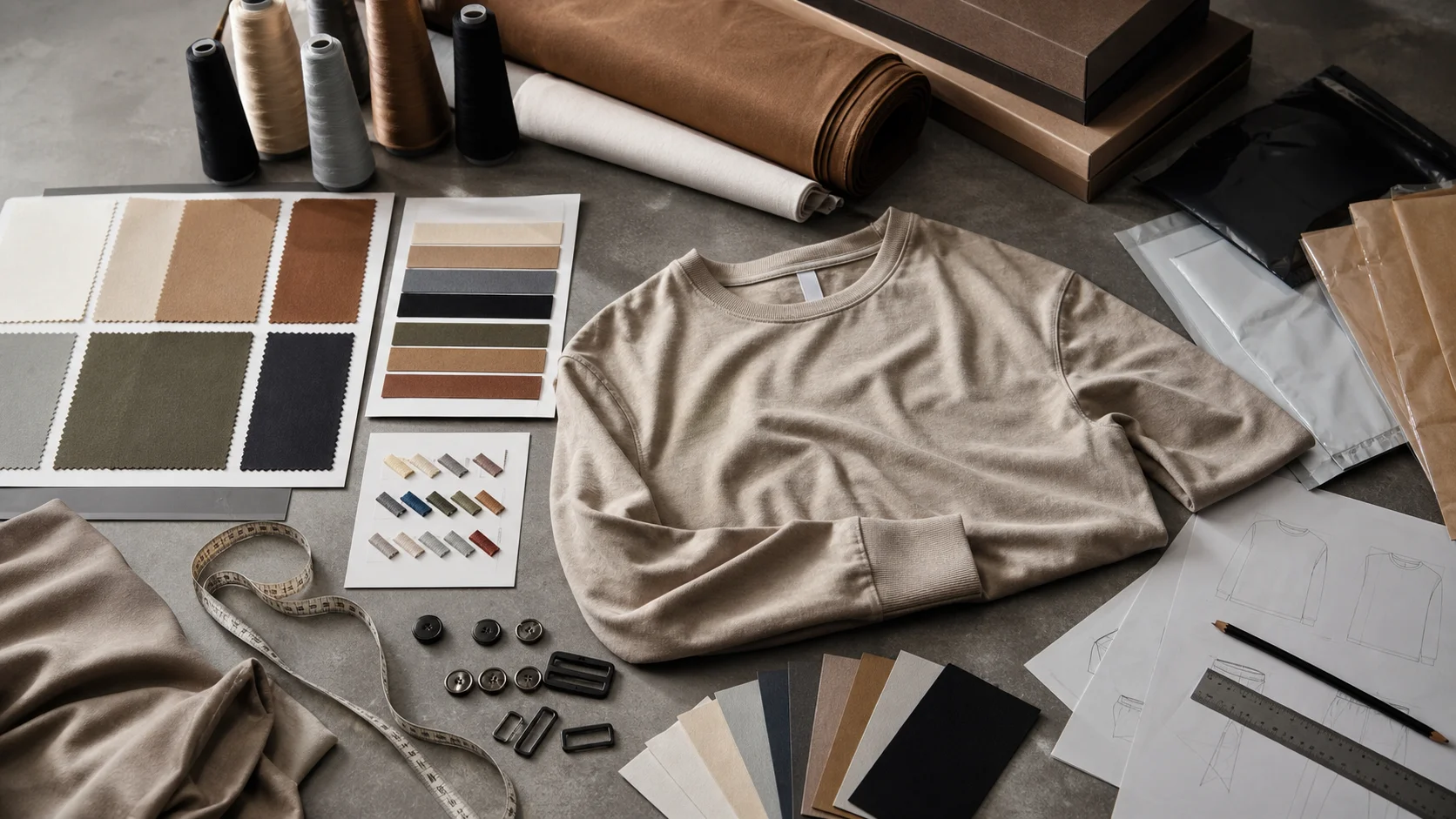
Sustainable Materials for Tshirts with checks for samples, fit, MOQ, QC evidence, pricing terms, and delivery risk.
Fast answer: Sustainable Materials for Tshirts: Samples, Cost Lines, QC, and Delivery Risk should be judged by production evidence, not by a generic sourcing promise. The buyer needs sample proof, cost breakdowns, QC checkpoints, and delivery buffers in writing.
Ask for recent sample photos, measurement tolerances, fabric or print test assumptions, decoration test notes, packing examples, and a named inspection checkpoint. These details show whether the team can repeat an approved sample at bulk volume.
Separate garment cost, decoration, labels, packaging, sampling, testing, freight, and rush charges. When every cost line is visible, it becomes easier to reduce colorways, adjust size depth, or reserve more time for sampling.
The t-shirt has become a staple in wardrobes across the globe, a universal garment that balances comfort, versatility, and style. Yet, the traditional production of t-shirts is resource-intensive, often reliant on materials and processes that strain the planet. As the fashion industry evolves, Brands are seeking sustainable alternatives that minimize environmental impact while maintaining the quality and affordability that customers expect. This comprehensive article explores the best sustainable materials for t-shirts, offering insight into their benefits, sourcing considerations, and how forward-thinking manufacturers like Fabrikn can help bring eco-conscious collections to market.
At Fabrikn, we understand the importance of marrying performance with planetary responsibility. As a B2B clothing manufacturer, we partner with brands to ensure materials are sourced, processed, and finished in ways that uphold environmental and social standards. This article will guide product developers, design teams, and procurement managers through the current landscape of sustainable t-shirt materials, from plant-based fibers to regenerated synthetics, and outline strategies to implement responsible sourcing and manufacturing practices.
Choosing the “best” material for sustainable t-shirts requires defining the criteria we use to evaluate fabrics. Beyond simply being biodegradable or plant-based, an ideal sustainable material should meet multiple benchmarks:
Sustainable materials often excel in several of these areas, though no single fiber fits every criterion perfectly. As trends continue to evolve, a hybrid approach that combines multiple sustainable fibers and innovative treatments can deliver high-performing t-shirts while safeguarding people and the planet.
Organic cotton remains one of the most widely adopted sustainable materials for t-shirts. Unlike conventional cotton, which relies heavily on pesticides, synthetic fertilizers, and irrigated water, organic cotton is grown without harmful agrochemicals and with better soil stewardship practices. Certified by organizations such as GOTS (Global Organic Textile Standard) or USDA Organic, this fiber reduces pesticide pollution, conserves water through rain-fed cultivation, and supports healthier ecosystems for farmers and surrounding communities.
Organic cotton fabric can range from soft, breathable jersey to more structured French terry, offering versatility across casual and premium t-shirt categories. Consumers who value natural products often seek out organic cotton for its softness, breathability, and gentle feel against sensitive skin. Also, the fiber is recyclable and compostable at the end of its life, further aligning with circular principles.
When sourcing organic cotton, brands should prioritize traceability to ensure the cotton they use truly meets certification standards. Fabrikn can support this effort by working with certified mills and verifying third-party audits, ensuring each yard meets expectations for both environmental impact and fabric performance.
TENCEL™ is a brand name for lyocell and modal fibers produced by Lenzing. These fibers are generated from sustainably harvested wood pulp, typically sourced from eucalyptus, beech, or spruce trees, which are grown in responsibly managed forests. The closed-loop production process reclaims and recycles over 99% of the solvents used in fiber production, drastically reducing chemical waste and ensuring cleaner output.
TENCEL™ fabrics are known for their silky handfeel, exceptional breathability, and moisture-wicking properties. Lyocell, in particular, has a luxurious drape and is highly durable, while modal is valued for its softness and color retention. Both fibers blend exceptionally well with organic cotton, hemp, and recycled polyester, creating fabrics that feel premium and perform in various climates.
TENCEL™ also offers an impressive biodegradability profile, returning to the earth within weeks under composting conditions. For design teams focused on sustainable luxury t-shirts, lyocell and modal are ideal candidates, especially when combined with responsible dyeing techniques such as fiber-reactive or low-impact dyes.
Hemp has been cultivated for thousands of years and is resurging as a truly regenerative fiber. It grows rapidly with minimal water and no pesticides, naturally deters pests, and replenishes soil health through deep root systems. Hemp’s carbon footprint is remarkably low, and the stalks can be used in multiple industries, promoting zero-waste utilization.
The fiber is exceptionally strong, breathable, and UV resistant. While early hemp garments were coarse, modern processing techniques yield softer, more refined fabrics that blend effectively with other fibers like organic cotton or lyocell. Hemp t-shirts become softer with each wash and maintain structural integrity for long-lasting wear.
Hemp works especially well for brands committed to regenerative agriculture or those seeking to highlight carbon-negative materials. While the fabric can be pricier due to limited scale, partnering with manufacturers who understand its processing—such as Fabrikn—ensures consistent quality, especially when blended for optimal handfeel and drape.
Bamboo is often touted as a sustainable material thanks to its rapid growth, minimal water needs, and lack of pesticides. Bamboo viscose or bamboo rayon is soft, breathable, and has natural antimicrobial properties, making it a favorite for activewear and luxury basics. However, the sustainability of bamboo fabrics depends heavily on the manufacturing process.
Conventional bamboo viscose uses chemical-heavy processing similar to rayon, which negates some ecological benefits. However, bamboo lyocell, produced in closed-loop systems, addresses these concerns by reusing solvents and minimizing emissions. Brands should seek certifications such as FSC (Forest Stewardship Council) or OEKO-TEX to validate claims. Bamboo also blends well with cotton and other fibers to enhance durability and softness.
Recycled polyester (rPET) is produced from post-consumer plastic bottles, textile waste, or industrial scrap, reducing the need for virgin petroleum-based polyester. The process diverts plastic from landfills and oceans, saving energy and decreasing greenhouse gas emissions associated with traditional polyester production.
For t-shirts, recycled polyester can be used alone or blended with natural fibers to create moisture-wicking, durable garments ideal for athleisure and performance lines. Recycled fibers maintain the technical advantages of polyester—shape retention, quick drying, wrinkle resistance—while aligning better with circular economy goals. Advanced recycling systems even capture dyes and finishes to minimize waste further.
It's important to verify the recycled content through certifications like GRS (Global Recycled Standard) or RCS (Recycled Claim Standard). Fabrikn works with producers who maintain rigorous tracking of recycled material feeds, enabling accurate reporting of reclaimed content in every t-shirt produced.
While nylon is less common in classic t-shirt silhouettes, reclaimed nylon fibers such as ECONYL®—produced from marine waste and pre- and post-consumer nylon scrap—offer opportunities for blends requiring stretch or technical performance. ECONYL® regeneration processes restore polymer chains entirely, allowing recycled nylon to perform comparably to virgin fiber without sacrificing sustainability credentials.
T-shirts incorporating reclaimed nylon blends are particularly appealing in seamless, performance, or fashion-forward collections that require subtle sheen and stretch. These fibers can be blended with organic cotton or TENCEL™ for a balanced fabric that delivers both eco credibility and technical performance. When used responsibly, reclaimed nylon adds another layer to sustainable wardrobe building and circular design.
While not traditional t-shirt materials, innovations like Piñatex—a leather alternative made from pineapple leaf fibers—and other botanical innovations represent the growing potential to integrate textile byproducts into mainstream apparel. These materials are typically used for trims, labels, appliqués, or statement pieces on t-shirts, highlighting creativity in sustainable fashion.
Piñatex utilizes agricultural waste, giving new life to pineapple leaves that would otherwise be discarded. It is lightweight, durable, and can be embossed or printed to resemble leather or other textures. As sustainable fashion moves toward zero-waste systems, such botanical alternatives allow designers to minimize reliance on virgin materials and support regenerative agriculture by maximizing material flows.
Combining organic hemp with recycled cotton or TENCEL™ results in fabrics that harness the strengths of each fiber. For instance, hemp adds durability and thermal regulation, organic cotton brings softness, and TENCEL™ contributes drape and moisture management. Blended fabrics allow brands to tailor the handfeel, performance, and appearance of their t-shirts while maintaining sustainable integrity.
When designing blended fabrics, it’s critical to ensure compatibility in dyeing and finishing processes. Fabrikn helps navigate these technical requirements by collaborating with mills that specialize in blended sustainable fabrics, ensuring color consistency, washfastness, and comfort remain top priorities throughout production.
Beyond fiber selection, circular design principles and regenerative agriculture underpin the future of sustainable t-shirt production. Circular design encourages garments that are durable, repairable, and recyclable, creating systems where materials flow back into production rather than ending up in landfills. Brands can incorporate take-back programs, design for disassembly, and use mono-material constructions where repair or recycling becomes feasible.
Regenerative agriculture—practices that restore soil health, enhance biodiversity, and sequester carbon—elevates the environmental impact of fibers like organic cotton and hemp. By working with farms committed to regenerative techniques, brands can support systems that heal rather than deplete ecosystems. Fabrikn supports clients in mapping their supply chain, identifying regenerative sources, and communicating these stories through transparent messaging.
Material choice is only one piece of the sustainability puzzle. The production processes—cutting, sewing, dyeing, finishing—also influence a garment’s environmental footprint. Waterless dyeing, digital printing, energy-efficient machinery, and zero-liquid discharge systems reduce pollution and conserve resources during manufacturing.
Fabrikn offers solutions for apparel brands looking to scale sustainable t-shirt production. Our facilities incorporate efficient manufacturing technologies, strict waste management procedures, and a commitment to social responsibility. These capabilities allow collections to maintain the integrity of sustainable materials through to final delivery.
Transparency is pivotal. Consumers increasingly demand clarity on the origins of their clothing. Traceability mechanisms such as blockchain, QR codes, and verified certifications help brands prove their t-shirts utilize sustainably sourced materials and responsible labor practices. Working with suppliers who can document each stage—from fiber cultivation to finished garment—empowers brands to share credible sustainability stories.
Fabrikn partners with certified suppliers and uses rigorous quality control protocols to ensure traceability integrity. By integrating responsible supply chain strategies, Fabrikn helps brands meet regulatory demands and consumer expectations without sacrificing efficiency or design flexibility.
The “best” sustainable material must also deliver on user experience. Consumers expect t-shirts that feel soft, fit well, retain their shape, and look polished wash after wash. This is where fabric innovation shines—blends of TENCEL™ and recycled polyester, for instance, can offer sleek drape and resilience, while organic cotton and hemp mixtures deliver breathability and ruggedness.
Fabrikn collaborates with brands to develop fabrications that balance sustainability with consumer appeal. We consider weight, colorfastness, shrinkage, and tactile qualities from developing prototypes to full-scale production runs, ensuring every sustainable material meets exacting standards for wearability.
Manufacturing sustainable t-shirts requires partners who understand the entire lifecycle—from fiber sourcing to packaging. Fabrikn provides end-to-end support through product development, fabric sourcing, sampling, and manufacturing. With capabilities spanning multiple sustainable materials, Fabrikn assists clients in designing premium garments that remain true to sustainability commitments.
Whether you need guidance selecting the best sustainable materials for a new capsule collection or want to scale production while maintaining accountability, Fabrikn’s team is ready to help. Learn more about our services by visiting https://www.fabrikn.com/services/, or connect with our experts through https://www.fabrikn.com/contact-us/ to discuss your next project.
We are proud of our process, rooted in transparency, innovation, and quality. Discover our story and how we champion sustainable fashion by visiting our https://www.fabrikn.com/about-us/ page.
Get a free quote from Fabrikn — your trusted B2B clothing manufacturer with 10+ years of experience. MOQ as low as 200 pieces.
Get a Free Quote →The most sustainable materials for t-shirts typically include organic cotton, TENCEL™ (lyocell and modal), hemp, bamboo lyocell, recycled polyester, and fused blends that minimize waste. These fibers are evaluated based on renewable sourcing, water usage, chemical management, and end-of-life attributes. Combining sustainable fibers with responsible manufacturing ensures t-shirts remain eco-conscious throughout their lifecycle.
Brands can verify sustainability claims through certifications such as GOTS, OEKO-TEX, FSC, GRS, and RCS, and by partnering with traceable supply chains. Working with manufacturers who maintain documented sourcing, third-party audits, and transparent reporting helps validate claims. Fabrikn supports clients by collaborating with certified partners and maintaining rigorous documentation practices.
Absolutely. Recycled fibers, such as rPET and ECONYL®, and regenerative fibers like hemp and organic cotton, can deliver premium aesthetics and performance when processed appropriately. Blending these fibers with luxury materials like TENCEL™ offers softness, drape, and durability suitable for high-end collections. The key lies in careful fabric development and finishing during manufacturing.
Fabrikn offers comprehensive support for sustainable production through material sourcing, prototype development, responsible manufacturing practices, and full-scale production management. Our team ensures fabrics maintain their sustainable attributes while meeting design, quality, and performance requirements. Brands can explore our capabilities at https://www.fabrikn.com/services/ and reach out via https://www.fabrikn.com/contact-us/ to start a project.