
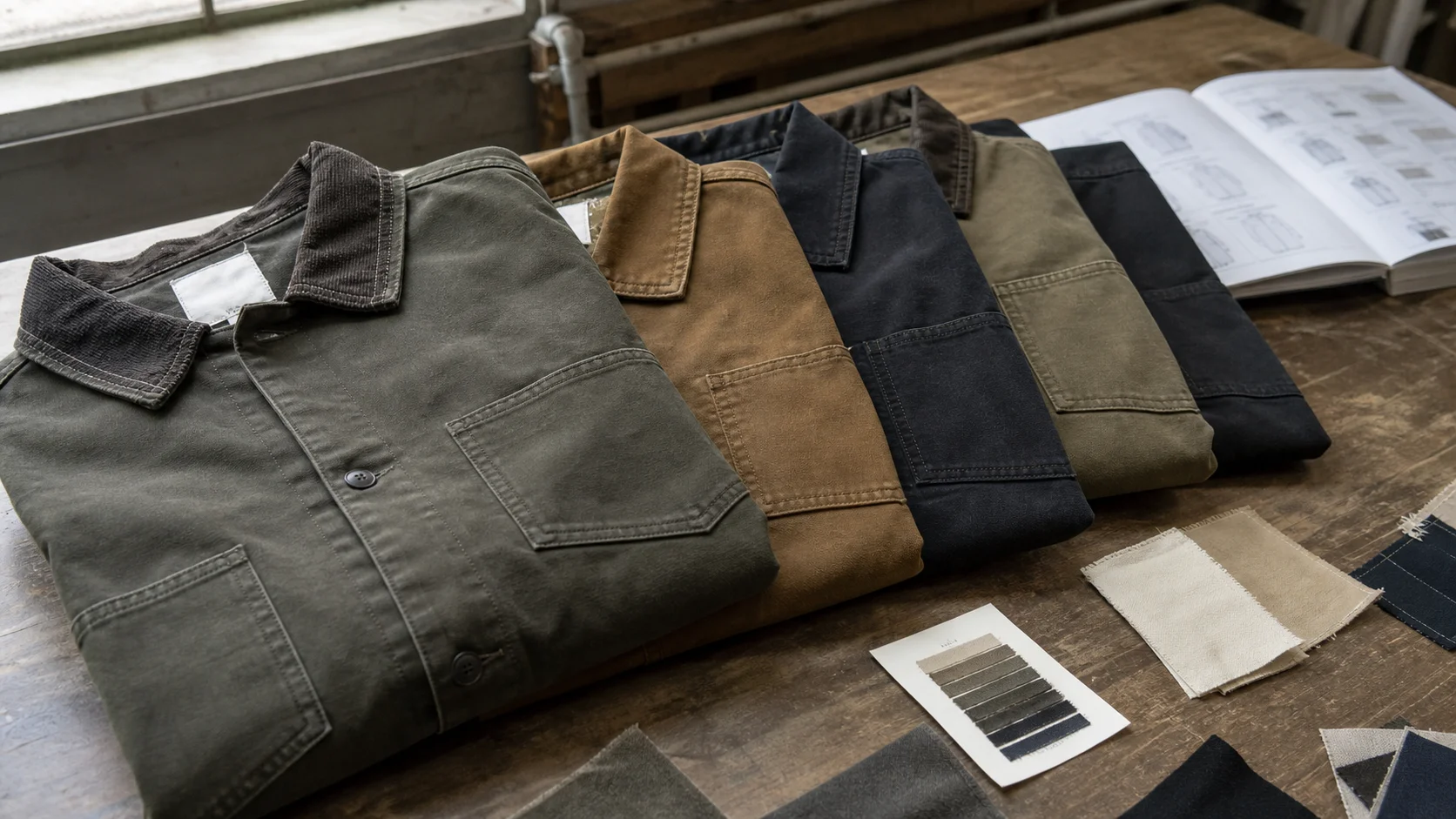
A practical review of freezer coat size grading for retail operations teams, covering fit blocks, grade rules, motion allowances, bulk QC, and store-ready size runs.
Bulk Freezer Coat Size Grading for Retail Buyers - Fabrikn production reference
For retail operations teams, freezer coats are not just another outerwear line. They are a controlled-function garment that has to balance warmth, mobility, repeatable sizing, and bulk production efficiency. When size grading is off, the consequences show up quickly: poor sell-through, higher return rates, inconsistent fit across size runs, and complaints from staff who need the coat to perform in cold storage, warehouse, or delivery environments.
This review looks at bulk freezer coat size grading from a retail buyer’s point of view. The goal is simple: reduce fit risk before production starts. That means understanding how grade rules are built, which measurements matter most, how fabric and insulation change the fit, and where sourcing teams should push for approvals and inspection controls.
Size grading is the process of scaling a base size into a full size range using measured increments. For freezer coats, that process needs to account for more than body dimensions. The coat is typically worn over workwear, thermal layers, or uniforms, so the fit must allow layering without looking oversized or restricting movement.
In retail and uniform programs, grading usually starts from a sample size such as M or L, then expands into adjacent sizes like XS through 3XL or beyond. The grading rule set defines how much chest, waist, hip, sleeve length, body length, cuff opening, and shoulder width change from one size to the next.
For bulk orders, a good grading review does not stop at the measurement chart. It also checks whether the chosen pattern block can survive production at scale. Thick insulation, quilted linings, storm flaps, and heavy zippers can all distort the intended fit once the garment is sewn in volume.
Freezer coats are built for cold environments, so the fit target is usually more generous than a fashion jacket. That does not mean oversized. A retail buyer should expect enough room for movement, but not so much volume that the coat becomes bulky, awkward under a hood, or unsafe around equipment.
There are three main reasons freezer coat grading needs more scrutiny than standard outerwear:
Retail operations teams should also account for the fact that freezer coat buyers often include both end users and procurement teams. That means the style has to satisfy functional expectations and standard size consistency. A size run that is acceptable in a showroom can still be rejected in a warehouse trial if the sleeve pitch or body length is off by a small but important margin.
Not every measurement carries equal weight. Some dimensions are decisive in performance outerwear, while others matter mainly for appearance and consistency. A practical grading review should focus on the points that affect wearability and bulk production tolerance.
Chest grade is usually the first place buyers look, but it should not be viewed in isolation. If chest increases are too small between sizes, wearers who layer underneath may feel restricted. If increases are too large, the coat will hang loosely and may create snagging or heat loss concerns.
A typical grading increment for chest in outerwear may range from about 2 to 3 cm per size on half-chest measurement, depending on the target market and fit intent. The exact rule should be aligned to the intended user and size chart, not copied from a generic jacket block.
Shoulder width drives comfort more than many buyers expect. If the shoulder grade is too aggressive, the coat can look boxy and feel unstable on the body. If it is too tight, sleeve mobility suffers. Armhole shape matters too, especially in freezer coats with insulation that already reduces flex.
Retail buyers should check that sleeve length is graded consistently across the size set and that cuff opening remains functional. A larger size needs more sleeve length, but not a wider opening that exposes the wrist to cold air. If there are elastic cuffs, knit cuffs, or adjustable tabs, these details must be tested after the lining and insulation are attached.
Body length is important for thermal protection. A freezer coat that rides up during movement creates cold spots and user complaints. At the same time, excessive body length can interfere with bending or equipment access. The right length depends on whether the coat is meant for warehouse work, food storage, or customer-facing cold-weather use.
Hem sweep affects ease of movement and layering over bulkier clothing. Grading should maintain enough sweep through larger sizes without making the coat look floppy. This is one of the areas where a pattern can look correct on paper but fail in wear testing.
If the style includes a hood, the hood opening and collar height need to scale carefully. A hood that is too large can block visibility and move around during work. A collar that is too high may interfere with zippers or chin protection. Retail teams should request size-specific fitting notes where relevant, especially for extended size runs.
Size grading cannot be separated from material specification. The same grade rule can behave differently once fabric weight, insulation loft, and seam construction change. Buyers should review the complete tech pack and not assume the approved sample will scale cleanly in bulk.
Spec Area What to Check Why It Matters Shell fabric Denier, coating, water resistance, abrasion resistance Affects drape, structure, and overall bulk Insulation Fill weight, loft, distribution, quilt pattern Impacts warmth and fit consistency across sizes Lining Slip, stretch, seam finish, attachment method Influences comfort and garment mobility Zippers and fasteners Gauge, tape width, pull strength, zipper length Can affect front balance and opening ease Cuffs and hems Elastic tension, adjustability, binding width Controls cold air entry and user comfort Seam allowance Consistency, tolerance, reinforcement points Critical for keeping graded sizes stable in productionShell fabric choice is especially important in freezer coats. A stiffer shell can help the coat hold shape, but may reduce comfort in larger sizes if the grade is too tight in the shoulder or elbow. A softer shell may feel better, yet it can hide fit issues during sampling and then expose them in wear. That is why buyers should review sample garments on a size range, not only on one fit model.
Insulation also changes the way a garment behaves. Fill migration, uneven quilting, and compressed seam areas can cause one size to fit differently from another even when the pattern is correct. For bulk programs, the buyer should ask how the factory controls insulation placement and whether quilting lines remain consistent across all sizes.
Practical rule: if a freezer coat is meant for real workwear use, the fit should be judged with the intended base layers underneath. A sample that fits over a T-shirt can be misleading.
For bulk freezer coat programs, MOQ can vary widely depending on fabric source, trim customization, and size spread. A practical range for many manufacturing setups may start around 300 to 500 pieces per style for standard programs, while more customized designs often need higher volumes. If special fabrics, reflective tape, branded trims, or custom packing are involved, MOQ may rise further.
Retail buyers should confirm MOQ by color, size ratio, and construction complexity. A supplier may quote one MOQ for the style overall but require separate minimums for each colorway or shell fabric option. This is a common source of confusion during sourcing.
Size grading should be locked before bulk cutting begins. If buyers keep changing fit comments after marker-making or fabric allocation, the risk of variation rises fast. The cleanest approach is to finalize the base size and grade rules, then use a pre-production sample and a size set sample to verify that the full run will behave as expected.
For sourcing teams comparing suppliers, it is worth reviewing the manufacturer’s development support and communication process early. A clear service structure can reduce revision cycles and help protect the launch calendar. Fabrikn’s services overview is a useful place to start: https://fabrikn.com/services/.
Bulk freezer coat lead times depend on more than sewing capacity. Material sourcing, insulation availability, lab dips, trims, sample rounds, and packaging approvals all affect the calendar. A simple coat can still take longer than expected if the fabric is imported or if the lining, reflective tape, or zipper spec is not readily available.
Typical lead time for a bulk program may range from 45 to 90 days after sample approval, but this depends heavily on fabric readiness and order volume. More complex styles can run longer. Retail buyers should treat any quoted timeline as conditional unless the supplier has already confirmed all materials in hand.
Retail operations teams often underestimate the time needed for a proper wear test. That is a mistake in freezer outerwear. A coat that is approved in the sample room may still need field testing in a cold environment to confirm mobility, insulation performance, and size consistency under real conditions.
Bulk inspection should cover both workmanship and size integrity. The key risk is not just a broken seam or a loose thread. It is a garment that passes a basic appearance check but fails in fit once the size range is produced.
Inspection teams should measure random pieces from each size, not just the sample size or the first production size. If the grade rule is sound but production is inconsistent, the buyer still faces returns and user complaints. This is especially true in multi-size programs where a small error repeated across the curve becomes a serious stock issue.
A useful control is to compare size-to-size growth in the pre-production sample set. If the medium to large jump is different from the large to extra-large jump, the grading logic or production execution may be unstable. That should be corrected before bulk packing and labeling.
The best bulk freezer coat programs are not the cheapest or the warmest on paper. They are the ones that match the end-use case, size expectations, and production reality. Retail buyers should weigh fit risk, lead time, and compliance requirements together rather than treating them as separate decisions.
Three tradeoffs matter most:
Retail teams should also be realistic about customer fit returns. If the program serves a broad audience, a conservative and well-tested grade rule is usually safer than an aggressive fit spec designed to look slimmer. Freezer coats are functional garments first. Style can support the sale, but the user will remember comfort and thermal performance.
When a buyer needs supplier support on development, sampling, and bulk coordination, it helps to work with a manufacturer that keeps the communication path clear. The company background page can be reviewed here: https://fabrikn.com/about-us/. If the next step is a quotation request or development inquiry, use the contact page: https://fabrikn.com/contact-us/.
A good supplier relationship should reduce fit uncertainty, not add to it. Retail buyers should ask direct questions early: Which size is the development base? What are the grading increments? How will insulation be controlled? What is the accepted tolerance on key measurements? Which samples are required before bulk release?
It also helps to provide a clean technical package. Include the measurement spec, target user profile, intended layering, size range, logo placements, trim reference, and packaging requirements. The more precise the brief, the less likely the supplier is to make assumptions that create costly revisions.
For larger retail programs, it is worth asking for a size set review before production approval. That step can reveal whether the grading curve holds across all sizes or whether the larger end of the range needs a different allowance. This is one of the most effective ways to reduce bulk risk in outerwear programs.
Bulk freezer coat size grading is a technical sourcing issue with direct retail consequences. A coat that is well priced but poorly graded will cost more in returns, complaints, and markdown pressure than a slightly more expensive garment that fits properly across the size range. Retail operations teams should review grading rules, material behavior, sampling workflow, and inspection controls as one system.
The best buying approach is cautious but practical: define the wearer, confirm the layering allowance, test the sample in real use conditions, and lock the grading before cutting bulk. That discipline protects margin and improves sell-through, which is the real goal of any outerwear program.
Get a free quote from Fabrikn — your trusted B2B clothing manufacturer with 10+ years of experience. MOQ as low as 200 pieces.
Get a Free Quote →Chest ease is usually the first measurement buyers review, but it should be checked alongside shoulder width, sleeve length, and body length. A freezer coat can technically fit in the chest and still fail in movement or layering comfort.
There is no universal rule, but outerwear often uses moderate increments in chest and sleeve dimensions. The correct grade depends on the intended user, base size, fit profile, and insulation thickness. Buyers should not rely on a generic chart without wear testing.
Many bulk programs start in the 300 to 500 piece range per style, though custom fabric, special trims, or multiple colorways can push the MOQ higher. Always confirm MOQ by style, color, and size ratio.
Yes, for most retail and uniform programs. A size set sample helps confirm that grading works across the full range, not just in the base size. This is especially important when insulation or heavy trims are part of the design.
Common causes include inconsistent grading, insulation migration, zipper balance issues, seam puckering, and trimming changes that affect garment shape. Production measurements should be checked across multiple sizes, not only on the first sample.
Provide a precise tech pack, approve the base size carefully, test the garment with intended layers, and confirm the grade curve through a size set review. Clear size labeling and realistic fit descriptions also help reduce customer confusion.