
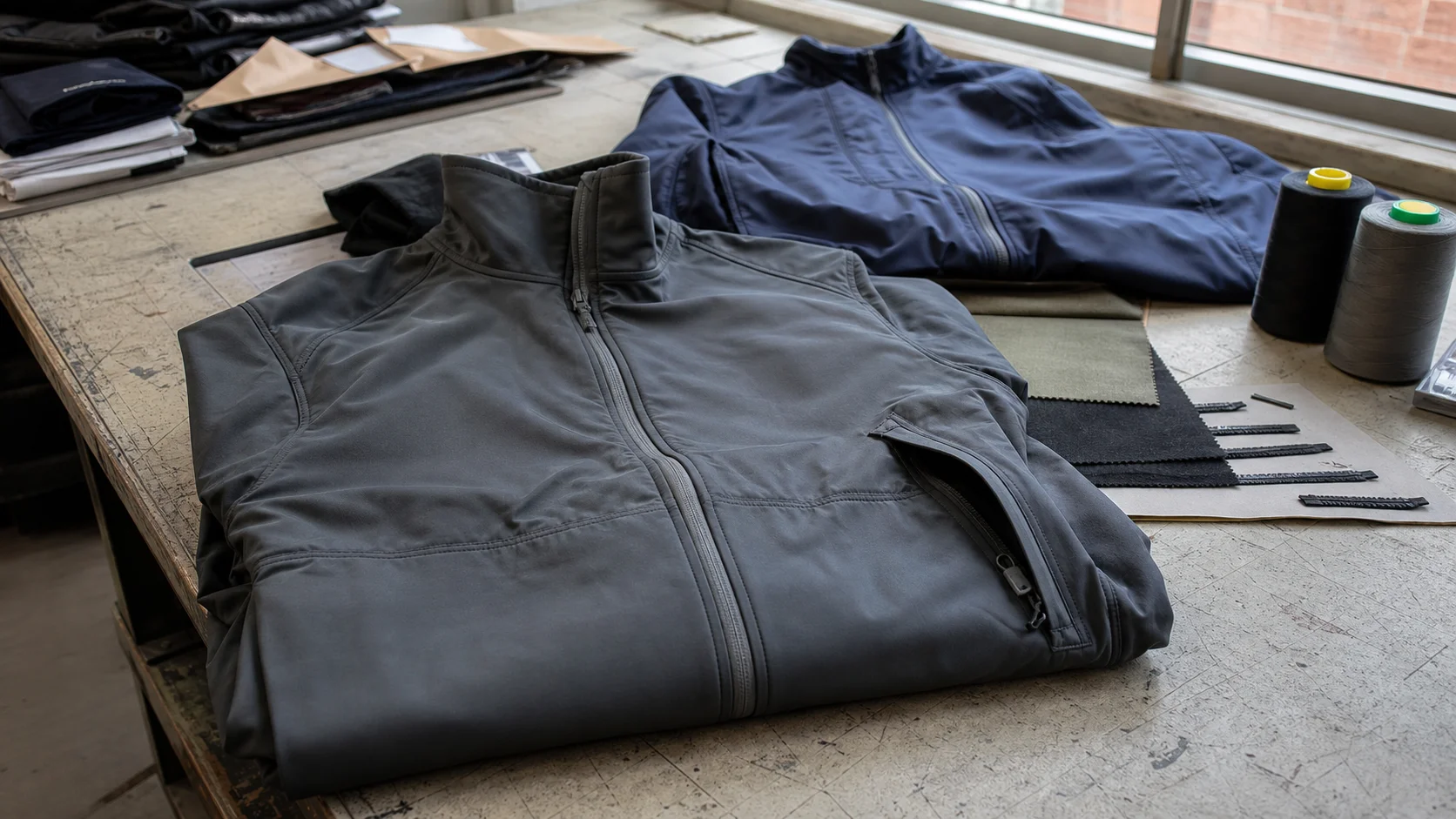
A quality and inspection-focused framework for warehouse safety teams evaluating wholesale security jacket reorders, with checks for consistency, visibility, durability, and shipment risk before replenishment.
Warehouse safety teams do not usually get into trouble because they ordered the wrong jacket once. The real risk comes when a security jacket is reordered months later, from memory, with missing details, changed trims, or a supplier assuming the last production run can simply be repeated. In warehouse operations, that kind of assumption can lead to inconsistent visibility, poor fit, delayed replenishment, and avoidable compliance gaps.
This wholesale security jacket reorder risk review is built for teams responsible for keeping warehouse staff visible, protected, and consistently outfitted. The focus is practical: what changes between orders, where quality slips most often, and how to control reorders without slowing down urgent replenishment. For sourcing teams that need support across specification control, sampling, and inspection planning, see Fabrikn services, about us, or contact us.
Security Jacket Reorder Risk Review for Warehouse Teams - Fabrikn production reference
Security jackets look straightforward at first glance. They usually involve a shell fabric, reflective or high-visibility detailing, basic closures, pockets, and branding or role identification. That simplicity can be misleading. A reorder is not just a repeat purchase; it is a test of whether the original specification was complete enough to survive time, staff turnover, and supplier substitutions.
The main risk is specification drift. A jacket ordered last season may have had a 300D Oxford shell, PVC coating, segmented reflective tape, and fleece lining. If that detail set lives only in someone’s inbox, a reorder can easily come back with a different denier, a softer coating, lower-grade tape, or a slightly altered fit. Each change may look small on paper, but the combined effect can reduce durability and wearer acceptance.
Warehouse teams also face operational risk. If jackets are used for visitor control, security staff, dock marshals, or overnight warehouse patrols, the visual standard matters. Inconsistent jacket appearance can weaken role recognition on site. In some environments, a poorly managed reorder can also create inventory fragmentation, where multiple versions of “the same jacket” sit in stock and create confusion during issue.
From a quality and inspection point of view, reorder risk is often less about defective manufacturing and more about uncontrolled variation. That is a procurement problem first, then a quality issue. Teams that treat reorders as a fresh sourcing exercise usually do better than teams that assume the last approved unit is enough.
A repeat order is only as reliable as the original tech pack or purchase specification. When security jackets are used in warehouse settings, the spec should be written for daily wear, not just appearance. The goal is to reduce ambiguity for the factory and reduce surprise for the end user.
For warehouse safety teams, fit is not cosmetic. Jackets that are too bulky get removed. Jackets that restrict movement get left in lockers. If the outerwear is intended for layering over uniforms, the size spec should include wear-over allowances. That means chest, sleeve, and body length need to be thought through as working dimensions, not fashion dimensions.
Placement of reflective elements deserves close attention. Warehouse safety teams often want visibility without making the garment look like roadwear. That balance is possible, but only if the placement is fixed in the spec. A reorder that shifts tape by a few centimeters can create inconsistency across staff and batches.
Wholesale security jacket MOQ depends on fabric availability, print or embroidery setup, color, size mix, and whether the jacket is a stock blank or a custom build. For many custom outerwear programs, a typical MOQ can range from 300 to 1,000 pieces per color or style, with lower thresholds sometimes possible for simplified designs or sourced stock fabrics. Small reorders may be accepted if the original material is still available, but once the fabric or trim is discontinued, the economics change quickly.
Sampling should not be skipped on a reorder unless the exact same materials, trims, and factory line are confirmed. Even then, teams should consider a pre-production sample or at least a sealed reference sample check. The approval sequence usually works best in three steps:
Lead time on a reorder is often shorter than a first order, but not always by much. If the supplier needs to remake artwork, relabel sizes, source a different zipper, or replace reflective tape, the timeline can stretch. Teams should be cautious about assuming “repeat order” means “fast order.” The best-case scenario depends on availability of the exact approved fabric, lining, and trims.
Where warehouse operations have seasonal peaks, reorder planning should start earlier than the expected need date. A practical rule is to forecast replacement demand before the existing stock drops below a two-cycle cushion. That cushion helps absorb delays caused by factory congestion, trim shortages, or failed sample approvals.
Security jacket reorder timing is shaped by a mix of material, production, and inspection variables. Many buyers focus only on sewing capacity, but the bigger delays often come from upstream items.
Dye lot variation is a frequent issue on reorders. If the original jacket used a specific navy, charcoal, or fluorescent shade, the new run can look different under warehouse lighting even when the supplier says the color matches. The risk increases with coated fabrics and high-visibility colors, where slight shade changes are easy to spot across a mixed batch.
Lead times also change when order quantities are split across sizes. Smaller size runs may trigger additional cutting inefficiencies, especially if the factory nests patterns differently from the first order. If a warehouse team wants a tight size distribution for new hires and a different mix for supervisors or security staff, that should be planned early.
Factories may promise a faster repeat order using leftover material, but that shortcut should be tested carefully. Leftover roll stock can be useful, yet it can also introduce shade inconsistency if the rest of the batch is not controlled. A low-price reorder is not automatically a safe reorder.
Repeat orders often fail in predictable ways. The jacket may look acceptable on first inspection, but the issue appears after use, washing, or cross-comparison with the original batch. Warehouse teams should pay close attention to the following risk areas.
A supplier may substitute a similar-looking shell fabric if the original is unavailable. That can change abrasion resistance, hand feel, water repellency, and overall weight. For warehouse use, a tougher shell usually outperforms a softer one, especially where jackets brush against pallet edges, shelving, and equipment.
If the garment relies on reflective tape, the tape quality matters as much as placement. Lower-grade reflective material may lose brightness faster or delaminate after repeated bending. For workwear used around forklifts or in low-light yard conditions, that is a meaningful safety concern.
Reorders may be sewn on a different line or by a different operator team. Pocket corners, zipper joins, shoulder seams, and cuff attachments are common weak points. A visually clean jacket can still fail in stress zones if stitch density or thread quality changes.
If the factory changes pattern blocks, grading can drift. A medium may fit like a small; an XL may not clear over a hoodie. Warehouses that issue jackets across shifts need predictable sizing, especially when garments are distributed in bulk and not individually fitted.
Zippers, snaps, drawcords, toggles, and hook-and-loop closures are common reorder substitution points. A cheaper zipper may save a little cost but create more warranty claims later. That tradeoff should be judged on the expected service life of the jacket, not only on landed cost.
Repeated production runs can still produce incorrect size labels, care labels, or country-of-origin marks. This is a compliance and receiving issue, and it can slow distribution if warehouse teams need to sort through mixed cartons.
Inspection teams should not assume a reorder is low risk simply because the first order passed. If the material source or production line changed, the order deserves fresh scrutiny.
A good reorder control plan keeps the process simple for buyers and strict where it matters. The objective is not to create paperwork for its own sake. It is to make sure the next purchase matches the previous approved standard, or else reflects a deliberate and approved revision.
For warehouse safety teams, one of the most useful habits is maintaining a reorder pack that includes the last approved sample, the purchase order history, and a photo record of the accepted garment. That pack should travel with the sourcing request, not sit in a forgotten folder. When a new order is placed, the team can compare the current offer against the saved record and catch variation before production starts.
It also helps to assign a clear approval owner. Reorders often slow down because purchasing, operations, and safety each assume someone else will sign off. A single owner can coordinate fit feedback, compliance review, and final release. That does not mean one person makes every decision alone. It means one person owns the timeline.
In wholesale security jackets, fabric and trim choices determine whether the garment performs through a full season or fails early. Warehouse environments are hard on outerwear. Cart movement, outdoor exposure, temperature changes, and constant on-off wear all punish weak construction.
Component Common Spec Range Risk if Not Locked Down Shell fabric 240D to 600D polyester or Oxford-style fabric Shade drift, abrasion loss, inconsistent hand feel Coating PVC, PU, or water-resistant finish Different water resistance, stiffness, or cracking risk Lining Polyester taffeta, mesh, or fleece Fit complaints, reduced warmth, lower comfort Reflective tape 25 mm, 50 mm, or segmented tape depending on role Visibility inconsistency and compliance risk Zip closure Nylon coil or molded plastic, sized to garment weight Breakage, snagging, short service life Thread Polyester core-spun or equivalent strength grade Seam failure under load or launderingThe table above is not a universal standard. It is a useful sourcing range. Final decisions should reflect whether the security jacket is for indoor patrol, dockside work, outdoor gate control, or cold warehouse environments. A jacket intended for freezing loading bays needs different insulation and closure performance than a light-duty visibility jacket used inside.
Trim consistency is often underestimated. Zippers can be the difference between a durable garment and a customer complaint. Drawcord tips, snaps, and label stock also deserve review. A low-cost trim change can create a visible downgrade even if the jacket passes basic measurements.
Repeat shipments should be checked against the approved sample and purchase specification, not against a vague memory of the last order. For warehouse safety teams, a practical inspection plan usually includes both visual and functional checks.
For larger orders, a sample plan should cover the full size curve and multiple cartons. If the order is split across production dates, the team should inspect at least one unit from each production lot. Mixed lot shipping is common, and quality variation can hide between cartons.
Inspection should also consider end-use wear. A jacket that passes measurements can still fail if the lining twists, the collar irritates the neck, or the sleeves catch on gloves. Warehouse teams should ask wear-test questions before final approval: Can staff reach overhead comfortably? Can they sit, lift, and drive equipment without resistance? Does the jacket stay closed when moving quickly between cold and warm areas?
If the order is intended for a critical site, a top-of-production check is worth the time. It is easier to stop a repeat problem after the first cartons than after the entire order has landed.
Not every reorder should be a blind repeat. Sometimes the right decision is to keep the spec unchanged. In other cases, a revision is overdue. The best purchasing judgment comes from comparing actual wear performance with the original purpose of the jacket.
Keep the spec if the jacket has a stable fit, acceptable durability, and no recurring complaints. Revise it if the same issues keep appearing in the same areas. Replace it if material availability, compliance expectations, or operational use have changed enough that the old version no longer fits the job.
Teams should be cautious about making too many changes at once. If the warehouse wants a stronger shell, a different lining, a new logo method, and a revised size curve, the resulting sample review becomes harder to manage. It is usually better to separate urgent functional upgrades from cosmetic changes.
Cost should be judged in service-life terms. A slightly higher unit price may be acceptable if the jacket lasts longer, holds its shape better, and reduces replacement frequency. Cheap outerwear can become expensive when issue rates rise, staff stop wearing it, or the replacement cycle shortens unexpectedly.
For sourcing teams managing several uniform or PPE categories, it is often useful to align security jacket specs with broader warehouse uniform policy. That reduces variety in materials, trims, and labeling, which helps purchasing control. When the product range becomes too fragmented, reorder risk climbs.
Wholesale security jacket reorder risk is not a narrow procurement issue. It sits at the intersection of safety, consistency, and supply control. Warehouse teams need jackets that are visible, durable, correctly sized, and repeatable across seasons. That only happens when the original spec is complete, the reorder process is controlled, and inspection remains strict enough to catch substitution and drift.
The safest reorder is the one that is treated like a controlled production event, not a memory-based restock. Lock down the fabric, trims, measurements, and approval steps. Keep a physical reference. Watch lead-time dependencies. Inspect against the approved sample. Those steps are practical, not excessive, and they protect both the warehouse team and the buying budget.
Get a free quote from Fabrikn — your trusted B2B clothing manufacturer with 10+ years of experience. MOQ as low as 200 pieces.
Get a Free Quote →The biggest risk is spec drift. That can include fabric substitution, trim changes, size inconsistency, or reflective tape differences. These changes often look small until the jackets are issued and compared in use.
MOQ often ranges from 300 to 1,000 pieces per style or color for custom orders. The exact threshold depends on fabric sourcing, print or embroidery requirements, and whether the supplier is making from stock materials or custom-developed materials.
Not always, but it is usually wise to request at least a reference comparison or pre-production sample if anything changed. If the fabric, trim, or factory line is different, a new sample review is strongly recommended.
Common issues include shade variation, reflective tape inconsistency, weak stitching, zipper failure, incorrect labeling, and poor size grading. These problems are often caused by changed inputs rather than a total manufacturing failure.
Keep a master spec sheet, approved sample, artwork file, and trim record in one place. Place reorders before stock drops too low, and confirm material availability before approving the purchase order.
Check fabric, color, measurements, stitching, reflective placement, zipper function, labels, packaging, and carton marks. For larger orders, inspect across different size ranges and production lots.