
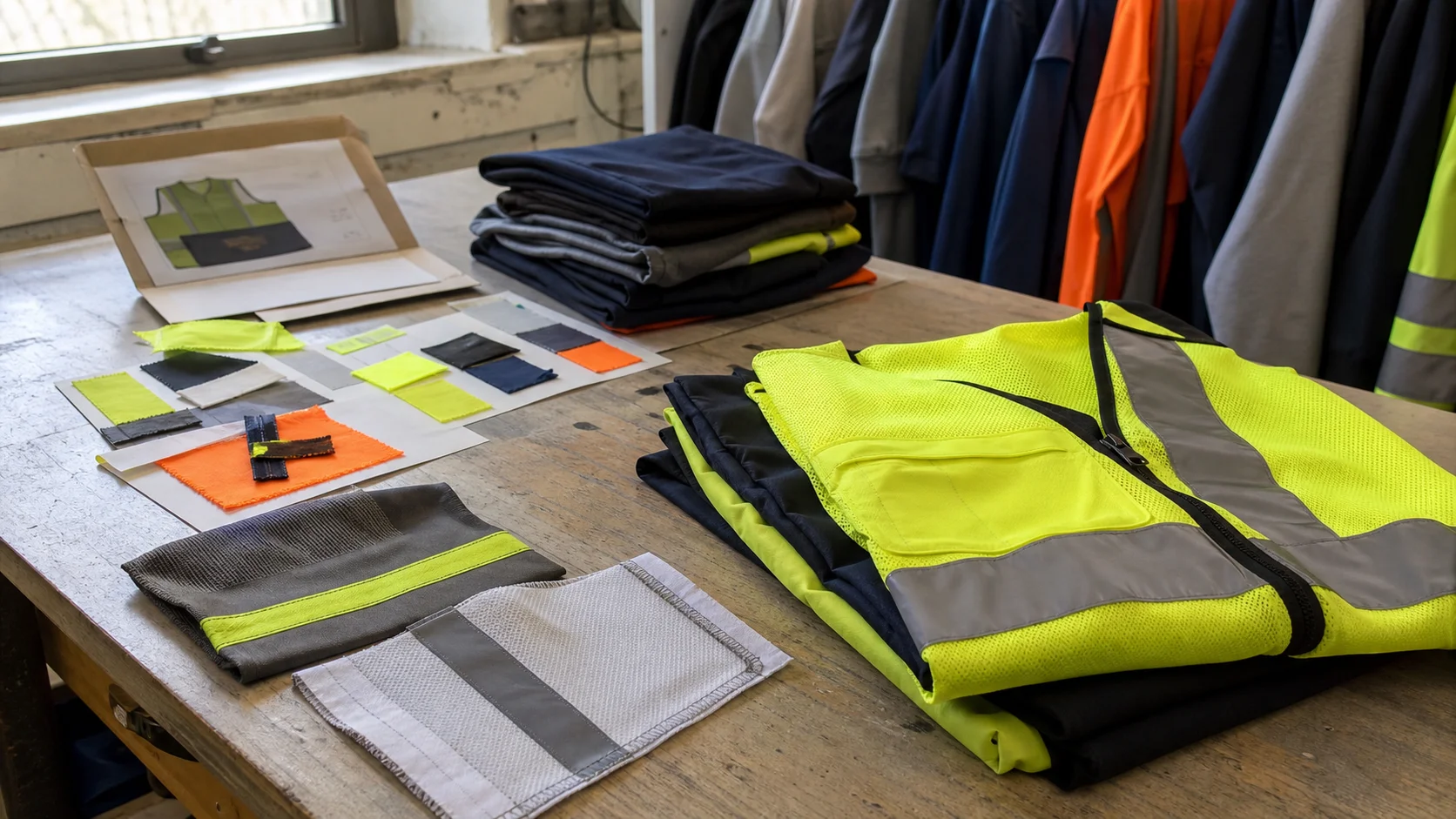
A practical landed cost breakdown for safety vests used by cleaning crews, including fabric specs, decoration choices, freight, duties, packaging, and reorder math.
Buying safety vests for cleaning crews looks simple at the quote stage and gets more complicated once freight, duties, labeling, sampling, and inspection costs are added. A vest that seems inexpensive on paper can become a poor buy if the fabric is too light, the reflective tape fails a compliance check, or the supplier’s minimum order quantity forces excess inventory. For cleaning teams, the right landed cost is not the lowest ex-factory price. It is the total cost of getting a vest into usable, repeatable stock with acceptable quality and lead time.
This guide breaks down landed cost for safety vest sourcing with a cleaning-crew use case in mind. The focus is practical: what to ask suppliers, which cost items to track, where MOQ pressure usually shows up, and which quality decisions affect long-term value. The goal is to help purchasing teams compare offers on a like-for-like basis instead of chasing the cheapest sample.
Safety Vest Landed Cost Guide for Cleaning Crews - Fabrikn production reference
Landed cost is the full cost of receiving a product ready for use. For safety vests, it usually includes the unit price from the supplier, packaging, internal or international freight, customs duty where applicable, broker fees, bank charges, inland delivery, and any testing or inspection cost that sits outside the factory quote. If a supplier offers a low unit price but charges separately for basic customization, the final landed cost can exceed a cleaner-looking quote from a more complete supplier package.
For cleaning crews, landed cost matters because vest consumption is usually routine, not occasional. The purchase is tied to staff onboarding, replacement cycles, seasonal contract changes, and sometimes site-specific visibility requirements. A difference of a few cents per vest can become material when multiplied across a full operation. The procurement mistake to avoid is treating vests like promotional items. They are workwear, and the purchasing decision should be built around durability, re-orderability, and predictable lead time.
A useful landed-cost rule: compare suppliers only after normalizing for fabric weight, reflective coverage, print method, packaging, and shipping term. If those are not aligned, the quote comparison is not real.
Cleaning crews usually need high visibility, easy size distribution, simple branding, and enough durability to survive repetitive wear and laundering. In many programs, the vest is worn over uniform shirts, rainwear, or light outer layers. That means fit should be forgiving, closures should be practical, and the vest should not add heat or bulk that workers avoid wearing.
The common purchasing priorities are straightforward:
Cleaning programs often prioritize cost over certified performance, but that tradeoff should be made intentionally. A basic hi-vis vest may be suitable for low-risk environments, while some sites require specific reflective tape placement, background color, or certification standard. The order spec should match the actual worksite requirement, not a generic catalog description.
A supplier quote usually contains only part of the total picture. The best way to evaluate landed cost is to separate each line item and test what changes if volume, customization, or shipping terms change.
Cost Element What It Covers Typical Procurement Risk Base garment price Fabric, sewing, reflective tape, closures, and factory margin Quote may assume a lighter fabric or narrower tape than the sample Customization Logo print, embroidery, name labeling, color changes, pocket changes Small artwork changes can trigger setup fees and MOQ penalties Sampling Pre-production sample, size set, color lab dip, print strike-off Sample fees may be non-refundable and separate from bulk pricing Packing Individual polybags, carton labels, size stickers, barcode labels Retail-style packing increases labor and material cost Freight Air, sea, courier, or domestic line-haul Low unit pricing can be overwhelmed by shipping on small orders Duty and tax Import duty, VAT/GST, customs clearance charges HS code assumptions may be wrong if product details are vague Inspection Third-party QC, measurement checks, carton audits, compliance review Skipping inspection can save money upfront and create costly failures laterSome buyers only calculate price per vest. That is too narrow. A more useful formula is:
Landed cost per unit = factory unit price + customization allocation + packaging allocation + freight allocation + duty/tax allocation + inspection/sample allocation
For example, a vest quoted at $2.10 FOB may land at $3.20 or more once freight, duty, and packaging are added. In a smaller order, the spread can be even wider because sample and freight costs are divided across fewer units. That is why MOQ has such a strong effect on the true unit cost.
MOQ is one of the biggest drivers of landed cost in safety vest sourcing. Factories set minimums based on fabric color runs, reflective tape sourcing, sewing line efficiency, print setup, and carton packing requirements. A standard vest may have a lower MOQ than a custom vest with printed logos, pockets, or segmented tape. When the order is below the factory’s preferred quantity, the supplier often increases the unit price or charges a setup fee.
Typical MOQ ranges vary widely by supplier capability and customization level. For plain safety vests, a working range might be 300 to 1,000 pieces per color or style. For custom logo orders, 500 to 2,000 pieces is common. For special fabrics, unusual colors, or segmented reflective layouts, the MOQ can rise further. These are not fixed numbers; they are negotiation ranges shaped by material sourcing and machine setup.
Sampling deserves the same discipline. A serious order usually goes through some combination of size confirmation, artwork approval, color approval, and pre-production sample approval. If the vest includes reflective tape, the tape width, placement, stitch pattern, and wash performance should be checked before bulk production. A buyer that skips approval steps may save a week and lose a month if the bulk run does not match the expected specification.
The practical approach is to define what must be approved before bulk cutting starts:
If the supplier offers a lower MOQ, ask what is being simplified. The answer is usually one of three things: fewer color options, lighter fabric, or reduced customization. That is not automatically a problem. The issue is whether the simplification still matches the cleaning crew’s daily use.
Small spec changes can move the cost more than many buyers expect. Safety vests look simple, but the bill of materials can vary a lot. For cleaning crews, the main cost levers are background fabric, reflective tape, closures, and branding method.
Mesh vests are usually lighter, cooler, and cheaper than solid polyester vests. They suit warm environments and indoor work. Solid polyester or tricot can feel more durable and print more cleanly, but they cost more and may reduce breathability. Fabric weight matters as well. A slight increase in grams per square meter can raise the price, especially if the supplier is using branded yarns or a thicker knit.
For cleaning crews, a medium-weight mesh often strikes the best balance between cost, comfort, and visibility. The tradeoff is that mesh can snag more easily than tighter-knit fabric. If the vest will be worn during heavy cart movement, janitorial supply handling, or regular site contact, a stronger knit may justify the higher cost.
Reflective tape is one of the most sensitive cost items. Tape width, quality grade, segmentation, and stitching all affect price. Wider tape, higher reflectivity, and more complex placement patterns cost more. Some buyers ask for extra tape because it looks safer in a catalog. That can increase cost without adding real utility if the site does not require it.
For low-risk cleaning applications, standard reflective strip placement across the torso and shoulders is often enough, provided the product meets the intended site requirements. If the vest is used near vehicles, loading zones, or low-light exterior areas, the buyer should review whether a higher performance reflective configuration is necessary.
Zippers generally cost more than hook-and-loop closures, but they can improve fit retention and reduce snagging. Velcro is common in budget programs and allows quick on-off use, though it can wear faster over time. Pockets, radio loops, ID holders, mic tabs, and pen pockets all add sewing steps and increase labor cost. Those features are worth paying for only when the crew actually uses them.
Cleaning teams often prefer light, uncomplicated vests. Extra pockets may look useful, yet they can create bulk, trap debris, or increase failure points. If the garment’s main job is visibility and identification, simplicity often wins on cost and durability.
Branding method has a direct effect on MOQ and lead time. Screen print can be economical at moderate volume but may require setup. Heat transfer can be flexible for smaller orders, though print durability varies by film and application quality. Embroidery usually costs more and is less common on lightweight vests because it can add weight and affect comfort.
When the vest is used by cleaning crews across multiple sites, a small front logo and a simple back identifier may be enough. Large, multi-color artwork raises the cost and sometimes complicates approval if the colors need to match a corporate standard. A conservative logo spec often reduces total cost without hurting usability.
Lead time for safety vests is not just production time. It includes raw material availability, sample approval, print setup, cutting and sewing, quality inspection, packing, and shipping. Any late approval extends the schedule. The most common delay is not sewing capacity. It is incomplete buyer feedback on artwork, sizing, or labeling.
Lead time usually becomes longer when the order includes custom color matching, imported reflective tape, special labeling, or a tight size curve. If the supplier must source a specific tape grade or a nonstandard zipper, the schedule depends on material procurement as much as on factory output. A buyer can reduce risk by locking the spec early and approving samples quickly.
There is also a practical shipping tradeoff. Air freight shortens time but raises landed cost sharply. Sea freight lowers unit shipping cost but requires enough planning to absorb transit time. For repeat cleaning programs, a mixed approach can work well: use air on urgent replenishment and sea on planned stock builds. That strategy only works if forecast data is reliable.
Inspection matters because low-cost vests can fail in small, expensive ways. The most common issues are poor stitching, uneven reflective tape placement, weak seams, color variation, incorrect sizing, and packaging errors. If the vest is intended to meet a visibility standard, the risk extends to tape quality and background color consistency.
For cleaning crews, the top inspection risks usually include:
Third-party inspection is worth considering on larger orders or any order with custom branding. Pre-shipment checks should focus on measurements, workmanship, tape placement, pack-out accuracy, and visible defects. If the buyer is sourcing for multiple cleaning contracts, a missed defect can lead to replacement cost, staff complaints, and rework on short notice. Those secondary costs are usually higher than the inspection fee.
Compliance should also be reviewed carefully. If the product is being sold or deployed as a high-visibility garment in a regulated setting, the supplier should confirm the applicable standard and the exact configuration being quoted. Some suppliers use broad language that sounds compliant but does not specify the version, class, or testing scope. A cautious buyer should ask for test reports or clear construction details rather than relying on a vague claim.
Comparing quotes by unit price alone is a weak method. A better comparison standard uses a normalized spec sheet and a landed cost worksheet. The same vest should be quoted across each supplier with identical fabric weight, tape layout, closures, print positions, packaging, and shipping term. Without that discipline, one offer may appear cheaper simply because it omits features that the other quote includes.
When reviewing a safety vest supplier landed cost guide for cleaning crews, the following questions usually expose hidden cost:
If a supplier cannot break down cost clearly, that is a warning sign. The quote may still be usable, but the buyer should not treat it as final until all assumptions are visible. A transparent supplier is easier to negotiate with because the tradeoffs are obvious. A vague supplier often becomes more expensive after the first revision.
For buyers who need help structuring this process, a sourcing partner can simplify spec control and supplier comparison. See the related services page for an overview of sourcing support, or use the contact page to request a quote review. Background information about the company is available on the about us page.
The best buying strategy depends on whether the cleaning crew needs a one-time issue, recurring replenishment, or site-specific branded stock. The structure below is often the most efficient for recurring programs.
Choose a vest type that balances comfort and cost. For many cleaning crews, a medium-weight mesh vest with basic reflective tape and a small logo is enough. Keep the spec stable unless a site requirement changes. Every spec change can reopen sampling and reset lead time.
Do not buy only the exact headcount. Sizes get lost, damaged, or reassigned. A sensible buffer is usually 5 to 15 percent depending on turnover and the number of sites served. The precise percentage depends on replacement frequency and whether the vests are assigned to individual workers or kept as pool stock.
Approve one master sample, then use that standard for repeat orders. This avoids re-litigating details with each purchase. The supplier should have a clear reference spec, photo record, and measurement sheet so the next order matches the first approved version.
Air shipping can make sense for urgent onboarding or emergency replacement. Sea freight or consolidated freight usually works better for planned inventory. The right answer depends on the value of time versus the value of inventory carrying cost. For low-cost garments, freight can easily become the largest non-product line item, so the transport plan should be decided before purchase order release.
A single PO may look efficient while the broader program is wasting money through poor size planning, excess samples, or avoidable rush freight. Track the full cost by site or department. That makes it easier to see whether a slightly higher unit price with better quality actually lowers total spend over the year.
Get a free quote from Fabrikn — your trusted B2B clothing manufacturer with 10+ years of experience. MOQ as low as 200 pieces.
Get a Free Quote →It varies by fabric, branding, shipping term, and order size. A low unit price can rise significantly after freight, duty, packaging, and sample costs are included. Smaller orders usually have a higher landed cost per unit because fixed expenses are spread across fewer pieces.
For plain vests, MOQ can be a few hundred pieces. For custom logo or color work, 500 to 2,000 pieces is a common working range. Special materials, segmented reflective layouts, or multiple print locations may require more.
Hook-and-loop is usually cheaper. Zippers cost more but can improve retention and reduce snagging. The better choice depends on how the vest will be worn, how often it is removed, and whether the program values long-term wear over upfront savings.
Not always. The correct tape level depends on the environment and the visibility requirement at the worksite. Indoor or low-risk uses may not need premium tape, while exterior or vehicle-adjacent work can justify higher performance. The key is matching the product to the site requirement rather than overbuying by default.
Fabric color and weight, reflective tape placement, logo artwork, size grading, closure type, and packing details should be approved before bulk cutting. A pre-production sample is the safest reference for repeat orders.
They are often not truly the same product. Differences in fabric weight, tape quality, print method, packaging, shipping term, and MOQ can change the price substantially. Normalizing the spec is the only reliable way to compare them.
For custom or higher-volume orders, yes. Inspection helps catch size errors, tape placement problems, workmanship defects, and packing mistakes before shipment. The cost is usually lower than dealing with returns or replacement shipments after receipt.
For cleaning crews, safety vest sourcing works best when the buyer treats landed cost as a complete procurement problem, not a unit-price exercise. The right order balances visibility, comfort, replenishment flexibility, and predictable cost. A careful spec, a realistic MOQ, and a disciplined sample approval process usually save more money than aggressive price cutting.