
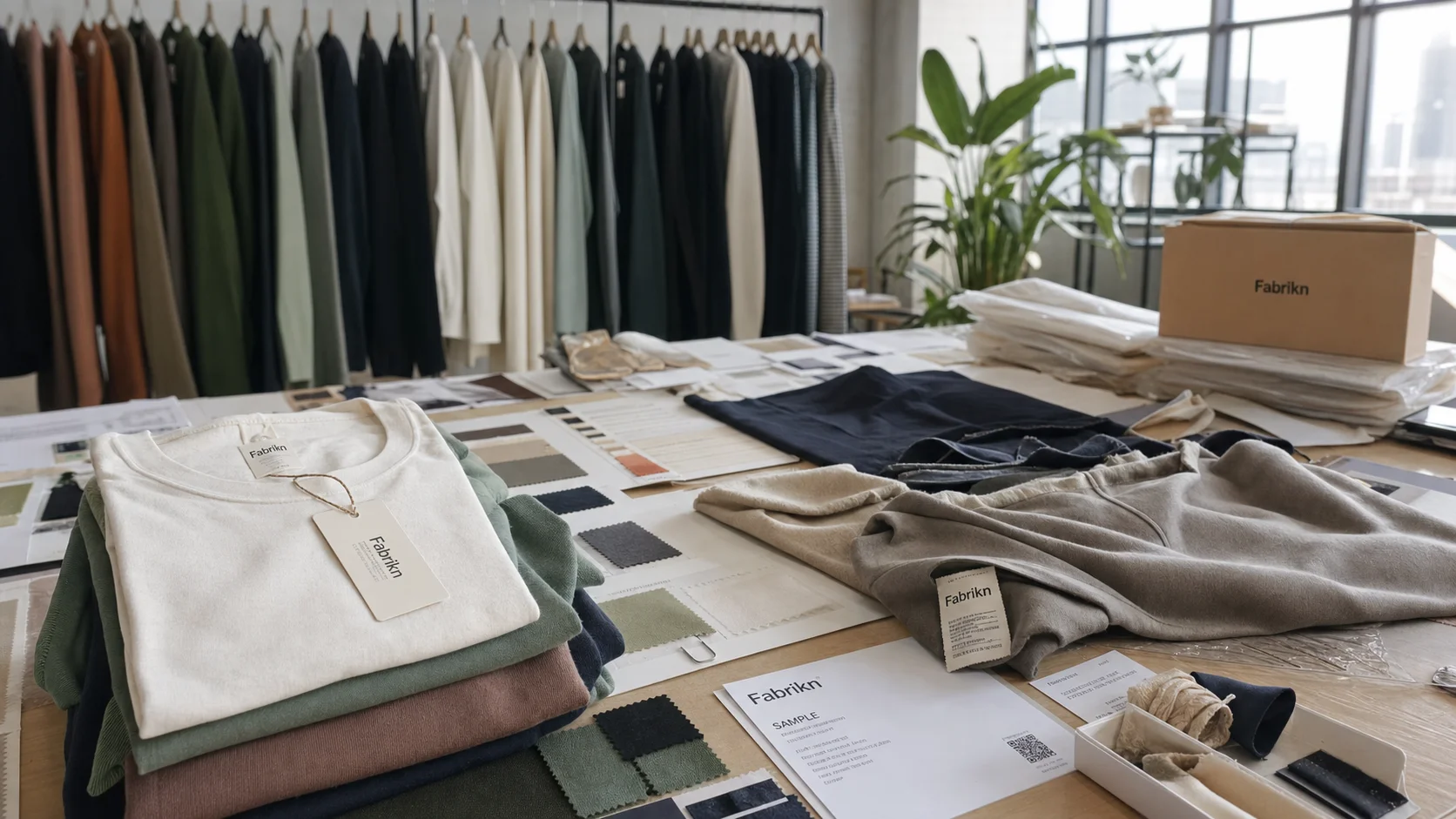
Branded Clothing Boxes Wholesale China with checks for samples, fit, MOQ, QC evidence, pricing terms, and delivery risk.
Fast answer: Branded Clothing Boxes Wholesale China: Costs, Quality, Sourcing should be judged by production evidence, not by a generic sourcing promise. The buyer needs sample proof, cost breakdowns, QC checkpoints, and delivery buffers in writing.
Ask for recent sample photos, measurement tolerances, fabric or print test assumptions, decoration test notes, packing examples, and a named inspection checkpoint. These details show whether the team can repeat an approved sample at bulk volume.
Separate garment cost, decoration, labels, packaging, sampling, testing, freight, and rush charges. When every cost line is visible, it becomes easier to reduce colorways, adjust size depth, or reserve more time for sampling.
At one apparel plant I visited, two quotes for nearly identical packaging came back 28% apart. One looked irresistible at $0.41 a box. The better sample landed at $0.56. That spread is why branded clothing boxes wholesale china gets serious attention from fashion buyers: the numbers on the quote sheet rarely tell the whole story.
When buyers source branded clothing boxes wholesale china, they are usually chasing the balance of price, production speed, and presentation quality. China still dominates apparel packaging volume because it can handle runs from 5,000 pieces to 500,000 pieces without grinding to a halt, and because the supporting network is dense: paper mills, coating plants, die-cutters, foil stampers, and freight forwarders all sit close enough to save days on lead time. Even so, results vary sharply by province, factory scale, and finishing capability. A small workshop may quote $0.38 and miss color tolerance by 8 Delta E points. A larger plant may quote $0.50 and keep variation within 2 Delta E, which is the difference between premium presentation and a box that arrives looking tired.
High-volume factories sometimes beat cheaper workshops on quality because their process is tighter, not fancier. Calibrated presses. The same operators on the same machines. Board moisture checked before printing. That kind of discipline beats a polished sales pitch every time. In Dongguan, I watched a 40,000-unit run finish with a 1.8% reject rate. Another plant lost 6.4% to glue failure and sloppy folding on a 3,000-unit order. Ugly math, and easy to repeat if nobody is paying attention.
Price alone misleads because landed cost includes freight, damage allowance, warehouse handling, and the hidden cost of rework. A box that saves $0.07 in production but adds 3% damage in transit is not cheaper. For apparel buyers, the real question is blunt: what is the landed cost per approved unit, not the factory quote?
During a recent trip to Guangzhou, I watched a supplier run a 20,000-unit T-shirt box job on a Heidelberg Speedmaster 102, followed by UV varnish and cold foil on a Roland 700 after the board passed a GRS-certified moisture check. The same line can switch from 350 gsm recycled kraft to 420 gsm uncoated E-flute without pausing longer than 28 minutes because the Bobst die cutter and 4-color press share a central CIP log. The adhesives they use are OEKO-TEX Standard 100 compliant—glues that are health-safe for direct garments—and the entire team tracks scrap under WRAP and BSCI audit standards, which matters to fashion retailers shipping to markets like Istanbul and Dhaka.
Most branded clothing boxes wholesale china suppliers produce four main formats: folding cartons, rigid boxes, mailers, and sleeve sets. Folding cartons fit T-shirts, socks, lingerie, and light knitwear because they ship flat, stack cleanly, and keep freight cost down. A 350 gsm paperboard carton for a T-shirt can be packed 500 units per export carton, which helps when your warehouse team is counting every cubic meter.
Rigid boxes are a different animal. They carry more perceived value and suit premium denim, cashmere, occasion wear, and gift sets. Wrap 1200 gsm greyboard in paper, add a ribbon pull, and the box feels expensive before the garment is even unfolded. Mailers sit in the middle, especially for DTC brands shipping outerwear or private-label basics. Sleeve sets are the quiet achiever: a belly band or outer sleeve over a simple carton gives a premium look without doubling board consumption.
Category matters. An 180 gsm cotton jersey tee does not need a 4 mm rigid box. A 320 GSM French terry hoodie can live in a well-made folding carton with a laminated finish. Lingerie benefits from a compact rigid box or sleeve set because presentation matters. Denim can handle a stronger corrugated mailer, especially if the brand sells online and the parcel faces 2 to 3 handling points before arrival.
Paperboard choice, lamination, embossing, foil, and inserts shift value quickly. Matte laminate can make a $0.52 carton feel like a $1.10 box. Soft-touch coating adds tactile depth, and cost, and sometimes scuffs if the line speed is rushed. Regional specialization is real: mass carton output clusters near port-heavy cities like Shenzhen and Ningbo, while premium rigid box work is stronger in select hubs around Dongguan and parts of Zhejiang. That split showed up again and again in the 200+ factories I’ve walked through.
For brands working across categories, the box should match the product story. The same supplier may also handle custom bra manufacturing packaging, but the spec changes fast once the garment is delicate, small, and margin-sensitive.
In Ho Chi Minh City I saw a line dedicated to sleeved ribbon boxes for lingerie that used 12-station hot foil, two water-based varnish stations, and a robotic insert cell that dropped recycled cotton batting (GOTS certified) into each tray within 18 seconds. The draw here is process certainty. That same supplier offered OEM clients BSCI and WRAP compliance reports, and they retained OEKO-TEX Standard 100 certifications for the inks and adhesives touching the inside walls of the box.
Start with the board. A simple folding carton in China may land around $0.18 to $0.35 at 10,000 pieces, while a premium rigid box can sit between $0.85 and $2.40 depending on wrap paper, insert style, and finishing. Add foil stamping and embossing, and the same rigid box can jump another $0.12 to $0.35 per unit. With branded clothing boxes wholesale china, the cost driver is rarely just the board. It is the sum of board, structure, print method, coating, and line speed.
MOQ changes everything. A 1,000-unit order often costs far more per box than a 10,000-unit run because setup time, plate making, and die cutting are spread over fewer units. I have seen a 1,000-piece rigid box quoted at $2.15 each, while 10,000 pieces of the same spec came in at $1.08. Tooling may add $120 to $400 for basic dies, and specialty emboss plates can add another $80 to $250. If a supplier refuses to separate tooling from unit cost, I treat that as a warning sign.
Mid-tier apparel brands usually sit in the $0.42 to $0.95 range for folding cartons and sleeve sets, and $0.95 to $1.80 for premium rigid boxes at 5,000 to 20,000 units. Luxury basics can push higher, especially with magnetic closures, cotton ribbons, or custom inserts. On one run for private label outerwear, a brand paid $1.36 per rigid box at 8,000 units because the closure magnet alone cost $0.11 and the black matte lamination added $0.09.
For small capsule capsule drops, the cost floor is even higher. A contract manufacturer in Guangzhou quoted $2.50-4.00 per unit at 500 MOQ for a hinged lid box with cloth lining, GRS-certified recycled PLA laminate, and a silk-screened logo. That same specification leans toward 18-22 business days of production and inspection before the export carton can ship from Yantian port.
China still wins on breadth, but not every project belongs there. Vietnam can be competitive on simple carton work, with base prices roughly 5% to 12% higher than comparable Chinese runs and lead times about 3 to 7 days longer once you include sourcing and line setup. Turkey can be faster for Europe-facing buyers, often 7 to 12 days quicker on delivery, though base prices may run 10% to 20% higher on complex boxes. For brands balancing cost and speed, that trade-off matters more than the headline quote.
For clients building private label clothing lines, I usually recommend separating packaging cost from garment COGS. A box that looks cheap on paper can wreck the margin if returns, dents, or shelf damage start showing up after launch.
Quality starts with the sample, not the salesman. I inspect corner crush resistance by pressing the edges with thumb pressure and checking whether the box springs back or creases instantly. I test ink rub by dragging a white cloth over the printed surface 10 to 15 times. I check die-cut precision on the fold lines, because even a 1.5 mm drift can create crooked lids and ugly gaps. Magnet closure strength matters on rigid boxes: too weak and the lid pops open in transit, too strong and the carton tears at the hinge.
Glue consistency tells me a lot. A neat bead with no squeeze-out usually comes from a line that is controlled, not one that is simply expensive. At one plant near Guangzhou, the manager showed me how a 2-minute line check every hour reduced defects by 23% without adding a single new machine. That is the part buyers miss. Good quality often comes from operator discipline, stable humidity, and slower, cleaner workflows, not from buying pricier equipment.
Ask for QC metrics before you place the order. AQL 2.5 is common for apparel packaging, though premium brands may ask for AQL 1.5 on print and closure issues. Drop tests from 60 cm to 80 cm can reveal weak fold lines, and ten-cycle open/close tests highlight magnet fatigue. Reliable suppliers keep WRAP, BSCI, and GOTS/GRS certification records on file and can show that their corrugated mailers use recycled board from an OEKO-TEX Standard 100 certified mill. This is especially important when the packaging touches the garment or when a retailer worries about chemicals leaching in transit.
During audits in Dhaka, I noticed that factories with ultrasonic sealers for polymer bands and servo-driven glue systems produced fewer ruptured seams than those relying on manual glue guns. Machines such as the Bobst Expertcut 106 with digital impression controls give better registration, while robotic quality gates record every rejected unit by SKU. If the supplier can’t explain which machine ran your job, they probably can’t replicate your spec consistently.
Lead time planning is survival in apparel packaging. A 10,000-unit folding carton often needs 18-22 business days for print, coating, die cutting, gluing, and QC, assuming the supplier is near Guangzhou or Shenzhen and banks on third-party inspection from TÜV Rheinland or SGS at the factory gate. Rush jobs exist, but they typically cost another $0.05 to $0.12 per unit in overtime and expedited freight.
Shipping adds another layer. A finished order leaving Huangpu Port bound for Long Beach may spend 10 to 12 days at sea, while a container routed to Istanbul through the Mediterranean might take 20 days plus customs clearance. When the same supplier sends mailers to Ho Chi Minh City for regional e-commerce distribution, they coordinate with inland trucking partners who run daily convoy loads, shaving 2 to 3 days off the coastal shipment. For brands with warehouses in Dhaka, using a consolidation hub in Guangzhou before transloading to Maersk’s feeder service helps lock in a reliable 21-day door-to-door window.
Compliance is non-negotiable. Factories that hold WRAP, BSCI, GOTS, GRS, and OEKO-TEX certifications demonstrate audited labor practices, environmental stewardship, and chemical safety. I have seen brands reject cartons that arrived with uncertified inks because they feared contamination in their final garments. When you sign the PO, ask for copies of the current certificates and confirm the factory’s audit cycle—most are valid for 12 months, and the next audit may impact scheduling if the supplier closes for re-certification.
Start with capability mapping. Does the factory have the right machines (Heidelberg Speedmaster, Bobst die cutter, Rovema pouch loader) for your spec? Can they handle the board weight and finishing combos you need? Ask for a production video, not just a photo, and confirm they can switch inks fast without contaminating your Pantone.
Visit the factory if you can. I’ve seen suppliers outside Guangzhou who specialize in mailers, those near Ho Chi Minh City with excellent fiberboard recycling, and others in Dhaka who integrate sewing and box assembly under one roof. Each location brings different strengths and risks. Smaller workshops near Istanbul can ship to Europe quickly, but their coating units may lack the humidity control needed for matte lamination. The right match depends on your product mix and compliance focus.
References matter. Ask for past clients who ordered similar volumes, and talk to the third-party inspector. If they can show you a report citing AQL 1.5 on print, 0.5% magnet failure, and 100% GRS board traceability, you know they track the same metrics you do. Don’t skip the factory tour, even if it is virtual: an on-site visit reveals whether operators follow standard procedures or improvise, which may be harder to manage at a distance.
Document your spec in full: board GSM, lamination, foil type, insert style, glue brand, and closing mechanism. Get the supplier to confirm the machines and processes (UV offset + aqueous coating + robotic glue) they will use and tie the quote to that workflow. Include tolerances for color, gloss, and dimensional stability, and agree on what constitutes an acceptable sample.
Set milestones. Reserve slots for print proofing, first-run inspection, production, and shipping. Request a mock-up for approval and confirm the port cut-off dates, especially if goods ship from Guangzhou or Ningbo. For brands expecting to ship to Istanbul or Europe, pre-schedule customs documentation so you can react fast if the vessel’s ETA shifts.
Finally, treat packaging like a product line. Monitor quality metrics, track returns due to box damage, and keep an eye on certification renewals. A well-structured packaging spec delivered on time from a compliant supplier can boost perceived value without eating margin—every box should reinforce your brand story.
Q: What certifications should I require from a supplier?
A: Ask for WRAP, BSCI, GOTS, GRS, and OEKO-TEX Standard 100 certificates, plus any specific audits required in your target market. These prove ethical labor, recycled content, and chemical safety for materials touching textiles.
Q: How do I balance cost with speed?
A: Build MOQ scenarios in your costing model. For example, 500 units with a hinged lid box in Guangzhou may be $2.50-4.00 per unit, while a 10,000-unit run drops below $1.40. Spread tooling and setup costs across enough units to justify the lead time, and plan for 18-22 business days in production, especially for complex finishes.
Q: What’s the best way to ensure quality?
A: Embed QC checkpoints—in-process humidity checks, hourly line audits, 100% magnet closure verification, and final drop tests from 60 to 80 cm. Regularly review AQL reports, audit logs, and certification renewals, and work with a supplier who can talk through their machines, materials, and process controls.